Introduction
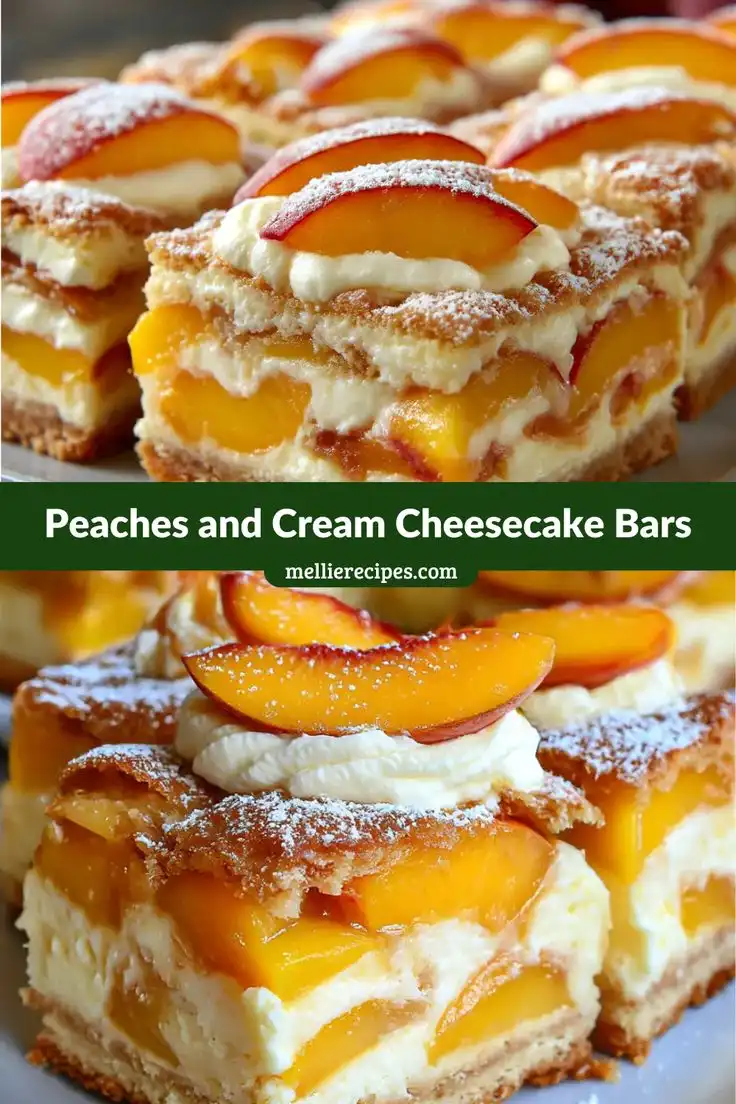
Peaches and Cream Cheesecake Bars are the ultimate summer dessert — a luscious fusion of velvety New York–style cheesecake, sweet ripe peaches, and buttery shortbread crust, all baked into perfectly portioned, slice-and-serve bars. These decadent treats deliver the rich tang of cream cheese, the floral sweetness of fresh or high-quality canned peaches, and a subtle hint of vanilla and almond that elevates every bite. Whether you’re hosting a backyard barbecue, packing a picnic basket, or simply craving something indulgent yet approachable, these bars strike the ideal balance between elegance and ease. Their stunning golden-pink marbled top, tender crumb, and melt-in-your-mouth texture make them a crowd-pleasing favorite at potlucks, bridal showers, and holiday tables alike — and with no water bath required, they’re far more forgiving (and less finicky) than traditional cheesecakes.
The History
The evolution of Peaches and Cream Cheesecake Bars reflects a broader culinary trend: the American love affair with both cheesecake and fruit-forward desserts, fused through the mid-century rise of bar cookies and convenience baking. Cheesecake itself traces its roots to ancient Greece, where it was served to athletes at the first Olympic Games in 776 BCE — a simple mixture of honey-sweetened cheese and flour. It traveled through Roman banquets, medieval European monasteries, and finally to America via 18th-century immigrants, particularly German and Eastern European bakers who brought their versions of Käsekuchen. By the 1920s, New York delis had refined the dense, creamy style we know today.
Meanwhile, peach cultivation flourished across the southeastern U.S., especially in Georgia and South Carolina, earning the “Peach State” its nickname by the late 1800s. Canned peaches became widely available after the invention of the Mason jar in 1858 and commercial canning advancements in the early 1900s — making them a pantry staple year-round. The iconic “peaches and cream” phrase — evoking youthful radiance and natural sweetness — entered common usage in the 18th century, long before it described desserts. But it wasn’t until the 1950s and ’60s — the golden age of community cookbooks, Jell-O molds, and “fruit cocktail” desserts — that home bakers began layering spiced peach fillings over cream cheese bases. The bar format gained traction in the 1970s, as women sought faster, shareable, no-fuss desserts for PTA meetings and church socials. Today’s Peaches and Cream Cheesecake Bars honor that legacy while embracing modern techniques: stabilized swirls, brown sugar–infused crusts, and mindful ingredient swaps — all rooted in nostalgia but refined for contemporary taste and texture.
Ingredients Breakdown
Every exceptional batch of Peaches and Cream Cheesecake Bars begins with intentionality — understanding not just *what* goes into the pan, but *why* each component matters:
- Shortbread Crust: Unsalted butter (cold, then softened for optimal creaming), all-purpose flour (for structure and tenderness), granulated sugar (for caramelized edges), brown sugar (for molasses depth and moisture retention), salt (to balance sweetness and enhance flavor), and a touch of vanilla extract (for aromatic complexity). Some recipes include finely ground toasted almonds or cornstarch for extra richness and crumbliness — a pro tip for bakery-style texture.
- Cheesecake Layer: Full-fat brick-style cream cheese (neither low-fat nor spreadable — essential for proper emulsification and crack resistance), sour cream (adds acidity, moisture, and a subtle tang that cuts through richness), heavy cream or full-fat Greek yogurt (for silkiness and improved sliceability), granulated sugar (for sweetness and stabilization), large eggs (room temperature — crucial for even incorporation and preventing curdling), pure vanilla extract (preferably Madagascar bourbon), and a pinch of fine sea salt. Lemon zest is an optional but highly recommended addition — its bright citrus oils cut through fat and lift the peach notes.
- Peach Swirl & Topping: Ripe, fragrant yellow peaches — ideally freestone varieties like Elberta or O’Henry — peeled, pitted, and finely diced. For best results, macerate them first with sugar, lemon juice, and a whisper of cinnamon or cardamom to draw out juices and concentrate flavor. A small amount of cornstarch or instant clearjel prevents excess weeping during baking and ensures a glossy, cohesive swirl. High-quality peach preserves or homemade peach compote may be swirled in for amplified fruit intensity and shimmer. Optional garnishes include turbinado sugar for crunch, fresh mint leaves for contrast, or a drizzle of reduced peach nectar glaze.
Quality cannot be compromised: use real vanilla, grass-fed dairy when possible, and organic or locally grown peaches at peak season for unmatched aroma and sweetness. Avoid pre-diced canned peaches packed in heavy syrup — they introduce too much water and artificial flavor. Instead, opt for frozen unsweetened peaches (thawed and well-drained) or premium jarred peach slices in 100% fruit juice if fresh aren’t available.
Step-by-Step Recipe
- Prepare the Pan: Line a 9×13-inch metal baking pan with two overlapping sheets of parchment paper, leaving generous overhang on two opposite sides (for easy lifting later). Lightly grease the parchment and pan sides with butter or nonstick spray. Chill the pan while you prep other components.
- Make the Shortbread Crust: In a food processor or medium bowl, combine 1½ cups all-purpose flour, ¼ cup granulated sugar, ¼ cup packed light brown sugar, and ¼ tsp fine sea salt. Pulse or whisk until evenly mixed. Add 10 tbsp (1¼ sticks) cold unsalted butter, cut into small cubes. Pulse (or cut in with a pastry cutter) until the mixture resembles coarse, damp sand with some pea-sized butter pieces remaining. Add 1 tsp pure vanilla extract and pulse once more to incorporate. Transfer to the chilled pan and press firmly and evenly into the bottom using the back of a measuring cup or flat-bottomed glass. Refrigerate for at least 30 minutes — or freeze for 15 minutes — to prevent bubbling and shrinkage during pre-baking.
- Pre-Bake the Crust: Preheat oven to 350°F (175°C). Bake the chilled crust for 18–22 minutes, until lightly golden at the edges and set in the center (it will still feel slightly soft but won’t appear wet). Remove from oven and let cool completely on a wire rack — do not skip cooling; a warm crust will melt the filling. Reduce oven temperature to 325°F (163°C) for the cheesecake layer.
- Prepare the Peach Component: While the crust cools, prepare your peaches: Peel 4 medium ripe peaches (use a quick blanch-and-shock method: score an X on the bottom, submerge in boiling water for 30 seconds, then transfer to ice water — skins will slip right off). Pit and finely dice (¼-inch pieces). In a medium bowl, gently toss with ⅓ cup granulated sugar, 1 tbsp fresh lemon juice, ¼ tsp ground cinnamon, and 1½ tsp cornstarch. Let macerate 15 minutes at room temperature, stirring once halfway through. Drain off any excess liquid (reserve for glaze or discard) — this step is critical to avoid a soggy bar.
- Make the Cheesecake Filling: Using a stand mixer fitted with the paddle attachment (or hand mixer + large heatproof bowl), beat 24 oz (three 8-oz blocks) full-fat cream cheese at medium speed for 2–3 minutes until completely smooth, creamy, and free of lumps. Scrape down the bowl thoroughly. Add 1 cup full-fat sour cream and ½ cup heavy cream (or full-fat Greek yogurt); mix on low until just combined — about 30 seconds. Add 1¼ cups granulated sugar and ¼ tsp fine sea salt; beat on medium for 1 minute until dissolved and airy. Add 3 large room-temperature eggs, one at a time, beating on low just until yolk disappears — never overmix. Stir in 2 tsp pure vanilla extract and 1 tsp finely grated lemon zest (optional but transformative). Scrape down bowl and beat on low for 15 seconds to homogenize.
- Assemble & Swirl: Pour the cheesecake batter evenly over the cooled crust. Use an offset spatula to smooth the top. Drop spoonfuls of the drained peach mixture (about 12–15) evenly across the surface. Using a thin skewer, toothpick, or chopstick, gently drag through the batter in figure-eight or zigzag motions — only 3–4 passes per area — to create a marbled effect. Do not over-swirl; aim for ribbons, not uniform blending. Optional: Sprinkle the top with 1 tbsp turbinado sugar for sparkle and crunch.
- Bake Low & Slow: Place the pan on the center rack of the preheated 325°F oven. Bake for 55–65 minutes — timing varies by oven — until the edges are puffed and lightly golden, the center jiggles only slightly (like firm Jell-O) when gently shaken, and an instant-read thermometer inserted 1 inch from the edge reads 150–155°F (65–68°C). The center will continue to set as it cools. Avoid opening the oven door for the first 45 minutes to prevent cracking.
- Cool Gradually: Turn off the oven. Crack the oven door open 1–2 inches with a wooden spoon and let the bars cool inside for 1 hour. This slow temperature transition minimizes thermal shock and prevents sinking or cracking. Then, transfer the pan to a wire rack and cool completely at room temperature (about 2 hours). Once fully cooled, cover loosely with plastic wrap and refrigerate for *at least 8 hours — preferably overnight*. This chilling time is non-negotiable: it firms the texture, deepens the flavors, and ensures clean, sharp slices.
- Chill & Cut: After chilling, use the parchment overhang to lift the entire slab from the pan onto a cutting board. Run a long, thin knife under hot water, dry thoroughly, and slice into 12–16 bars (3×4 or 4×4 grid). Wipe and reheat the knife between cuts for pristine edges. Store covered in the refrigerator.
Tips
- Room Temperature Is Non-Negotiable: Cold cream cheese = lumps. Cold eggs = curdling. Take ingredients out 2–3 hours ahead — or place sealed cream cheese blocks in warm water for 10 minutes (don’t microwave!).
- Drain Peaches Religiously: Even 1 tsp of excess liquid can cause separation or a gummy layer. After macerating, transfer peaches to a fine-mesh strainer over a bowl and press gently with the back of a spoon. Save the flavorful syrup for peach iced tea or glaze.
- Don’t Overmix the Batter: Once eggs are added, mix only until incorporated. Overbeating introduces air bubbles that expand and collapse during baking — leading to cracks and sunken centers.
- Use a Metal Pan, Not Glass: Metal conducts heat more evenly and cools faster — critical for consistent baking and clean release. If using glass, reduce oven temp by 25°F and add 5–8 minutes to bake time.
- Prevent Sticking Without Grease: Parchment lining is superior to greasing alone. For ultra-clean release, lightly spray the parchment — but never skip the parchment.
- Patience Pays Off: Rushing the chill time yields crumbly, soft bars that fall apart. Overnight refrigeration allows proteins to fully set and starches to gel — resulting in that perfect “clean snap” when bitten.
- Warm Knife, Clean Cut: For serving, dip your knife in hot water, wipe dry, and cut each bar individually. This prevents dragging and preserves the beautiful swirl.
- Freeze for Longevity: Fully cooled, uncut bars (wrapped tightly in parchment + foil + freezer bag) freeze beautifully for up to 3 months. Thaw overnight in the fridge before slicing.
Variations and Customizations
These bars are a canvas for creativity — whether adapting to dietary needs, seasonal produce, or personal flair:
- Gluten-Free: Substitute the crust with 1½ cups gluten-free 1:1 baking flour (like King Arthur or Bob’s Red Mill) + 2 tbsp almond flour for structure. Ensure all other ingredients (vanilla, cornstarch) are certified GF.
- Lower-Sugar / Diabetic-Friendly: Replace granulated sugar with a 1:1 monk fruit–erythritol blend (e.g., Lakanto). Use no-sugar-added peach compote (simmer peeled peaches with lemon juice, cinnamon, and 2 tbsp erythritol until thickened). Note: texture may be slightly less tender due to sugar’s role in moisture retention.
- Vegan Version: Crust: vegan butter + GF oat flour or almond flour. Filling: soaked cashews (blended ultra-smooth with coconut cream, lemon juice, maple syrup, and apple cider vinegar for tang), plus silken tofu for body. Swirl: stewed peaches with agar-agar instead of cornstarch.
- Grilled Peach Variation: In summer, grill halved, pitted peaches over medium charcoal for 2–3 minutes per side until caramelized and smoky. Cool, dice, and fold into the batter — no maceration needed. Adds incredible depth and a subtle charred nuance.
- Spiced Chai Peach: Infuse the peach maceration with ½ tsp ground cardamom, ¼ tsp ground ginger, and a pinch of black pepper. Stir 1 tsp strong brewed chai concentrate into the cheesecake batter before swirling.
- White Chocolate–Peach Swirl: Melt 4 oz high-quality white chocolate, cool slightly, then gently fold into half the peach mixture before swirling — creates ivory ribbons and a luxurious, creamy contrast.
- Herb-Infused: Add 1 tsp finely chopped fresh basil or thyme to the peach mixture — surprisingly harmonious with stone fruit’s floral notes.
- Nutty Crunch Topper: Before baking, sprinkle the swirled surface with ¼ cup toasted sliced almonds or chopped pecans + flaky sea salt for textural drama.
- Mini Bar Version: Press crust into a lined 13×9-inch pan as directed, then pour filling and swirl. Bake as usual, but cut into 24 mini bars (2×3 inches) — ideal for weddings or corporate events.
Health Considerations and Nutritional Value
While undeniably indulgent, Peaches and Cream Cheesecake Bars can be contextualized within a balanced diet — especially when mindfully prepared. A standard 2×2-inch bar (1/16th of the full recipe) contains approximately:
- Calories: 280–320 kcal
- Total Fat: 18–21g (11–13g saturated)
- Carbohydrates: 26–30g (18–22g sugars — naturally occurring from peaches + added)
- Protein: 4–5g
- Fiber: 0.5–1g (increases to 2–3g if using whole-wheat crust or almond flour)
- Vitamin C: ~8–12mg (20–30% DV) from fresh peaches
- Vitamin A: ~15% DV (from peach beta-carotene and dairy fat)
- Calcium: ~5% DV (from dairy ingredients)
Key Considerations:
- Sugar Awareness: The majority of sugar comes from added sources (granulated, brown, and in preserves). Opting for ripe, in-season peaches reduces need for added sweeteners. Consider reducing sugar in the peach layer by 1–2 tbsp without sacrificing flavor.
- Dairy Sensitivity: Sour cream and cream cheese contain lactose. Lactose-free versions work well — though texture may be slightly thinner. For casein sensitivity, seek certified casein-free alternatives (note: most “dairy-free” cheeses lack the necessary fat structure).
- Saturated Fat: Full-fat dairy contributes to richness and texture — but moderation is key. Substituting part of the cream cheese with low-fat cottage cheese (blended until smooth) can reduce saturated fat by ~25% with minimal impact on taste.
- Portion Control: These bars are calorie-dense. Serving them in smaller portions (e.g., 1.5×1.5 inches) or pairing with fresh berries and unsweetened whipped cream enhances satiety and balances macros.
- Nutrient Density Boosters: Stir 1 tbsp ground flaxseed or chia seeds into the crust for omega-3s and fiber. Top with fresh peach slices and crushed pistachios for antioxidants and healthy fats.
- Not Suitable For: Those following strict keto diets (too high in net carbs), individuals with severe dairy allergies (unless fully substituted), or those managing advanced kidney disease (due to phosphorus and potassium content in dairy and peaches).
Ultimately, enjoyment is part of wellness. Savoring a thoughtfully made bar — shared with loved ones, eaten slowly, and appreciated for its craftsmanship — supports emotional nourishment as much as physical health.
Ingredients
- For the Shortbread Crust:
- 1½ cups (180g) all-purpose flour
- ¼ cup (50g) granulated sugar
- ¼ cup (55g) packed light brown sugar
- ¼ teaspoon fine sea salt
- 10 tablespoons (140g) unsalted butter, cold and cubed
- 1 teaspoon pure vanilla extract
- For the Cheesecake Filling:
- 24 ounces (680g) full-fat brick-style cream cheese, at room temperature (3 (8-oz) blocks)
- 1 cup (240g) full-fat sour cream
- ½ cup (120ml) heavy cream or full-fat plain Greek yogurt
- 1¼ cups (250g) granulated sugar
- ¼ teaspoon fine sea salt
- 3 large eggs, at room temperature
- 2 teaspoons pure vanilla extract
- 1 teaspoon finely grated lemon zest (optional but recommended)
- For the Peach Swirl:
- 4 medium ripe yellow peaches (about 1 lb / 450g), peeled, pitted, and finely diced (¼-inch)
- ⅓ cup (65g) granulated sugar
- 1 tablespoon (15ml) fresh lemon juice
- ¼ teaspoon ground cinnamon
- 1½ teaspoons cornstarch
- Optional: 2 tablespoons high-quality peach preserves for extra gloss and intensity
- For Garnish (Optional):
- 1 tablespoon turbinado sugar
- Fresh mint leaves
- Additional fresh peach slices
Directions
- Line a 9×13-inch metal baking pan with two overlapping sheets of parchment paper, allowing at least 2 inches of overhang on the two longer sides. Lightly grease the parchment and pan sides with butter or nonstick cooking spray. Place in the refrigerator while preparing the crust.
- In a food processor, combine flour, granulated sugar, brown sugar, and salt; pulse 3 times to blend. Add cold cubed butter and pulse until the mixture resembles coarse crumbs with some pea-sized butter pieces remaining, about 12–15 one-second pulses. Add vanilla extract and pulse once to incorporate. Transfer mixture to the chilled pan and press firmly and evenly into the bottom using the back of a flat-bottomed glass or 1-cup measuring cup. Refrigerate for 30 minutes (or freeze for 15 minutes).
- Preheat oven to 350°F (175°C). Bake chilled crust for 18–22 minutes, until light golden at edges and set in center. Cool completely on a wire rack (minimum 45 minutes). Reduce oven temperature to 325°F (163°C).
- While crust cools, prepare peaches: In a medium bowl, combine diced peaches, ⅓ cup sugar, lemon juice, cinnamon, and cornstarch. Gently toss and let macerate at room temperature for 15 minutes. Drain well in a fine-mesh strainer, pressing gently with a spoon to remove excess liquid. Reserve liquid for glaze if desired.
- Using a stand mixer with paddle attachment (or hand mixer), beat cream cheese on medium speed for 2–3 minutes until completely smooth and creamy. Scrape down bowl. Add sour cream and heavy cream; mix on low until just combined (~30 sec). Add sugar and salt; beat on medium 1 minute until sugar dissolves. Add eggs one at a time, mixing on low just until yolk disappears (do not overmix). Stir in vanilla and lemon zest. Scrape bowl and mix on low 15 seconds to homogenize.
- Pour cheesecake batter over cooled crust. Smooth top with an offset spatula. Drop drained peaches (and optional preserves) in spoonfuls across surface. Using a toothpick or skewer, gently swirl in a figure-eight motion — only 3–4 passes per section — to create a marbled effect. Sprinkle with turbinado sugar, if using.
- Bake at 325°F for 55–65 minutes, until edges are puffed and golden, center jiggles slightly when nudged, and internal temperature at edge reads 150–155°F. Turn off oven, crack door open 1–2 inches with a wooden spoon, and let cool inside for 1 hour.
- Transfer pan to wire rack to cool completely (≈2 hours). Cover loosely with plastic wrap and refrigerate for at least 8 hours — preferably overnight.
- Using parchment overhang, lift slab onto cutting board. With a long, thin knife dipped in hot water and wiped dry, cut into 12–16 even bars. Wipe and reheat knife between cuts. Serve chilled. Store covered in refrigerator up to 5 days, or freeze up to 3 months.
FAQ
- Can I use frozen peaches?
- Yes — but thaw them completely in a colander, then pat *very* dry with paper towels. Frozen peaches release significantly more water, so increase cornstarch to 2 tsp and extend maceration time to 20 minutes. Avoid “lite” or syrup-packed varieties.
- Why did my bars crack?
- Most commonly: overmixing after adding eggs, cooling too quickly (skip the oven-off cooling step), or opening the oven too soon. Also check for expired baking powder in crust (if used), or overbaking — always rely on visual cues + jiggle test over timer alone.
- Can I make these ahead for an event?
- Absolutely — in fact, they improve after 24–48 hours of chilling. Bake and chill up to 3 days ahead. For longer storage, freeze uncut bars (well-wrapped) up to 3 months. Thaw overnight in fridge before slicing.
- My swirl disappeared! What happened?
- Over-swirling or using overly juicy peaches causes the color to bleed. Use drier peaches, fewer swirls, and a lighter hand. Also ensure batter isn’t too thin — overmixed or warm batter absorbs fruit faster.
- Can I omit the sour cream?
- You can substitute with an equal amount of full-fat Greek yogurt or crème fraîche. Avoid low-fat or non-dairy yogurts — they destabilize the protein matrix and increase risk of curdling.
- Are these bars safe for pregnant people?
- Yes — all eggs are fully cooked to a safe internal temperature (>160°F in center), and dairy is pasteurized. Just ensure proper refrigeration and consume within 5 days.
- How do I prevent soggy bottoms?
- Pre-bake the crust until fully set and golden. Always drain peaches thoroughly. Avoid overloading the pan with batter — stick to the specified amounts. And never skip the full chill time — residual warmth causes condensation.
- Can I double the recipe?
- Not recommended for a single 9×13 pan — batter will be too deep and bake unevenly. Instead, bake two separate batches in identical pans, rotating positions halfway through baking.
- What’s the best way to transport these?
- Keep fully chilled until departure. Place bars in a rigid, lidded container with parchment between layers. Pack in an insulated cooler with ice packs for trips over 1 hour. Re-chill upon arrival before serving.
- Can I add white chocolate chips to the batter?
- Yes — fold in ½ cup mini white chocolate chips *after* swirling the peaches, just before baking. They’ll melt into delicate pockets of sweetness. Avoid regular-sized chips — they sink.
Summary
Peaches and Cream Che