Introduction
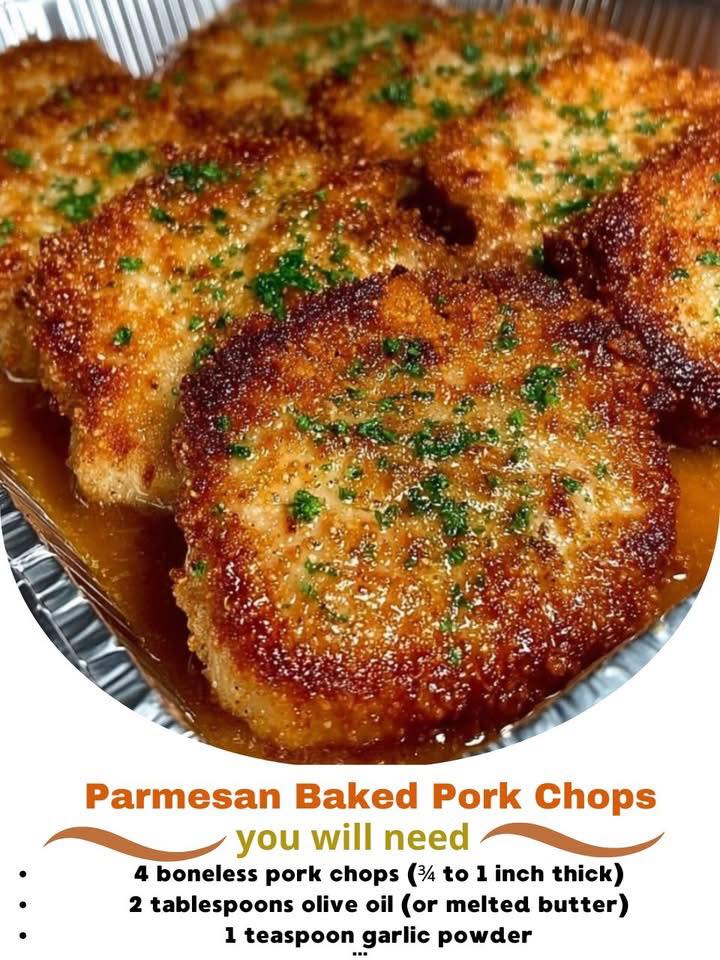
Parma-baked pork chops are a luxurious, restaurant-worthy dish that brings bold flavor, golden crispness, and tender juiciness to the everyday dinner table. Combining the savory umami depth of aged Parmesan cheese with the natural sweetness and firm texture of center-cut pork chops, this recipe transforms simple ingredients into an elegant, comforting main course. Whether served for a weeknight family supper or elevated for a special occasion with a side of garlic mashed potatoes and roasted asparagus, Parmesan baked pork chops deliver consistent excellence—crispy on the outside, moist and flavorful within, and finished with a nutty, caramelized crust that’s impossible to resist.
The History
While pork chops have been a staple in European and American kitchens for centuries—dating back to medieval feasts and colonial hearth cooking—the modern iteration of Parmesan-baked pork chops is a product of mid-20th-century American culinary innovation. The rise of convenience-oriented home cooking post-World War II, coupled with the growing availability of pre-grated Parmesan (popularized by brands like Kraft in the 1940s), paved the way for quick, oven-baked preparations that emphasized texture and rich, cheesy appeal. Italian-American home cooks—drawing from traditions of scaloppine al formaggio and cotoletta alla milanese—adapted classic breading techniques using Parmigiano-Reggiano instead of breadcrumbs alone, adding depth and saltiness without heaviness. Over time, food magazines like Bon Appétit and television chefs such as Julia Child and later Ina Garten helped cement the technique: a triple-layer coating (flour–egg–cheese), pan-searing for fond development, then finishing in the oven for even doneness. Today, it stands as a beloved hybrid dish—rooted in Old World craftsmanship but perfected through American pragmatism, accessibility, and love of golden, cheesy indulgence.
Ingredients Breakdown
Every exceptional Parmesan-baked pork chop begins with intentionality—not just in selection, but in understanding how each component functions:
- Pork Chops: Bone-in, center-cut rib or loin chops (¾” to 1¼” thick) are ideal. Bone-in adds moisture retention and richer flavor during baking; thickness ensures even cooking without drying out. Look for chops with creamy-white fat marbling and a rosy-pink hue—avoid grayish or overly wet cuts, which indicate age or poor handling.
- All-Purpose Flour: Acts as the foundational “glue” layer. It lightly coats the meat, absorbs surface moisture, and creates a subtle barrier that helps the egg adhere. Opt for unbleached flour for cleaner flavor and better browning.
- Eggs: Fresh, large eggs at room temperature yield optimal binding. The proteins coagulate during searing, forming a stable matrix for the cheese crust. For extra richness, add a teaspoon of Dijon mustard or a splash of whole milk to the beaten eggs—this enhances emulsification and adds subtle tang.
- Grated Parmesan Cheese: This is non-negotiable—use authentic, freshly grated Parmigiano-Reggiano, not pre-shredded “Parmesan-style” blends. Pre-shredded cheeses contain anti-caking agents (like cellulose) that inhibit melting and browning, resulting in a gritty, pale crust. A microplane yields the finest, most adhesive texture; a box grater works well too. Expect ½ cup finely grated per 4 chops.
- Panko Breadcrumbs (Optional but Recommended): Though not traditional in all versions, many top-rated recipes incorporate a 50/50 blend of Parmesan and Japanese panko. Panko’s airy, flaky structure crisps up dramatically while allowing the cheese to caramelize fully—not just melt. If used, choose plain, unseasoned panko and pulse briefly in a food processor with the cheese for uniform integration.
- Seasonings: Kosher salt and freshly ground black pepper are essential—but don’t stop there. Garlic powder (not garlic salt) contributes deep, roasted notes without burning. Onion powder adds savory-sweet complexity. A whisper of smoked paprika or dried oregano lends aromatic nuance without overpowering. Always season each layer: lightly salt the chops before flouring, season the flour itself, and enhance the egg wash with herbs and spices.
- High-Smoke-Point Oil: Avocado oil, refined olive oil, or grapeseed oil are ideal for searing—each withstands temperatures above 400°F without smoking or imparting bitterness. Butter may be added *after* searing for finishing richness, but never used alone for initial browning due to its low smoke point.
- Liquid for Deglazing & Pan Sauce (Optional Enhancement): While not part of the crust, a splash of dry white wine (Sauvignon Blanc or Pinot Grigio), low-sodium chicken broth, or even fresh lemon juice added to the hot pan after removing chops builds incredible depth—and transforms leftover fond into a glossy, herb-flecked sauce that elevates the entire dish.
Step-by-Step Recipe
- Prep the Pork: Pat chops *thoroughly* dry with paper towels—moisture is the enemy of adhesion and browning. Trim excess fat if desired (leave a thin border for flavor), then gently pound thicker edges to even thickness using a meat mallet wrapped in parchment (avoid tearing). Let sit uncovered at room temperature for 20–30 minutes to ensure even cooking.
- Set Up Your Breading Station: Use three shallow dishes: (1) Flour + 1 tsp each kosher salt and black pepper + ½ tsp garlic powder + ¼ tsp onion powder; (2) Eggs + 1 tbsp Dijon mustard + 1 tbsp whole milk + pinch of cayenne; (3) Finely grated Parmesan (and optional panko blend) + ½ tsp dried thyme + zest of ½ lemon. Arrange left-to-right in order of use.
- Bread Methodically: Dredge each chop in flour—shake off excess. Dip fully into egg mixture—let excess drip off. Press firmly into cheese mixture, coating both sides evenly; gently press again to ensure full adherence. Place on a wire rack over parchment—not a plate—to prevent sogginess and allow airflow.
- Chill for Adhesion: Refrigerate breaded chops for 15–20 minutes. This critical step firms the coating, prevents slippage during searing, and improves crust integrity in the oven.
- Preheat & Sear: Heat 2 tbsp high-smoke-point oil in a heavy, oven-safe skillet (cast iron or stainless steel) over medium-high heat until shimmering (~375°F). Add chops without crowding—sear 2–3 minutes per side until deeply golden brown and crust is set. Resist moving them—let the crust form fully.
- Finish in Oven: Transfer skillet directly to a preheated 400°F oven. Bake for 8–12 minutes depending on thickness, until internal temperature reaches 145°F (measured in thickest part with an instant-read thermometer). Rest 5 minutes before serving—this allows juices to reabsorb and prevents dryness.
- Optional Pan Sauce: Remove chops; place skillet back on stove over medium heat. Add ¼ cup dry white wine, scrape vigorously to lift browned bits. Simmer 1 minute, then stir in ½ cup warm chicken broth, 1 tbsp cold butter, and 1 tsp fresh parsley. Reduce until slightly thickened, about 2–3 minutes.
Tips
- Temperature Control Is Everything: Too-hot oil causes premature browning and raw interiors; too-cool oil leads to greasy, soggy crusts. Use an infrared thermometer or test with a wooden chopstick—if bubbles form steadily around it, you’re ready.
- Don’t Skip the Rest: Cutting into chops immediately releases up to 30% of their juices. Resting on a warm plate (not cold ceramic) for 5 minutes ensures maximum tenderness and flavor retention.
- Double-Dip for Extra Crunch: For ultra-crisp results, repeat the egg-and-cheese step after the first coating dries slightly—creates a thicker, shatteringly crisp crust.
- Use a Wire Rack for Even Airflow: When chilling or after baking, avoid stacking or placing on paper towels—steam softens the bottom crust. A wire rack keeps all surfaces crisp.
- Toast Your Cheese (Optional Pro Tip): Spread grated Parmesan on a parchment-lined sheet and bake at 325°F for 4–6 minutes until fragrant and lightly golden. Cool completely before mixing into breading—adds toasted nuttiness and improves browning.
- Batch Cooking? Freeze Unbaked: Breaded chops freeze beautifully for up to 3 months. Place on a parchment-lined tray, freeze solid, then transfer to airtight bags. Bake from frozen—add 5–7 minutes to oven time and increase temp to 425°F for first 5 minutes to jumpstart crust formation.
- Thermometer Not Optional: Visual cues deceive—especially with thicker chops. An instant-read digital thermometer is the only reliable way to achieve perfect doneness every time. Insert horizontally from the side, avoiding bone.
- Rotate Your Skillet: In gas ovens, hotspots vary. Halfway through baking, rotate the skillet 180° for even browning and consistent crust development.
Variations and Customizations
This versatile canvas welcomes endless creativity—without compromising structural integrity or flavor harmony:
- Herb-Crusted: Fold 2 tbsp finely chopped fresh rosemary, thyme, and sage into the cheese mixture. Add 1 tsp lemon zest for brightness.
- Spicy Arrabbiata Style: Mix 1 tsp crushed red pepper flakes and ½ tsp fennel seeds into the flour; finish with a drizzle of Calabrian chili oil.
- Lemon-Pepper Parmesan: Replace black pepper in flour with coarsely cracked Tellicherry peppercorns; add 1 tbsp lemon zest to egg wash and garnish with lemon wedges.
- Prosciutto-Wrapped: Wrap each pounded chop with a thin slice of dry-cured prosciutto before breading—adds salt-kissed richness and delicate chew.
- Gluten-Free Adaptation: Substitute almond flour or gluten-free panko for all-purpose flour and breadcrumbs. Ensure certified GF Parmesan (some brands use wheat-based anti-caking agents).
- Dairy-Free Option: Use nutritional yeast blended with crushed rice crackers and toasted sunflower seeds as a Parmesan analog. Add miso paste to egg wash for umami depth.
- Smoky Chipotle Version: Blend 1 tsp chipotle powder + ½ tsp smoked paprika into cheese mixture; serve with avocado crema and pickled red onions.
- Bruschetta-Topped: After baking, top chops with fresh tomato-basil bruschetta and a drizzle of aged balsamic glaze for sweet-acid contrast.
- Breakfast Chop: Serve with fried eggs, crispy hash browns, and a side of maple-sage gravy for a decadent brunch centerpiece.
- Meal-Prep Friendly: Bake double the batch, cool completely, vacuum-seal, and refrigerate for up to 4 days. Reheat in air fryer at 375°F for 6–8 minutes—crispness fully restores.
Health Considerations and Nutritional Value
A 6-ounce (170g) serving of Parmesan-baked pork chop (made with lean loin chops, minimal oil, and authentic Parmigiano-Reggiano) delivers approximately:
- Calories: ~380–420 kcal
- Protein: 48–52g (excellent complete protein source—contains all 9 essential amino acids)
- Fat: 18–22g (mostly unsaturated; includes heart-healthy monounsaturated fats from olive oil and natural pork fat)
- Saturated Fat: ~6–7g (well within daily limits for most adults)
- Sodium: ~520–650mg (naturally occurring sodium from pork and Parmesan; easily reduced by omitting added salt in flour and using low-sodium broth in sauce)
- Calcium: ~320mg (25% DV—thanks to bioavailable calcium in aged cheese)
- Zinc & Selenium: High levels support immune function and antioxidant activity
- Vitamin B12 & Niacin: Critical for energy metabolism and nervous system health
Key Health Notes:
- Pork Quality Matters: Choose pasture-raised or heritage-breed pork when possible—it contains higher levels of omega-3s, vitamin E, and conjugated linoleic acid (CLA), linked to anti-inflammatory benefits.
- Cheese Choice Impacts Nutrition: Authentic Parmigiano-Reggiano is naturally lactose-free, low in carbs (<0.1g per serving), and rich in bioactive peptides shown to support blood pressure regulation.
- Breading Alternatives: For lower-carb/keto diets, replace flour with crushed pork rinds or almond flour; skip panko entirely.
- Portion Awareness: While nutrient-dense, pork chops are calorie-concentrated. Pair with voluminous non-starchy vegetables (roasted broccoli, sautéed spinach, zucchini ribbons) to balance the plate nutritionally and visually.
- Consider the Cooking Medium: Using avocado oil instead of butter reduces saturated fat while boosting vitamin E and oleic acid intake.
- Food Safety Reminder: Always cook pork to a minimum internal temperature of 145°F followed by a 3-minute rest—per USDA guidelines—to eliminate pathogens while preserving juiciness.
Ingredients
- 4 bone-in center-cut pork loin or rib chops (¾” to 1¼” thick, ~6 oz each)
- ½ cup all-purpose flour (unbleached preferred)
- 1½ tsp kosher salt, divided
- 1 tsp freshly ground black pepper, divided
- 1 tsp garlic powder
- ½ tsp onion powder
- 3 large eggs
- 1 tbsp Dijon mustard
- 1 tbsp whole milk or heavy cream
- 1 pinch cayenne pepper (optional)
- 1¼ cups finely grated Parmigiano-Reggiano (do NOT substitute pre-shredded)
- ½ cup plain panko breadcrumbs (optional but recommended for crunch)
- 1 tsp dried thyme or oregano
- Zest of ½ lemon
- 3 tbsp high-smoke-point oil (avocado, grapeseed, or refined olive oil)
- For Pan Sauce (Optional): ¼ cup dry white wine, ½ cup low-sodium chicken broth, 1 tbsp cold unsalted butter, 1 tbsp fresh chopped parsley
Directions
- Place pork chops on a clean cutting board. Pat *extremely* dry with paper towels—every drop matters. Gently pound any thick edges to even thickness using a meat mallet covered in parchment paper. Season both sides lightly with ½ tsp kosher salt.
- In a shallow dish, whisk together flour, remaining 1 tsp kosher salt, ½ tsp black pepper, garlic powder, and onion powder. In a second dish, whisk eggs, Dijon, milk, cayenne, and remaining ½ tsp black pepper until frothy. In a third dish, combine grated Parmesan, panko (if using), thyme, and lemon zest.
- Dredge each chop thoroughly in flour mixture, shaking off excess. Dip fully into egg mixture, letting excess drip back into bowl. Press firmly into cheese mixture—coat both sides evenly, pressing again to secure. Place on a wire rack set over parchment-lined baking sheet.
- Refrigerate uncovered for 15–20 minutes to set coating.
- Preheat oven to 400°F. Heat oil in a large oven-safe skillet (cast iron preferred) over medium-high heat until shimmering and just beginning to ripple (~375°F).
- Carefully place chops in hot skillet—do not crowd. Sear undisturbed for 2½–3 minutes until deep golden brown and crust is firmly set. Flip and sear opposite side for same time.
- Immediately transfer skillet to preheated oven. Bake for 8–12 minutes, rotating skillet halfway, until internal temperature reads 145°F when measured in thickest part (avoiding bone).
- Remove chops to a warm plate, tent loosely with foil, and rest 5 minutes.
- (Optional sauce) Return skillet to stovetop over medium heat. Add white wine, scraping vigorously to lift browned bits. Simmer 1 minute. Add broth, simmer 2 more minutes. Whisk in cold butter until glossy. Stir in parsley. Taste and adjust seasoning.
- Serve chops topped with pan sauce, alongside roasted vegetables, garlic mashed potatoes, or a bright arugula salad with lemon vinaigrette.
FAQ
- Can I use boneless pork chops?
- Yes—but choose thick-cut (at least 1″) boneless loin chops and reduce oven time by 2–3 minutes. Bone-in is strongly recommended for superior moisture and flavor.
- Why does my crust fall off?
- Most commonly due to insufficient drying, skipping the chill step, overcrowding the pan (causing steam), or moving chops too soon during searing. Also verify your cheese is freshly grated—not pre-shredded.
- Can I make these ahead of time?
- Absolutely. Bread chops up to 24 hours in advance; store covered on a wire rack in the fridge. Or freeze unbaked for up to 3 months (see Tips section). Never refrigerate *after* baking—reheating compromises texture.
- What’s the best side dish pairing?
- Classic pairings include creamy polenta, lemon-herb roasted potatoes, sautéed Swiss chard with garlic, or a shaved fennel and orange salad. For low-carb: cauliflower mash or grilled asparagus.
- Is Parmesan vegetarian?
- Traditional Parmigiano-Reggiano uses animal-derived rennet. Look for labels specifying “vegetarian rennet” or certified vegetarian Parmesan if required. Most supermarket “Parmesan-style” cheeses use microbial rennet.
- Can I air-fry these instead of baking?
- Yes—with adjustments. Preheat air fryer to 400°F. Lightly spray breaded chops with oil. Cook 10–14 minutes, flipping halfway, until 145°F internally. Crispness is excellent—but pan sauce won’t be possible unless made separately.
- How do I keep leftovers crispy?
- Store chilled in a single layer on parchment in an airtight container. Reheat in air fryer (375°F for 6–8 min) or conventional oven (400°F on wire rack for 10–12 min). Avoid microwaving—it steams the crust.
- Can I use other cheeses?
- You can experiment—but Parmigiano-Reggiano is irreplaceable for its crystalline texture, umami intensity, and browning capacity. Asiago or aged Gouda work as partial substitutes (50/50 blend), but avoid mozzarella, ricotta, or soft cheeses—they burn or weep.
- What wine pairs best?
- A medium-bodied Italian red like Barbera d’Alba or Chianti Classico complements the richness. For white lovers, try a fuller Pinot Grigio or unoaked Chardonnay with bright acidity.
- My chops came out dry—what went wrong?
- Overcooking is the #1 cause. Use a thermometer religiously. Other culprits: chops too thin (<½"), skipping the rest period, or using very lean cuts without adequate fat cap or marbling.
Summary
Parma-baked pork chops are a masterclass in simplicity elevated—where premium ingredients, precise technique, and patient attention converge to create a dish that’s simultaneously rustic and refined, hearty and elegant.
From the crackle of its golden Parmesan crust to the succulent, rosy-pink tenderness within, every bite celebrates the alchemy of heat, time, and tradition—making it not just a meal, but a memorable culinary experience worthy of any table.