Introduction
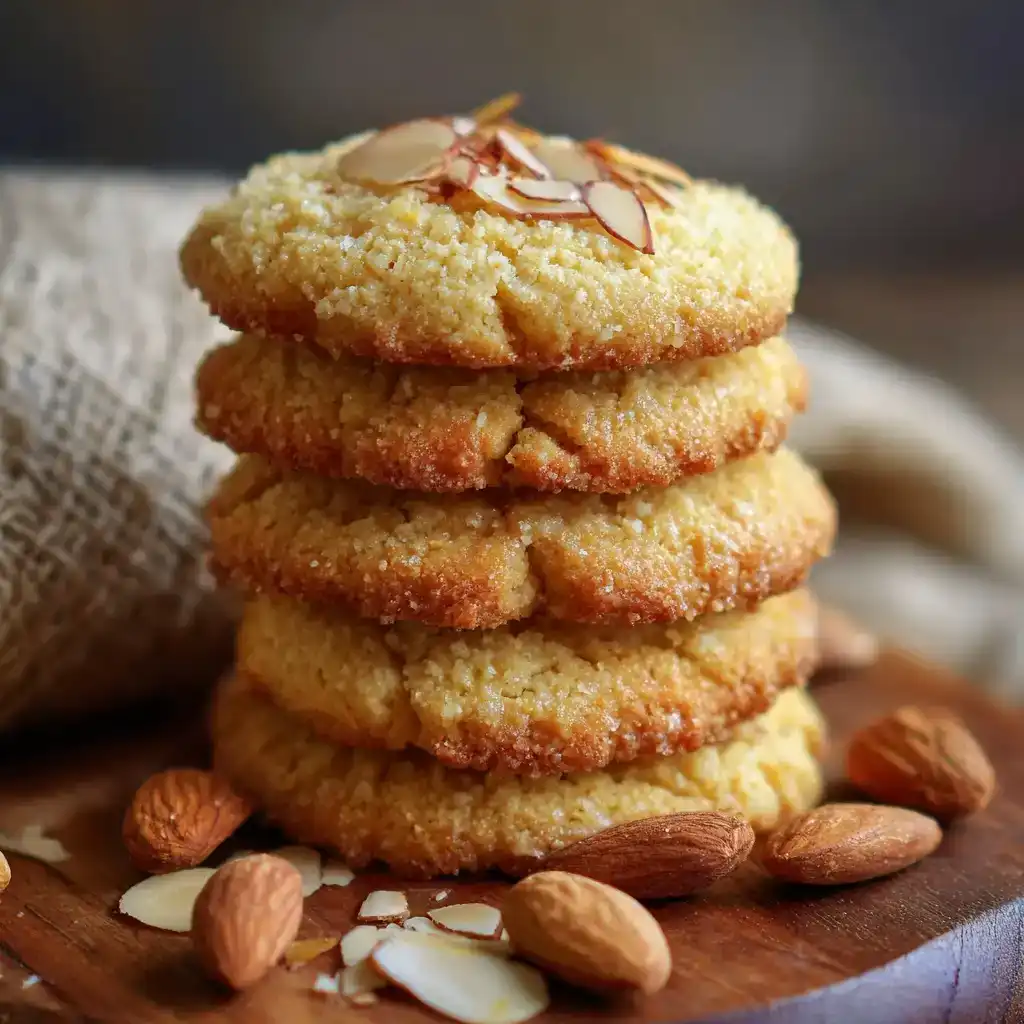
Orange Almond Cookies are a luminous marriage of bright citrus zest and rich, nutty warmth—a timeless confection that evokes sun-drenched orchards, cozy holiday kitchens, and the quiet elegance of European patisseries. With their tender, slightly crumbly texture, delicate floral-citrus aroma, and subtle marzipan-like depth from almond flour, these cookies strike a perfect balance between refreshing and indulgent. They’re neither overly sweet nor aggressively spiced—just beautifully nuanced, making them equally at home on a spring brunch table, a Christmas cookie platter, or as an everyday treat with afternoon tea. Whether you’re a seasoned baker seeking refined simplicity or a novice drawn to approachable yet impressive results, Orange Almond Cookies offer both accessibility and artistry in every golden-edged bite.
The History
The origins of Orange Almond Cookies are deeply interwoven with centuries-old Mediterranean and Middle Eastern baking traditions, where citrus and almonds have long been cherished for both flavor and symbolic significance. In Moorish Spain (Al-Andalus), bakers combined bitter orange blossom water, ground almonds, and honey to create delicate pastries like masa podrida—early precursors to marzipan-based sweets. Later, Sephardic Jewish communities carried these techniques across North Africa and into Ottoman territories, adapting recipes to local ingredients and customs. By the 17th century, candied orange peel and imported bitter orange oil appeared in elite European confections, particularly in Italy’s Liguria and Sicily—regions famed for their fragrant Tarocco and Moro blood oranges. The modern American iteration gained traction in the mid-20th century, buoyed by the rise of accessible almond flour, the popularity of citrus-forward baking during postwar culinary experimentation, and the influence of California’s burgeoning citrus and almond industries. Today, Orange Almond Cookies exist in countless regional dialects—from Moroccan ghriba bil burtuqal (orange-scented almond cookies dusted with powdered sugar) to Scandinavian appelsinmandelkaker, often baked for Lucia Day—and remain a beloved emblem of cross-cultural culinary dialogue.
Ingredients Breakdown
Every ingredient in this recipe plays a precise, intentional role—no filler, no afterthought. Understanding their functions deepens both control and creativity in the kitchen:
- All-purpose flour: Provides essential gluten structure for lift and cohesion without toughness; balanced with almond flour to prevent density.
- Blanched almond flour (not almond meal): Finely ground, skinless almonds lend richness, moisture retention, and that signature velvety crumb—critical for authenticity. Almond meal’s coarser grind and residual skins would yield grittiness and muted flavor.
- Granulated sugar: Not only sweetens but also aids in creaming, contributes to spread control, and promotes light browning via caramelization.
- Brown sugar (light or dark): Adds molasses-derived moisture, acidity (to tenderize gluten), and deeper caramel notes that complement orange’s brightness.
- Unsalted butter (room temperature): The backbone of flavor and texture—its milk solids brown gently in the oven for nutty complexity, while its fat coats flour proteins to inhibit gluten overdevelopment.
- Fresh orange zest (preferably organic): Contains volatile aromatic oils (limonene, myrcene, pinene) concentrated in the flavedo—the colorful outer peel. Never substitute dried zest; it lacks nuance and can taste dusty.
- Freshly squeezed orange juice: Adds acidity to balance sweetness and activate leavening; its subtle tartness lifts the entire profile. Avoid bottled juice—it oxidizes rapidly and loses vibrancy.
- Pure vanilla extract: Enhances and rounds out citrus and almond notes with warm, woody undertones—not a dominant flavor, but a vital harmonizer.
- Almond extract (pure, not imitation): A highly concentrated essence that amplifies the natural benzaldehyde compounds in almonds—use sparingly (¼ tsp is optimal) to avoid medicinal bitterness.
- Baking soda: Reacts with the orange juice’s citric acid to produce carbon dioxide, ensuring gentle lift and tenderness—especially important in low-gluten almond-heavy doughs.
- Sea salt (fine): Crucial for flavor modulation—it doesn’t make the cookies salty, but rather heightens sweetness, sharpens citrus, and deepens almond richness.
- Optional: Toasted sliced almonds: For textural contrast and visual elegance—added just before baking to retain crunch and toasted aroma.
Step-by-Step Recipe
- Prep & Preheat: Position oven racks in upper and lower thirds. Line two large baking sheets with parchment paper or silicone baking mats. Preheat oven to 350°F (175°C). Toast sliced almonds (if using) on a dry skillet over medium-low heat for 4–6 minutes, stirring constantly until fragrant and lightly golden; cool completely.
- Zest & Juice: Using a microplane grater, zest 2 large navel or Valencia oranges (about 2 tbsp finely grated zest). Then juice the zested oranges to yield exactly 2 tbsp fresh juice—strain to remove pulp and seeds.
- Cream Butter & Sugars: In a large bowl of a stand mixer fitted with paddle attachment (or using a hand mixer), beat unsalted butter, granulated sugar, and brown sugar on medium-high speed for 3–4 minutes until pale, fluffy, and noticeably increased in volume. Scrape bowl thoroughly with a flexible spatula.
- Incorporate Wet Flavors: Reduce speed to low. Add orange zest, orange juice, vanilla extract, and almond extract. Mix just until combined (~20 seconds). Stop and scrape bowl.
- Dry Ingredients Assembly: In a separate medium bowl, whisk together all-purpose flour, almond flour, baking soda, and fine sea salt until fully homogenized and aerated—no lumps, no streaks.
- Gradual Dry-to-Wet Incorporation: With mixer on low speed, add dry ingredients in three equal portions, mixing only until each addition is *just* incorporated—do not overmix. After final addition, fold once or twice by hand with spatula to ensure no dry pockets remain at bottom.
- Chill for Structure & Flavor Development: Cover bowl tightly with plastic wrap and refrigerate dough for *at least 60 minutes*, preferably 90–120 minutes. Chilling solidifies butter (preventing overspread), hydrates flours evenly, and allows flavors to meld—zest oils fully infuse the fat matrix.
- Portion & Shape: Scoop chilled dough using a 1.5-tablespoon cookie scoop (≈30g per cookie). Roll each portion firmly between palms into smooth, taut balls. Gently flatten each ball to ½-inch thickness (≈2 inches diameter)—they will spread moderately. Place 2 inches apart on prepared sheets. Press 3–4 cooled toasted almonds onto top of each cookie, gently pressing to adhere.
- Bake with Precision: Bake one sheet at a time in preheated 350°F oven for 11–13 minutes—rotating pan front-to-back at 6-minute mark—until edges are delicately golden, centers appear set but still soft to gentle touch, and bottoms are lightly bronzed. Avoid overbaking: cookies continue to firm as they cool.
- Cool & Set: Let cookies rest on baking sheet for 5 full minutes—this allows internal structure to stabilize. Then carefully transfer with thin spatula to wire cooling racks. Cool completely (≈30 minutes) before storing or serving. Texture evolves beautifully: crisp edges give way to a tender, melt-in-the-mouth center.
Tips
- Room Temperature Butter Is Non-Negotiable: Too cold = grainy, broken emulsion; too warm = greasy, flat cookies. Ideal temp is 65–68°F—soft enough to press an indentation with fingertip but still holding shape.
- Zest Before Juicing: Zesting a whole orange is infinitely easier—and yields more oil—than trying to zest a slippery, juice-slicked fruit.
- Weigh Your Flours: Volume measurements for almond flour vary wildly due to density and settling. For consistent results, use a digital scale: 1 cup all-purpose flour = 120g; 1 cup blanched almond flour = 96g.
- Don’t Skip the Chill: Warm dough spreads uncontrollably. If short on time, freeze scooped dough balls for 20 minutes—but never bake straight from fridge without chilling first.
- Rotate Pans Mid-Bake: Ovens have hot spots. Rotating ensures even browning and prevents one side from drying out.
- Underbake Slightly: Remove cookies when centers look *just* set—not dry or cracked. Carryover heat finishes the bake gently on the sheet.
- Cool Completely Before Storing: Trapped steam creates sogginess. Always cool on wire racks, never stacked or in airtight containers while warm.
- Revive Stale Cookies: Place in a 300°F oven for 3–4 minutes—they’ll regain crispness and fragrance.
- Freeze Dough, Not Baked Cookies: Portion and freeze raw dough balls up to 3 months. Bake straight from frozen—add 1–2 minutes to bake time. Baked cookies lose texture when frozen/thawed.
Variations and Customizations
These cookies serve as a radiant canvas for seasonal, cultural, and dietary expression—each variation preserving the core orange-almond harmony while offering delightful novelty:
- Lavender-Orange Almond: Add ½ tsp culinary-grade dried lavender buds (crushed fine) with dry ingredients. Complements orange’s floral top notes with herbal sophistication.
- Spiced Citrus Twist: Stir ¼ tsp ground cardamom + ⅛ tsp freshly grated nutmeg into dry mix. Warm, aromatic, and subtly exotic—ideal for fall and winter.
- Dark Chocolate-Dipped: Once fully cooled, dip half of each cookie in tempered 70% dark chocolate. Sprinkle with flaky sea salt or crushed pistachios before chocolate sets.
- Ginger-Orange Almond: Fold in 2 tbsp finely minced crystallized ginger (blotted dry) with wet ingredients. Adds chewy sweetness and gentle heat.
- Gluten-Free Version: Replace all-purpose flour with certified GF 1:1 baking blend (e.g., Bob’s Red Mill). Ensure almond flour is processed in GF facility. Add ¼ tsp xanthan gum if blend doesn’t include it.
- Vegan Adaptation: Use vegan butter (Miyoko’s or Earth Balance), flax egg (1 tbsp ground flax + 2.5 tbsp water, rested 5 min), and maple syrup (reduced to 1 tbsp) instead of brown sugar. Increase almond flour by 2 tbsp to absorb extra moisture.
- Orange Blossom Water Infusion: Replace 1 tsp orange juice with food-grade orange blossom water—adds ethereal, perfumed depth. Reduce zest slightly to avoid overpowering.
- Stuffed Surprise: Flatten dough ball, place ¼ tsp high-quality orange marmalade (seeds strained) in center, seal and re-roll. Creates a jammy, glossy core.
- Savory-Sweet Herb Variation: Add 1 tsp finely chopped fresh rosemary (needles only) with zest—unexpected, piney, and deeply memorable with aged cheddar.
Health Considerations and Nutritional Value
While inherently a treat, Orange Almond Cookies offer meaningful nutritional advantages over many conventional cookies—especially when made mindfully:
- Almond Flour Benefits: Naturally gluten-free, low-glycemic, and rich in vitamin E (a potent antioxidant), magnesium (supports nerve/muscle function), monounsaturated fats (heart-healthy), and plant-based protein (≈6g per ¼ cup). Its fiber content promotes satiety and digestive health.
- Citrus Power: Orange zest and juice deliver bioflavonoids (hesperidin, naringenin) linked to reduced inflammation and improved vascular function, plus immune-supportive vitamin C—though heat degrades some C, the phytonutrients remain stable.
- Reduced Refined Sugar Profile: With brown sugar contributing moisture and depth, total added sugar is kept purposefully moderate (≈9g per cookie vs. 12–15g in typical sugar cookies), especially when portion-controlled.
- No Artificial Additives: Homemade versions avoid preservatives, artificial colors, hydrogenated oils, and high-fructose corn syrup common in commercial cookies.
- Considerations: Still calorie-dense due to nuts and butter. Those with tree nut allergies must avoid entirely. For lower-fat options, replace 2 tbsp butter with unsweetened applesauce (may yield slightly cakier texture). Diabetics should monitor portions and pair with protein/fiber (e.g., Greek yogurt) to blunt glycemic response.
- Nutrition Facts (per cookie, based on 24 cookies per batch): Calories: 132 | Total Fat: 7.8g (1.9g saturated) | Carbohydrates: 14.2g (9.1g sugars, 0.8g fiber) | Protein: 2.1g | Sodium: 68mg | Vitamin E: 2.4mg (16% DV) | Magnesium: 22mg (5% DV).
Ingredients
- 1 cup (120g) all-purpose flour, spooned & leveled
- 1 cup (96g) blanched almond flour (fine, not meal)
- ½ tsp baking soda
- ¼ tsp fine sea salt
- ¾ cup (170g) unsalted butter, room temperature
- ½ cup (100g) granulated sugar
- ¼ cup (55g) light or dark brown sugar, packed
- 2 tbsp finely grated orange zest (2 large navel or Valencia oranges)
- 2 tbsp freshly squeezed orange juice (strained)
- 1½ tsp pure vanilla extract
- ¼ tsp pure almond extract
- ¼ cup (30g) sliced almonds, toasted and cooled (optional but recommended)
Directions
- Preheat oven to 350°F (175°C). Line two large baking sheets with parchment paper or silicone mats.
- In a medium bowl, whisk together all-purpose flour, almond flour, baking soda, and salt until uniform. Set aside.
- In a large bowl, beat butter, granulated sugar, and brown sugar with a stand mixer (paddle attachment) or hand mixer on medium-high for 3–4 minutes until light, fluffy, and pale.
- Reduce speed to low. Add orange zest, orange juice, vanilla, and almond extract. Mix just until combined, ~20 seconds. Scrape bowl.
- Add dry ingredients in three parts, mixing on low just until incorporated after each addition. Finish with a gentle fold by hand to ensure no dry flour remains.
- Cover bowl tightly and refrigerate dough for at least 60 minutes (up to 72 hours for enhanced flavor).
- Scoop 1.5-tbsp portions (≈30g), roll into smooth balls, then gently flatten to ½-inch thick circles. Place 2 inches apart on sheets. Press 3–4 toasted almonds onto each.
- Bake one sheet at a time for 11–13 minutes, rotating pan at 6 minutes, until edges are golden and centers look set.
- Cool on sheet for 5 minutes, then transfer to wire racks to cool completely.
FAQ
- Can I use almond meal instead of almond flour?
- No—almond meal contains skins and is coarser, resulting in gritty texture, muted flavor, and uneven spread. Blanched almond flour is essential for authentic tenderness and aroma.
- Why did my cookies spread too much?
- Likely causes: butter too warm, insufficient chilling, excess orange juice, or omitting baking soda. Ensure butter is cool-room-temp (65°F), chill dough ≥60 min, measure juice precisely, and verify baking soda is fresh (test in vinegar—if no fizz, replace).
- Can I make these ahead for holidays?
- Absolutely. Baked cookies stay fresh in an airtight container at room temp for 5 days, or freeze for up to 3 months. Dough balls freeze beautifully for 3 months—bake straight from frozen (+1–2 min).
- What if I don’t have a microplane?
- A fine box grater works, but press gently and avoid the bitter white pith. Never use a vegetable peeler—it removes too much pith and yields coarse, fibrous zest.
- Are these suitable for Passover?
- Yes—with certification: substitute matzo cake meal for all-purpose flour (same weight, 120g) and ensure almond flour is certified kosher for Passover. Omit baking soda (not kosher for Passover); rely on egg whites if adding for lift (though traditional versions are soda-leavened).
- Can I double the batch?
- Yes—but mix in two separate batches. Overloading the mixer bowl prevents proper creaming, leading to dense cookies. Also, chilling time remains critical—even doubled dough needs full 60+ minutes.
- Why do my cookies taste bitter?
- Over-zesting (including white pith) or using imitation almond extract (which contains coumarin) causes bitterness. Always zest only the colored part, and use only pure almond extract—never “imitation” or “almond flavor.”
- Can I add chocolate chips?
- Yes—fold in ⅓ cup finely chopped dark chocolate (60–70%) with dry ingredients. Avoid chips—they contain stabilizers that resist melting and create uneven texture.
- How do I prevent burnt bottoms?
- Use light-colored aluminum sheets (dark pans overheat), ensure oven is properly calibrated (use oven thermometer), and always bake on middle rack—not bottom. Double-parchment or silicone mats also insulate.
- Can I make these nut-free?
- Not authentically—the almond flour is structural and flavor-defining. For nut allergy, try sunflower seed flour (toasted, finely ground) + increase all-purpose flour to 1¼ cups—but expect different texture and flavor profile.
Summary
Orange Almond Cookies are a masterclass in balanced simplicity—where vibrant citrus zest, fragrant almond flour, and creamy butter converge into tender, golden-edged delights with sophisticated depth and refreshing brightness. They honor centuries of global baking wisdom while remaining effortlessly adaptable, nourishing, and unforgettable in both aroma and mouthfeel.
Whether baked for quiet reflection, festive celebration, or heartfelt gifting, these cookies deliver joy not through extravagance, but through the profound resonance of perfectly harmonized, thoughtfully sourced ingredients—each bite a sunlit pause in a busy world.