Introduction
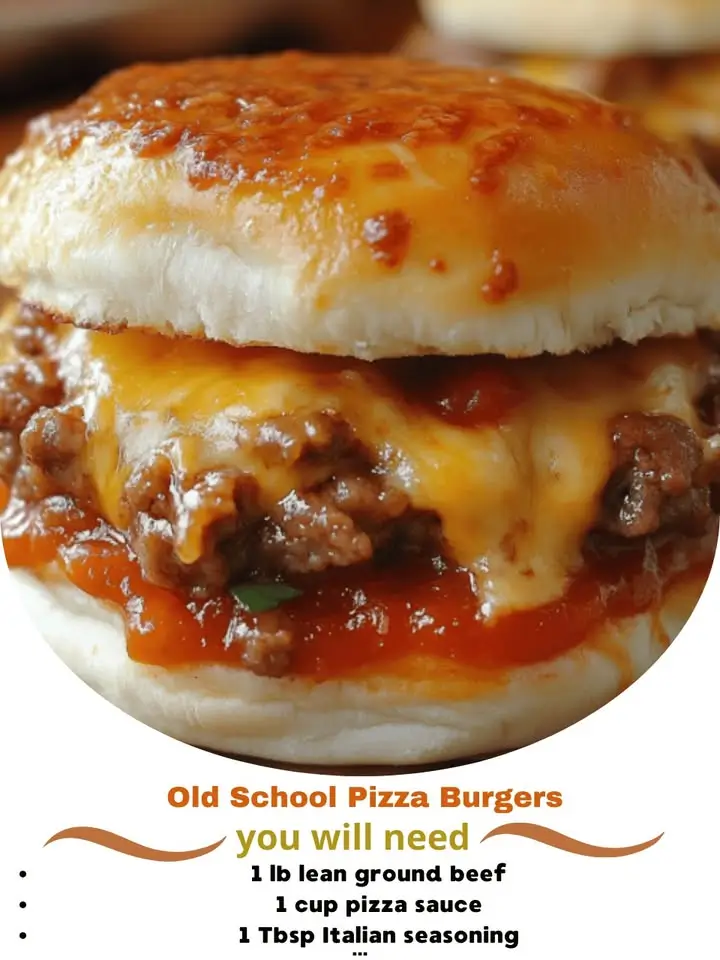
Old School Pizza Burgers are a nostalgic, crowd-pleasing fusion dish that bridges the beloved comfort of classic American hamburgers with the bold, cheesy, saucy charm of retro-style pizza—think 1970s–1980s pizzeria vibes: thick-cut pepperoni, tangy tomato sauce, melted mozzarella, and just a hint of oregano. Unlike modern gourmet hybrids or deconstructed versions, this recipe stays true to its roots—no artisanal sourdough buns, no truffle oil drizzles, no kale garnishes. It’s hearty, unapologetically indulgent, and built for weeknight ease without sacrificing flavor. Whether you’re feeding hungry teenagers after soccer practice, hosting a retro-themed game night, or simply craving something deliciously uncomplicated, Old School Pizza Burgers deliver big on taste, texture, and throwback satisfaction—all in one juicy, saucy, cheese-draped patty.
The History
The origins of the pizza burger aren’t found in Michelin-starred kitchens—but in school cafeterias, roadside diners, and home kitchens across America during the post-war boom of convenience cooking. While the exact genesis is unrecorded (and likely undocumented), food historians point to several cultural touchstones: the rise of frozen “pizza pockets” and “burger pizzas” in the late 1960s; the popularity of “pizza burgers” served at regional chains like Rally’s (introduced in 1985) and early iterations at Midwest drive-ins; and the widespread adoption of “hamburger helper”-style meals that encouraged creative, pantry-driven mashups. By the mid-1970s, home cooks began layering tomato sauce and shredded cheese directly onto grilled patties—often using canned tomato soup thinned with water as a quick sauce base—and topping them with sliced pepperoni before broiling. The term “Old School Pizza Burger” emerged organically decades later as a deliberate homage—distinguishing this no-frills, family-table staple from newer interpretations like “stuffed crust burgers” or “pizza slider stacks.” It represents more than a recipe—it’s a culinary time capsule of resourcefulness, flavor-forward simplicity, and the golden era of analog comfort food.
Ingredients Breakdown
Every ingredient in this recipe was chosen not only for flavor but for authenticity, function, and accessibility—the way it would’ve been sourced from a neighborhood A&P or corner grocery in 1978:
- Ground Beef (80/20 lean-to-fat ratio): The cornerstone. Not too lean (which dries out), not too fatty (which causes flare-ups). This ratio delivers juiciness, rich beefy depth, and enough rendered fat to carry seasonings and meld with sauce.
- Yellow Onion (finely minced): Adds sweetness and aromatic backbone—not raw sharpness, but gently caramelized depth when sautéed into the patty or used in the sauce base. White onions were common then, but yellow offer superior balance.
- Garlic Powder (not fresh): A deliberate old-school choice. Fresh garlic burns easily on the grill and can turn bitter; garlic powder integrates seamlessly, offers consistent savory umami, and was a pantry staple in every 1970s kitchen cabinet.
- Dried Oregano & Basil: Not fresh herbs—dried, slightly dusty, and generously sprinkled. These were the go-to for “Italian” flavor before the fresh herb revolution; they hold up to heat and lend that unmistakable, warm, earthy aroma associated with vintage pizza sauce.
- Canned Tomato Sauce (not crushed tomatoes or passata): Smooth, mildly sweet, lightly seasoned—think Hunt’s or Contadina brands. Its consistency clings to patties without sliding off, and its gentle acidity balances the beef’s richness. No need to simmer for hours: this is *fast* pizza flavor.
- Shredded Low-Moisture Mozzarella (not fresh mozzarella balls): The quintessential melt—stringy, creamy, golden-brown when broiled. Pre-shredded works perfectly here (despite the anti-cellulose bias of today’s food media); its drier texture ensures even melting and prevents sogginess.
- Thick-Cut Pepperoni (not spicy or cup-and-char): Round, flat, slightly greasy slices that curl at the edges when heated—releasing flavorful oil that pools around the cheese and seeps into the patty. This is the visual and textural hallmark of an authentic Old School Pizza Burger.
- Hamburger Buns (soft, slightly sweet, sesame-seed top): Think Wonder Bread or Nature’s Own—pillowy, tender, and engineered to hold up to sauce without disintegrating. Toasted lightly on the griddle or under the broiler for structure and subtle crunch.
- Worcestershire Sauce: A secret weapon borrowed from classic meatloaf recipes—adds umami depth, tang, and complexity without tasting “British.” Just a teaspoon per pound of beef makes a noticeable difference.
- Evaporated Milk (optional but recommended): A little-known retro trick: 1 tablespoon per pound of beef adds tenderness, creaminess, and helps bind the patty without breadcrumbs—keeping it dense yet succulent, just like diner-style burgers of yore.
Step-by-Step Recipe
- Prep the Patty Mixture: In a large bowl, combine 1 lb ground beef (80/20), ¼ cup finely minced yellow onion, 1 tsp garlic powder, 1 tsp dried oregano, ½ tsp dried basil, 1 tsp Worcestershire sauce, 1 tbsp evaporated milk, ½ tsp kosher salt, and ¼ tsp black pepper. Gently mix with your hands—just until combined. Overmixing compacts the meat and yields tough burgers. Divide into 4 equal portions (about 6 oz each) and shape into ¾-inch-thick patties. Use your thumb to make a shallow dimple in the center of each patty—this prevents puffing and ensures even cooking.
- Sear the Patties: Heat a cast-iron skillet or heavy-bottomed griddle over medium-high heat. Add 1 tsp neutral oil (like canola or vegetable). Once shimmering, place patties in the pan—not touching—and cook undisturbed for 3½ minutes. Flip carefully with a wide spatula and cook another 3 minutes for medium doneness (internal temp ~145°F). Resist pressing! Let juices settle for 1 minute off-heat.
- Build the Pizza Layer: While patties rest, warm ¾ cup canned tomato sauce in a small saucepan over low heat. Stir in ½ tsp sugar (to balance acidity) and a pinch of red pepper flakes (optional, for subtle heat—very optional in true old-school style). Spoon 2 tablespoons of warm sauce evenly over each patty. Top each with ¼ cup shredded low-moisture mozzarella, spreading gently to cover. Arrange 4–5 thick-slice pepperonis in a slight overlap over the cheese.
- Broil to Perfection: Position oven rack 4 inches below the broiler element. Line a baking sheet with foil and place patties on it. Broil on HIGH for 90–120 seconds—watch closely! You want the cheese fully melted, bubbly, and beginning to brown at the edges, and the pepperoni edges curled and glistening with oil. Do NOT walk away—broilers vary wildly, and this step takes precision, not patience.
- Toast the Buns: While broiling, split 4 soft hamburger buns and toast cut-side down in the same skillet (wiped clean) over medium heat for 1–2 minutes until golden and crisp. Alternatively, pop under the broiler for 30 seconds—just long enough to warm and add subtle crunch.
- Assemble with Care: Place each hot, saucy, cheesy, pepperoni-topped patty onto a toasted bun bottom. Drizzle with an extra ½ tsp warm tomato sauce over the top (the “pizza finish”), then crown with a final light sprinkle of dried oregano. Cap with the top bun and serve immediately—no waiting, no resting. This is meant to be eaten while steam rises and cheese stretches.
Tips
- Chill Before Cooking: After shaping patties, refrigerate them for 20–30 minutes. Cold meat holds its shape better on the grill or skillet and prevents excessive spreading.
- Season Generously—But Not Too Early: Salt draws out moisture. If mixing ahead, add salt only in the last 5 minutes before cooking—or incorporate it directly into the meat mixture right before shaping.
- Don’t Skip the Dimple: That thumbprint isn’t folklore—it’s food science. It counteracts natural contraction, ensuring flat, even patties that hold sauce and toppings uniformly.
- Warm Sauce = Better Adhesion: Cold sauce slides right off hot patties. Always warm your tomato sauce before applying—it creates a tacky base so cheese sticks instead of sliding.
- Broiler Timing Is Everything: Set a timer. Start checking at 75 seconds. If your broiler has “low” and “high” settings, use high—but know your appliance. A gas broiler heats faster than electric; convection broilers may require reducing time by 20%.
- Pepperoni Placement Matters: Lay slices flat—not stacked—so they render evenly and curl beautifully. Overlapping slightly encourages those iconic “cupped” edges that pool savory oil.
- Toast Buns in the Same Pan: After removing patties, wipe the skillet, add a tiny bit of butter or reserved beef fat, and toast buns cut-side down. The residual beefy, garlicky, oregano-scented fond infuses the bread with unforgettable depth.
- Serve on Warmed Plates: Especially important for maintaining that ideal cheese-pull temperature. Stack plates in a low oven (200°F) for 5 minutes before serving.
- Leftovers? Repurpose Smart: Cold pizza burgers make excellent chopped salad bases (toss with romaine, cherry tomatoes, red onion, and Italian vinaigrette) or get blitzed into “pizza burger crumbles” for omelets or baked potatoes.
Variations and Customizations
While the core formula remains sacred, Old School Pizza Burgers welcome thoughtful, era-appropriate tweaks—none of which betray their roots:
- The “Diner Deluxe”: Add a thin slice of American cheese beneath the mozzarella for extra melt and nostalgic tang—mimicking the grilled cheese–burger hybrids served at roadside stands.
- The “TV Dinner Twist”: Swap half the beef for cooked, crumbled Italian sausage (mild, not fennel-forward) for deeper spice and rustic texture—just like the frozen combo meals of the ’70s.
- The “Pizza Hut Homage”: Top with 2–3 thin slices of green bell pepper and a single black olive (pitted and halved) before broiling—channeling the veggie-loaded frozen pizzas that defined childhood freezer sections.
- The “Coney Island Nod”: Replace tomato sauce with a spoonful of chili (beanless, Cincinnati-style if possible) and top with diced white onion and yellow mustard—blending two American classics in one bite.
- The “Breakfast Pizza Burger”: Cook patties as directed, then top with a fried egg (over-easy), a slice of provolone, and a sprinkle of everything bagel seasoning—served on a toasted kaiser roll. Inspired by 1980s diner “breakfast specials.”
- The “No-Oven Option”: Skip the broiler entirely. After saucing and cheesing, cover the skillet tightly with a lid and cook over low heat for 2–3 minutes until cheese melts. Then arrange pepperoni on top and let sit, covered, for 60 seconds to gently render.
- The “Grill Master Edition”: Cook patties on a charcoal grill for smoky nuance. Finish with cheese and pepperoni directly over indirect heat, covered, for 2 minutes—then move over direct flame for 30 seconds to blister the pepperoni.
- The “Kid-Approved Mild”: Omit red pepper flakes and garlic powder; double the oregano and add 1 tsp grated Parmesan to the cheese blend. Serve with mild ranch dressing for dipping—because every ’70s lunchbox had a blue plastic dip cup.
Health Considerations and Nutritional Value
An Old School Pizza Burger is proudly a treat—not a health food—and that’s part of its honest, comforting charm. However, understanding its nutritional profile empowers mindful enjoyment:
- Calories & Macronutrients (per burger, approx.): ~580–640 kcal | Protein: 32–36g | Total Fat: 34–38g (13–15g saturated) | Carbohydrates: 32–36g (5–7g sugars, mostly from sauce and bun) | Fiber: 2g | Sodium: ~920–1,100mg (varies by brand of sauce, cheese, and bun).
- Beef Choice Impact: Swapping 80/20 for 90/10 reduces fat by ~6g and calories by ~55 per burger—but also sacrifices juiciness and traditional mouthfeel. For a balanced compromise, try 85/15 with added evaporated milk for tenderness.
- Sodium Savvy: Canned tomato sauce and processed cheese contribute most sodium. Opt for “no-salt-added” tomato sauce and reduced-sodium mozzarella shreds to trim ~220mg per serving—without compromising flavor, thanks to the oregano, garlic powder, and Worcestershire.
- Fiber Boost (Without Going Modern): Choose buns labeled “whole grain” (not “multigrain” or “wheat”)—many retro-style brands now offer whole-grain versions with similar softness and toastability. Or, line the bottom bun with a thin layer of sautéed spinach (just 1 tbsp)—a stealthy nod to nutrition that won’t clash with the flavor profile.
- Gluten Considerations: Traditional buns contain gluten. For a faithful yet accommodating version, use certified gluten-free buns made with rice or sorghum flour—many brands now replicate that pillowy, slightly sweet texture remarkably well.
- What’s *Not* in This Recipe (and Why): No artificial colors (despite vintage appeal), no high-fructose corn syrup-laden sauces (opt for tomato sauce sweetened only with cane sugar or naturally occurring fruit sugars), no MSG—relying instead on layered umami from beef, Worcestershire, garlic powder, and aged cheese.
- Mindful Pairings: Balance the meal with a simple side salad dressed in lemon juice and olive oil—not creamy dressings—to lighten the palate. A tall glass of cold, unsweetened iced tea or sparkling water with lemon complements the richness without adding sugar.
Ingredients
- 1 pound (450g) ground beef (80% lean / 20% fat)
- ¼ cup finely minced yellow onion
- 1 teaspoon garlic powder (not fresh garlic)
- 1 teaspoon dried oregano
- ½ teaspoon dried basil
- 1 teaspoon Worcestershire sauce
- 1 tablespoon evaporated milk (optional but highly recommended)
- ½ teaspoon kosher salt
- ¼ teaspoon freshly ground black pepper
- ¾ cup (180ml) canned tomato sauce (smooth, not crushed)
- ½ teaspoon granulated sugar
- Pinch of red pepper flakes (optional)
- 1 cup (100g) shredded low-moisture mozzarella cheese
- 16–20 slices thick-cut pepperoni (about 4 oz / 115g)
- 4 soft hamburger buns (sesame or plain)
- 1 teaspoon neutral oil (canola, vegetable, or grapeseed) for cooking
- Extra dried oregano for garnish
Directions
- In a large mixing bowl, combine ground beef, minced onion, garlic powder, dried oregano, dried basil, Worcestershire sauce, evaporated milk, salt, and black pepper. Gently mix with your hands just until evenly incorporated—do not overwork. Divide into 4 equal portions and shape into ¾-inch-thick patties. Press a shallow dimple into the center of each patty with your thumb.
- Refrigerate patties for 20–30 minutes (optional but recommended for firmness).
- Heat a large cast-iron skillet or griddle over medium-high heat. Add oil and swirl to coat. Once shimmering, add patties (do not overcrowd) and cook undisturbed for 3½ minutes.
- Carefully flip patties using a wide, thin spatula. Cook for an additional 3 minutes for medium doneness (or until internal temperature reaches 145°F). Transfer to a wire rack or plate and let rest for 1 minute.
- Meanwhile, in a small saucepan, warm tomato sauce over low heat. Stir in sugar and red pepper flakes (if using). Keep warm.
- Preheat broiler on HIGH. Line a baking sheet with aluminum foil.
- Spoon 2 tablespoons warm tomato sauce over each rested patty. Evenly distribute ¼ cup mozzarella over sauce. Arrange 4–5 pepperoni slices in a circular, slightly overlapping pattern over cheese.
- Place patties on prepared baking sheet. Broil 4 inches from heat source for 90–120 seconds—until cheese is fully melted, bubbling, and lightly golden at edges, and pepperoni curls at tips.
- While broiling, toast buns: Wipe skillet clean, return to medium heat, add a tiny bit of butter or reserved beef fat, and toast cut sides of buns for 1–2 minutes until golden.
- Immediately assemble: Place each hot, saucy, cheesy, pepperoni-topped patty on a toasted bottom bun. Drizzle with an extra ½ tsp warm tomato sauce. Sprinkle lightly with additional dried oregano. Top with toasted bun lid.
- Serve immediately—best enjoyed within 3 minutes of assembly, while steam rises and cheese stretches gloriously.
FAQ
- Can I make these ahead of time?
- You can prep the raw patties and refrigerate (up to 24 hours) or freeze (up to 3 months, wrapped tightly). Sauce can be made 3 days ahead and refrigerated. However, do *not* pre-assemble—cheese loses ideal melt, pepperoni hardens, and buns become soggy. Assembly must happen just before serving.
- Can I bake them instead of broiling?
- Yes—but it changes the character. Bake at 425°F for 5–6 minutes on a parchment-lined sheet, then switch to broil for final 60 seconds to blister pepperoni. Expect less caramelization and less dramatic cheese pull than direct broiling.
- Why not use fresh mozzarella?
- Fresh mozzarella contains too much water, resulting in steaming rather than melting, and often separates or weeps. Low-moisture mozzarella melts smoothly, browns beautifully, and delivers the signature stringy, chewy, nostalgic texture expected in an Old School Pizza Burger.
- My cheese isn’t melting properly—what went wrong?
- Most common causes: 1) Cheese was cold straight from the fridge—always use room-temp shredded cheese; 2) Sauce was too cold—warm it first to create a tacky base; 3) Broiler wasn’t hot enough or patties were too thick—ensure proper distance and timing; 4) Using pre-shredded cheese with anti-caking agents—try shredding block mozzarella yourself (though store-bought low-moisture shreds work fine when fresh).
- Can I air-fry these?
- Air frying works well for the patty (375°F for 8–10 min, flipping halfway), but the cheese-and-pepperoni finish requires broiling or a very hot air fryer with “broil” mode. Standard air fryers rarely achieve the radiant heat needed for optimal pepperoni curl and cheese browning—so finish under the broiler for authenticity.
- What if I don’t eat pork? Are there pepperoni alternatives?
- Absolutely. Look for turkey, beef, or plant-based pepperoni labeled “thick-cut” and “sliceable”—avoid crumble-style. Brands like Applegate Natural Turkey Pepperoni or Yves Veggie Pepperoni hold up well under broiling and retain that essential grease-release and curl.
- Is there a vegetarian version that still feels “old school”?
- Yes—with integrity. Use a high-protein, pan-searable plant-based patty (like black bean & quinoa or lentil-walnut blend), sautéed until deeply caramelized. Top with same warm tomato sauce, low-moisture vegan mozzarella (branded for melting, e.g., Daiya Cutting Board or Violife), and vegan pepperoni. Toast buns in reserved veggie “fond” oil for depth. It honors the spirit—not the letter—of the original.
- How do I prevent the buns from getting soggy?
- Three keys: 1) Toast them—crisp exterior repels moisture; 2) Apply sauce *only* to the patty—not the bun; 3) Assemble immediately before serving. Never let sauced patties sit on buns. If serving buffet-style, keep components separate and assemble to order.
- Can kids help make these?
- Entirely! Kids ages 6+ can safely shape patties (with supervision), spoon sauce, sprinkle cheese, and arrange pepperoni. Ages 10+ can manage the broiler with adult oversight. It’s a fantastic intro to foundational cooking skills: seasoning, heat control, timing, and assembly.
- What drinks pair best with Old School Pizza Burgers?
- Think retro refreshment: ice-cold cola (especially glass-bottle Coke or RC), orange soda, strawberry milk, or a tall mug of chocolate milk. For adults: an ice-cold lager (Budweiser, Pabst Blue Ribbon), a simple gin & tonic, or a bourbon old-fashioned—bourbon’s caramel notes complement the beef and tomato beautifully.
Summary
Old School Pizza Burgers are a lovingly unpretentious tribute to mid-century American comfort food—where juicy, seasoned beef patties meet tangy tomato sauce, molten mozzarella, and curling pepperoni, all crowned on a softly toasted bun.
They celebrate simplicity, nostalgia, and soul-satisfying deliciousness—not dietary trends or culinary innovation—making them the perfect centerpiece for family dinners, game-day spreads, or any moment you crave real, resonant, no-nonsense flavor.