Introduction
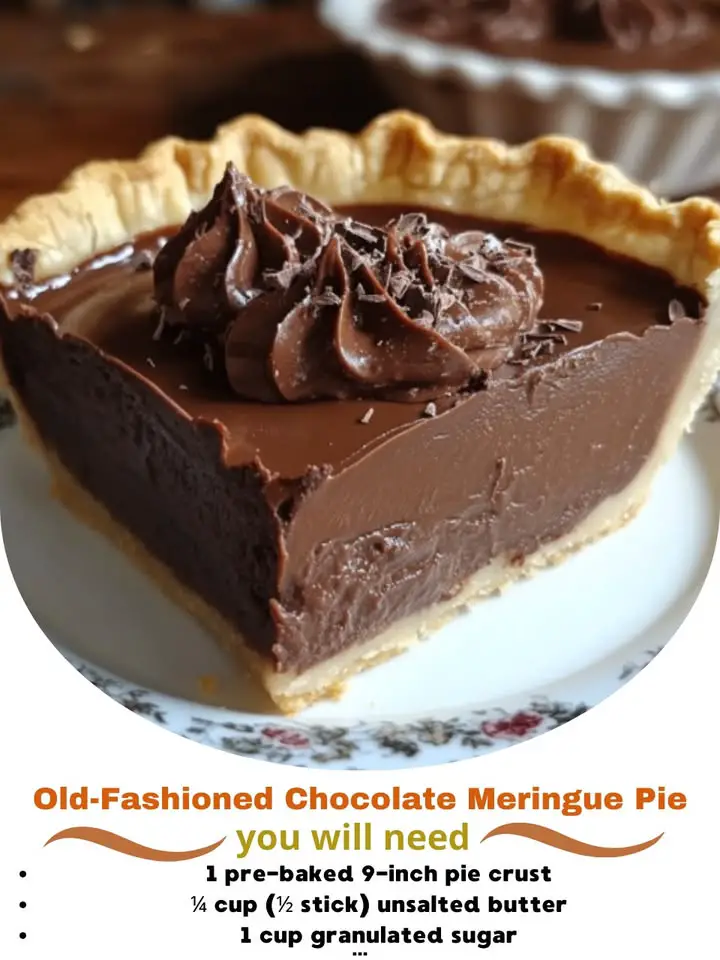
The Old-Fashioned Chocolate Meringue Pie is a timeless American dessert that embodies the soul of classic home baking—rich, nostalgic, and deeply comforting. With its luscious chocolate custard filling cradled in a flaky, buttery crust and crowned with a billowy, toasted meringue, this pie strikes the perfect balance between decadence and airiness. It’s more than just a dessert; it’s a cherished ritual—served at holiday tables, church suppers, county fairs, and Sunday dinners for generations. Its enduring popularity lies not only in its irresistible flavor profile but also in its elegant simplicity: no fancy techniques, no obscure ingredients—just honest, time-tested craftsmanship that rewards patience and care.
The History
Tracing the lineage of the Old-Fashioned Chocolate Meringue Pie requires stepping back into the late 19th and early 20th centuries, when American home kitchens were transforming alongside advances in food science, refrigeration, and commercial ingredient availability. While chocolate pie itself dates to the mid-1800s—appearing in cookbooks like Fannie Farmer’s Boston Cooking-School Cook Book (1896) as “Chocolate Cream Pie”—the integration of meringue as a topping reflects the broader cultural embrace of egg-white foams following the popularization of stabilized meringues in Victorian-era confectionery.
The pivotal innovation came with the rise of cornstarch as a reliable thickener (replacing less predictable flour or arrowroot) and the widespread adoption of Dutch-process cocoa in the 1920s–30s, which lent deeper color and smoother, less acidic chocolate notes. Meanwhile, the invention of the electric mixer in the 1910s—and its gradual entry into middle-class households by the 1940s—made whipping stiff, glossy meringue far more accessible than the arm-intensive process of hand-beating. Regional variations flourished: Southern versions often featured a graham cracker or chocolate wafer crust instead of pastry; Midwestern iterations leaned into brown sugar and a touch of coffee to deepen the chocolate; and New England bakers sometimes added a whisper of molasses or clove for warmth. By the postwar era, the pie had secured its place in iconic community cookbooks—including the Church Women United Cookbook, the Junior League’s Entertaining in the South, and Betty Crocker’s first televised recipe demonstrations—where it was routinely described as “company-worthy,” “foolproof,” and “the pie Grandma always made when the cousins came to visit.” Its name—“Old-Fashioned”—isn’t merely stylistic; it’s a quiet homage to technique, tradition, and the generational handoff of recipes written in pencil on index cards, stained with vanilla and egg yolk.
Ingredients Breakdown
Every element of this pie plays a precise, functional role—no ingredient is arbitrary. Understanding *why* each one is included deepens both mastery and appreciation:
- Pie Crust (Double-Crust or Blind-Baked Single): A tender, flaky all-butter crust provides structural integrity and a buttery counterpoint to the sweet filling. Lard or shortening may be blended in for extra flakiness and tenderness, while a splash of vinegar or vodka helps inhibit gluten development for maximum tenderness.
- Unsweetened Chocolate (60–70% Cacao): Provides intense, complex chocolate flavor and essential cocoa solids for richness and body. Bittersweet or semisweet chocolate may be substituted, but unsweetened ensures precise sugar control in the custard layer.
- Granulated Sugar (for Filling): Serves dual roles: sweetening the custard and acting as a stabilizer for the starch gel network. Too little sugar results in a weak, weepy filling; too much interferes with thickening.
- Cornstarch: The traditional thickener of choice—creates a smooth, glossy, heat-stable custard that holds up under meringue without breaking down or weeping. Unlike flour, it’s gluten-free and yields a cleaner chocolate taste.
- Pinch of Salt: Not just for seasoning—it heightens all other flavors and balances bitterness, especially critical with dark chocolate.
- Egg Yolks: Provide fat, emulsification, and natural lecithin, contributing to velvety mouthfeel and helping bind the starch-thickened mixture into a cohesive, sliceable filling.
- Whole Milk & Heavy Cream (or Half-and-Half): Milk supplies protein and water for starch hydration; cream adds luxurious fat and prevents a “thin” or chalky texture. Some vintage recipes call for scalded milk to ensure full starch gelatinization.
- Vanilla Extract (Pure, Not Imitation): Adds aromatic complexity and rounds out the chocolate’s sharp edges. Mexican or Tahitian vanilla can add intriguing floral notes.
- Distilled White Vinegar or Cream of Tartar (in Meringue): An acid that strengthens egg-white foam by denaturing proteins more effectively, resulting in greater volume, stability, and resistance to deflation or weeping.
- Superfine Sugar (for Meringue): Dissolves rapidly into the egg whites, preventing graininess and ensuring a satiny, marshmallow-soft interior beneath crisp, golden peaks.
- Cold Egg Whites (at Room Temperature for Best Volume): While cold whites separate more cleanly from yolks, they’re best brought to room temperature before beating—warm whites achieve greater volume and finer, more stable bubbles.
Crucially, the order and method of combining these ingredients matter profoundly: chocolate must be fully melted and cooled before mixing with hot custard to prevent scrambling yolks; cornstarch must be slurry-mixed with cold liquid before heating to avoid lumps; and meringue must be spread to fully seal the filling’s edges—creating a moisture barrier that prevents shrinkage and weeping.
Step-by-Step Recipe
- Prepare the Crust: Roll out chilled pie dough and fit into a 9-inch deep-dish pie plate. Trim and crimp edges. Prick bottom generously with a fork. Line with parchment and fill with pie weights or dried beans. Refrigerate 30 minutes. Bake at 425°F for 15 minutes. Remove weights and parchment; bake 8–10 minutes more until golden. Cool completely on a wire rack (at least 45 minutes). Reduce oven to 325°F for meringue baking.
- Melt the Chocolate: Finely chop 4 ounces unsweetened chocolate. Place in a heatproof bowl set over barely simmering water (double boiler), stirring occasionally until smooth. Remove from heat and cool to lukewarm (about 90°F)—do not let solidify.
- Make the Custard Base: In a heavy-bottomed saucepan, whisk together ¾ cup granulated sugar, ¼ cup cornstarch, ¼ tsp salt, and ½ cup cold whole milk until smooth and lump-free. Whisk in remaining 2½ cups warm (not boiling) milk and ½ cup heavy cream. Cook over medium heat, whisking constantly, until mixture thickens and begins to bubble at edges (about 8–10 minutes). Do not boil vigorously.
- Incorporate Eggs and Chocolate: Remove pan from heat. Temper 4 large egg yolks by slowly whisking ½ cup hot milk mixture into them; then pour yolk mixture back into saucepan. Return to low heat and cook 2 minutes more, stirring constantly, until thickened enough to coat the back of a spoon. Immediately remove from heat and whisk in melted chocolate until fully incorporated and glossy. Stir in 2 tsp pure vanilla extract.
- Fill and Cool: Pour warm filling into cooled pie crust. Smooth surface with an offset spatula. Press plastic wrap directly onto surface (to prevent skin formation). Chill uncovered in refrigerator for at least 4 hours—or preferably overnight—for optimal set and clean slicing.
- Prepare Meringue: In a spotlessly clean, dry bowl (preferably copper or glass), combine 4 large room-temperature egg whites, ¼ tsp cream of tartar, and ⅛ tsp fine sea salt. Beat on medium speed until soft peaks form (about 2–3 minutes). Gradually add ½ cup superfine sugar, 1 tbsp at a time, beating on high speed after each addition until dissolved (rub a bit between fingers to test). Continue beating until stiff, glossy peaks form that hold upright when beaters are lifted (5–7 minutes total). Optional: add ½ tsp pure vanilla or 1 tsp instant espresso powder dissolved in ½ tsp water for depth.
- Apply and Bake Meringue: Remove plastic wrap. Spoon meringue onto chilled filling. Using a silicone spatula, gently lift and spread meringue outward from center, ensuring it touches the crust edge all the way around—this seals in moisture and prevents shrinking. Create decorative peaks with back of spoon or piping tip. Bake at 325°F for 12–15 minutes, until peaks are lightly golden and tips spring back when lightly touched. Cool completely on wire rack (at least 2 hours) before slicing—this allows meringue to fully set and prevents weeping.
Tips
- Crust Perfection Tip: For guaranteed flakiness, keep all ingredients—and your hands—cold. If dough becomes sticky while rolling, return to fridge for 10 minutes. For extra tenderness, replace 1 tbsp of water with apple cider vinegar.
- No-Lump Custard Tip: Always make a slurry with cornstarch and cold milk *before* adding warm dairy. Never add dry cornstarch directly to hot liquid.
- Chocolate Integration Tip: Ensure melted chocolate is lukewarm—not hot—when folding into custard. Hot chocolate will cook the egg yolks and cause curdling.
- Meringue Stability Tip: Use aged egg whites (separated 24 hours ahead and refrigerated in covered container) for stronger, more stable foam. Avoid any trace of yolk or grease in bowl or beaters—even a speck of fat will prevent proper whipping.
- Weep-Proofing Tip: Spread meringue while filling is still slightly cool (not cold) — about 55–60°F — to encourage gentle bonding. Also, never refrigerate a fully assembled meringue pie unless absolutely necessary; condensation causes weeping. Store at cool room temperature (65–70°F) for up to 8 hours, or refrigerate only after slicing.
- Golden Peak Tip: For even, rich browning without overcooking, rotate pie halfway through baking. For deeper color, broil on low for 30–45 seconds at end—watch constantly.
- Slicing Tip: Use a long, thin-bladed knife dipped in hot water and wiped dry between each slice for clean, picture-perfect portions.
- Humidity Hack: On rainy or humid days, add an extra ⅛ tsp cream of tartar and increase sugar by 1 tbsp for better moisture resistance.
Variations and Customizations
This pie is a beloved canvas for creativity—honoring tradition while welcoming personal expression:
- Decadent Dark Chocolate Version: Swap unsweetened chocolate for 3 oz unsweetened + 1 oz 85% dark chocolate. Add 1 tsp instant espresso powder to enhance bitterness and aroma.
- Spiced Mexican-Inspired: Infuse warm milk with 1 cinnamon stick, 3 whole cloves, and ¼ tsp ground ancho chili powder (strained before mixing). Finish filling with ¼ tsp ground cinnamon and a pinch of cayenne.
- Coconut-Chocolate Fusion: Replace ½ cup milk with full-fat coconut milk; fold in ½ cup toasted coconut flakes into cooled filling before pouring into crust.
- Gluten-Free Adaptation: Use a certified GF pie crust (almond flour + tapioca starch blend works beautifully); substitute cornstarch with arrowroot or tapioca starch (same amount) for identical texture.
- Vegan Option (Innovative Interpretation): Crust: GF oat or almond crust. Filling: Blend silken tofu, aquafaba-reduced coconut cream, Dutch-process cocoa, maple syrup, cornstarch, and vanilla; cook gently until thick. Meringue: Whip aquafaba with cream of tartar and sugar until stiff—bake at 225°F for 90 minutes to dry and set.
- Mini Individual Pies: Bake in six 4-inch tart pans with removable bottoms. Reduce crust bake time by 3 minutes; chill filling 2 hours minimum; top with scaled-down meringue and bake 8–10 minutes.
- Boozy Twist: Stir 1 tbsp bourbon, Kahlúa, or Grand Marnier into cooled filling. For adults-only flair, sprinkle meringue peaks with flaky sea salt and a light dusting of cocoa nibs.
- Crunchy Texture Layer: Sprinkle ¼ cup finely chopped toasted pecans or hazelnuts over chilled filling before adding meringue for subtle nuttiness and contrast.
Health Considerations and Nutritional Value
A single generous slice (1/8 of a standard 9-inch pie) contains approximately 420–480 calories, with variations depending on crust type, dairy fat content, and meringue sweetness. Key nutritional insights include:
- Sugar Content: Ranges from 38–46g per slice—predominantly added sugars from filling and meringue. To reduce, cut granulated sugar in filling by 2 tbsp and use ⅓ cup superfine sugar in meringue (still yields stable, glossy results).
- Fat Profile: ~22g total fat (13g saturated), primarily from butter crust and heavy cream. Health-conscious swaps: use half butter/half avocado oil in crust; replace ¼ cup cream with additional milk; opt for a graham cracker crust (lower saturated fat, higher fiber).
- Protein & Micronutrients: Provides ~5g protein (mainly from eggs and dairy), plus modest amounts of calcium, phosphorus, riboflavin (B2), and magnesium from cocoa. Dark chocolate contributes flavonoid antioxidants linked to cardiovascular support—especially when using minimally processed, high-cocoa chocolate.
- Dietary Accommodations: Naturally egg-free alternatives remain challenging due to meringue’s structural role—but aquafaba-based versions are increasingly viable. Low-sugar versions benefit from erythritol-blend sweeteners (tested for heat stability), though texture may vary. For those managing diabetes, pairing a small slice with a protein-rich snack (e.g., Greek yogurt or almonds) slows glucose response.
- Food Safety Note: Because the filling contains raw egg yolks cooked to 160°F (confirmed with instant-read thermometer), it meets USDA safety guidelines. Meringue reaches safe temperature during baking—no risk of salmonella when prepared as directed.
While undeniably indulgent, this pie can be part of a balanced diet when enjoyed mindfully—as a special occasion treat rather than daily fare—and gains nutritional nuance through intentional, whole-food ingredient choices.
Ingredients
For the Flaky All-Butter Pie Crust (Double-Crust or Single Blind-Baked)
- 2½ cups (300g) all-purpose flour (plus extra for dusting)
- 1 tsp granulated sugar
- 1 cup (227g) unsalted butter, very cold and cubed
- 6–8 tbsp ice water
- 1 tsp distilled white vinegar (optional, for tenderness)
For the Rich Chocolate Custard Filling
- 4 oz (113g) unsweetened chocolate, finely chopped
- ¾ cup (150g) granulated sugar
- ¼ cup (30g) cornstarch
- ¼ tsp fine sea salt
- 3 cups (720ml) whole milk (divided: ½ cup cold, 2½ cups warmed to 110°F)
- ½ cup (120ml) heavy cream
- 4 large egg yolks (save whites for meringue)
- 2 tsp pure vanilla extract
For the Toasted Swiss-Style Meringue
- 4 large egg whites (room temperature)
- ¼ tsp cream of tartar
- ⅛ tsp fine sea salt
- ½ cup (100g) superfine sugar
- ½ tsp pure vanilla extract (optional)
Directions
- Make the Pie Dough: In a large bowl, whisk flour, sugar, and salt. Add cold butter cubes; cut in using a pastry blender or two forks until mixture resembles coarse crumbs with some pea-sized butter pieces remaining. Sprinkle vinegar (if using) and 6 tbsp ice water over mixture. Gently toss with fork; add more water 1 tsp at a time until dough just begins to clump. Divide in two, flatten into 1-inch thick disks, wrap in plastic, and chill at least 1 hour (or up to 2 days).
- Roll and Blind-Bake Crust: Preheat oven to 425°F. On floured surface, roll one disk to 12-inch circle. Fit into 9-inch deep-dish pie plate; trim overhang to ½ inch. Fold under and crimp decoratively. Prick bottom 12–15 times with fork. Line with parchment and fill with pie weights. Chill 30 minutes. Bake 15 minutes. Remove weights and parchment; bake 8–10 minutes more until golden. Cool completely.
- Melt Chocolate: Place chopped chocolate in heatproof bowl. Set over saucepan with 1 inch simmering water (don’t let bowl touch water). Stir until smooth. Remove; cool to 90°F (32°C).
- Prepare Custard: In saucepan, whisk sugar, cornstarch, salt, and ½ cup cold milk until smooth. Whisk in remaining 2½ cups warm milk and heavy cream. Cook over medium heat, whisking constantly, until thickened and bubbling at edges (~8–10 min). Remove from heat.
- Add Yolks & Chocolate: Whisk ½ cup hot mixture into yolks; pour back into saucepan. Return to low heat; cook 2 min more, stirring constantly, until thick enough to coat spoon. Remove from heat. Whisk in melted chocolate until uniform and glossy. Stir in vanilla.
- Chill Filling: Pour into cooled crust. Smooth top. Press plastic wrap directly onto surface. Refrigerate ≥4 hours—or overnight.
- Make Meringue: In clean, dry bowl, beat egg whites, cream of tartar, and salt on medium until frothy (~1 min). Increase to medium-high; beat until soft peaks. Gradually add sugar, 1 tbsp at a time, beating 20 sec after each addition. Beat on high until stiff, glossy peaks form (5–7 min). Fold in vanilla if using.
- Bake Meringue: Remove plastic. Spoon meringue over filling. Seal edges to crust. Create peaks. Bake at 325°F for 12–15 min until golden. Cool completely on wire rack (≥2 hours) before slicing.
FAQ
- Why does my meringue weep or shrink?
- Weeping (beading) occurs when sugar isn’t fully dissolved or meringue isn’t sealed to crust edges. Shrinkage happens if meringue cools too quickly or isn’t baked long enough to set proteins. Solution: Beat sugar in thoroughly, seal meringue, and cool pie gradually at room temperature.
- Can I make this pie ahead of time?
- Yes—with caveats. Bake crust and prepare filling up to 2 days ahead; store covered in fridge. Assemble and bake meringue no more than 6 hours before serving. Fully assembled pie should not sit >8 hours unrefrigerated or >24 hours refrigerated (meringue softens).
- What’s the difference between French, Swiss, and Italian meringue—and which is best here?
- French (egg whites + sugar beaten cold) is simplest but most fragile. Swiss (whites + sugar heated over simmering water, then whipped) offers superior stability and food safety—ideal for this pie. Italian (hot sugar syrup poured into whipped whites) is richest but overkill for home kitchens. This recipe uses a stabilized French method—enhanced with cream of tartar—to mimic Swiss reliability.
- My filling is lumpy—can I fix it?
- If caught before baking: strain through fine-mesh sieve while warm. If after chilling: gently reheat in double boiler, whisking constantly until smooth, then re-chill. Prevention is key—always slurry cornstarch in cold liquid first.
- Can I freeze this pie?
- Freeze unbaked crust and filling separately for best results. Baked pie freezes poorly—meringue becomes rubbery and soggy upon thawing. Thaw crust overnight in fridge; thaw filling in fridge, then reheat gently before pouring into crust and topping with fresh meringue.
- Is there a lower-sugar version that still sets properly?
- Yes. Replace ¼ cup sugar with 3 tbsp erythritol + 1 tsp stevia glycerite (tested for heat stability). Keep full cornstarch amount—reducing thickener compromises structure. Expect slightly less glossy finish and marginally softer set.
- Why use unsweetened chocolate instead of cocoa powder?
- Unsweetened chocolate contributes cocoa butter—essential for richness, mouth-coating texture, and emulsification. Cocoa powder alone yields a thinner, drier, less luxurious filling. Dutch-process cocoa *can* supplement for depth, but shouldn’t replace the chocolate entirely.
- Can I use a graham cracker crust?
- Absolutely—and it’s historically authentic in many regional versions. Combine 1½ cups crushed graham crackers, 6 tbsp melted butter, and 2 tbsp sugar; press into plate and bake at 350°F for 8 minutes. Cool before filling. Adds caramelized notes and simplifies prep.
Summary
The Old-Fashioned Chocolate Meringue Pie is a masterclass in harmony—its velvety, bittersweet chocolate custard grounded by a flaky, buttery crust and elevated by a cloud-like, golden meringue that melts on the tongue with ethereal sweetness and delicate crunch.
More than a dessert, it’s a vessel for memory, skill, and generosity: every step honors time-honored technique, every bite invites slow savoring, and every pie shared becomes a quiet act of love passed down, one generation to the next.