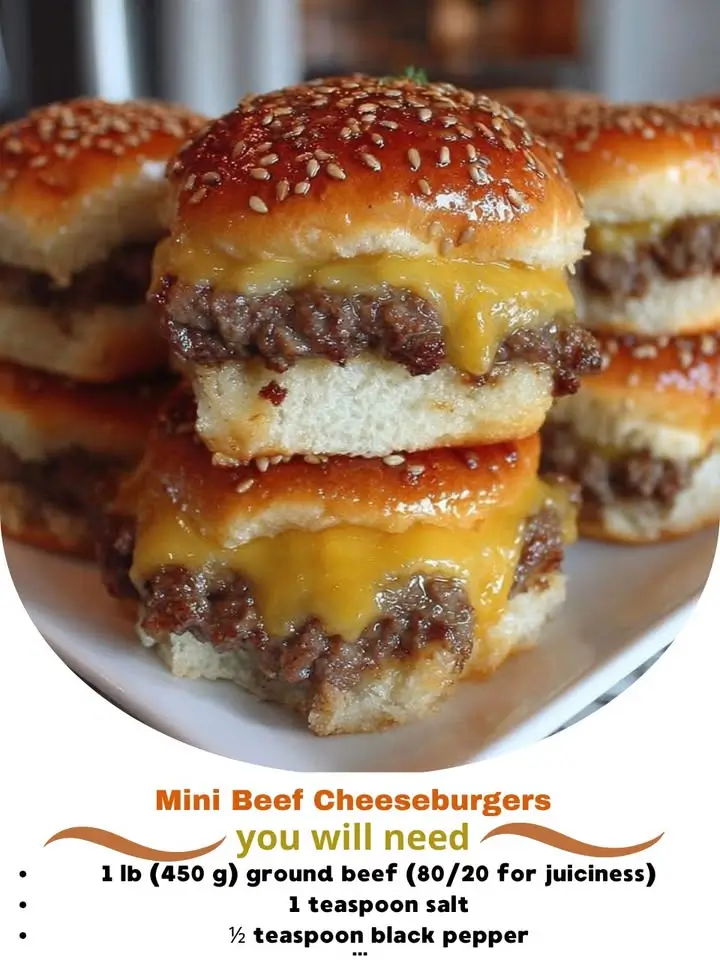
Mini Beef Cheeseburgers: A Delicious Bite-Sized Delight
There’s something undeniably satisfying about a perfectly crafted cheeseburger—juicy beef, melty cheese, and a soft bun coming together in harmony. But what if you could enjoy that same incredible flavor in a smaller, party-friendly package? Enter the Mini Beef Cheeseburgers—bite-sized versions of the classic American favorite, ideal for appetizers, game-day spreads, kids’ meals, or even elegant dinner parties. These tiny powerhouses of flavor are not only fun to make but also incredibly versatile, allowing endless customization while maintaining the essence of what makes a cheeseburger great.
The History of the Cheeseburger and Its Miniature Evolution
The origins of the cheeseburger trace back to the early 20th century in the United States. While there are multiple claims about its invention—ranging from Lionel Sternberger in Pasadena, California (1926) to various diners across Wisconsin and Colorado—one thing is certain: the addition of melted cheese to a ground beef patty revolutionized fast food culture. Over time, the cheeseburger became a staple of American cuisine, evolving into countless regional variations.
The concept of the mini cheeseburger emerged as a response to social dining trends, particularly the rise of cocktail parties, holiday gatherings, and family-style meals where guests appreciate variety and portion control. By shrinking the traditional burger, chefs and home cooks alike found a way to offer the beloved taste of a cheeseburger without overwhelming the palate. Today, mini beef cheeseburgers are featured at weddings, buffets, tailgates, and even gourmet food trucks, proving that great things truly do come in small packages.
Ingredients Breakdown: What Makes a Mini Beef Cheeseburger Shine?
The magic of a mini beef cheeseburger lies in the balance of quality ingredients and precise proportions. Here’s a detailed breakdown of each component:
- Ground Beef (80/20 Lean-to-Fat Ratio): The foundation of any great burger. An 80% lean, 20% fat ratio ensures juiciness and rich flavor. Leaner meat can dry out, especially when cooked in small patties.
- Salt and Black Pepper: Essential seasonings that enhance the natural taste of beef without overpowering it.
- Garlic Powder and Onion Powder: Subtle aromatics that deepen the savory profile without adding moisture that might weaken the patty’s structure.
- Paprika (optional): Adds a hint of smokiness and color, enhancing visual appeal.
- Cheese Slices (American, Cheddar, Swiss, or Pepper Jack): Melts beautifully and adds creaminess. American cheese is often preferred for its smooth meltability.
- Slider Buns or Mini Potato Rolls: Soft, slightly sweet buns that hold up well without overwhelming the meat. Can be toasted for extra texture.
- Toppings: Classic options include lettuce, tomato, red onion, pickles, ketchup, mustard, and mayonnaise. Freshness is key.
- Butter (for toasting buns): Enhances richness and gives the buns a golden, crisp exterior.
Optional add-ins: Worcestershire sauce (a few drops per pound of meat), finely minced shallots, or a splash of steak sauce for umami depth.
Step-by-Step Recipe: How to Make Perfect Mini Beef Cheeseburgers
Ingredients
- 1.5 lbs (680g) ground beef (80/20)
- 1.5 tsp kosher salt
- 1 tsp freshly ground black pepper
- 1 tsp garlic powder
- 1 tsp onion powder
- ½ tsp smoked paprika (optional)
- 12 slices of cheese (cheddar, American, etc.)
- 12 mini slider buns
- 2 tbsp unsalted butter, softened
- Toppings of choice: lettuce leaves, tomato slices, red onion rings, pickles
- Condiments: ketchup, mustard, mayo, special sauce
Directions
- Prepare the Beef Mixture: In a large bowl, gently combine the ground beef with salt, pepper, garlic powder, onion powder, and paprika. Use your hands or a fork, being careful not to overmix—this keeps the patties tender.
- Form the Patties: Divide the mixture into 12 equal portions (about 2 oz or 57g each). Gently shape each into a ball, then flatten into 2.5-inch diameter patties, about ¾ inch thick. Press a slight indentation in the center of each patty with your thumb to prevent bulging during cooking.
- Chill (Optional but Recommended): Place patties on a plate, cover, and refrigerate for 15–30 minutes. This helps them hold their shape during cooking.
- Preheat Cooking Surface: Heat a cast-iron skillet, griddle, or grill pan over medium-high heat. You want it hot enough to sear but not burn.
- Cook the Patties: Place patties on the heated surface. Cook for 2–3 minutes per side for medium doneness (internal temperature of 160°F/71°C). Adjust time based on preference—shorter for medium-rare, longer for well-done.
- Add Cheese: During the last 30 seconds of cooking, place a slice of cheese on each patty and cover the pan briefly to help it melt.
- Toast the Buns: While patties cook, spread butter on the cut sides of the buns. Toast in a separate pan or under a broiler for 1–2 minutes until golden brown.
- Assemble: Place each cheesy patty on the bottom half of a toasted bun. Add desired toppings and condiments, then crown with the top bun.
- Serve Immediately: Mini beef cheeseburgers are best enjoyed hot off the grill or skillet.
Tips for Making the Best Mini Beef Cheeseburgers
- Don’t Overwork the Meat: Overmixing leads to dense, tough patties. Mix just until combined.
- Keep Hands Cold: Chill your hands or use gloves when forming patties to prevent warming the fat in the beef.
- Uniform Size = Even Cooking: Use a kitchen scale or measuring cup to ensure all patties are the same weight and thickness.
- Avoid Pressing Patties: Resist the urge to press down with a spatula—it squeezes out juices and dries out the burger.
- Use a Meat Thermometer: For perfect doneness every time, especially important with small patties that cook quickly.
- Prep Toppings Ahead: Slice vegetables and prepare sauces before cooking so assembly is fast and efficient.
- Cook in Batches: If making a large quantity, keep cooked burgers warm in a 200°F (95°C) oven on a wire rack over a baking sheet to prevent sogginess.
Variations and Customizations
One of the greatest advantages of mini beef cheeseburgers is their adaptability. Here are some creative ways to customize them:
- Gourmet Style: Use brioche slider buns, add arugula, caramelized onions, and truffle aioli.
- Hawaiian Sliders: Top with grilled pineapple, teriyaki glaze, and a sprinkle of sesame seeds.
- Bacon Cheeseburger Minis: Add a crispy bacon strip to each patty before closing the bun.
- Blue Cheese & Mushroom: Sauté mushrooms with thyme and top with crumbled blue cheese instead of cheddar.
- Spicy Kick: Mix diced jalapeños into the meat or use pepper jack cheese and spicy mayo.
- Diner-Style: Keep it classic with yellow mustard, ketchup, onion, and pickle on a squishy white roll.
- Kid-Friendly: Skip strong flavors; use mild cheese and serve with fries for dipping.
- Gluten-Free Option: Use gluten-free buns or serve lettuce-wrapped “sliders” for a low-carb alternative.
- International Twists:
- Mexican: Guacamole, salsa, and pepper jack.
- Italian: Mozzarella, marinara, and fresh basil.
- Greek: Feta, tzatziki, and sliced cucumber.
Health Considerations and Nutritional Value
While mini beef cheeseburgers are delicious, they should be enjoyed in moderation as part of a balanced diet. Here’s a general nutritional overview per serving (one mini cheeseburger with cheddar, bun, ketchup, and pickle):
- Calories: ~220–280 kcal
- Protein: ~12–15g (excellent source of complete protein)
- Fat: ~14–18g (mostly saturated; choose leaner beef or blends with turkey for reduction)
- Carbohydrates: ~15–20g (primarily from the bun)
- Sodium: ~400–600mg (can be reduced by using low-sodium cheese and limiting added salt)
Healthier Modifications:
- Use lean ground beef (90/10) or mix with sautéed mushrooms to reduce fat and calories.
- Opt for whole wheat or multigrain slider buns for added fiber.
- Load up on fresh veggies like spinach, tomato, and onion for vitamins and antioxidants.
- Skip high-calorie condiments or use Greek yogurt-based sauces.
- Bake or grill instead of frying to reduce added oil.
Note: Those with dietary restrictions (low sodium, gluten-free, keto) can easily adapt this recipe with suitable substitutions.
Frequently Asked Questions (FAQ)
Q: Can I make mini beef cheeseburgers ahead of time?
A: Yes! You can form and refrigerate raw patties up to 24 hours in advance. Cooked patties (without buns) can be stored in the fridge for 3–4 days and reheated in a skillet or oven.
Q: Can I freeze mini cheeseburgers?
A: Absolutely. Freeze uncooked patties on a tray, then transfer to a freezer bag for up to 3 months. Cook from frozen—add 1–2 minutes per side. Fully assembled burgers can be frozen too, but buns may become soggy upon thawing.
Q: What’s the best cheese for melting?
A: American cheese melts the smoothest, but cheddar, provolone, Swiss, and mozzarella are also excellent choices. Avoid hard cheeses like Parmesan for melting on patties.
Q: Can I bake these instead of grilling?
A: Yes. Preheat oven to 375°F (190°C). Place patties on a lined baking sheet and bake for 10–12 minutes, flipping halfway. Add cheese in the last 2 minutes.
Q: Why are my mini patties falling apart?
A: Overhandling, too much seasoning, or using very lean meat can cause crumbling. Avoid binders like breadcrumbs unless necessary; the fat in the meat helps hold it together.
Q: Are mini beef cheeseburgers kid-friendly?
A: Extremely! Their small size is perfect for little hands, and you can customize fillings to suit picky eaters. Serve with apple slices or carrot sticks for a balanced meal.
Summary
Mini beef cheeseburgers are a flavorful, fun, and versatile twist on the classic American burger—perfect for gatherings, snacks, or creative weeknight dinners.
Packed with juicy beef, melty cheese, and customizable toppings, these bite-sized delights bring big taste to any table.