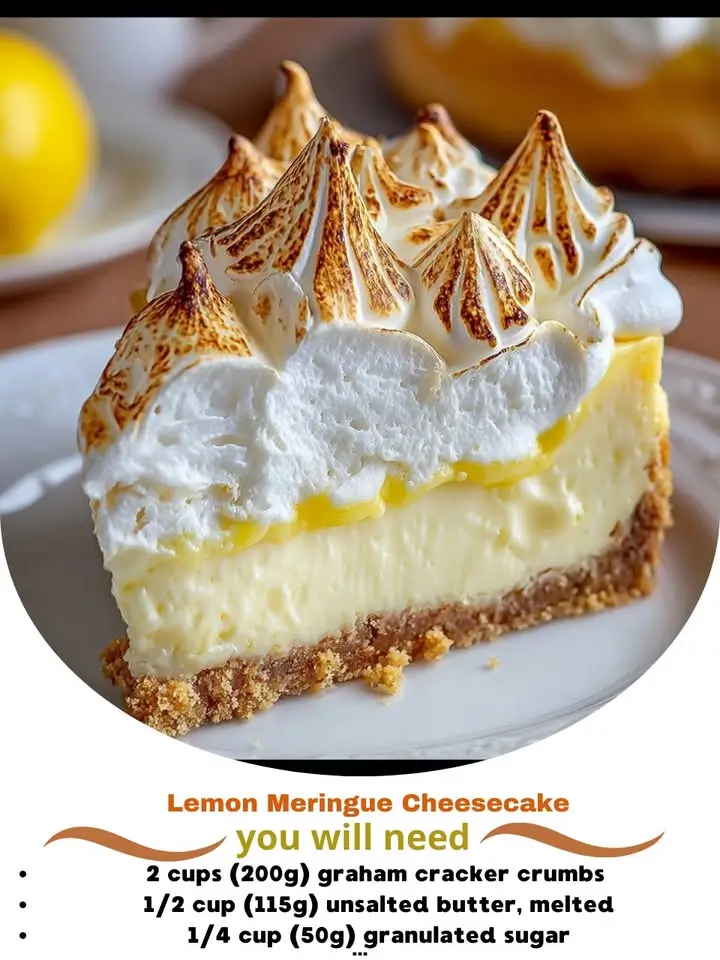
Lemon Meringue Cheesecake Recipe: A Perfect Fusion of Tangy and Sweet
If you’re searching for a dessert that combines the creamy richness of cheesecake with the bright, citrusy zing of lemon meringue pie, then this Lemon Meringue Cheesecake is your ultimate indulgence. This show-stopping dessert blends two beloved classics into one luscious creation—silky smooth cheesecake layered beneath a tart lemon curd and crowned with a cloud-like toasted meringue. Whether it’s for a special occasion or just to treat yourself, this recipe delivers elegance, flavor, and a touch of nostalgia in every bite.
The History Behind the Dessert
The origins of cheesecake trace back thousands of years to ancient Greece, where it was served to athletes during the first Olympic games as a source of energy. Over centuries, cheesecake evolved across Europe and eventually made its way to America, where the New York-style version became iconic. On the other hand, lemon meringue pie has roots in 19th-century Europe, particularly in Swiss and French cuisine, where meringue-topped desserts gained popularity for their dramatic presentation and sweet-tart balance.
The fusion of these two classics—Lemon Meringue Cheesecake—is a modern innovation born from the desire to elevate traditional flavors. By combining the dense creaminess of cheesecake with the vibrant tang of lemon filling and the airy sweetness of meringue, bakers have created a hybrid dessert that’s both familiar and excitingly new. Today, it graces menus at upscale restaurants and home kitchens alike, especially during spring and summer when citrus fruits are at their peak.
Ingredients Breakdown: What Makes This Cheesecake Shine
This multi-layered dessert consists of three key components: the crust, the cheesecake base, the lemon curd layer, and the meringue topping. Each part contributes texture, flavor, and structure to the final product.
For the Crust:
- Graham cracker crumbs (1 ½ cups): Provides a slightly sweet, nutty base that complements the tartness of the lemon.
- Granulated sugar (¼ cup): Enhances sweetness and helps bind the crust.
- Salted butter (6 tablespoons, melted): Adds moisture and richness while helping the crust hold together.
- Optional zest (1 tsp lemon zest): For an extra hint of citrus aroma.
For the Cheesecake Filling:
- Cream cheese (4 packages, 8 oz each, full-fat, room temperature): The foundation of any great cheesecake—creamy, rich, and smooth.
- Granulated sugar (1 cup): Balances acidity and adds sweetness.
- Sour cream (1 cup): Adds tang and improves texture by preventing cracking.
- Vanilla extract (2 teaspoons): Deepens flavor complexity.
- Eggs (4 large, room temperature): Provide structure and help the cheesecake set properly.
- Lemon juice (2 tablespoons fresh): Subtle citrus note without overpowering the creaminess.
- Lemon zest (1 tablespoon): Intensifies the lemon flavor naturally.
For the Lemon Curd Layer:
- Fresh lemon juice (¾ cup): The star ingredient—must be freshly squeezed for best taste.
- Granulated sugar (¾ cup): Sweetens the curd and balances acidity.
- Egg yolks (5 large): Thicken the curd and give it a velvety texture.
- Unsalted butter (4 tablespoons, cubed): Enriches the curd and adds shine.
- Cornstarch (1 tablespoon, optional for stability): Helps the curd hold its shape between layers.
- Lemon zest (1 tablespoon): Boosts aromatic citrus notes.
For the Meringue Topping:
- Egg whites (5 large, room temperature): Must be free of yolk for maximum volume.
- Granulated sugar (1 cup): Stabilizes the meringue and creates a glossy finish when cooked.
- Cream of tartar (¼ teaspoon): Prevents the egg whites from deflating and increases volume.
- Vanilla extract (½ teaspoon): Adds subtle warmth to the sweetness.
Step-by-Step Recipe Instructions
Step 1: Prepare the Crust
- Preheat oven to 325°F (160°C). Grease a 9-inch springform pan thoroughly and wrap the outside bottom tightly with aluminum foil to prevent water seepage during baking.
- In a medium bowl, combine graham cracker crumbs, sugar, and lemon zest (if using). Pour in melted butter and stir until the mixture resembles wet sand.
- Press the mixture firmly into the bottom and slightly up the sides of the prepared pan using the back of a spoon or flat-bottomed glass.
- Bake the crust for 10 minutes, then remove and let cool while preparing the filling. Leave the oven on.
Step 2: Make the Cheesecake Base
- In a large mixing bowl, beat the cream cheese on medium speed until smooth and creamy (about 2–3 minutes).
- Add sugar gradually and continue beating until well incorporated and fluffy.
- Mix in sour cream and vanilla extract. Scrape down the sides of the bowl as needed.
- Add eggs one at a time, mixing just until each is blended. Do not overmix, as this can incorporate too much air and cause cracking.
- Stir in lemon juice and lemon zest gently.
- Pour the batter over the cooled crust. Smooth the top with a spatula.
- Place the springform pan inside a larger roasting pan. Fill the outer pan with hot water halfway up the sides of the springform (this is a water bath, which prevents cracking and ensures even cooking).
- Bake for 60–75 minutes, or until the edges are set but the center still jiggles slightly like Jell-O.
- Turn off the oven, crack the door open, and let the cheesecake cool slowly inside for 1 hour. This gradual cooling minimizes cracks.
- Remove from water bath, discard foil, and refrigerate uncovered for at least 4 hours (preferably overnight).
Step 3: Prepare the Lemon Curd Layer
- In a medium saucepan, whisk together lemon juice, sugar, egg yolks, cornstarch (if using), and lemon zest.
- Place over medium heat and cook, stirring constantly, until the mixture thickens and coats the back of a spoon (about 8–10 minutes). Do not let it boil rapidly or the eggs may scramble.
- Remove from heat and stir in butter, one cube at a time, until fully melted and smooth.
- Strain the curd through a fine-mesh sieve into a clean bowl to remove any bits of cooked egg or zest.
- Cover surface directly with plastic wrap to prevent a skin from forming and chill for at least 2 hours before spreading.
- Once chilled, spoon the lemon curd over the cold cheesecake base and spread evenly. Return to the refrigerator while making meringue.
Step 4: Create the Meringue Topping
- In a spotlessly clean mixing bowl, add egg whites and cream of tartar. Beat on medium-low speed until foamy (about 1 minute).
- Increase speed to medium-high and gradually add sugar, one tablespoon at a time, over 3–4 minutes. Continue beating until stiff, glossy peaks form (about 6–8 minutes total).
- Add vanilla extract and beat briefly to combine.
- Remove cheesecake from refrigerator. Pile meringue onto the center of the lemon curd layer and spread outward, sealing all the way to the edges of the crust to prevent shrinking.
- Use the back of a spoon to create decorative swirls or peaks.
- Preheat broiler to high. Place cheesecake on the top rack and broil for 2–5 minutes, watching closely, until the meringue turns golden brown in spots.
- Remove immediately and let cool slightly before returning to the refrigerator for 30 minutes to stabilize.
Step 5: Serve and Store
- Run a thin knife around the edge of the pan before releasing the springform clasp to prevent sticking.
- Slice with a sharp, warm knife (dip blade in hot water and wipe dry between cuts) for clean slices.
- Store leftovers covered loosely in the refrigerator for up to 4 days. Do not freeze, as the meringue will become soggy upon thawing.
Professional Tips for Success
- Room Temperature Ingredients: Ensure cream cheese, eggs, and sour cream are at room temperature to avoid lumps and ensure smooth blending.
- No Overmixing: Once eggs are added, mix only until combined. Overbeating introduces excess air and leads to cracks.
- Water Bath is Key: Never skip the water bath—it regulates heat and keeps the cheesecake moist.
- Cool Gradually: Letting the cheesecake cool slowly in the turned-off oven prevents sudden temperature shifts that cause sinking and cracking.
- Seal the Meringue: Always attach the meringue to the edge of the crust so it doesn’t pull away during baking or cooling.
- Broil with Caution: Keep a close eye during broiling—the meringue can burn in seconds.
- Fresh Citrus Only: Bottled lemon juice lacks brightness and may contain preservatives that alter flavor.
Variations and Customizations
While the classic Lemon Meringue Cheesecake is divine on its own, feel free to experiment with creative twists:
- Gingersnap Crust: Swap graham crackers for crushed gingersnaps for a spicier, warmer base.
- Lime or Orange Version: Replace lemon juice and zest with lime or orange for a tropical twist.
- Swirl Technique: Before adding the full lemon curd layer, swirl some into the cheesecake batter for a marbled effect.
- Berries on Top: Garnish with fresh raspberries, blueberries, or strawberries before serving for added color and freshness.
- Toasted Coconut Meringue: Fold ½ cup shredded coconut into the meringue before spreading and toast until golden.
- Mini Cheesecakes: Make individual servings in muffin tins—adjust baking time accordingly (25–35 minutes).
- Gluten-Free Option: Use gluten-free graham crackers or almond flour crust.
- Dairy-Free Alternative: Substitute with vegan cream cheese, dairy-free butter, and coconut-based sour cream (results may vary in texture).
Health Considerations and Nutritional Value
Lemon Meringue Cheesecake is undeniably rich and should be enjoyed in moderation. Here’s a nutritional overview per average slice (based on 12 servings):
| Nutrient | Amount per Slice |
|---|---|
| Calories | ~520 kcal |
| Total Fat | ~32g |
| Saturated Fat | ~18g |
| Cholesterol | ~180mg |
| Sodium | ~380mg |
| Total Carbohydrates | ~50g |
| Sugars | ~42g |
| Protein | ~8g |
| Vitamin C | ~10mg (from lemon) |
| Calcium | ~60mg |
Health Notes:
- This dessert is high in sugar and saturated fat due to cream cheese, butter, eggs, and meringue.
- Contains cholesterol; those monitoring blood cholesterol should consume sparingly.
- Not suitable for low-sugar, keto, or diabetic diets unless significantly modified.
- Lemons provide vitamin C and antioxidants, offering minor health benefits amidst the indulgence.
- Portion control is recommended—consider slicing into 14 smaller pieces for gatherings.
Full Ingredient List (All Components)
Crust:
- 1 ½ cups graham cracker crumbs (about 10 full sheets)
- ¼ cup granulated sugar
- 6 tablespoons salted butter, melted
- 1 tsp lemon zest (optional)
Cheesecake Filling:
- 32 oz (4 packages) full-fat cream cheese, room temperature
- 1 cup granulated sugar
- 1 cup sour cream, room temperature
- 2 tsp vanilla extract
- 4 large eggs, room temperature
- 2 tbsp fresh lemon juice
- 1 tbsp lemon zest
Lemon Curd Layer:
- ¾ cup fresh lemon juice (about 4–5 lemons)
- ¾ cup granulated sugar
- 5 large egg yolks
- 4 tbsp unsalted butter, cubed
- 1 tbsp cornstarch (optional)
- 1 tbsp lemon zest
Meringue Topping:
- 5 large egg whites, room temperature
- 1 cup granulated sugar
- ¼ tsp cream of tartar
- ½ tsp vanilla extract
Detailed Directions Recap
- Preheat oven to 325°F. Prepare springform pan with grease and foil. Make and bake crust for 10 minutes. Cool.
- Beat cream cheese until smooth. Add sugar, sour cream, vanilla. Mix in eggs one at a time. Stir in lemon juice and zest.
- Pour batter over crust. Place in water bath. Bake 60–75 minutes until center is slightly wobbly.
- Cool in oven with door cracked for 1 hour. Refrigerate 4+ hours (overnight ideal).
- Make lemon curd: Whisk ingredients in saucepan. Cook over medium heat until thickened. Add butter. Strain and chill.
- Spread curd over chilled cheesecake. Return to fridge.
- Beat egg whites and cream of tartar until foamy. Gradually add sugar to form stiff peaks. Mix in vanilla.
- Spread meringue over curd, sealing edges. Broil 2–5 minutes until golden.
- Cool slightly, then chill again for 30 minutes before serving.
- Slice with warm knife and serve cold.
Frequently Asked Questions (FAQ)
Can I make this cheesecake ahead of time?
Yes! You can prepare the cheesecake base and lemon curd up to 2 days in advance. Add the meringue and broil no more than 4 hours before serving to maintain its texture and appearance.
Why did my cheesecake crack?
Cracking usually results from overmixing, rapid cooling, or too much heat. Using room temperature ingredients, avoiding overbeating, and slow cooling in the oven help prevent this.
Can I use store-bought lemon curd?
Yes, though homemade tastes fresher and less artificial. If using store-bought, choose a high-quality brand with natural ingredients.
Can I make this without a water bath?
You can, but it increases the risk of cracking and uneven baking. For best results, use the water bath method.
Is it safe to eat raw egg whites in meringue?
The meringue is lightly toasted under the broiler, which begins to cook the surface. However, if concerned about salmonella, use pasteurized egg whites or make a Swiss or Italian meringue with heated sugar syrup.
How do I prevent weeping (liquid droplets) in meringue?
Weeping occurs when sugar isn’t fully dissolved or the meringue isn’t sealed to the base. Beat until sugar dissolves completely (rub a bit between fingers—it should feel smooth), and always attach meringue to the crust edge.
Can I freeze Lemon Meringue Cheesecake?
It’s not recommended. While the cheesecake base freezes well, the meringue becomes soggy and collapses after thawing. Freeze only the plain cheesecake (without curd and meringue) for up to 2 months.
What size springform pan should I use?
A 9-inch round springform pan is ideal. Using a different size will affect thickness and baking time.
Can I double the recipe for a larger crowd?
Yes, but use a 10-inch pan and increase baking time slightly. Avoid going larger than 10 inches, as structural integrity may suffer.
Why does my lemon curd look runny?
It will thicken further as it chills. If still too thin after refrigeration, reheat gently with additional cornstarch slurry (1 tsp cornstarch + 1 tbsp water).
Summary
The Lemon Meringue Cheesecake is a decadent fusion dessert featuring a graham cracker crust, creamy cheesecake base, tangy homemade lemon curd, and a toasted meringue crown—all harmonizing in flavor and texture.
Perfect for celebrations or as a luxurious treat, this make-ahead dessert impresses with its bold citrus notes, silky layers, and stunning presentation, making it a standout favorite among cheesecake lovers.