Introduction
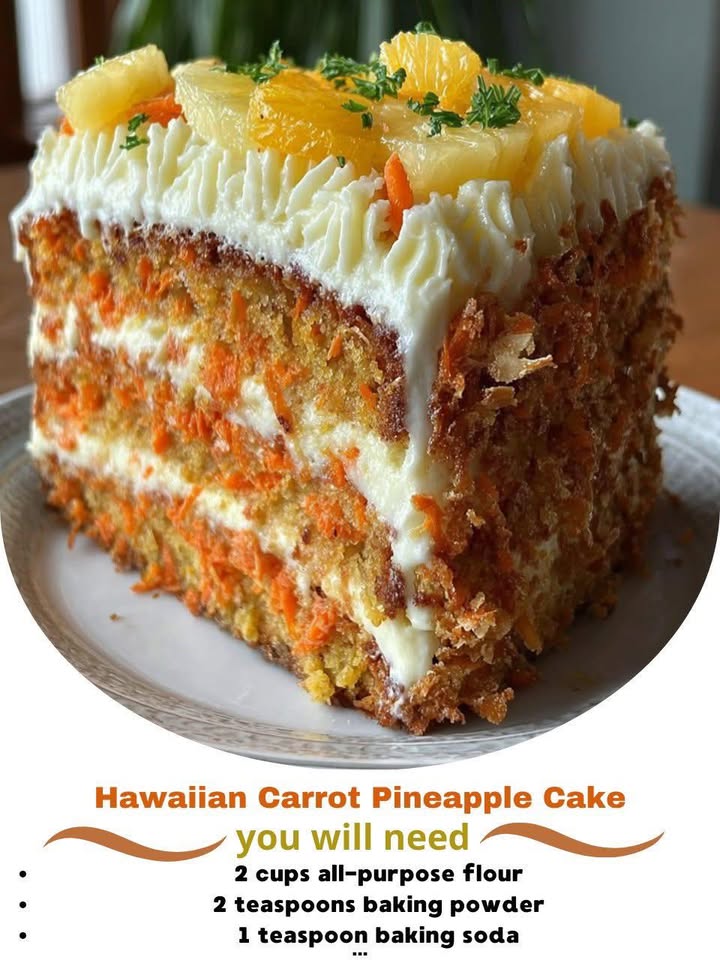
Welcome to the tropical embrace of Hawaiian Carrot Pineapple Cake — a luscious, moist, and vibrantly spiced dessert that transports your senses straight to sun-drenched beaches, swaying palms, and the sweet tang of island-grown fruit. This isn’t just another carrot cake; it’s a harmonious fusion of classic American baking tradition and the bold, bright flavors of the Pacific. With shredded carrots lending earthy sweetness and natural moisture, crushed pineapple adding juicy acidity and tender crumb structure, and warm spices like cinnamon, nutmeg, and ginger weaving in subtle warmth, this cake strikes the perfect balance between comforting familiarity and exotic delight. Whether served at a luau-themed gathering, a family Sunday brunch, or simply as a joyful midweek treat, Hawaiian Carrot Pineapple Cake delivers nostalgia, novelty, and nourishment in every forkful.
The History
The origins of Hawaiian Carrot Pineapple Cake are deeply rooted in culinary adaptation, migration, and island innovation. While carrot cake itself traces back to medieval Europe — where carrots were used as sweeteners during sugar shortages — its modern American incarnation surged in popularity during the 1960s health-food movement, when grated carrots were praised for their beta-carotene richness. Pineapple, meanwhile, was introduced to Hawai‘i in the early 19th century and became commercially cultivated by the 1880s. James Dole’s founding of the Hawaiian Pineapple Company (later Dole Food Company) in 1901 cemented pineapple’s status as Hawai‘i’s iconic export — and soon, its beloved ingredient in local kitchens.
By the mid-20th century, home cooks across the Aloha State began experimenting with pineapple in traditional baked goods — folding crushed pineapple into banana bread, adding it to coconut macadamia cookies, and, notably, reimagining carrot cake with tropical flair. Early versions appeared in community cookbooks like the Hawaiian Women’s Club Cookbook (1957) and the Kaua‘i County Extension Service Recipe Collection (1963), often featuring locally sourced carrots from upcountry Maui farms and canned or fresh ‘Smooth Cayenne’ pineapple from O‘ahu’s fertile fields. Over time, the recipe evolved beyond mere substitution: bakers discovered that pineapple’s natural bromelain enzyme not only tenderized the batter but also enhanced moisture retention — a revelation especially valuable in Hawai‘i’s humid, sometimes oven-unpredictable climate. Today, Hawaiian Carrot Pineapple Cake stands as a proud emblem of local food sovereignty — a testament to how immigrant techniques, indigenous resources, and island ingenuity can coalesce into something wholly original, deeply flavorful, and culturally resonant.
Ingredients Breakdown
Every element in Hawaiian Carrot Pineapple Cake plays a precise, purpose-driven role — from texture and structure to flavor depth and moisture control. Understanding each ingredient’s function empowers bakers to troubleshoot, substitute wisely, and elevate results:
- Grated Carrots: Use medium-shredded, fresh carrots (not pre-packaged shreds, which often contain anti-caking agents and dry out faster). They contribute natural sugars, fiber, moisture, and vibrant color — plus beta-carotene, which transforms into vitamin A during baking. For optimal texture, gently squeeze excess water from shredded carrots if using very juicy varieties (e.g., Nantes or Chantenay).
- Canned Crushed Pineapple (in juice, not syrup): The cornerstone of the “Hawaiian” distinction. Crushed — not diced or tidbits — ensures even distribution and seamless integration. Pineapple juice adds acidity that activates baking soda, while natural enzymes (bromelain) partially break down gluten proteins, yielding a uniquely tender, springy crumb. Always drain *lightly* — reserve ¼ cup of juice for added moisture and flavor; never use syrup-based pineapple, as excess sugar causes over-browning and greasiness.
- Granulated Sugar & Brown Sugar: A dual-sugar blend balances sweetness and complexity. Granulated sugar aerates the batter during creaming for lift, while brown sugar (preferably dark) contributes molasses notes, hygroscopic moisture retention, and subtle caramel depth — essential for counteracting pineapple’s brightness.
- Vegetable Oil (or Coconut Oil): Unlike butter-based cakes, oil-based batters yield superior moisture retention and shelf life — critical for a cake meant to be enjoyed over several days (a hallmark of Hawaiian hospitality). Refined coconut oil adds a whisper of tropical aroma without overpowering; unrefined may impart strong coconut flavor best reserved for variations.
- Eggs: Large, room-temperature eggs emulsify the batter, trap air for structure, and provide protein-based tenderness. Extra yolks (optional add-in) enrich color and mouthfeel.
- All-Purpose Flour (with vital wheat gluten optional): Standard AP flour offers reliable rise and neutral flavor. In high-humidity environments or with extra-moist batters, adding 1 tsp vital wheat gluten per cup of flour strengthens gluten network slightly — preventing collapse without toughening.
- Leavening Agents (Baking Soda + Baking Powder): Baking soda neutralizes pineapple’s acidity while boosting rise; baking powder provides secondary, heat-activated lift. Together, they ensure consistent height and open crumb — crucial when dense carrots and fruit compete for space.
- Spice Blend (Cinnamon, Ginger, Nutmeg, Allspice): Warmth without heat. Freshly grated nutmeg is non-negotiable for floral depth; ground ginger adds zesty bite; allspice (often overlooked) lends clove-like resonance that bridges carrot earthiness and pineapple brightness.
- Salted Butter & Cream Cheese (for Frosting): Full-fat, brick-style cream cheese (not spreadable) and high-fat European-style butter (82%+ fat) produce a luxuriously stable, tangy-sweet frosting with velvety mouthfeel. Salt enhances all other flavors and balances sweetness.
- Toasted Macadamia Nuts & Shredded Coconut: Signature Hawaiian garnishes. Macadamias offer buttery crunch and rich monounsaturated fats; unsweetened shredded coconut (toasted until golden) adds chew, aroma, and textural contrast. Both are nutritionally synergistic — enhancing satiety and antioxidant profile.
Step-by-Step Recipe
- Prep & Preheat: Position oven racks in upper and lower thirds. Preheat to 350°F (177°C). Grease two 9-inch round cake pans *thoroughly*, line bottoms with parchment paper circles, then grease parchment and dust lightly with flour — tapping out excess. For sheet cake: grease and flour one 9×13-inch pan.
- Drain & Reserve Pineapple: Open 20 oz (567g) can crushed pineapple. Pour contents into a fine-mesh strainer set over a bowl. Gently press with a spoon to extract ~½ cup juice. Measure out exactly ¾ cup *drained* crushed pineapple (moist but not dripping). Reserve ¼ cup juice for batter; refrigerate remaining juice for smoothies or glazes.
- Grate Carrots: Peel and grate 3 cups (about 4–5 medium) carrots on the medium holes of a box grater. For uniformity and moisture control, avoid food processor shredding (it pulverizes fibers). Place in a clean kitchen towel and gently squeeze out *just enough* water to eliminate pooling — do not wring dry.
- Cream Wet Ingredients: In a large bowl, whisk together oil, granulated sugar, brown sugar, reserved pineapple juice, vanilla, and eggs (one at a time, fully incorporated before adding next). Whisk vigorously for 2 minutes until thickened and pale — this incorporates air for better rise.
- Dry Ingredients Mix: In a separate bowl, sift together flour, baking soda, baking powder, salt, cinnamon, ginger, nutmeg, and allspice. Whisk 30 seconds to evenly distribute leaveners and spices.
- Fold Batter: Add dry ingredients to wet in three additions, folding gently with a spatula after each until *just combined*. Overmixing develops gluten and causes toughness. After second addition, fold in drained pineapple and grated carrots until evenly dispersed — batter will be thick, glossy, and speckled with orange and gold.
- Pan & Bake: Divide batter evenly between prepared pans (use a scale for precision: ~580g per 9-inch round). Smooth tops with an offset spatula. Tap pans firmly twice on counter to release air bubbles. Bake 30–35 minutes (rounds) or 38–42 minutes (sheet), rotating pans top-to-bottom and front-to-back at 20 minutes. Cake is done when a toothpick inserted 1 inch from edge comes out clean *and* center springs back when lightly pressed.
- Cool Completely: Let cakes cool in pans on wire racks for 20 minutes. Run a thin knife around edges, invert onto racks, peel off parchment, then reinvert right-side-up to cool fully (minimum 2 hours). *Crucial:* Frosting will melt or slide if applied to warm cake.
- Prepare Frosting: Beat room-temperature cream cheese and butter on medium speed 2 minutes until creamy and lump-free. Scrape bowl. Sift in powdered sugar (3½ cups) and salt; beat on low 1 minute, then medium 2 minutes until fluffy. Add 1 tsp vanilla and 1 tbsp pineapple juice (optional for tang); beat 30 seconds. Refrigerate 15 minutes for easier spreading.
- Frost & Garnish: Level cooled cake layers with serrated knife if domed. Place bottom layer on turntable or plate. Spread ¾ cup frosting evenly. Top with second layer. Apply thin crumb coat over entire cake; refrigerate 20 minutes. Finish with remaining frosting using offset spatula or bench scraper. Press toasted macadamias and toasted coconut around sides; pipe rosettes or swirls on top. Chill 30 minutes before slicing.
Tips
- Room-Temperature Rule: Bring eggs, cream cheese, butter, and even pineapple juice to room temperature (65–70°F) for 60 minutes before baking/frosting. Cold ingredients cause curdling, uneven mixing, and poor emulsion — leading to dense cake or broken frosting.
- Measure Flour Correctly: Spoon flour into measuring cup and level with straight edge — never scoop directly from bag (compacts flour, adding up to 25% extra). For precision, weigh: 1 cup AP flour = 120g.
- Don’t Skip the Toast: Toast macadamias at 325°F for 8–10 minutes until fragrant and golden; toast coconut at 300°F for 5–7 minutes, stirring every 2 minutes. Toasting deepens flavor, removes raw bitterness, and prevents sogginess against frosting.
- Humidity Hack: In tropical or rainy climates, reduce pineapple juice by 1 tbsp and add 1 tbsp sour cream or Greek yogurt — its acidity and fat stabilize batter against excess moisture.
- Bake Evenly: Use an oven thermometer — many ovens run hot or cold. Rotate pans halfway through bake time, and avoid opening oven door before 25 minutes to prevent collapse.
- Storage Wisdom: Store unfrosted cake layers wrapped tightly in plastic at room temperature up to 2 days, or freeze up to 3 months. Frosted cake keeps refrigerated (covered) up to 5 days — bring to room temperature 45 minutes before serving for best texture.
- Perfect Slice Every Time: Dip a sharp, thin-bladed knife in hot water and wipe dry between cuts. This ensures clean, crumb-free slices with intact frosting edges.
- Taste Before Frosting: Taste a small crumb of cooled cake — if spice profile feels muted, stir ¼ tsp extra cinnamon or ginger into frosting for layered warmth.
Variations and Customizations
This cake is a canvas for creativity — honoring tradition while inviting personal expression. Here are thoughtfully tested, chef-approved adaptations:
- Vegan Hawaiian Carrot Pineapple Cake: Replace eggs with flax eggs (3 tbsp ground flax + 9 tbsp warm water, rested 10 min); use refined coconut oil instead of vegetable oil; swap cream cheese frosting for cashew-based frosting (soaked raw cashews, lemon juice, maple syrup, coconut cream, pinch turmeric for color); top with toasted pepitas instead of macadamias for nut-free option.
- Gluten-Free Version: Substitute 1:1 gluten-free all-purpose flour blend *with xanthan gum included* (e.g., King Arthur or Bob’s Red Mill). Add ½ tsp xanthan gum if blend doesn’t contain it. Increase pineapple juice by 1 tbsp to compensate for GF flour’s absorbency. Bake 2–3 minutes longer — GF batters often need extra time to set.
- Whole Grain Upgrade: Replace ½ cup AP flour with toasted oat flour (pulse rolled oats until fine) or white whole wheat flour. Adds fiber and nutty depth without heaviness. Reduce brown sugar by 2 tbsp to balance earthier notes.
- Pineapple Rum Infusion: Simmer reserved pineapple juice with 2 tbsp dark rum and 1 tsp grated lime zest until reduced by half. Cool completely, then add to batter with vanilla. Brush cooled layers with reduction before frosting for boozy, citrus-kissed complexity.
- Coconut Milk Variation: Substitute full-fat coconut milk (canned, stirred well) for pineapple juice in both batter and frosting. Enhances tropical aroma and yields ultra-rich crumb. Garnish with crystallized ginger and toasted coconut flakes.
- Mini Bundt or Muffin Format: Fill greased mini bundt pans ⅔ full; bake at 350°F for 18–22 minutes. For muffins, line 24-cup tin, bake 17–19 minutes. Frost with cream cheese drizzle (powdered sugar + cream cheese + splash milk) and a single macadamia half per muffin top.
- Low-Sugar Option: Reduce granulated and brown sugar by ⅓ cup total; increase pineapple (drained) to 1 cup for natural sweetness; add 2 tbsp unsweetened applesauce for moisture. Use monk fruit–erythritol blend (1:1 sugar ratio) if preferred. Frost with Greek yogurt–cream cheese blend (½ cup each, 1 tbsp honey, lemon zest).
- Spice-Forward “Island Chai” Cake: Add ½ tsp cardamom, ¼ tsp black pepper, and 1 star anise pod (steeped in warm pineapple juice, then removed) to batter. Frost with chai-spiced cream cheese (add 1 tsp chai concentrate or steeped chai tea into frosting).
Health Considerations and Nutritional Value
Hawaiian Carrot Pineapple Cake offers surprising nutritional merit when viewed through a holistic, ingredient-forward lens — far beyond typical “indulgence” labeling. Per standard slice (1/12 of 9-inch double-layer cake, frosted), approximate values are: 385 calories, 18g fat (9g saturated), 52g carbohydrates (38g sugars), 4g protein, 2g fiber, 220mg sodium. While not low-calorie, its nutrient density distinguishes it:
- Vitamin A Powerhouse: One cup of carrots provides over 400% DV of beta-carotene — converted to retinol in the body, supporting vision, immune resilience, and skin health. Baking enhances bioavailability.
- Digestive Enzyme Benefits: Raw pineapple contains bromelain, a proteolytic enzyme aiding protein digestion and reducing inflammation. Though heat deactivates most bromelain, residual compounds and pineapple’s high fiber content still support gut motility and microbiome diversity.
- Antioxidant Synergy: Cinnamon regulates blood glucose spikes; ginger combats oxidative stress; nutmeg contains myristicin with neuroprotective potential; macadamias deliver heart-healthy monounsaturated fats and tocotrienols (vitamin E variants).
- Functional Fats: Macadamia nuts and coconut oil provide lauric acid and palmitoleic acid — linked to improved lipid profiles and metabolic flexibility when consumed in moderation.
- Considerations: Those monitoring sodium should opt for low-sodium baking powder and unsalted butter. For reduced sugar impact, pair slice with plain Greek yogurt or a handful of berries to slow glycemic response. Individuals with pineapple allergy (rare but possible due to bromelain sensitivity) should avoid entirely; those with nut allergies must omit macadamias and verify coconut processing safety.
- Mindful Enjoyment: This cake shines as part of a balanced pattern — not daily fare, but a celebration of whole foods, cultural connection, and sensory joy. Its homemade nature avoids preservatives, artificial colors, and hydrogenated oils common in commercial versions.
Ingredients
For the Cake:
- 3 cups (360g) peeled and medium-grated carrots (about 4–5 medium carrots)
- 1 (20 oz / 567g) can crushed pineapple in juice, drained (reserve ¼ cup juice)
- 1 ½ cups (300g) granulated sugar
- 1 cup (220g) packed dark brown sugar
- 1 ¼ cups (295ml) neutral vegetable oil (or refined coconut oil)
- 4 large eggs, room temperature
- 2 tsp pure vanilla extract
- 3 cups (360g) all-purpose flour, spooned & leveled
- 2 tsp baking soda
- 1 ½ tsp baking powder
- 1 ½ tsp ground cinnamon
- 1 tsp ground ginger
- ½ tsp freshly grated nutmeg
- ¼ tsp ground allspice
- 1 tsp fine sea salt
For the Cream Cheese Frosting:
- 16 oz (454g) full-fat brick cream cheese, room temperature
- 1 cup (227g) unsalted butter, room temperature
- 3 ½ cups (420g) powdered sugar, sifted
- 1 tsp pure vanilla extract
- ¼ tsp fine sea salt
- 1 tbsp reserved pineapple juice (optional, for brightness)
For Garnish:
- 1 cup (130g) raw macadamia nuts, toasted and roughly chopped
- 1 cup (80g) unsweetened shredded coconut, toasted until golden
Directions
- Preheat oven to 350°F (177°C). Grease and flour two 9-inch round cake pans; line bottoms with parchment paper, then grease parchment.
- Drain crushed pineapple in a fine-mesh strainer over a bowl. Gently press to collect ~½ cup juice. Measure out exactly ¾ cup drained pineapple; reserve ¼ cup juice for batter.
- In a large bowl, whisk oil, granulated sugar, brown sugar, reserved pineapple juice, vanilla, and eggs (one at a time) until thickened and pale (~2 minutes).
- In another bowl, sift together flour, baking soda, baking powder, cinnamon, ginger, nutmeg, allspice, and salt. Whisk 30 seconds.
- Add dry ingredients to wet in three parts, folding gently with a silicone spatula after each until just combined. Fold in drained pineapple and grated carrots until evenly distributed.
- Divide batter evenly between prepared pans (weigh for accuracy: ~580g each). Smooth tops. Tap pans firmly twice on counter.
- Bake on upper and lower oven racks for 30–35 minutes, rotating halfway, until toothpick inserted 1 inch from edge comes out clean and center springs back.
- Cool in pans 20 minutes. Invert onto wire racks, peel off parchment, then reinvert to cool completely (2+ hours).
- Make frosting: Beat cream cheese and butter until smooth (2 min). Gradually add powdered sugar and salt on low; increase to medium and beat 2 min until fluffy. Stir in vanilla and optional pineapple juice.
- Level cooled layers. Frost with crumb coat; chill 20 min. Apply final coat. Press toasted macadamias and coconut around sides. Chill 30 min before slicing.
FAQ
- Can I use fresh pineapple instead of canned?
- Yes — but with caveats. Fresh pineapple is less acidic and lacks the concentrated juice of canned. To substitute: finely crush 1 ½ cups fresh pineapple (juice reserved), then simmer juice with 1 tbsp brown sugar until reduced to ¼ cup. Cool completely before using. Note: Fresh pineapple’s higher water content may require 1–2 extra minutes baking time.
- Why did my cake sink in the middle?
- Most commonly caused by underbaking, opening oven too early, or excessive leavening. Ensure toothpick test is done *near edge*, not center (center is naturally softer). Also verify baking soda isn’t expired — old leavener loses potency, causing collapse after initial rise.
- Can I make this cake ahead of time?
- Absolutely — and it improves! Unfrosted layers keep wrapped in plastic at room temperature up to 2 days, or freeze up to 3 months. Frosted cake lasts refrigerated (covered) up to 5 days. Flavor deepens as spices meld and pineapple moisture redistributes.
- My frosting is too soft — what do I do?
- Refrigerate bowl and beaters 15 minutes, then re-beat on medium. If still soft, add 2 tbsp sifted powdered sugar and 1 tsp softened butter; beat until stiff peaks form. Avoid over-chilling — below 60°F causes butter to harden and seize.
- Is there a way to make this cake more “Hawaiian”?
- Authentically elevate it with local touches: use Kaua‘i-grown organic carrots, Maui Gold pineapple (if available fresh), and Hawaiian sea salt in both batter and frosting. Garnish with liliko‘i (passionfruit) curd dots or edible orchid blossoms for true island elegance.
- Can I bake this as a sheet cake or loaf?
- Yes! For 9×13-inch sheet: bake 38–42 minutes. For four 8×4-inch loaves: bake 50–55 minutes. Adjust cooling accordingly — loaves need 1 hour in pan before removal. Sheet cake serves 24; loaves freeze beautifully for individual portions.
- What’s the best way to store leftovers?
- Refrigerate covered with cake dome or inverted bowl. To prevent drying, place a paper towel under cover to absorb condensation. Bring to room temperature 45 minutes before serving for optimal crumb and frosting texture.
- Can I use a hand mixer instead of stand mixer?
- Yes — though creaming butter/cream cheese for frosting requires 3–4 minutes on medium-high with a hand mixer versus 2 minutes with stand. For batter, whisk wet ingredients vigorously by hand (2 min) before folding in dry — no mixer needed.
Summary
Hawaiian Carrot Pineapple Cake is a masterclass in tropical harmony — where the earthy sweetness of farm-fresh carrots meets the bright, juicy tang of island-grown pineapple, all wrapped in warm spices, enriched with creamy frosting, and crowned with crunchy macadamias and toasted coconut.
More than a dessert, it’s a story of cultural fusion, agricultural abundance, and mindful baking — delivering exceptional moisture, nuanced flavor, functional nutrition, and joyful celebration in every golden, fragrant slice.