Introduction
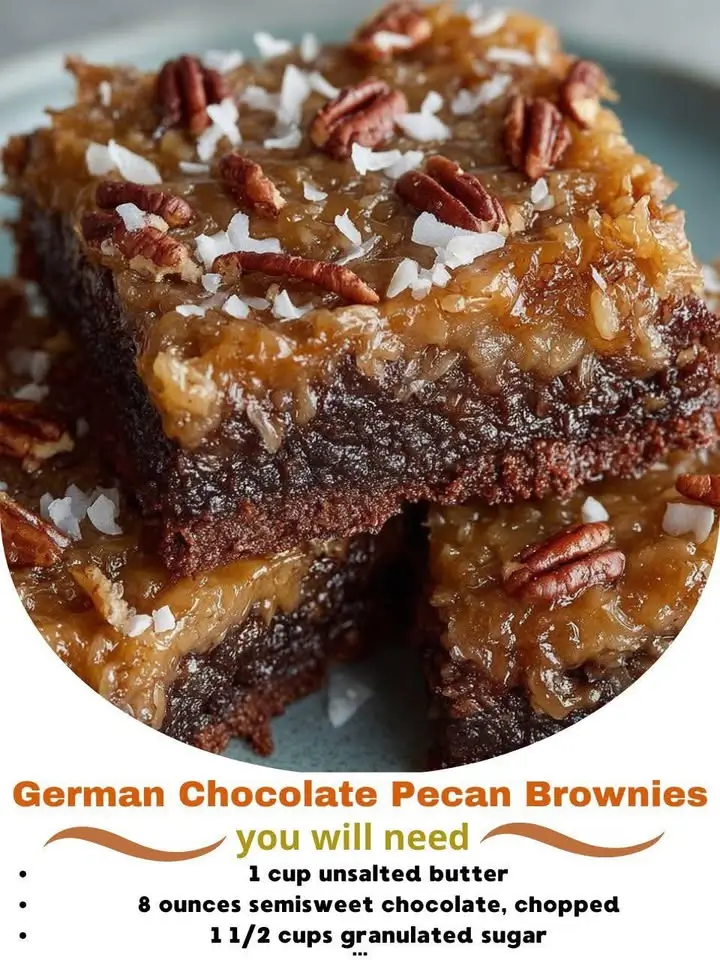
German Chocolate Pecan Brownies are the ultimate indulgence for chocolate lovers who crave a rich, fudgy treat with a nutty crunch. Combining the deep, decadent flavor of German chocolate cake with the dense texture of classic brownies, these confections offer an irresistible blend of cocoa, coconut, and toasted pecans. Whether you’re baking for a special occasion or simply treating yourself to something luxurious, these brownies deliver on every level—flavor, texture, and nostalgia.
Originating from the fusion of two beloved American desserts—German’s Sweet Chocolate Cake and traditional brownies—this hybrid dessert has become a favorite in home kitchens and bakeries alike. The result is a moist, chewy brownie swirled with a sweet coconut-pecan topping reminiscent of the iconic frosting used in German chocolate cake. With their glossy crust, crackly surface, and gooey interior, German Chocolate Pecan Brownies are not just a dessert—they’re an experience.
The History
The story behind German Chocolate Pecan Brownies begins with a fascinating twist of branding and culinary innovation. Despite its name, German chocolate cake does not originate from Germany. Instead, it was named after Samuel German, an English-American chocolatier who developed a type of dark baking chocolate for Baker’s Chocolate Company in 1852. This sweetened chocolate, known as “Baker’s German’s Sweet Chocolate,” became the foundation for what we now call German chocolate cake.
The cake gained nationwide popularity in the United States in 1957 when a recipe using this chocolate was published in the Dallas Morning News. The recipe, submitted by homemaker Mrs. George Clay, featured a three-layer cake topped with a rich custard-like icing made from egg yolks, evaporated milk, sugar, coconut, and pecans. Due to a typesetting error, the recipe was attributed to “German’s Chocolate Cake,” inadvertently cementing the name in American culinary history.
Brownies, on the other hand, emerged around the turn of the 20th century, with early versions appearing in cookbooks like the 1896 Boston Cooking-School Cook Book. Their dense, fudgy texture and ease of preparation made them a household staple. Over time, bakers began experimenting with variations, incorporating nuts, caramel, and even pieces of candy.
The fusion of German chocolate cake elements with brownies likely began in the mid-to-late 20th century, as home bakers sought ways to simplify the multi-layered cake into a more convenient, bar-style dessert. By embedding the signature coconut-pecan filling directly onto a chocolate brownie base, they created a one-pan treat that captured the essence of the original cake without the labor-intensive assembly. Today, German Chocolate Pecan Brownies are celebrated as a modern classic—a delicious homage to American ingenuity and sweet tooth satisfaction.
Ingredients Breakdown
To create the perfect batch of German Chocolate Pecan Brownies, each ingredient plays a vital role in building flavor, texture, and structure. Here’s a detailed breakdown:
- Unsweetened Baking Chocolate: Provides deep, intense chocolate flavor without added sugar. It forms the backbone of the brownie’s richness.
- Butter: Adds moisture, tenderness, and a luxurious mouthfeel. Unsalted butter is preferred so you can control the salt content.
- Granulated Sugar: Contributes sweetness and helps create the signature crackly top when combined with eggs.
- Brown Sugar: Enhances moisture and adds a subtle molasses depth that complements the coconut and pecans.
- Eggs: Bind the ingredients together while contributing to the brownie’s rise and fudgy texture. Egg yolks add richness; whites provide structure.
- Vanilla Extract: A touch of pure vanilla enhances the overall flavor profile, rounding out the chocolate and nuttiness.
- All-Purpose Flour: Gives the brownies their structure. Too much flour leads to cakey brownies; too little results in overly greasy ones.
- Cocoa Powder: Boosts the chocolate intensity and deepens the color. Use high-quality Dutch-process or natural cocoa for best results.
- Salt: Balances sweetness and amplifies all the other flavors.
- Pecans: Toasted and chopped, they add crunch and a buttery, earthy flavor that pairs perfectly with chocolate and coconut.
- Sweetened Flaked Coconut: The hallmark of German chocolate topping, providing tropical sweetness and soft texture.
- Evaporated Milk: Used in the coconut-pecan layer, it thickens when heated and creates a creamy, caramel-like consistency.
- Egg Yolks (for topping): Act as a binder and enrich the topping, giving it a custard-like quality.
Step-by-Step Recipe
- Preheat Oven & Prepare Pan: Preheat your oven to 350°F (175°C). Line a 9×13-inch baking pan with parchment paper, leaving overhang on two sides for easy removal. Lightly grease the parchment and sides of the pan.
- Melt Chocolate and Butter: In a medium heatproof bowl set over a pot of simmering water (double boiler method), melt 4 ounces of unsweetened baking chocolate with 1 cup (2 sticks) of unsalted butter. Stir frequently until smooth. Remove from heat and let cool slightly.
- Mix Wet Ingredients: In a large mixing bowl, whisk together 1 cup granulated sugar and ½ cup packed light brown sugar. Add the melted chocolate-butter mixture and stir until well combined. Whisk in 3 large eggs, one at a time, followed by 1 teaspoon of pure vanilla extract. Mix until shiny and smooth.
- Incorporate Dry Ingredients: Sift in ¾ cup all-purpose flour, ¼ cup cocoa powder, ½ teaspoon salt, and a pinch of baking powder (optional, for slight lift). Gently fold with a spatula until just combined—do not overmix. Stir in 1 cup of chopped toasted pecans.
- Pour Batter into Pan: Spread the thick brownie batter evenly into the prepared pan, smoothing the top with the spatula. Set aside while preparing the topping.
- Make Coconut-Pecan Topping: In a saucepan over medium heat, combine 1 cup evaporated milk, 1 cup granulated sugar, 3 large egg yolks, 2 tablespoons butter, 1 teaspoon vanilla extract, and a pinch of salt. Cook, stirring constantly, for about 8–10 minutes until the mixture thickens slightly and coats the back of a spoon. Remove from heat and stir in 1½ cups sweetened flaked coconut and ½ cup chopped toasted pecans.
- Add Topping to Brownies: Spoon the warm coconut-pecan mixture evenly over the brownie batter. Use an offset spatula or knife to gently swirl it into the top layer if desired, creating a marbled effect.
- Bake: Bake for 30–35 minutes, or until a toothpick inserted near the center comes out with moist crumbs (not wet batter). The top should be set and the edges slightly pulled away from the pan.
- Cool Completely: Allow the brownies to cool completely in the pan on a wire rack. For clean cuts, refrigerate for 1–2 hours before slicing.
- Serve: Use the parchment overhang to lift the brownies out of the pan. Cut into squares using a sharp knife dipped in hot water for neat edges.
Tips
- Toast Your Pecans: Spread pecans on a baking sheet and toast at 350°F for 8–10 minutes until fragrant. This enhances their flavor and crunch.
- Avoid Overbaking: Brownies continue to cook slightly as they cool. Remove them from the oven when the center still looks slightly underdone for maximum fudginess.
- Use Quality Chocolate: Since chocolate is the star, opt for high-quality unsweetened chocolate bars rather than chips.
- Chill Before Cutting: Refrigerating the cooled brownies ensures clean, professional-looking slices.
- Don’t Overmix the Batter: Once flour is added, mix only until incorporated. Overmixing develops gluten, leading to tough brownies.
- Double the Batch: These brownies freeze beautifully. Wrap individual portions in plastic and store in an airtight container for up to 3 months.
- Swirl Technique: For a bakery-style look, use a knife to gently swirl the coconut-pecan topping into the batter in a figure-eight motion.
- Room Temperature Eggs: Using room-temperature eggs helps them incorporate more smoothly into the batter, improving texture.
Variations and Customizations
While traditional German Chocolate Pecan Brownies are divine as-is, there are countless ways to personalize them to suit dietary needs, flavor preferences, or seasonal themes:
- Gluten-Free Version: Substitute all-purpose flour with a 1:1 gluten-free baking blend. Ensure cocoa powder and other ingredients are certified gluten-free.
- Dairy-Free Option: Replace butter with vegan margarine or coconut oil, and use dairy-free chocolate. Swap evaporated milk with full-fat coconut milk for the topping.
- Reduced Sugar: Use coconut sugar instead of granulated sugar, and opt for unsweetened coconut flakes. Note: texture may vary slightly.
- Nut Substitutions: Replace pecans with walnuts, almonds, or hazelnuts. For nut-free versions, omit nuts entirely or use roasted sunflower seeds.
- Chocolate Variations: Swirl in white or milk chocolate chips into the brownie batter before adding the topping for extra decadence.
- Alcohol Infusion: Add 1 tablespoon of bourbon, rum, or Kahlúa to the brownie batter for a sophisticated depth of flavor.
- Fruit Twist: Fold in dried cherries or cranberries along with the pecans for a tart contrast to the sweet coconut.
- Layered Bars: Make them into no-bake layered bars by pressing a chocolate-cookie crust (like Oreo crumbs and butter) into the pan before adding the brownie layer.
- Holiday Edition: Add a dash of cinnamon or pumpkin spice to the topping during fall, or garnish with edible gold dust and sprinkles for festive occasions.
- Mini Muffin Tin Version: Bake in lined muffin tins for bite-sized treats—reduce baking time to 18–22 minutes.
Health Considerations and Nutritional Value
German Chocolate Pecan Brownies are undeniably a treat meant for enjoyment in moderation. However, understanding their nutritional profile can help you make informed choices:
Per Serving (1 of 15 brownies, approximate):
- Calories: 320–360 kcal
- Total Fat: 22–26g (Saturated Fat: 10–13g)
- Carbohydrates: 32–36g (Dietary Fiber: 2–3g, Sugars: 24–28g)
- Protein: 3–4g
- Cholesterol: 60–75mg
- Sodium: 80–110mg
Key Considerations:
- High in Saturated Fat: From butter, chocolate, and egg yolks. Enjoy occasionally as part of a balanced diet.
- Sugar Content: Contains significant added sugars. Diabetics should consume sparingly or explore sugar substitutes.
- Nutrients from Pecans: Pecans provide heart-healthy monounsaturated fats, fiber, vitamin E, and antioxidants.
- Iron & Magnesium: Cocoa powder contributes small amounts of essential minerals.
- Energy-Dense: Ideal for those needing calorie-dense snacks, such as athletes or individuals with increased energy needs.
For a healthier twist, consider reducing sugar by 25%, using applesauce to replace some fat, or increasing fiber with whole wheat pastry flour. Pairing a small square with fresh berries or Greek yogurt can balance sweetness with acidity and protein.
Ingredients
For the Brownies:
- 4 oz (½ cup) unsweetened baking chocolate, chopped
- 1 cup (2 sticks / 226g) unsalted butter
- 1 cup (200g) granulated sugar
- ½ cup (100g) packed light brown sugar
- 3 large eggs, room temperature
- 1 tsp pure vanilla extract
- ¾ cup (95g) all-purpose flour
- ¼ cup (20g) unsweetened cocoa powder
- ½ tsp salt
- Pinch of baking powder (optional)
- 1 cup (100g) chopped toasted pecans
For the Coconut-Pecan Topping:
- 1 cup (240ml) evaporated milk
- 1 cup (200g) granulated sugar
- 3 large egg yolks
- 2 tbsp (28g) unsalted butter
- 1 tsp pure vanilla extract
- Pinch of salt
- 1½ cups (120g) sweetened flaked coconut
- ½ cup (50g) chopped toasted pecans
Directions
- Preheat oven to 350°F (175°C). Grease and line a 9×13-inch baking pan with parchment paper, allowing overhang on two sides for easy removal.
- Melt the unsweetened chocolate and butter together using a double boiler. Stir until smooth, then remove from heat and let cool slightly.
- In a large bowl, whisk together granulated sugar and brown sugar. Add the melted chocolate mixture and stir until combined.
- Whisk in eggs, one at a time, followed by vanilla. The mixture should become glossy and slightly thickened.
- Sift in flour, cocoa powder, salt, and baking powder (if using). Fold gently with a spatula until just combined. Do not overmix.
- Stir in 1 cup of chopped toasted pecans. Pour the batter into the prepared pan and spread evenly.
- To make the topping, combine evaporated milk, sugar, egg yolks, butter, vanilla, and salt in a saucepan. Cook over medium heat, stirring constantly, for 8–10 minutes until thickened.
- Remove from heat and stir in coconut and ½ cup chopped pecans. The mixture will be sticky and warm.
- Immediately spoon the topping over the brownie batter. Use a knife to swirl gently if desired.
- Bake for 30–35 minutes until a toothpick comes out with moist crumbs. The edges should be set and slightly pulling from the pan.
- Cool completely in the pan on a wire rack. For best results, chill in the refrigerator for 1–2 hours before slicing.
- Lift the brownies out using the parchment overhang. Cut into squares with a sharp, hot knife for clean edges.
- Serve at room temperature or slightly warmed. Store in an airtight container at room temperature for up to 3 days, or refrigerate for up to 1 week.
FAQ
Can I make these brownies ahead of time?
Yes! Bake and cool them completely, then store in an airtight container. They actually taste better the next day as flavors meld. Refrigerate for longer storage or freeze for up to 3 months.
Why are my brownies cakey instead of fudgy?
This usually happens due to overmixing, too much flour, or overbaking. Stick to the recipe measurements, fold gently, and pull them out when the center is still slightly underdone.
Can I use canned coconut-pecan frosting?
Absolutely. If short on time, spread a layer of store-bought German chocolate cake frosting over baked and cooled brownies, then broil for 1–2 minutes to lightly toast the top.
Do I have to toast the pecans?
Toasting is highly recommended—it intensifies their flavor and crunch. Skip only if pressed for time, but expect a milder nutty note.
Can I make this recipe without eggs?
Eggs are crucial for texture and binding. For vegan versions, try flax eggs (1 tbsp ground flax + 3 tbsp water per egg), though results may be denser.
Can I use shredded coconut instead of flaked?
Yes, but flaked coconut has a lighter texture and toasts more evenly. Shredded coconut can become chewy; avoid the sweetened variety unless specified.
How do I prevent the topping from sinking?
The topping should be thickened properly before spreading. Ensure you cook it long enough to coat the back of a spoon, and apply it immediately while warm.
Are German Chocolate Pecan Brownies freezer-friendly?
Yes! Wrap tightly in plastic wrap and foil, then place in a freezer-safe bag. Thaw overnight in the fridge and bring to room temperature before serving.
Summary
German Chocolate Pecan Brownies combine the rich fudginess of chocolate brownies with the iconic coconut-pecan topping of German chocolate cake, creating a decadent, one-pan dessert that’s both nostalgic and luxurious.
Perfect for gatherings, gifts, or satisfying a sweet craving, these brownies offer a symphony of textures and flavors—crackly top, gooey center, chewy coconut, and crunchy pecans—in every unforgettable bite.