Introduction
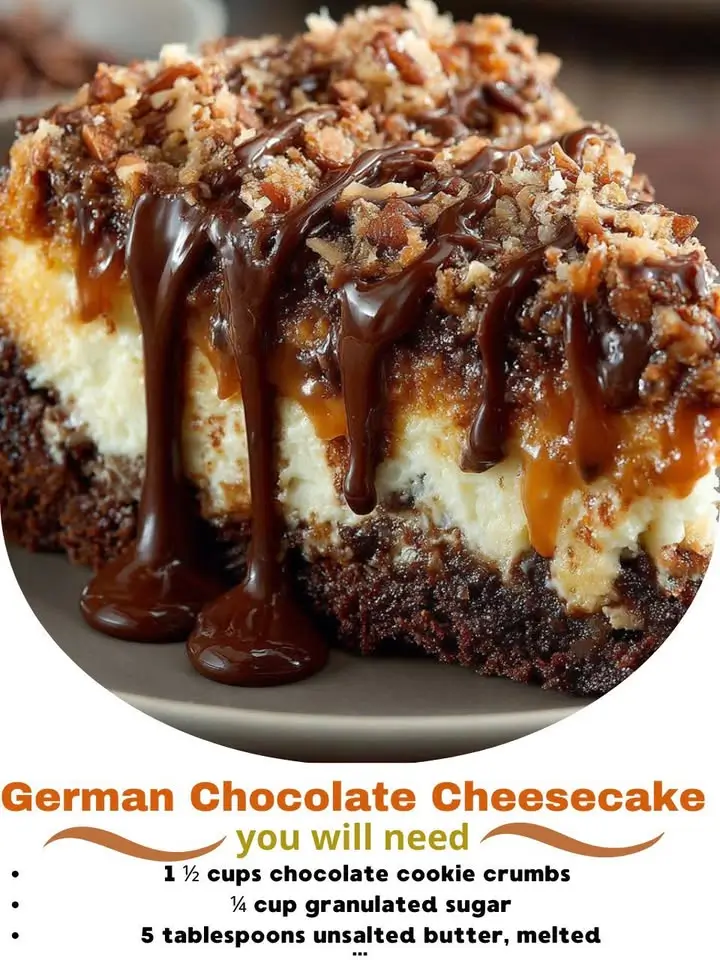
German Chocolate Cheesecake is a decadent fusion of two beloved American desserts: the rich, fudgy German chocolate cake and the creamy, velvety texture of New York-style cheesecake. Despite its name, this dessert has no actual ties to Germany; rather, it’s an American creation that honors Samuel German, the chocolatier who developed a special dark baking chocolate for Baker’s Chocolate Company in the 19th century. Over time, German Chocolate Cake became a staple in Southern U.S. bakeries, known for its moist chocolate layers and luxurious coconut-pecan frosting. Now, imagine taking that iconic flavor profile—sweet caramel-like coconut-pecan filling, deep cocoa notes, and a buttery crust—and blending it into a luscious cheesecake. The result? A show-stopping dessert that combines the best of both worlds: the elegance of cheesecake with the nostalgic richness of German chocolate cake. Whether you’re serving it at a holiday gathering, birthday celebration, or simply treating yourself on a quiet evening, German Chocolate Cheesecake promises an unforgettable taste experience.
The History
The story of German Chocolate Cheesecake begins not in Germany, but in the heart of American culinary innovation. The term “German” in German Chocolate Cake refers not to the country but to Samuel German, an English-American chocolatier employed by Baker’s Chocolate in the 1850s. In 1852, he developed a unique sweet baking chocolate made from a blend of chocolate liquor, sugar, cocoa butter, and vanilla—a formulation that would later bear his name. However, it wasn’t until 1957 that the cake gained national fame. A recipe using “German’s Sweet Chocolate” was published in the Dallas Morning News by a Texas homemaker named Mrs. George Clay. The recipe, which featured a layered chocolate cake topped with a warm coconut-pecan custard frosting, quickly gained popularity across the United States. By the 1960s, the cake had become so widely associated with the brand that people began referring to it as “German Chocolate Cake,” mistakenly assuming it had European origins.
As American bakers experimented with classic recipes throughout the late 20th century, the idea of transforming beloved cakes into cheesecake form gained traction. Enter the German Chocolate Cheesecake: a creative reinterpretation that marries the dense, creamy consistency of cheesecake with the signature flavors of German chocolate cake. This hybrid dessert likely emerged in the 1980s and 1990s, when gourmet baking and dessert fusion were gaining momentum. Cookbooks and culinary magazines began featuring variations that incorporated chocolate into the crust, swirled coconut-pecan fillings into the batter, or topped plain cheesecakes with a traditional German frosting. Today, German Chocolate Cheesecake stands as a testament to American ingenuity in the kitchen—a modern classic born from tradition, reinvention, and a love for bold, indulgent flavors.
Ingredients Breakdown
To create an authentic and deeply flavorful German Chocolate Cheesecake, each ingredient plays a critical role in achieving the perfect balance of richness, texture, and sweetness. Let’s take a detailed look at what goes into this masterpiece:
- Cream Cheese: The foundation of any great cheesecake, full-fat cream cheese provides the dense, creamy base. It should be softened to room temperature to ensure a smooth, lump-free batter.
- Sugar: Granulated sugar adds sweetness and helps aerate the mixture when beaten with the cream cheese. Some recipes also use brown sugar in the topping for a deeper molasses note.
- Eggs: Eggs act as a binder and give the cheesecake its custard-like structure. They should be added one at a time and mixed just until incorporated to prevent overbeating, which can lead to cracking.
- Sour Cream or Heavy Cream: These add moisture and tanginess, balancing the sweetness and contributing to a silkier texture.
- Vanilla Extract: Pure vanilla enhances the overall flavor profile and complements both the chocolate and coconut elements.
- Dark Chocolate or Cocoa Powder: Since this is a German chocolate variation, high-quality cocoa powder or melted dark chocolate is folded into the batter to deliver that signature chocolate depth.
- Graham Cracker Crumbs: Used for the crust, these provide a slightly sweet, crunchy base. Some variations mix in chocolate cookie crumbs for added chocolate intensity.
- Butter: Melted butter binds the crust together and gives it a rich, buttery flavor.
- Sweetened Condensed Milk: Essential for the coconut-pecan topping, this thick, sweet milk creates the gooey, caramel-like consistency reminiscent of the original German chocolate cake frosting.
- Coconut (Flaked or Shredded): Toasted sweetened coconut flakes are a hallmark of the topping, offering chewy texture and tropical aroma.
- Pecans: Chopped pecans add nuttiness and crunch. Toasting them beforehand enhances their flavor significantly.
- Salt: A pinch of salt in both the crust and filling helps balance the sweetness and deepen the overall flavor.
- Chocolate Ganache or Glaze (optional): For extra decadence, some bakers drizzle a glossy chocolate ganache over the finished cheesecake.
Together, these ingredients create a harmonious blend of textures and tastes—creamy, crunchy, sweet, nutty, and deeply chocolatey—all layered into one stunning dessert.
Step-by-Step Recipe
- Prepare the Crust: Preheat your oven to 325°F (163°C). In a mixing bowl, combine 1½ cups graham cracker crumbs, ¼ cup granulated sugar, ½ cup melted unsalted butter, and 1 tablespoon cocoa powder. Mix until the crumbs are evenly moistened. Press the mixture firmly into the bottom and slightly up the sides of a 9-inch springform pan. Use the bottom of a glass or a flat measuring cup to compact it evenly. Bake for 8–10 minutes, then remove and let cool while you prepare the filling.
- Make the Chocolate Cheesecake Filling: In a large bowl, beat 4 packages (8 oz each) of softened cream cheese on medium speed until smooth and creamy, about 2–3 minutes. Add 1½ cups granulated sugar and continue beating until light and fluffy. Scrape down the sides of the bowl, then add 1 teaspoon vanilla extract and 3 tablespoons of cocoa powder (or 4 oz melted and cooled dark chocolate). Mix until fully incorporated.
- Add Eggs and Cream: One at a time, add 5 large eggs, mixing on low speed after each addition just until blended. Overmixing can incorporate too much air and cause cracks. Then, mix in 1 cup of sour cream (or heavy cream) until smooth. The batter should be silky and pourable.
- Fill and Bake: Pour the batter over the cooled crust. Tap the pan gently on the counter to release any air bubbles. Place the springform pan inside a larger roasting pan and fill the outer pan with hot water until it reaches halfway up the sides of the springform (this is the water bath, or bain-marie, which helps prevent cracking and ensures even baking).
- Bake Slowly: Carefully transfer to the preheated oven and bake for 60–75 minutes. The cheesecake is done when the edges are set but the center still jiggles slightly when gently shaken. Turn off the oven, crack the door open, and let the cheesecake cool inside for 1 hour. This gradual cooling helps prevent sinking and cracking.
- Chill Thoroughly: Remove from the water bath, run a knife around the edge (but don’t cut through), and refrigerate for at least 6 hours, preferably overnight.
- Prepare the Coconut-Pecan Topping: In a saucepan over medium heat, combine 1 cup sweetened condensed milk, 3 egg yolks, 2 tablespoons unsalted butter, 1 teaspoon vanilla extract, 1 cup sweetened shredded coconut, and ¾ cup chopped toasted pecans. Stir constantly for 8–10 minutes until the mixture thickens and turns golden. Remove from heat and let cool completely.
- Assemble the Cheesecake: Once the cheesecake is fully chilled, spread the cooled coconut-pecan topping evenly over the surface. For an elegant finish, drizzle with a simple chocolate ganache made from ½ cup heavy cream and 4 oz chopped semisweet chocolate, melted and cooled slightly.
- Serve: Release the springform pan, slice with a warm knife, and serve chilled. Garnish with extra pecans or coconut if desired.
Tips
- Room Temperature Ingredients: Ensure cream cheese, eggs, and sour cream are at room temperature before mixing. Cold ingredients can lead to lumps and uneven texture.
- Avoid Overmixing: Once you start adding eggs, mix only until combined. Overbeating incorporates excess air, which can cause the cheesecake to rise and then collapse, leading to cracks.
- Use a Water Bath: Don’t skip the water bath! It regulates temperature and adds moisture to the oven environment, preventing cracks and ensuring a smooth, creamy texture.
- Prevent Leaks: Wrap the outside of the springform pan tightly with aluminum foil to keep water from seeping in during baking.
- Cool Gradually: Letting the cheesecake cool slowly in the turned-off oven prevents thermal shock, which can cause cracking.
- Chill Overnight: Patience pays off. A minimum of 6 hours is required, but 8–12 hours yields the firmest, slicable texture.
- Toast the Nuts and Coconut: Lightly toasting the pecans and coconut before adding them to the topping enhances their flavor dramatically.
- Smooth Topping Application: Make sure the coconut-pecan mixture is completely cooled before spreading—it should be thick but spreadable. Warm topping can melt the cheesecake surface.
- Clean Slices: Dip a sharp knife in hot water and wipe it clean between each slice for neat, professional-looking cuts.
- Storage: Store leftovers covered in the refrigerator for up to 5 days. Freeze without topping for up to 2 months; thaw in the fridge and add topping before serving.
Variations and Customizations
While the classic German Chocolate Cheesecake is already a crowd-pleaser, there are countless ways to personalize it to suit your taste or occasion:
- Gluten-Free Version: Replace graham cracker crumbs with gluten-free chocolate cookie crumbs or a blend of almond flour and cocoa powder for a naturally gluten-free crust.
- Dairy-Free Option: Use dairy-free cream cheese, coconut cream, and vegan butter. Substitute sweetened condensed coconut milk for the traditional condensed milk in the topping.
- Mini Cheesecakes: Make individual servings using a muffin tin lined with parchment cups. Reduce baking time to 20–25 minutes and use a water bath with caution.
- Chocolate Swirl: Melt additional chocolate and swirl it into the cheesecake batter before baking for a marbled effect.
- Boozy Twist: Add 1–2 tablespoons of bourbon, rum, or Kahlúa to the filling or topping for a grown-up version that enhances the caramel and nutty flavors.
- Fruit Infusion: Layer a thin ribbon of raspberry or cherry compote between the crust and filling for a tart contrast.
- Crust Variations: Use crushed chocolate wafers, Oreo cookies (filling removed for less sweetness), or shortbread cookies instead of graham crackers.
- Nut Substitutions: If pecans aren’t available or you have allergies, try walnuts, almonds, or hazelnuts. Each brings its own unique flavor profile.
- Lower Sugar Options: Use sugar substitutes like erythritol or monk fruit in the filling, and opt for unsweetened coconut and reduced-sugar condensed milk alternatives.
- Decorative Touches: Pipe whipped cream rosettes around the edge, sprinkle with gold dust, or garnish with edible flowers for a festive presentation.
Health Considerations and Nutritional Value
German Chocolate Cheesecake is undeniably indulgent, and while it’s not a health food, understanding its nutritional content can help you enjoy it mindfully. A typical slice (1/12th of a 9-inch cake) contains approximately:
- Calories: 550–650 kcal
- Total Fat: 38–45g (with 18–22g saturated fat)
- Carbohydrates: 50–60g (including 40–50g sugars)
- Protein: 8–10g
- Cholesterol: 120–150mg
- Sodium: 300–400mg
The high fat and sugar content comes primarily from cream cheese, butter, eggs, sugar, and sweetened condensed milk. While this dessert offers minimal fiber and essential nutrients, it does provide calcium and some B vitamins from dairy ingredients. For those managing diabetes, heart health, or weight, moderation is key. Consider serving smaller slices or pairing with fresh berries to add fiber and antioxidants. Health-conscious bakers can explore lower-fat versions using Neufchâtel cheese, Greek yogurt, and natural sweeteners, though texture and flavor may vary. Always consult dietary guidelines or a nutritionist if incorporating such desserts into a medical diet plan.
Ingredients
For the Crust:
- 1½ cups graham cracker crumbs
- ½ cup (1 stick) unsalted butter, melted
- ¼ cup granulated sugar
- 1 tablespoon unsweetened cocoa powder
- Pinch of salt
For the Cheesecake Filling:
- 32 oz (4 packages) full-fat cream cheese, softened
- 1½ cups granulated sugar
- 5 large eggs, room temperature
- 1 cup sour cream (or heavy cream)
- 1 teaspoon pure vanilla extract
- 3 tablespoons unsweetened cocoa powder (or 4 oz melted dark chocolate)
For the Coconut-Pecan Topping:
- 1 cup sweetened condensed milk
- 3 large egg yolks
- 2 tablespoons unsalted butter
- 1 teaspoon vanilla extract
- 1 cup sweetened shredded coconut
- ¾ cup chopped pecans, toasted
Optional Glaze:
- 4 oz semisweet chocolate, finely chopped
- ½ cup heavy cream
Directions
- Preheat oven to 325°F (163°C). Grease a 9-inch springform pan and wrap the outside securely with 2–3 layers of heavy-duty aluminum foil to prevent water leakage.
- In a bowl, mix crust ingredients until combined. Press firmly into the bottom and 1 inch up the sides of the pan. Bake for 10 minutes, then cool completely.
- In a large mixer bowl, beat cream cheese on medium speed until smooth (~2 minutes). Add sugar and beat until fluffy. Scrape bowl, then add vanilla and cocoa powder; mix until uniform.
- Reduce speed to low. Add eggs one at a time, mixing just until blended after each. Mix in sour cream until smooth. Do not overmix.
- Pour batter into crust. Place springform pan into a large roasting pan. Fill roasting pan with hot water until halfway up the sides of the springform.
- Bake for 60–75 minutes until edges are set and center slightly jiggles. Turn off oven, open door slightly, and let cheesecake cool inside for 1 hour.
- Remove from water bath, run a knife around the edge, and refrigerate uncovered for at least 6 hours or overnight.
- For topping: In a saucepan, whisk together condensed milk, egg yolks, butter, and vanilla. Cook over medium heat, stirring constantly, for 5–7 minutes. Stir in coconut and pecans. Continue cooking 3–5 minutes until thickened and golden. Cool completely.
- Spread topping evenly over chilled cheesecake. For glaze, heat cream until steaming, pour over chopped chocolate, let sit 5 minutes, then stir until smooth. Drizzle over top.
- Refrigerate for 30 minutes to set glaze. Serve cold. Store leftovers covered in the refrigerator for up to 5 days.
FAQ
Q: Can I make this cheesecake ahead of time?
A: Absolutely! German Chocolate Cheesecake tastes even better the next day. Prepare it 1–2 days in advance and store it covered in the refrigerator.
Q: Why did my cheesecake crack?
A: Cracking is usually caused by overmixing, rapid temperature changes, or overbaking. To prevent this, avoid overbeating, use a water bath, cool gradually, and don’t overbake.
Q: Can I freeze German Chocolate Cheesecake?
A: Yes, but without the topping. Wrap tightly in plastic and foil, freeze for up to 2 months. Thaw in the refrigerator overnight, then add the topping before serving.
Q: Can I use canned coconut-pecan frosting?
A: While convenient, homemade topping has superior flavor and texture. If using canned, warm slightly and spread carefully over the chilled cheesecake.
Q: Is this recipe safe with raw eggs in the topping?
A: The topping is cooked on the stove, so the egg yolks are heated to a safe temperature during preparation. Just ensure it reaches a gentle boil and thickens properly.
Q: Can I make it without a springform pan?
A: A springform pan is ideal for easy release. Alternatives include a regular cake pan lined with parchment, but removal will be more difficult.
Q: How do I get clean slices?
A: Use a sharp knife dipped in hot water and wiped dry between cuts. This ensures smooth, clean edges every time.
Summary
German Chocolate Cheesecake blends the moist, nutty-coconut sweetness of classic German chocolate cake with the luxuriously creamy texture of a professional-grade cheesecake. It’s a show-stopping dessert that delivers deep chocolate flavor, chewy coconut, crunchy pecans, and a perfectly smooth bite.