Introduction
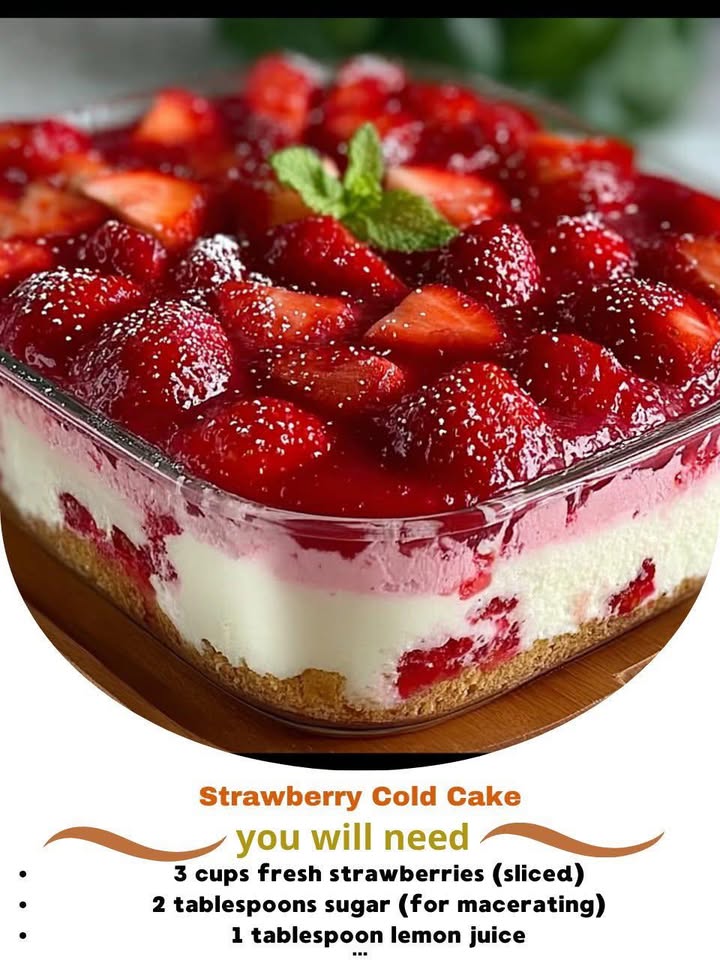
Gâteau froid aux fraises — a breathtaking, no-bake French summer dessert that marries elegance with effortless preparation. This chilled strawberry cake is not merely a confection; it’s a celebration of sun-ripened berries, velvety textures, and refined simplicity. Imagine layers of delicate vanilla-infused sponge or crisp biscuit base, crowned with a luxuriously smooth crème diplomat or mascarpone-strawberry mousse, generously draped in glossy, jewel-toned strawberry coulis, and finished with a cascade of fresh, glistening whole strawberries, mint leaves, and perhaps a whisper of edible flowers. It requires no oven, no temperamental custards, and no pastry chef credentials — just thoughtful assembly, quality ingredients, and reverence for seasonal produce. Perfect for picnics, garden parties, bridal showers, or quiet afternoons when the air hums with cicadas and the only agenda is pure, unadulterated sweetness.
The History
While “gâteau froid” (cold cake) is a broad French culinary category encompassing any chilled, set dessert — from charlottes to bavarois — the strawberry iteration emerged organically from two powerful gastronomic currents: the Belle Époque’s fascination with refined, layered desserts and the post-war rise of accessible dairy innovations. In the early 20th century, French patisseries began experimenting with cold-set cakes using gelatin-stabilized creams, inspired by earlier English trifle traditions but elevated with Gallic precision. The abundance of strawberries from regions like Plougastel-Daoulas in Brittany and the Dordogne — celebrated since the 14th century — naturally made them the star. By the 1950s and 60s, as refrigeration became widespread in French homes, home cooks adapted professional techniques: using store-bought génoise or butter biscuits (like boudoirs or petits beurres), stabilized crème anglaise, and fresh coulis instead of jam. The dessert gained national affection through women’s magazines like Cuisine et Vins de France and television programs hosted by icons such as Ginette Mathiot, who championed approachable yet sophisticated recipes. Today, it stands as a beloved staple of French summer tables — less a rigid recipe than a canvas for regional pride, seasonal variation, and familial tradition, passed down with handwritten notes in recipe boxes across Provence, Normandy, and beyond.
Ingredients Breakdown
Every exceptional gâteau froid aux fraises rests on a harmony of purpose-driven components — each playing a distinct structural, textural, or flavor role:
- The Base: Typically a lightly sweetened, crisp-yet-yielding layer — most authentically a biscuit joconde (almond-sponge hybrid), boudoirs (French ladyfingers), or petits beurres (buttery shortbread biscuits). Provides stability, absorbs moisture without disintegrating, and adds subtle nuttiness or richness.
- The Cream Layer: The soul of the dessert. Traditionally a crème diplomat — a marriage of rich crème pâtissière (vanilla custard) and softly whipped Chantilly cream, often enriched with mascarpone for silkiness and stability. Some modern variations use stabilized whipped cream alone or a lighter crème légère (custard folded into Italian meringue), but the diplomat remains the gold standard for depth and balance.
- The Strawberry Element: A triumvirate: Fresh whole berries (preferably local, in-season, and impeccably ripe — varietals like Gariguette or Ciflorette offer intense aroma and low acidity); Strawberry purée/coulis (blended, strained, and gently simmered with a touch of sugar and lemon juice to concentrate flavor and achieve glossy, clingy consistency); and sometimes strawberry compote (lightly cooked berries for textural contrast).
- The Binder & Stabilizer: Unflavored powdered gelatin (or agar-agar for vegan versions) is essential for setting the cream layer firmly enough to slice cleanly while retaining its airy lightness. Proper blooming and temperature control are non-negotiable.
- The Flavor Enhancers: Pure Madagascar bourbon vanilla bean (seeds scraped into warm milk/cream), fresh lemon zest and juice (to brighten sweetness and cut richness), a pinch of fine sea salt (to elevate all flavors), and high-quality unsalted butter (if used in a biscuit base or for brushing).
- The Finishing Touches: Whole, hulled strawberries (arranged with stems intact for visual impact), edible flowers (violets, pansies, borage), fresh mint leaves, a final drizzle of coulis, and optionally, a dusting of powdered sugar or crushed pistachios for color and crunch.
Step-by-Step Recipe
- Prepare the Base (Day Before Recommended): If using homemade joconde or sponge, bake, cool completely, and cut precisely to fit your mold (typically a 20–22 cm springform or ring mold). For biscuits, arrange a single, tight layer on the bottom of the mold lined with acetate or parchment. Lightly brush with a simple syrup infused with lemon zest and a splash of kirsch or framboise (optional but traditional). Chill for 30 minutes.
- Make the Crème Diplomat: Warm 500 ml whole milk with split vanilla bean and seeds. Whisk 6 egg yolks with 120 g granulated sugar until pale and thick. Temper in hot milk, return to pan, and cook over medium-low heat, stirring constantly with a wooden spoon, until thick enough to coat the back of the spoon (approx. 82–85°C / 180–185°F). Strain immediately into a clean bowl. Stir in 60 g softened unsalted butter until fully incorporated. Cover surface directly with plastic wrap. Chill until cold (at least 3 hours or overnight).
- Bloom & Incorporate Gelatin: Soak 8 g (2¼ tsp) powdered gelatin in 60 ml cold water for 5–10 minutes until spongy. Gently melt over a double boiler or in microwave (5-second bursts) until liquid. Stir 2–3 tbsp of the cold crème pâtissière into the melted gelatin, then whisk this mixture back into the entire custard base until fully homogenized. Chill for 15–20 minutes until slightly thickened (like loose yogurt).
- Whip the Cream: Whip 400 ml heavy cream (35% fat) with 20 g powdered sugar and 1 tsp vanilla extract to soft peaks. Gently fold the chilled, gelatin-enriched crème pâtissière into the whipped cream in two additions, using a large silicone spatula with slow, deliberate figure-eight motions until just combined — avoid overmixing to prevent deflation.
- Prepare the Strawberries: Hull 600 g of the freshest, ripest strawberries. Reserve 200 g whole for garnish. Purée the remaining 400 g with 50 g sugar and 1 tbsp fresh lemon juice. Strain through a fine-mesh sieve to remove seeds, pressing with a spatula. Simmer gently in a saucepan for 5–7 minutes until reduced by 1/3 and glossy. Cool completely. Optional: Cook 100 g additional strawberries with 20 g sugar and 1 tsp lemon juice for 3–4 minutes for a chunky compote layer.
- Assemble with Precision: Spread 1/3 of the diplomat cream over the chilled base. Spoon 1/2 of the cooled coulis evenly over the cream. Gently place a second layer of biscuits (if using) or a thin joconde sheet on top, pressing lightly. Spread another 1/3 of cream, then the remaining coulis. Top with the final 1/3 of cream, smoothing meticulously with an offset spatula. Refrigerate uncovered for at least 4 hours, ideally overnight (12+ hours), to allow full setting and flavor melding.
- Final Garnish & Serve: Unmold carefully onto a serving plate. Arrange reserved whole strawberries vertically around the perimeter, stems pointing upward. Drizzle generously with remaining coulis in artistic swirls. Scatter edible flowers and mint leaves. Dust lightly with powdered sugar using a fine mesh sieve. Slice with a hot, dry knife (dipped in hot water and wiped clean between cuts) for pristine layers.
Tips
- Temperature is Paramount: All components — custard, gelatin mixture, whipped cream, and even the mold — must be cold before combining. Warm elements will melt the gelatin and cause separation or weeping.
- Strawberry Selection is Non-Negotiable: Avoid underripe (sour, hard) or overripe (fermented, mushy) berries. Seek deep red color, fragrant aroma, and firm-yet-yielding texture. Local farmers’ market finds are ideal. Wash only *immediately* before use and pat *completely* dry — excess water dilutes flavor and destabilizes cream.
- Gelatin Mastery: Never boil bloomed gelatin — it breaks down. Always dissolve it in a small amount of warm liquid first, then temper into the larger cold base. Test set: Dip a clean spoon into the mixture after folding; it should hold a slight film when lifted.
- Acetate is Your Ally: Lining the mold with food-grade acetate sheets (not parchment, which can tear) ensures flawless, glossy sides and easy unmolding. Overlap seams slightly and secure with tape on the outside.
- Syrup Smartly: Brush the base with syrup *only* if using dry biscuits or sponge. Too much makes it soggy; too little prevents cohesion. Use a pastry brush and apply sparingly, letting it absorb fully before adding cream.
- Chill Time Cannot Be Rushed: Minimum 4 hours is functional, but 12–24 hours yields transformative results: flavors deepen, textures harmonize, and slicing becomes effortless. Do not freeze unless absolutely necessary (it alters cream texture).
- Knife Technique: For clean slices, use a long, thin, non-serrated knife. Dip in near-boiling water, wipe *completely* dry with a towel, slice firmly in one motion, then repeat the dip-and-wipe ritual before each cut.
- Seasonal Flexibility: While strawberries reign supreme in summer, this method shines year-round: raspberries in spring, peaches in late summer, blackberries in autumn, or even roasted pears with ginger in winter.
Variations and Customizations
The beauty of this dessert lies in its adaptability — a framework inviting personal expression and seasonal inspiration:
- Gluten-Free: Substitute gluten-free ladyfingers or a nut-based dacquoise (almond/hazelnut meringue) base. Ensure all other ingredients (vanilla, gelatin) are certified GF.
- Vegan: Replace gelatin with agar-agar (use 1.5x the weight, dissolved in boiling plant milk). Use coconut cream (chilled overnight, solid part only) or cashew cream for the base, and aquafaba whipped to stiff peaks for the “Chantilly.” Sweeten with maple syrup or agave.
- Low-Sugar: Reduce sugar in coulis and syrup by 30–50%, relying on ripe berries’ natural sweetness. Use erythritol or monk fruit blend for baking, but avoid artificial sweeteners in whipped cream (they inhibit whipping).
- Flavor Infusions: Steep the milk with lavender buds, rosemary sprigs, or orange zest for the custard. Add a tablespoon of Grand Marnier, Chambord, or elderflower cordial to the coulis. Fold crushed toasted pistachios or white chocolate shavings into the diplomat.
- Textural Twists: Add a thin layer of almond praline paste or hazelnut gianduja between cream layers. Include a crunchy element: crushed amaretti cookies, toasted sliced almonds, or candied lemon peel.
- Regional Homages: Provence: Add a tablespoon of lavender honey to coulis and garnish with lavender flowers. Brittany: Use salted butter in the base and finish with fleur de sel crystals. Alsace: Infuse custard with Gewürztraminer and garnish with poached rhubarb alongside strawberries.
- Individual Portions: Assemble in elegant glasses or ramekins for parfait-style presentation — layer base, coulis, cream, repeat — perfect for buffets or portion control.
- Dairy-Free Luxury: Opt for oat milk crème pâtissière (thickened with cornstarch/tapioca) and whipped coconut cream, stabilized with a touch of xanthan gum.
Health Considerations and Nutritional Value
While undeniably indulgent, this dessert offers meaningful nutritional contributions when prepared mindfully — far surpassing many commercially baked alternatives:
- Strawberries: A nutritional powerhouse — exceptionally rich in vitamin C (150% DV per cup), manganese, folate, potassium, and antioxidants like ellagic acid and anthocyanins, linked to reduced inflammation, improved heart health, and cellular protection.
- Dairy Components: Whole milk and cream provide bioavailable calcium, vitamin D (if fortified), phosphorus, and high-quality protein. Mascarpone adds conjugated linoleic acid (CLA), studied for potential metabolic benefits. Using grass-fed dairy increases omega-3s and CLA.
- Vanilla: Contains vanillin, a compound with demonstrated antioxidant and anti-inflammatory properties in research models.
- Lemon Juice/Zest: Adds vitamin C and bioflavonoids, enhancing iron absorption from plant sources and supporting immune function.
- Mindful Modifications: Reducing added sugar by 25–40% significantly lowers glycemic load without sacrificing enjoyment, especially with ultra-ripe berries. Choosing organic strawberries minimizes pesticide exposure. Using pasture-raised eggs and dairy supports regenerative agriculture practices.
- Portion Awareness: A generous slice (approx. 180g) contains roughly 320–380 kcal, 5–7g protein, 20–25g carbohydrates (of which 15–18g are natural sugars from fruit), 22–28g fat (mostly unsaturated from cream/mascarpone), and 3–4g fiber. It’s a dessert best savored slowly and intentionally — not a daily staple, but a joyful, nutrient-dense celebration of summer’s bounty.
Ingredients
- For the Base: 200 g boudoirs (French ladyfingers) or 1 pre-baked 20cm joconde sponge, 60 ml simple syrup (equal parts water & sugar, infused with lemon zest)
- For the Crème Diplomat: 500 ml whole milk, 1 vanilla bean (or 2 tsp pure extract), 6 large egg yolks, 120 g granulated sugar, 60 g unsalted butter (room temp), 8 g unflavored powdered gelatin, 60 ml cold water, 400 ml heavy cream (35% fat), 20 g powdered sugar, 1 tsp vanilla extract
- For the Strawberry Elements: 600 g fresh, ripe strawberries (divided), 70 g granulated sugar (divided), 2 tbsp fresh lemon juice (divided), 1 tsp lemon zest
- For Garnish: Reserved whole strawberries, edible flowers (violets, pansies), fresh mint leaves, powdered sugar
Directions
- Prepare Base & Chill Mold: Line a 20–22 cm springform pan with acetate or parchment. Arrange biscuits or sponge snugly in the bottom. Brush lightly with lemon-zest syrup. Refrigerate 30 min.
- Infuse Milk & Make Custard: Split vanilla bean, scrape seeds, add both to milk. Heat to scalding (just below boil). Whisk yolks & sugar until pale. Temper with hot milk, return to pan. Cook, stirring, until thick (82°C). Strain into bowl. Whisk in butter. Cover surface with plastic. Chill 3+ hrs.
- Bloom Gelatin: Sprinkle gelatin over cold water. Let sit 5–10 min until spongy. Melt gently (double boiler/microwave). Stir 2 tbsp cold custard into gelatin, then whisk into entire batch. Chill 15–20 min until slightly thickened.
- Whip Cream: Whip cream, powdered sugar, and vanilla to soft peaks.
- Combine Diplomat: Gently fold chilled custard-gelatin mixture into whipped cream in two additions until uniform. Do not overmix.
- Prepare Strawberries: Hull berries. Purée 400 g with 50 g sugar and 1 tbsp lemon juice. Strain. Simmer 5–7 min until glossy. Cool completely. Reserve 200 g whole.
- Assemble: Spread 1/3 diplomat over base. Spoon half coulis over. Add optional second biscuit layer. Spread another 1/3 diplomat. Spoon remaining coulis. Top with final 1/3 diplomat. Smooth top. Refrigerate uncovered 12+ hrs.
- Unmold & Garnish: Run thin knife around edge. Release springform. Carefully lift off ring. Arrange whole strawberries vertically. Drizzle generously with coulis. Scatter flowers and mint. Dust with powdered sugar.
- Serve: Slice with hot, dry knife. Best served chilled, within 24 hours of assembly.
FAQ
- Can I make this without gelatin?
- Yes. Agar-agar is the most reliable vegan substitute (use 12 g for this recipe, dissolved in 120 ml boiling liquid). For a lighter set, try a combination of cornstarch (15 g) and xanthan gum (1/8 tsp) in the custard, though stability is reduced. Note: Coconut cream-based versions set well with agar alone.
- Why does my cream layer weep or become watery?
- This is almost always due to temperature mismatch (warm custard + cold cream) or insufficient gelatin bloom/dissolution. Ensure every component is thoroughly chilled, gelatin is fully dissolved and tempered, and avoid over-whipping the cream before folding.
- Can I use frozen strawberries?
- Fresh is strongly preferred for flavor, texture, and color. If essential, thaw frozen berries completely, drain *all* liquid (press gently), and reduce the coulis longer to compensate for excess water. Expect less vibrant color and aroma.
- How far in advance can I assemble this?
- Optimally, assemble 12–24 hours ahead. It holds beautifully for up to 48 hours refrigerated, covered loosely with plastic. After 48 hours, the base may soften excessively and the coulis can bleed.
- My strawberries are tart. How do I balance it?
- Increase sugar in the coulis by 10–20 g and add an extra ½ tsp lemon juice to brighten rather than mask. A tiny pinch of salt enhances sweetness perception. Alternatively, macerate hulled berries in 1 tbsp sugar for 30 minutes before assembling to draw out natural juices.
- Can I freeze the finished cake?
- Not recommended. Freezing causes ice crystals that rupture fat globules in cream, leading to grainy, separated textures upon thawing. You *can* freeze the unbaked base (sponge or biscuits) or the coulis for up to 3 months.
- What’s the best way to store leftovers?
- Cover tightly with plastic wrap or an airtight container. Consume within 48 hours. Do not store cut pieces uncovered — they dry out quickly.
- Is there a shortcut for the crème diplomate?
- A simplified version uses 500 g high-quality mascarpone, 300 ml whipped cream, 80 g powdered sugar, 1 tsp vanilla, and 8 g bloomed gelatin — folded together. It lacks the depth of true crème pâtissière but is significantly faster and still luxurious.
Summary
Gâteau froid aux fraises is the quintessential French summer dessert — a stunning, no-bake masterpiece where vibrant, sun-kissed strawberries shine atop impossibly smooth, vanilla-kissed crème diplomat, all resting on a delicate, crisp base, set to perfection with gentle gelatin and chilled to sublime harmony.
It embodies the very essence of terroir and seasonality: effortless to assemble yet deeply sophisticated in flavor and texture, requiring only patience, quality ingredients, and the quiet joy of celebrating nature’s most fragrant berry at the peak of its perfection.