Introduction
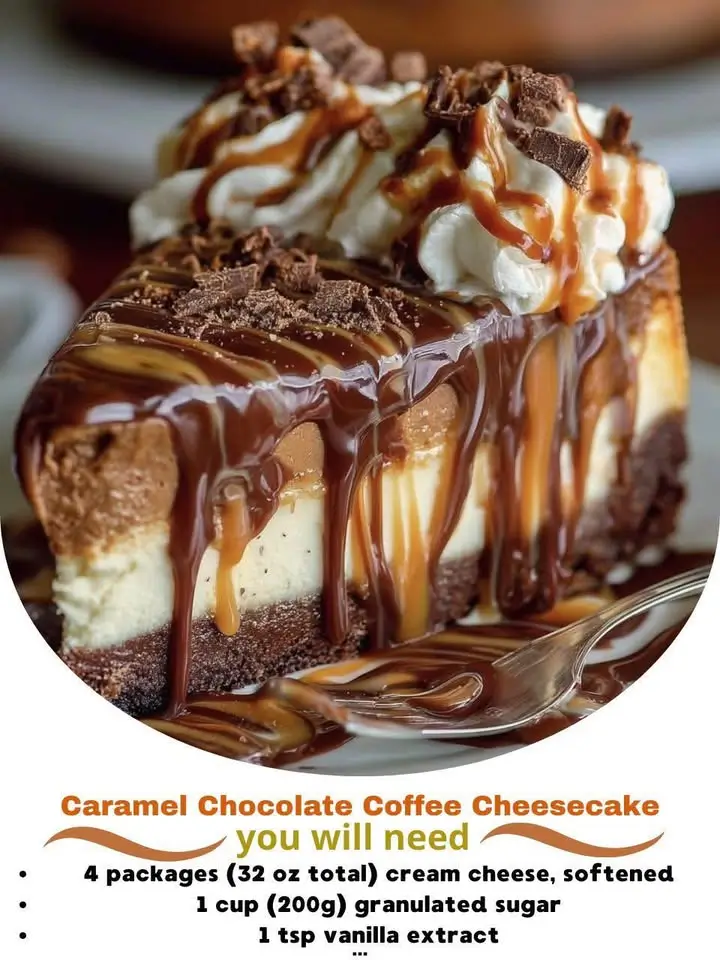
Gâteau au fromage au chocolat caramel — a luxurious, multi-layered French-inspired dessert that marries the velvety richness of cheesecake, the deep intensity of dark chocolate, and the buttery, nuanced sweetness of salted caramel. This isn’t just a cake — it’s an experience: dense yet airy, creamy yet structured, decadent yet balanced. Born from the elegant fusion of Parisian patisserie sensibility and modern American dessert innovation, it has become a coveted centerpiece at dinner parties, weddings, and gourmet cafés across Europe and North America. Whether served chilled with a delicate dusting of cocoa or at room temperature with a warm caramel drizzle, every bite delivers a symphony of textures and flavors — tangy cream cheese, bittersweet chocolate ganache, toasted caramel notes, and a hint of sea salt that elevates everything without overpowering. Its name — literally “cheese cake with chocolate caramel” in French — belies its sophistication: this is a dessert that demands attention, rewards patience, and lingers long after the last forkful.
The History
The origins of the Gâteau au fromage au chocolat caramel are both deeply rooted and refreshingly contemporary — a testament to culinary evolution across borders and generations. While classic French cheesecake (gâteau au fromage) dates back centuries — appearing in variations as early as the 18th-century *gâteau de fromage blanc* in Normandy and Brittany — it was traditionally light, baked, and often flavored with lemon or vanilla, bearing little resemblance to its New York cousin. The modern incarnation began to emerge in the 1970s and ’80s, when French pastry chefs started experimenting with richer, denser textures inspired by American cream cheese-based desserts, especially after cultural exchanges intensified post-WWII. Chocolate entered the fold in the late 1990s, notably through the work of famed pâtissier Pierre Hermé, who championed unexpected pairings like chocolate and fleur de sel. Caramel — particularly *caramel au beurre salé*, invented in 1977 by Henri Le Roux in Brittany — became the final, transformative element. By the mid-2000s, high-end Parisian salons de thé such as Ladurée and Stohrer began offering layered interpretations: a base of speculoos or brownie, a thick layer of mascarpone–cream cheese mousse, a glossy dark chocolate mirror glaze, and ribbons of house-made salted caramel. The dessert gained global traction via food blogs, Instagram aesthetics, and viral baking challenges around 2015–2018, evolving into today’s signature version: a no-bake, chilled, triple-textured marvel with structural integrity, visual drama, and profound depth of flavor.
Ingredients Breakdown
Every component of the Gâteau au fromage au chocolat caramel serves a precise functional and sensory role — nothing is arbitrary. Below is a granular analysis of each ingredient category:
For the Crust (Base Layer)
- Digestive or Speculoos Biscuits (200 g): Chosen for their malty, spiced complexity and natural binding fat content — superior to graham crackers for French-style texture. Finely crushed and pulsed with melted unsalted butter (85 g), they form a firm, slightly crumbly yet cohesive foundation that contrasts beautifully with the soft upper layers.
- Unsalted Butter (85 g), melted: Acts as both binder and flavor enhancer; European-style butter (82–84% fat) is preferred for its deeper, nuttier profile and superior melt-in-mouth quality.
- Dark Cocoa Powder (15 g, Dutch-processed): Adds subtle bitterness and deep color without acidity, reinforcing the chocolate narrative while preventing the crust from tasting overly sweet or one-dimensional.
- Fleur de Sel (¼ tsp): A whisper of artisanal sea salt enhances all other flavors, cutting through richness and amplifying caramel’s savory-sweet duality.
For the Cheesecake Layer (Core)
- Cream Cheese (500 g), full-fat, room temperature: The backbone — must be Philadelphia-style (not Neufchâtel or low-fat) for proper viscosity, tang, and stability. Cold cream cheese leads to lumps; over-beaten cream cheese causes weeping.
- Mascarpone (250 g), cold but not chilled: Adds unparalleled silkiness and mild sweetness while reducing overall acidity. Its higher fat content (60–75%) creates a lush, almost whipped-cream-like mouthfeel without compromising structure.
- Powdered Sugar (180 g), sifted: Dissolves instantly, avoids grittiness, and contains cornstarch — which aids in stabilization and prevents syneresis (weeping).
- Heavy Cream (300 ml), cold (36% fat minimum): Whipped to soft peaks and folded in last to aerate the mixture — crucial for lift and spoonability. Ultra-cold cream ensures maximum volume retention.
- Vanilla Bean Paste (2 tsp) + Seeds: Far superior to extract — provides visible specks, deeper floral notes, and better heat stability. Complements both caramel and chocolate without dominating.
- Full-Fat Sour Cream (60 g): Often overlooked but essential — adds subtle tang, moisture control, and helps prevent cracking during chilling/firming.
- Unflavored Gelatin (8 g), bloomed in cold water: Critical for no-bake integrity — provides elasticity, prevents slumping, and ensures clean slicing even after 72 hours of refrigeration. Alternatives like agar-agar yield a firmer, less creamy set.
For the Chocolate Ganache Layer (Middle)
- 70% Single-Origin Dark Chocolate (320 g), finely chopped (e.g., Valrhona Guanaja or Domori Porcelana): High cocoa butter content ensures gloss, snap, and smooth melting. Avoid chips — they contain stabilizers that inhibit proper emulsification.
- Heavy Cream (240 ml), heated to 105°C (221°F): Precise temperature is non-negotiable: too hot → seized chocolate; too cool → incomplete emulsification. Infused with a cinnamon stick and star anise pod (removed pre-pour) for aromatic complexity.
- Unsalted Butter (40 g), cubed: Added off-heat to enrich sheen, soften set, and improve mouth-melt — especially important when paired with dense cheesecake.
- Espresso Powder (1 tsp, instant): Enhances chocolate’s depth without adding coffee flavor — a classic “umami amplifier.”
For the Salted Caramel Sauce (Swirl & Garnish)
- Granulated Sugar (300 g): Pure sucrose for clean caramelization. No substitutes — brown sugar introduces unwanted acidity and moisture.
- Heavy Cream (180 ml), warmed to 60°C (140°F): Must be warm enough to incorporate smoothly without shocking the caramel, but not boiling (risk of splatter or re-crystallization).
- Unsalted Butter (60 g), cubed: Adds body, gloss, and richness — also helps suspend the salt evenly.
- Fleur de Sel (1½ tsp), plus extra for garnish: Sea salt crystals dissolve partially in warm caramel, creating bursts of salinity. Larger flakes on top provide textural contrast and visual elegance.
- Light Corn Syrup (15 g) or Glucose Syrup: Optional but recommended — inhibits crystallization, ensures smooth pourability, and extends shelf life without altering flavor.
For Garnish & Finishing
- Edible Gold Leaf (optional but traditional): Applied with a dry sable brush for haute-cuisine refinement.
- Chocolate Shards (tempered 70% dark): Hand-broken for irregular elegance — made by spreading tempered chocolate on acetate and flexing once set.
- Roasted Hazelnuts (20 g), skinless and roughly chopped: Toasted in clarified butter and flaky salt — adds crunch, nutty aroma, and earthy counterpoint to sweetness.
- Fresh Raspberries or Blackberries (8–10): Acidic brightness cuts richness; placed strategically just before serving to prevent bleeding.
Step-by-Step Recipe
This recipe yields one stunning 8-inch (20 cm) cake, serving 12–14 people. Total active time: 2 hours. Chilling time: minimum 18 hours (ideally 48 hours for optimal flavor melding and slice integrity).
Step 1: Prepare the Crust (Day 1, Evening)
- Preheat oven to 160°C (320°F) convection / 175°C (350°F) conventional. Line an 8-inch springform pan with parchment: cut a round for the base and two long strips for the sides (overlapping seams). Lightly grease the pan.
- In a food processor, pulse digestive biscuits until fine crumbs form (≈15 sec). Add cocoa powder and fleur de sel; pulse 3 times to combine. Pour in melted butter and pulse in 1-second bursts until mixture resembles wet sand and holds together when pinched.
- Transfer to prepared pan. Use the bottom of a flat measuring cup or glass to press firmly and evenly — first along edges (1 cm up), then across base. Aim for uniform 4 mm thickness. Chill uncovered for 20 minutes.
- Bake crust 12–14 minutes until fragrant, dry to touch, and lightly bronzed at edges. Cool completely in pan on wire rack (≈45 min). Once cool, wrap exterior of pan tightly with double-layer plastic wrap — critical for leak prevention later.
Step 2: Bloom Gelatin & Prep Caramel (Same Day)
- Sprinkle gelatin over 60 ml cold water in a small heatproof bowl. Let bloom 10 minutes until spongy. Meanwhile, prepare caramel sauce (see below) and cool to lukewarm (≈35°C/95°F). Reserve ⅓ cup for swirling; refrigerate remainder in airtight jar (keeps 3 weeks).
Step 3: Make the Cheesecake Layer (Day 1, Late Afternoon)
- In stand mixer with paddle attachment, beat cream cheese on medium speed 3 minutes until completely smooth and glossy — scraping bowl and paddle twice. Add mascarpone; beat 2 minutes more until homogenous. Add powdered sugar in 3 additions, beating 30 seconds each. Scrape thoroughly.
- Add sour cream, vanilla paste, and salt; beat 1 minute on medium-low. Mixture should be thick, pale, and lump-free.
- Heat bloomed gelatin in microwave in 5-second bursts until fully liquid (≈20 sec total). With mixer on low, slowly drizzle warm gelatin into cheesecake mixture. Beat 30 seconds to incorporate — do not overmix.
- In separate chilled bowl, whip heavy cream to soft peaks (just before stiff). Using silicone spatula, gently fold ⅓ of whipped cream into cheesecake mixture to lighten. Then fold in remaining cream in two additions, rotating bowl ¾ turn between folds. Stop when no white streaks remain — texture should be airy, billowy, and hold gentle peaks.
- Reserve 1 cup of mixture. Pour remaining into chilled crust. Smooth top with offset spatula dipped in hot water. Tap pan sharply 4 times on counter to release air bubbles. Refrigerate uncovered 45 minutes until surface is tacky but not set.
Step 4: Prepare & Layer Chocolate Ganache (Day 1, Evening)
- Place chopped chocolate in heatproof bowl. Heat cream with spices to exact 105°C — use digital thermometer. Discard spices. Pour hot cream over chocolate. Wait 90 seconds, then stir gently with whisk in concentric circles from center outward until smooth and glossy (≈1 min). Stir in butter and espresso powder until fully absorbed.
- Cool ganache to 32°C (90°F) — test with thermometer or wrist: should feel warm but not hot. Stir occasionally to prevent skin formation.
- Remove cheesecake from fridge. Carefully spoon ganache over surface, starting at center and working outward. Tilt pan gently to spread evenly. Use toothpick to pop any surface bubbles. Refrigerate uncovered 30 minutes until ganache firms but remains slightly yielding.
Step 5: Swirl in Caramel & Final Chill (Day 1, Night)
- Remove reserved 1 cup cheesecake mixture from fridge. Stir in 3 tbsp cooled caramel sauce until marbled — do not overmix; streaks should remain distinct.
- Using piping bag fitted with ½-inch round tip (or zip-top bag with corner snipped), pipe caramel-cheesecake mixture in concentric circles over ganache layer, beginning at outer edge and spiraling inward.
- Use thin metal skewer or chopstick to drag vertically through piped circles, then rotate pan 45° and drag again — creating elegant feathered swirls. Wipe tool between passes.
- Cover pan loosely with plastic wrap (not touching surface). Refrigerate minimum 18 hours — preferably 48 hours — at consistent 3–5°C (37–41°F). Do not freeze.
Step 6: Unmold & Garnish (Day 2 or 3, Before Serving)
- Run thin knife under hot water, dry thoroughly, and carefully trace inner edge of pan. Release springform clasp. Lift off band.
- Warm flat serving plate with hair dryer or warm towel for 10 seconds. Place plate over cake, invert swiftly, then lift pan base. Peel off parchment.
- Refrigerate uncovered 15 minutes to re-chill surface. Warm caramel sauce (reserved portion) to 40°C. Drizzle in zigzag pattern using spoon or squeeze bottle.
- Apply gold leaf sparingly using dry brush. Scatter hazelnuts and berries. Insert chocolate shards upright at 12, 3, 6, and 9 o’clock positions.
- Serve immediately with dollop of crème fraîche infused with orange zest — optional but highly recommended.
Tips
- Temperature Discipline is Non-Negotiable: All dairy components (cream cheese, mascarpone, cream) must be within 18–22°C (64–72°F) unless specified otherwise. Too cold = lumps and poor emulsion; too warm = separation and weeping.
- Gelatin Integrity Matters: Never boil bloomed gelatin — it breaks protein chains and loses setting power. Always dissolve completely before adding.
- Whipping Cream Wisdom: Whip only to soft peaks. Over-whipped cream turns grainy and separates when folded — ruining airiness. If accidental over-whip occurs, gently whisk in 1 tbsp cold cream to restore texture.
- Caramel Control: When making caramel, never stir once sugar begins melting — swirl pan instead. Keep a bowl of ice water nearby to stop cooking instantly if overheated. If caramel seizes, remove from heat, add 1 tbsp hot cream, and whisk vigorously until smooth.
- Chill Gradually, Not Rushed: Rapid chilling causes condensation, fogging, and weeping. Always refrigerate uncovered for initial set, then loosely cover. For best results, chill overnight in main compartment (not door), away from strong-smelling foods.
- Slicing Perfection: Use a long, thin-bladed knife (e.g., Dexter-Russell) dipped in hot water and wiped dry between every cut. For cleanest slices, chill cake fully (48 hrs ideal), then let sit at room temp 8 minutes before cutting.
- Springform Pan Seal: Double-wrap exterior with plastic — especially critical for no-bake layers. Test seal by pouring 2 tbsp water inside chilled pan — if no leakage, you’re good.
- Flavor Maturation: This cake tastes markedly better on Day 2 and peaks on Day 3. Acidity mellows, chocolate rounds out, and caramel integrates seamlessly. Plan accordingly.
- No Substitutions for Mascarpone: Ricotta is too grainy and acidic; cottage cheese lacks fat; cream cheese alone makes layer overly dense and tangy. Authenticity requires true Italian mascarpone.
- Altitude Adjustment: Above 1,000 m (3,300 ft), reduce sugar in cheesecake layer by 15 g and increase gelatin by 1 g to compensate for faster evaporation and lower boiling points.
Variations and Customizations
This masterpiece is wonderfully adaptable — honoring tradition while inviting creativity. Here are chef-tested, structurally sound variations:
Gluten-Free Version
Replace digestive biscuits with 180 g GF almond flour + 20 g tapioca starch + 15 g cocoa + 85 g melted butter + ¼ tsp xanthan gum. Toast dry mix 5 minutes at 160°C before adding butter. Press and bake same as original.
Vegan Adaptation
Crust: GF oat cookies + coconut oil + cocoa. Cheesecake: blended raw cashews (soaked 6 hrs), silken tofu, coconut cream, maple syrup, lemon juice, and agar-agar (12 g, boiled 2 mins in 60 ml water). Ganache: 70% vegan chocolate + full-fat coconut milk. Caramel: date paste + coconut cream + sea salt. Requires 24-hr freeze for firmness.
Alcohol-Infused Luxe Edition
Add 2 tbsp Grand Marnier to caramel sauce (reduce cream by 15 ml). Fold 1 tbsp aged rum into cheesecake mixture pre-folding. Brush ganache layer with 1 tsp Armagnac before chilling. Garnish with candied orange peel.
Seasonal Fruit Integration
Summer: Layer roasted peach compote (reduced with balsamic) between ganache and caramel swirl. Autumn: Poached pear slices marinated in Calvados and star anise, nestled into top layer. Winter: Blood orange curd dots beneath caramel swirl. Spring: Rhubarb-rose coulis piped in fine lines.
Texture Twists
- Crispy Element: Press 40 g feuilletine (crispy crepe pieces) into top of ganache layer before caramel swirl.
- Crunch Layer: Add 60 g praline paste (hazelnut or almond) to cheesecake mixture for nutty depth and subtle grit.
- Chewy Contrast: Fold in 50 g chopped dried cherries (soaked 10 mins in kirsch) into reserved caramel-cheesecake mixture.
Dietary & Flavor Profiles
- Lower-Sugar: Replace powdered sugar with erythritol-monk fruit blend (1:1); use 85% chocolate; reduce caramel sugar by 30 g and add 1 tsp apple cider vinegar for balance.
- Spiced Variation: Infuse cream for ganache with 1 star anise, 2 green cardamom pods, and ½ cinnamon stick. Strain before pouring.
- White Chocolate Caramel: Substitute 320 g high-quality white chocolate (35% cocoa butter) for dark. Omit espresso; add 1 tsp vanilla bean paste to ganache. Pair with Madagascar bourbon caramel.
- Matcha-Chocolate Fusion: Whisk 2 tsp ceremonial matcha into cooled ganache. Swirl with yuzu-kosho caramel (yuzu zest + chili + salt).
Health Considerations and Nutritional Value
While undeniably indulgent, the Gâteau au fromage au chocolat caramel can be contextualized within a balanced diet — especially when prepared with high-quality, minimally processed ingredients. A standard 100 g serving (approx. 1/12 of cake) contains:
Nutritional Profile (Per 100 g)
- Calories: 385 kcal
- Total Fat: 26.4 g (15.8 g saturated)
- Carbohydrates: 32.1 g (28.3 g sugars, 0.8 g fiber)
- Protein: 5.9 g
- Calcium: 78 mg (8% DV)
- Vitamin A: 185 µg RAE (21% DV)
- Vitamin D: 0.8 µg (4% DV)
- Choline: 32 mg (6% DV)
- Antioxidants: Significant flavonoids from 70% dark chocolate (epicatechin, procyanidins) and polyphenols from cocoa — linked to improved endothelial function and reduced oxidative stress.
Functional Benefits & Mindful Indulgence
The inclusion of full-fat dairy contributes bioavailable calcium, vitamin K2 (especially in grass-fed butter), and conjugated linoleic acid (CLA), associated in studies with improved body composition and anti-inflammatory effects. Dark chocolate (>70% cacao) delivers magnesium (important for muscle relaxation and nerve function) and theobromine — a gentle stimulant with vasodilatory properties. The modest amount of sea salt supports electrolyte balance, while the absence of refined vegetable oils (using only butter and cocoa butter) eliminates industrially processed fats.
Dietary Notes & Cautions
- Lactose Sensitivity: Contains moderate lactose (≈2.1 g per 100 g), primarily from cream cheese and mascarpone. Lactase enzyme supplements taken prior to consumption may aid digestion.
- Added Sugars: Represents ≈57% of the FDA’s recommended daily limit (50 g). Best enjoyed as an occasional treat — not daily dessert.
- Food Safety: Due to raw eggs in some caramel recipes (not used here), this version is egg-free and safe for pregnant individuals and immunocompromised guests — provided all dairy is pasteurized and hygiene protocols strictly followed.
- Gluten Considerations: Traditional version contains gluten via biscuits. Certified GF versions require dedicated prep surfaces and verified GF ingredients.
- Allergens: Contains dairy, tree nuts (if garnished with hazelnuts), and soy (in most chocolate — check labels for soy lecithin).
Mindful Serving Suggestions
To enhance satiety and nutritional balance, serve a modest 80 g slice (≈310 kcal) alongside: a small handful of raw walnuts (for omega-3s and crunch), a side of mixed seasonal berries (fiber and anthocyanins), and herbal tea (peppermint or ginger to aid digestion). Avoid pairing with additional sweets or sugary beverages — let the cake shine solo.
Ingredients
Makes one 8-inch (20 cm) cake, 12–14 servings
For the Crust
- 200 g digestive biscuits (or speculoos), finely crushed
- 85 g unsalted butter, melted
- 15 g Dutch-processed cocoa powder
- ¼ tsp fleur de sel
For the Cheesecake Layer
- 500 g full-fat cream cheese, room temperature
- 250 g mascarpone cheese, cold
- 180 g powdered sugar, sifted
- 300 ml heavy cream (36% fat), very cold
- 2 tsp vanilla bean paste
- 60 g full-fat sour cream
- 8 g unflavored gelatin powder
- 60 ml cold water (for blooming gelatin)
- ¼ tsp fine sea salt
For the Chocolate Ganache Layer
- 320 g 70% dark chocolate, finely chopped
- 240 ml heavy cream
- 1 cinnamon stick
- 1 star anise pod
- 40 g unsalted butter, cubed
- 1 tsp instant espresso powder
For the Salted Caramel Sauce
- 300 g granulated sugar
- 180 ml heavy cream, warmed to 60°C
- 60 g unsalted butter, cubed
- 1½ tsp fleur de sel
- 15 g light corn syrup or glucose syrup (optional but recommended)
For Garnish
- Edible gold leaf
- Tempered 70% dark chocolate shards
- 20 g roasted, skinless hazelnuts, roughly chopped
- 8–10 fresh raspberries or blackberries
- Crème fraîche infused with orange zest (optional accompaniment)