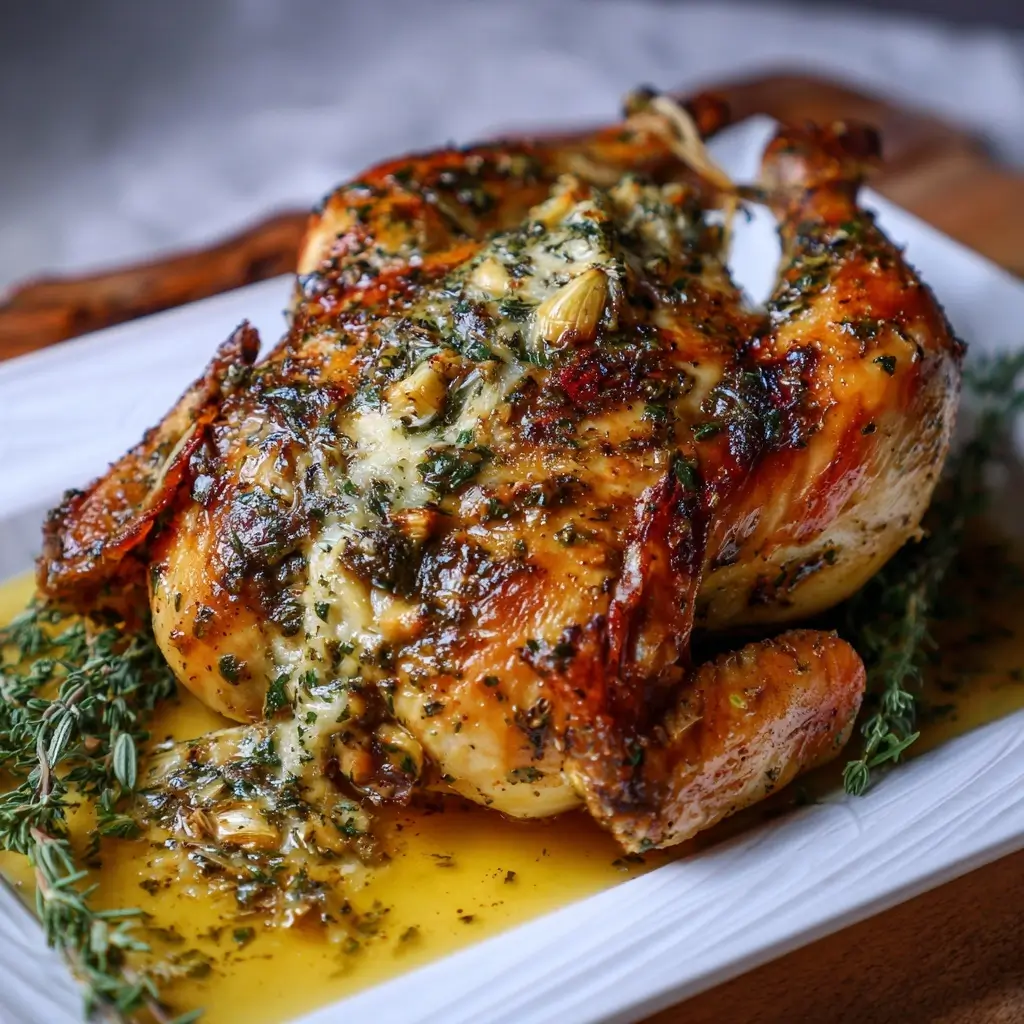
Garlic Herb Butter Roasted Chicken: A Flavorful Classic for Every Home Cook
The aroma of Garlic Herb Butter Roasted Chicken wafting through the kitchen is nothing short of magical. Crispy golden skin, tender juicy meat, and a symphony of garlic, herbs, and butter infused throughout every bite—this dish has earned its place as a beloved centerpiece on dinner tables across the world. Whether you’re hosting a family Sunday dinner or preparing an elegant meal for guests, this roasted chicken recipe delivers both comfort and sophistication in one perfect package.
The History of Roast Chicken
Roast chicken has been a culinary staple for centuries, tracing its roots back to ancient civilizations. The Romans enjoyed roast fowl seasoned with garum (a fermented fish sauce), while medieval Europeans roasted chickens over open fires with simple herbs and salt. As cooking techniques evolved during the Renaissance, roasting became more refined, often using butter, wine, and aromatic herbs to elevate flavor.
In France, poulet rôti became a symbol of home cooking excellence, while in the American South, variations with buttermilk and spices emerged. The addition of garlic and herb butter under the skin—a technique now widely popular—likely gained momentum in the 20th century, influenced by French and Mediterranean cuisines. Today, Garlic Herb Butter Roasted Chicken stands as a modern classic, combining timeless tradition with bold, accessible flavors.
Ingredients Breakdown: What Makes This Recipe Shine
The magic of this dish lies in the careful selection and combination of ingredients that work together to enhance moisture, flavor, and texture. Here’s a detailed look at each component:
- Whole Chicken (3.5–4.5 lbs): Opt for a high-quality, air-chilled chicken if possible. Free-range or organic birds tend to have better texture and flavor. The size ensures even cooking without drying out.
- Unsalted Butter (1 cup, softened): Using unsalted butter allows control over the salt content. Softened butter blends easily with herbs and can be smoothly rubbed under the skin.
- Fresh Garlic (8–10 cloves, minced): Freshly minced garlic provides a robust, pungent kick that mellows beautifully during roasting, infusing the meat with depth.
- Fresh Herbs (parsley, rosemary, thyme, sage—¼ cup chopped total): Fresh herbs are essential. Parsley adds brightness, rosemary contributes piney notes, thyme offers earthiness, and sage brings warmth. Dried herbs can be substituted in a pinch, but fresh delivers superior aroma.
- Lemon (1 whole, halved): Adds acidity and citrus fragrance. Placed inside the cavity, it steams the chicken from within, keeping it moist and subtly scented.
- Shallot or Onion (1 medium, quartered): Complements the lemon in the cavity, adding sweetness and complexity to the drippings, which are perfect for gravy.
- Olive Oil (2 tbsp): Helps crisp the skin and promotes even browning when brushed on the exterior.
- Kosher Salt and Freshly Ground Black Pepper: Essential seasonings. Kosher salt adheres well and seasons evenly. Always season generously for balanced flavor.
- Optional Additions: White wine (¼ cup) for deglazing, chicken stock (½ cup) to keep the pan moist, or carrots, celery, and potatoes placed around the chicken for a complete one-pan meal.
Step-by-Step Recipe: How to Make Perfect Garlic Herb Butter Roasted Chicken
- Preparation (1 hour before roasting): Remove the chicken from the refrigerator and let it sit at room temperature. This ensures even cooking. Pat the chicken dry thoroughly with paper towels—dry skin is crucial for crispiness.
- Make the Herb Butter: In a bowl, combine the softened butter, minced garlic, chopped herbs, 1½ teaspoons of kosher salt, and ½ teaspoon black pepper. Mix until fully incorporated and creamy.
- Season the Cavity: Sprinkle 1 teaspoon salt and ¼ teaspoon pepper inside the chicken cavity. Stuff it with the halved lemon, quartered shallot or onion, and a few sprigs of fresh herbs (rosemary and thyme work well).
- Loosen the Skin: Gently slide your fingers under the breast and thigh skin to separate it from the meat, being careful not to tear it. Do the same on the legs and back if possible.
- Apply the Butter: Take spoonfuls of the herb butter and spread it directly onto the meat beneath the skin. Massage the outside of the skin to distribute the butter evenly. Rub any remaining butter over the outside of the chicken.
- Truss the Chicken (optional): Use kitchen twine to tie the legs together and tuck the wing tips under. Trussing helps the chicken cook evenly and retain its shape.
- Preheat Oven: Set oven to 425°F (220°C). Position rack in the center.
- Prepare Roasting Pan: Place a wire rack inside a roasting pan or use a cast-iron skillet. Brush the chicken lightly with olive oil for extra crispness.
- Roast: Place chicken breast-side up on the rack. Roast for 15 minutes at 425°F to sear the skin, then reduce heat to 375°F (190°C) and continue roasting for 60–75 minutes, or until the internal temperature reaches 165°F (74°C) in the thickest part of the thigh (avoiding bone).
- Baste (Optional): For added richness, baste the chicken with pan juices halfway through cooking.
- Rest the Chicken: Once done, remove from oven and tent loosely with foil. Let rest for 15–20 minutes. This allows juices to redistribute, ensuring moist meat when carved.
- Carve and Serve: Remove twine, take out the lemon and aromatics, and carve the chicken into pieces. Drizzle with pan juices for extra flavor.
Tips for Success: Mastering the Perfect Roast
- Dry the Skin Well: Moisture is the enemy of crispy skin. After rinsing (if desired), pat the chicken dry inside and out with paper towels and let it air-dry in the fridge uncovered for a few hours or overnight for optimal results.
- Use a Meat Thermometer: Guessing doneness leads to overcooking. Insert the thermometer into the thickest part of the thigh without touching bone for accuracy.
- Don’t Skip the Rest: Cutting into the chicken too soon releases juices, leading to dry meat. Resting is non-negotiable for juiciness.
- Rotate the Pan (if needed): Ovens have hot spots. If browning is uneven, rotate the pan halfway through.
- Spatchcock for Faster Cooking: For a quicker roast and flatter profile, spatchcock the chicken (remove the backbone and flatten it). Reduce cooking time to about 45–50 minutes at 425°F.
- Save the Drippings: The browned bits and fat in the pan are liquid gold. Skim off excess fat and use the fond to make a rich gravy or sauce.
- Room Temperature Start: Cold chicken straight from the fridge will cook unevenly. Letting it warm up ensures the center doesn’t lag behind.
Variations and Customizations: Make It Your Own
This recipe is incredibly versatile. Try these creative twists to suit your taste or dietary preferences:
- Lemon-Dill Butter Chicken: Swap rosemary and thyme for fresh dill and increase lemon zest for a bright, summery flavor.
- Spicy Harissa Butter Chicken: Mix harissa paste (1–2 tbsp) into the butter for a North African kick.
- Citrus-Herb Fusion: Add orange or grapefruit zest to the butter and stuff the cavity with mixed citrus halves.
- Wine-Roasted Version: Pour ½ cup dry white wine into the pan during the last 30 minutes to create a flavorful jus.
- Herb-Crusted Skin: After applying butter, press additional chopped herbs onto the skin before roasting for an aromatic crust.
- Dairy-Free Option: Substitute butter with olive oil or vegan butter. The result is slightly different but still delicious.
- Smoked Paprika & Cumin: For a Spanish twist, add smoked paprika and ground cumin to the herb mix.
- One-Pan Meal: Surround the chicken with halved baby potatoes, carrots, onions, and Brussels sprouts tossed in olive oil and herbs. They’ll roast alongside, absorbing all the delicious juices.
- Brined Chicken: For ultra-moisture, brine the chicken in a solution of water, salt, sugar, and aromatics (like peppercorns and bay leaves) for 4–12 hours before roasting.
Health Considerations and Nutritional Value
While indulgent, Garlic Herb Butter Roasted Chicken can fit into a balanced diet when enjoyed mindfully. Here’s what you should know:
- Protein Powerhouse: Chicken is an excellent source of lean protein, providing about 25–30 grams per 3-ounce serving, supporting muscle maintenance and satiety.
- Fat Content: The skin and butter contribute saturated fat. A 3-ounce portion with skin contains roughly 8–10 grams of fat, while skinless cuts drop to 3–4 grams. Using less butter or removing the skin before eating reduces fat intake.
- Sodium Awareness: Depending on seasoning, sodium levels can vary. Using low-sodium butter or reducing added salt helps manage intake, especially for those with hypertension.
- Herbs Offer Benefits: Rosemary and thyme contain antioxidants and anti-inflammatory compounds. Garlic supports immune function and cardiovascular health.
- Balanced Serving: Pair with roasted vegetables, quinoa, or a green salad to balance the meal. Avoid heavy sides like mashed potatoes with extra butter to keep it lighter.
- Moderation is Key: Enjoy this dish as an occasional centerpiece rather than a daily meal for optimal health.
Ingredients
- 1 whole chicken (3.5–4.5 lbs)
- 1 cup (2 sticks) unsalted butter, softened
- 8–10 cloves garlic, minced
- ¼ cup fresh herbs (parsley, rosemary, thyme, sage), finely chopped
- 1 large lemon, halved
- 1 medium shallot or yellow onion, quartered
- 2 tbsp olive oil
- 2½ tsp kosher salt (divided)
- ¾ tsp freshly ground black pepper (divided)
- Kitchen twine (for trussing, optional)
Directions
- Let chicken sit at room temperature for 1 hour. Preheat oven to 425°F (220°C).
- Pat chicken dry with paper towels. Season cavity with 1 tsp salt and ¼ tsp pepper.
- Stuff cavity with lemon halves, shallot/onion, and herb sprigs.
- In a bowl, mix softened butter, garlic, chopped herbs, 1½ tsp salt, and ½ tsp pepper.
- Gently loosen skin over breast, thighs, and drumsticks. Spread herb butter underneath and massage over exterior.
- Tie legs with twine and tuck wing tips under body.
- Brush chicken with olive oil. Place breast-side up on a rack in a roasting pan.
- Roast at 425°F for 15 minutes. Reduce heat to 375°F and continue roasting 60–75 minutes, until internal temp reaches 165°F in thigh.
- Remove from oven, tent with foil, and rest 15–20 minutes.
- Carve and serve with pan juices.
FAQ
Can I use dried herbs instead of fresh?
Yes, but use 1/3 the amount (e.g., 1 tbsp dried for 3 tbsp fresh). Fresh herbs provide superior flavor and aroma.
Why is my chicken skin not crispy?
Likely causes: wet skin, insufficient oven temperature, or skipping the initial high-heat sear. Always dry the chicken well and start at 425°F.
Can I roast the chicken ahead of time?
Yes! Roast fully, cool, then refrigerate. Reheat gently in a 350°F oven, covered with foil, until warmed through (about 20–25 minutes).
What do I do with leftover chicken?
Use leftovers in soups, salads, sandwiches, enchiladas, or chicken pot pie. The carcass makes excellent homemade stock.
Is it safe to eat the garlic and herbs under the skin?
Yes, they are fully cooked and edible, though some prefer to discard them for texture.
Can I stuff the chicken with bread stuffing?
It’s not recommended due to food safety concerns—stuffing slows cooking and may not reach safe temperatures. Cook stuffing separately.
How do I know when the chicken is done?
Use a meat thermometer: 165°F in the inner thigh. Juices should run clear, not pink.
Summary
Garlic Herb Butter Roasted Chicken is a timeless, flavorful dish that combines succulent meat, crispy skin, and aromatic herbs for a show-stopping meal. Easy to customize and perfect for gatherings, it’s comfort food elevated to gourmet status.