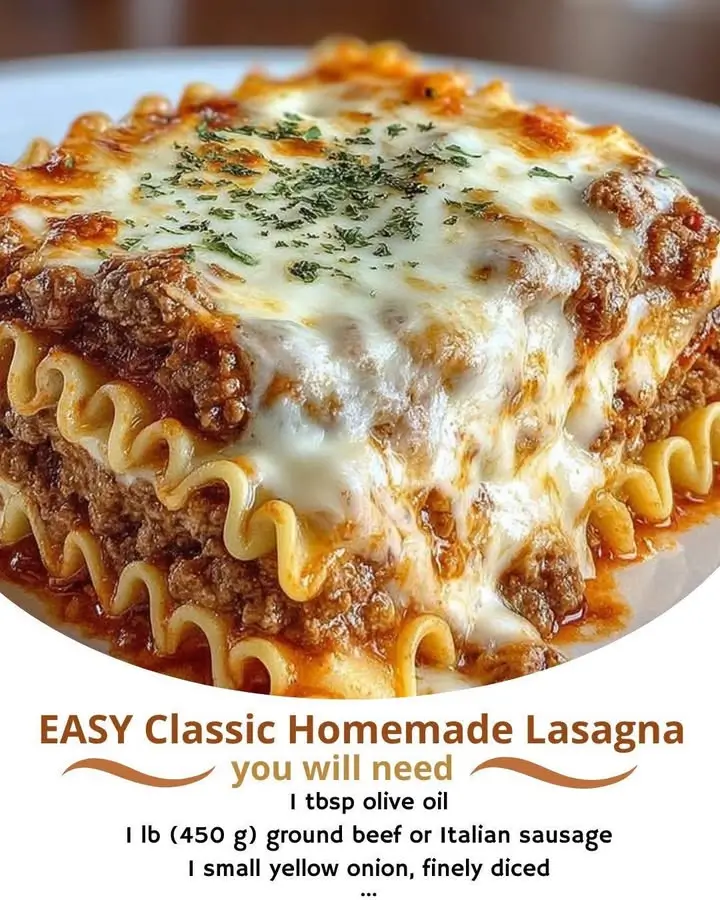
Easy Classic Homemade Lasagna
There are few dishes that bring people together quite like a steaming, cheesy pan of homemade lasagna. This classic Italian-American favorite is the epitome of comfort food—rich, hearty, and deeply satisfying. Whether it’s a Sunday family dinner, a holiday gathering, or a cozy night in, lasagna never fails to impress. The best part? Making it from scratch isn’t as complicated as it might seem. With simple ingredients, a little patience, and this easy step-by-step guide, you can create a delicious, golden-brown masterpiece right in your own kitchen.
The History of Lasagna
Lasagna has roots that stretch back centuries, originating in ancient Italy. While modern lasagna is known for its layers of pasta, cheese, and meat sauce, its earliest versions were much simpler. In fact, the word “lasagna” comes from the Greek word lasanon, meaning “chamber pot” or “cooking pot,” which evolved into the Latin lasanum, referring to a type of pot used for cooking. By the Middle Ages, Italians began using flat sheets of dough boiled and layered with cheese and spices, often baked in terracotta dishes.
It wasn’t until the 19th century that tomato sauce became a staple ingredient, thanks to the widespread cultivation of tomatoes in Southern Italy. As Italian immigrants brought their culinary traditions to America in the late 1800s and early 1900s, lasagna evolved further—becoming richer, cheesier, and more elaborate. Today’s American-style lasagna typically features layers of ricotta, mozzarella, Parmesan, seasoned ground beef or sausage, and a robust tomato-based sauce, all baked to bubbly perfection. While regional variations exist across Italy and beyond, the version we’re making today honors this beloved Italian-American tradition with simplicity and heart.
Ingredients Breakdown
To make an easy yet authentic-tasting classic lasagna, you don’t need exotic ingredients—just high-quality staples that come together beautifully. Here’s a detailed breakdown of what goes into this comforting dish:
- Lasagna Noodles: You can use oven-ready (no-boil) noodles for convenience, or traditional dried lasagna sheets that require pre-cooking. Both work well, though pre-cooked noodles may yield a slightly softer texture.
- Ground Meat: A combination of ground beef and Italian sausage adds depth of flavor and richness. However, you can use just one type if preferred, or go meatless entirely.
- Tomato Sauce Base: Crushed tomatoes form the base, enhanced by tomato paste for thickness and richness. Using high-quality canned tomatoes makes a noticeable difference in taste.
- Aromatics: Onion and garlic are sautéed first to build flavor. Fresh herbs like basil and oregano add aromatic complexity, while a pinch of red pepper flakes brings subtle heat.
- Cheese Blend: Ricotta provides creaminess, mozzarella gives that iconic melty pull, and freshly grated Parmesan delivers a salty, nutty finish. Whole-milk ricotta is recommended for a richer texture.
- Eggs: Added to the ricotta mixture to help bind it and prevent separation during baking.
- Olive Oil: Used for sautéing; extra-virgin olive oil enhances the overall flavor profile.
- Salt & Pepper: Essential seasonings adjusted to taste throughout the process.
Every ingredient plays a role in creating the harmonious layers that define great lasagna. Choosing fresh, quality components ensures a tastier final product without requiring advanced techniques.
Step-by-Step Recipe
- Preheat Oven: Begin by preheating your oven to 375°F (190°C). This ensures even baking once the lasagna goes in.
- Cook the Meat Sauce: In a large skillet or Dutch oven, heat 2 tablespoons of olive oil over medium heat. Add 1 chopped yellow onion and cook until translucent (about 5 minutes). Stir in 4 minced garlic cloves and cook for another minute until fragrant. Add 1 pound of ground beef and 1 pound of Italian sausage (casings removed), breaking it apart with a spoon. Cook until browned and no longer pink. Drain excess fat if necessary.
- Build the Sauce: Stir in 2 (28-ounce) cans of crushed tomatoes, 2 tablespoons of tomato paste, 2 teaspoons of dried basil, 1 teaspoon of dried oregano, 1/2 teaspoon of red pepper flakes (optional), salt, and black pepper to taste. Simmer uncovered for 25–30 minutes, stirring occasionally, allowing flavors to meld and sauce to thicken slightly.
- Prepare Cheese Mixture: In a medium bowl, combine 15 ounces of whole-milk ricotta cheese, 1 large egg, 1/2 cup of grated Parmesan cheese, 1/4 cup of chopped fresh parsley, 1/2 teaspoon of salt, and a dash of black pepper. Mix well until smooth and set aside.
- Assemble the Lasagna: Spread about 1 cup of meat sauce on the bottom of a 9×13-inch baking dish to prevent sticking. Place a single layer of lasagna noodles over the sauce (use about 12 noodles depending on size). Spoon 1/3 of the remaining meat sauce evenly over the noodles, followed by 1/3 of the ricotta mixture dolloped in small clumps and spread gently. Sprinkle with 1 1/2 cups of shredded mozzarella and 1/4 cup of Parmesan.
- Repeat Layers: Add another layer of noodles, then repeat the sequence: sauce, ricotta, mozzarella, and Parmesan. Do this one more time to create three full layers. Finish with a final layer of noodles, the remaining meat sauce, and a generous topping of mozzarella and Parmesan.
- Cover and Bake: Cover the dish tightly with aluminum foil (tented slightly to avoid touching the cheese). Bake for 25 minutes. Remove the foil and bake for an additional 15–20 minutes, or until the top is golden and bubbling.
- Rest Before Serving: Let the lasagna rest for at least 15 minutes after removing it from the oven. This allows the layers to settle and makes slicing cleaner and easier.
Tips for Perfect Lasagna Every Time
- Don’t Skip the Resting Time: Allowing the lasagna to sit after baking helps the layers firm up, preventing a runny mess when you cut into it.
- Use Freshly Grated Cheese: Pre-shredded cheese contains anti-caking agents that can affect meltability and texture. Freshly grated mozzarella and Parmesan melt better and taste superior.
- Balance Moisture: If your sauce is too watery, simmer it longer to reduce. Excess moisture can lead to soggy noodles. Conversely, if using no-boil noodles, ensure enough sauce surrounds them so they cook properly.
- Layer Evenly: Distribute sauce, cheese, and noodles uniformly to ensure every bite is balanced and flavorful.
- Bake Until Bubbling at Edges: Look for signs of bubbling around the sides and a golden-brown top to know it’s fully cooked.
- Make Ahead Friendly: Assemble the lasagna up to 24 hours in advance and refrigerate. Add 10–15 minutes to baking time if starting cold.
- Freeze for Later: Fully assemble and freeze unbaked lasagna for up to 3 months. Thaw overnight in the fridge before baking.
Variations and Customizations
This classic recipe is incredibly versatile. Feel free to adapt it based on dietary preferences, seasonal ingredients, or pantry availability:
- Vegetarian Lasagna: Omit the meat and replace it with sautéed mushrooms, zucchini, spinach, bell peppers, and eggplant. You can also use lentils or a plant-based ground “meat” substitute.
- Gluten-Free Option: Use gluten-free lasagna noodles (available in most supermarkets). Ensure other ingredients like sauces are also certified gluten-free.
- Low-Carb/Keto Version: Replace pasta sheets with thinly sliced zucchini or eggplant (known as “zoodles” or eggplant lasagna). Increase cheese content slightly to compensate for added moisture.
- Dairy-Free Alternative: Substitute ricotta with blended tofu or cashew ricotta, and use dairy-free mozzarella shreds made from almond or coconut milk.
- White Lasagna (Lasagna Bianca): Skip the tomato sauce and create a creamy béchamel-based version with spinach, chicken, and a three-cheese blend.
- Add Greens: Stir a couple of handfuls of fresh baby spinach into the ricotta mixture or layer in sautéed kale for added nutrition.
- Spice It Up: Boost heat with extra red pepper flakes, diced jalapeños, or spicy Italian sausage.
- Sweet Italian Sausage Twist: For a milder, sweeter flavor, use sweet rather than hot Italian sausage.
Health Considerations and Nutritional Value
While traditional lasagna is undeniably rich and calorie-dense, there are ways to enjoy it as part of a balanced diet. A typical serving (1/8 of a 9×13-inch pan) contains approximately:
- Calories: 450–550
- Protein: 25–30g (from meat and cheese)
- Fat: 20–25g (mostly saturated from cheese and beef)
- Carbohydrates: 35–40g (primarily from pasta)
- Fiber: 3–5g (especially if vegetables are added)
- Calcium & Iron: Significant amounts due to dairy and meat content
To make a healthier version:
- Use lean ground turkey or chicken instead of beef and sausage.
- Incorporate whole wheat or legume-based lasagna noodles for added fiber and protein.
- Boost vegetable content by adding layers of roasted veggies or blending pureed carrots and squash into the sauce.
- Reduce cheese quantity slightly or use part-skim ricotta and reduced-fat mozzarella.
- Serve with a side salad and whole-grain bread for a well-rounded meal.
Lasagna can be portion-controlled and frozen in individual servings for convenient, home-cooked meals throughout the week—ideal for meal prep.
Ingredients
- 2 tablespoons olive oil
- 1 large yellow onion, finely chopped
- 4 garlic cloves, minced
- 1 pound (450g) ground beef (80/20)
- 1 pound (450g) Italian sausage, casings removed
- 2 (28-ounce) cans crushed tomatoes
- 2 tablespoons tomato paste
- 2 teaspoons dried basil
- 1 teaspoon dried oregano
- 1/2 teaspoon red pepper flakes (optional)
- Salt and freshly ground black pepper, to taste
- 12 lasagna noodles (oven-ready or traditional)
- 15 oz (425g) container whole-milk ricotta cheese
- 1 large egg
- 1/2 cup freshly grated Parmesan cheese, plus more for topping
- 1/4 cup fresh parsley, chopped
- 4 cups (16 oz) shredded mozzarella cheese
Directions
- Preheat oven to 375°F (190°C).
- In a large pot or deep skillet, heat olive oil over medium heat. Add onion and cook until soft and translucent, about 5 minutes. Add garlic and cook 1 minute more.
- Add ground beef and sausage. Cook, breaking apart with a spoon, until browned and cooked through. Drain excess grease if needed.
- Stir in crushed tomatoes, tomato paste, basil, oregano, red pepper flakes, salt, and pepper. Simmer uncovered for 25–30 minutes, stirring occasionally.
- Meanwhile, mix ricotta, egg, 1/2 cup Parmesan, parsley, 1/2 teaspoon salt, and a dash of pepper in a bowl. Set aside.
- If using traditional noodles, cook according to package directions; drain and lay flat on parchment paper to prevent sticking. (Skip if using oven-ready.)
- In a 9×13-inch baking dish, spread 1 cup of sauce on the bottom. Layer with 4 noodles (slightly overlapping).
- Spread 1/3 of ricotta mixture over noodles. Top with 1/3 of remaining sauce, then 1 1/2 cups mozzarella and 1/4 cup Parmesan.
- Repeat two more times: noodles, ricotta, sauce, cheeses.
- Top final noodle layer with remaining sauce and 1 1/2 cups mozzarella and 1/4 cup Parmesan.
- Cover with foil (tented to avoid cheese sticking). Bake 25 minutes.
- Remove foil, bake 15–20 more minutes until bubbly and golden.
- Let rest 15 minutes before slicing and serving.
FAQ
Can I make lasagna ahead of time?
Yes! Assemble it up to 24 hours in advance and refrigerate. Add 10–15 minutes to baking time if starting cold.
How do I reheat lasagna?
Reheat individual slices in the microwave for 2–3 minutes, or cover the whole pan with foil and warm in a 350°F oven for 20–25 minutes.
Can I freeze lasagna?
Absolutely. Freeze unbaked or baked lasagna for up to 3 months. Thaw in the refrigerator overnight before reheating.
Why is my lasagna watery?
Possible causes include not draining meat well, using watery sauce, wet noodles, or skipping the resting step. Simmer sauce longer and let lasagna rest before cutting.
What kind of pan should I use?
A 9×13-inch glass or ceramic baking dish works best for even heating. Metal pans can cause over-browning on edges.
Can I use cottage cheese instead of ricotta?
Yes, though the texture will be lighter and slightly tangier. Blending it briefly can make it smoother.
Are no-boil noodles okay?
Yes, they absorb liquid from the sauce and cook perfectly when covered during baking. Just ensure sauce is sufficiently moist.
Summary
This easy classic homemade lasagna combines rich meat sauce, creamy ricotta, melted mozzarella, and tender pasta layers for a comforting, crowd-pleasing meal. Simple to prepare, endlessly customizable, and perfect for feeding a family or freezing for later.