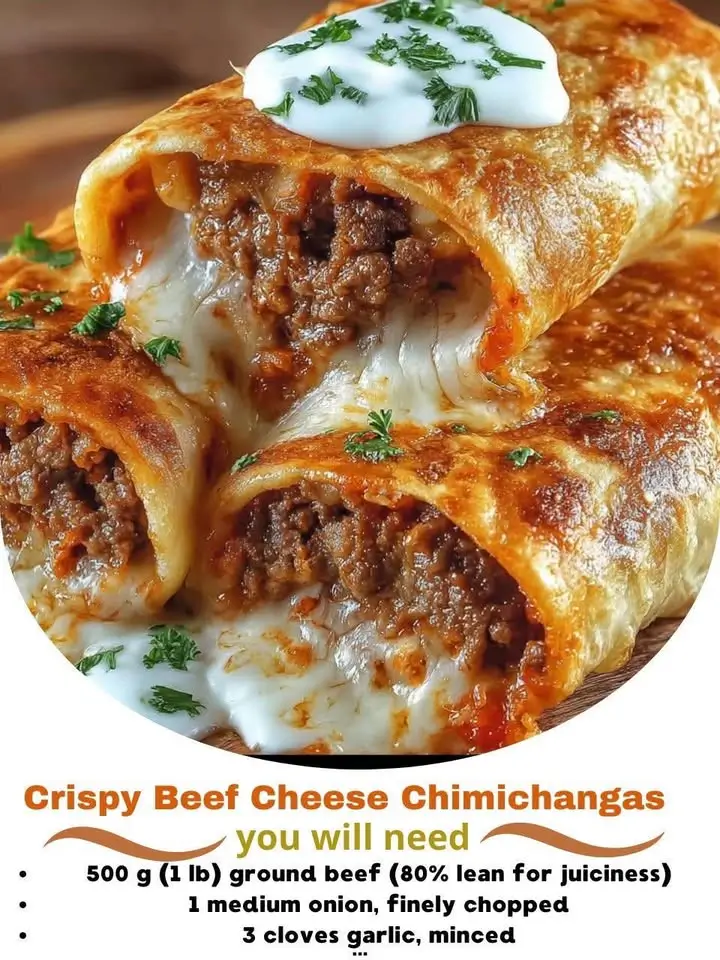
Crispy Beef Cheese Chimichangas – A Golden, Cheesy Fiesta in Every Bite
Introduction
Welcome to a culinary celebration that brings together bold flavors, golden crispiness, and melty cheese in every bite—Crispy Beef Cheese Chimichangas! These deep-fried delights are more than just a meal; they’re an experience. Imagine warm tortillas stuffed with seasoned ground beef, gooey melted cheese, beans, onions, and spices, all rolled up tightly and fried until golden brown. The result? A mouthwatering Mexican-inspired dish that’s both comforting and exciting, perfect for family dinners, game-day gatherings, or when you simply crave something indulgent.
Chimichangas originated as a fusion of Tex-Mex and traditional Mexican cuisine, evolving into a beloved staple across the American Southwest and beyond. Whether served smothered in enchilada sauce, topped with sour cream and guacamole, or enjoyed plain with a squeeze of lime, these crispy bundles deliver a fiesta of flavor in every bite. In this comprehensive guide, we’ll dive deep into everything you need to know about making the perfect Crispy Beef Cheese Chimichangas—from their fascinating history to detailed cooking techniques, nutritional insights, and creative variations.
The History
The origins of the chimichanga are shrouded in delicious legend and regional pride. While its exact birthplace is debated, most food historians agree it emerged in the mid-20th century along the U.S.-Mexico border, particularly in Arizona. One popular story attributes the invention to Monica Flin, owner of El Charro Café in Tucson, who accidentally dropped a burrito into a deep fryer in the 1940s. Upon pulling it out, she reportedly exclaimed a minced version of a Spanish swear word—”¡Chimichanga!”—which translates loosely to “thingamajig” or “whatchamacallit.” The name stuck, and so did the popularity.
Unlike traditional burritos, which are typically baked or steamed, chimichangas are defined by their deep-fried preparation, giving them a uniquely crispy exterior while maintaining a hot, flavorful filling inside. Over time, the dish gained widespread appeal throughout the Southwestern United States and became a menu favorite at Tex-Mex restaurants nationwide. Today, chimichangas come in countless varieties—chicken, bean, shredded pork, vegetarian—but the classic beef and cheese version remains one of the most cherished iterations, combining hearty protein with rich dairy and vibrant seasonings for a satisfying meal.
In Mexican-American culture, chimichangas symbolize culinary creativity and adaptation—taking familiar ingredients and transforming them into something new and exciting through frying, saucing, and topping. They’ve even made appearances in pop culture, referenced in TV shows like King of the Hill and featured in food festivals across Texas and Arizona. This humble yet decadent dish continues to evolve, reflecting both tradition and innovation on every plate.
Ingredients Breakdown
To create authentic, restaurant-quality Crispy Beef Cheese Chimichangas at home, selecting high-quality ingredients is essential. Each component plays a vital role in building layers of flavor, texture, and satisfaction. Let’s break down what goes into this golden masterpiece:
- Ground Beef (80/20 lean-to-fat ratio): Provides richness and savory depth. The fat content ensures juiciness after frying.
- Taco Seasoning (homemade or store-bought): A blend of chili powder, cumin, paprika, garlic powder, onion powder, oregano, salt, and pepper creates the signature Tex-Mex taste.
- Onion (yellow or white): Adds sweetness and aroma when sautéed, enhancing the overall complexity of the filling.
- Garlic (freshly minced): Brings pungent warmth and elevates the savory profile.
- Refried Beans (traditional or vegetarian): Contributes creaminess and body, helping bind the filling together.
- Shredded Cheese (Monterey Jack, cheddar, or a Mexican blend): Melts beautifully inside, creating gooey pockets of cheesy goodness.
- Flour Tortillas (large, 10-inch diameter): Must be pliable enough to roll without cracking but sturdy enough to hold up during frying.
- Vegetable Oil (for deep frying): Neutral flavor and high smoke point make it ideal for achieving a crispy, non-greasy crust.
- Salt and Pepper: For seasoning balance.
- Optional Add-ins: Diced green chilies, corn, jalapeños, cilantro, or tomatoes can add freshness and heat.
- Enchilada Sauce or Salsa (for serving): Offers a tangy, spicy complement to the rich chimichanga.
- Toppings: Sour cream, guacamole, shredded lettuce, pico de gallo, sliced olives, and lime wedges round out the presentation and flavor.
Using fresh, real ingredients—notably minced garlic instead of powdered, homemade taco seasoning, and quality cheese—can elevate your chimichangas from good to unforgettable. If possible, opt for organic or grass-fed beef for enhanced flavor and sustainability.
Step-by-Step Recipe
Ingredients
- 1 lb (450g) ground beef (80/20)
- 1 medium yellow onion, finely diced
- 2 cloves garlic, minced
- 2 tbsp taco seasoning (or 1 tbsp chili powder, 1 tsp cumin, ½ tsp paprika, ½ tsp garlic powder, ¼ tsp oregano, salt & pepper to taste)
- 1 cup refried beans (canned or homemade)
- 1 ½ cups shredded cheese (Mexican blend or Monterey Jack)
- 6 large flour tortillas (10 inches)
- Vegetable oil (for frying, about 1–2 quarts)
- Optional: ½ cup frozen corn, ¼ cup diced green chilies
- Salt to taste
Directions
- Cook the Filling: In a large skillet over medium heat, cook the ground beef until browned and crumbled, about 6–8 minutes. Drain excess fat if needed.
- Add Aromatics: Stir in the diced onion and cook for 3–4 minutes until softened. Add the minced garlic and cook for another 30 seconds until fragrant.
- Season the Meat: Sprinkle in the taco seasoning and stir to combine. Cook for 1 minute to toast the spices. Add refried beans and optional ingredients (corn, green chilies). Mix well and simmer for 2–3 minutes. Remove from heat and stir in 1 cup of shredded cheese. Set aside to cool slightly.
- Prepare Tortillas: Warm the tortillas briefly on a dry skillet or microwave (covered with a damp paper towel) for 20 seconds to make them pliable and prevent cracking when rolling.
- Fill and Roll: Lay a tortilla flat. Spoon about ⅓ cup of filling onto the center. Sprinkle additional cheese on top. Fold the sides inward, then roll tightly from the bottom to form a sealed burrito. Repeat with remaining tortillas.
- Secure Rolls: Place each rolled chimichanga seam-side down. You may use toothpicks to secure the edges if necessary, especially before frying.
- Heat Oil: In a deep pot or Dutch oven, heat 1–2 inches of vegetable oil to 350°F (175°C). Use a thermometer for accuracy.
- Fry Until Golden: Carefully place 1–2 chimichangas into the hot oil, seam side down. Fry for 2–3 minutes per side, turning once, until deeply golden and crispy. Avoid overcrowding the pot.
- Drain Excess Oil: Transfer cooked chimichangas to a wire rack set over a baking sheet or a plate lined with paper towels to drain.
- Serve Immediately: Remove toothpicks if used. Serve hot with your choice of toppings and sauces.
Tips
- Don’t Skip Warming Tortillas: Cold tortillas crack easily. Warming them makes rolling much easier and prevents leaks during frying.
- Avoid Overfilling: Too much filling can cause bursting. Stick to about ⅓ cup per tortilla for best results.
- Use a Wire Rack: Placing fried chimichangas on a wire rack instead of paper towels helps maintain crispiness by allowing air circulation underneath.
- Maintain Oil Temperature: Keep the oil between 340°F and 360°F. If too low, chimichangas absorb oil and become greasy; if too high, they burn outside before heating through.
- Double Wrap for Baking Option: Want a lighter version? Bake instead! Brush rolls with oil, place on a parchment-lined tray, and bake at 400°F for 20–25 minutes, flipping halfway.
- Freeze Before Frying for Crispier Results: Some chefs recommend freezing assembled (unfried) chimichangas for 30 minutes to help them hold shape and achieve extra crunch.
- Prep Ahead: Make the filling a day in advance and store in the fridge. Assemble and fry just before serving for optimal texture.
- Safety First: Always use tongs or a slotted spoon when handling hot oil. Keep a lid nearby to smother flames in case of fire.
Variations and Customizations
Crispy Beef Cheese Chimichangas are incredibly versatile. Once you master the base recipe, feel free to experiment with different proteins, cheeses, vegetables, and global flavor twists:
- Chicken Chimichangas: Replace beef with shredded rotisserie chicken or grilled chicken breast seasoned with taco spices.
- Pulled Pork Chimichangas: Use slow-cooked carnitas or BBQ pork for a smoky, tender alternative.
- Vegetarian/Vegan: Swap meat for black beans, lentils, sautéed mushrooms, or plant-based ground “meat.” Use vegan cheese and dairy-free sour cream.
- Breakfast Chimichangas: Fill with scrambled eggs, chorizo, potatoes, and cheese for a brunch twist.
- Spicy Kick: Add diced jalapeños, chipotle peppers in adobo, or a dash of cayenne to the filling.
- Gourmet Cheese Blends: Try pepper jack, queso fresco, cotija, or smoked gouda for unique flavor profiles.
- Gluten-Free Option: Use gluten-free tortillas (available in many stores) and ensure all seasonings are GF-certified.
- International Fusion: Add curry powder and peas for an Indian-inspired chimichanga, or teriyaki-glazed chicken with pineapple for an Asian fusion take.
- Dessert Chimichangas: Yes, dessert versions exist! Fill with Nutella, banana slices, cinnamon sugar, and marshmallows, then fry and dust with powdered sugar.
- Sauce Variations: Instead of red enchilada sauce, try green tomatillo salsa, mole, queso blanco, or avocado crema.
Health Considerations and Nutritional Value
While undeniably delicious, traditional Crispy Beef Cheese Chimichangas are calorie-dense and high in fat due to deep frying and cheese content. Here’s a general nutritional breakdown per serving (1 chimichanga, approx. 300g):
- Calories: ~550–700 kcal
- Total Fat: 30–40g (including saturated fat from beef and cheese)
- Protein: 20–25g
- Carbohydrates: 40–50g
- Fiber: 4–6g (especially if beans and veggies are included)
- Sodium: 800–1200mg (can vary widely based on seasoning and canned ingredients)
- Calcium & Iron: Good sources from cheese and beef
Healthier Modifications:
- Bake Instead of Fry: Lightly coat rolls with oil spray and bake at 400°F for 20–25 minutes for a significantly lower-fat option.
- Leaner Protein: Use 90/10 or 93/7 lean ground beef, ground turkey, or plant-based crumbles.
- Reduced-Fat Cheese: Opt for part-skim mozzarella or reduced-fat cheddar to cut calories.
- Whole Wheat Tortillas: Increase fiber and nutrients with whole grain or spinach tortillas.
- Less Salt: Control sodium by using low-sodium beans and making your own taco seasoning without added salt.
- Add Veggies: Boost nutrition with bell peppers, zucchini, spinach, or kale in the filling.
Enjoy chimichangas in moderation as part of a balanced diet. Pair them with a fresh salad, grilled vegetables, or black bean soup to enhance meal nutrition.
FAQ
Can I bake chimichangas instead of frying?
Yes! Baking is a healthier alternative. Brush assembled chimichangas with olive oil, place on a baking sheet, and bake at 400°F for 20–25 minutes, flipping halfway, until golden and heated through.
How do I keep chimichangas from getting soggy?
Ensure the oil is hot enough (350°F) before frying. Drain on a wire rack, not paper towels, and serve immediately. Avoid covering them after cooking.
Can I freeze chimichangas?
Absolutely. Assemble and wrap tightly in plastic, then foil. Freeze for up to 3 months. Fry or bake from frozen—add 3–5 minutes to cooking time.
What kind of oil is best for frying chimichangas?
Use oils with high smoke points like vegetable, canola, peanut, or sunflower oil.
Why did my chimichangas burst open?
Overfilling, improper rolling, or cold tortillas can cause leaks. Make sure to seal the edges well and don’t overload.
Are chimichangas gluten-free?
Traditional flour tortillas contain gluten. Use certified gluten-free tortillas to make them GF-friendly.
Can I make chimichangas ahead of time?
Yes. Prepare and assemble up to a day in advance, refrigerate covered, and fry just before serving for best texture.
What’s the difference between a burrito and a chimichanga?
A chimichanga is essentially a deep-fried burrito. While burritos are usually soft and steamed, chimichangas are crispy and golden from frying.
Summary
Crispy Beef Cheese Chimichangas are a golden, indulgent fusion of Tex-Mex flavors—packed with seasoned beef, melted cheese, and beans, then fried to perfection for a satisfying crunch.
Serve them hot with fresh toppings and sauce for a hearty, crowd-pleasing meal that turns dinner into a festive fiesta with every irresistible bite.