Introduction
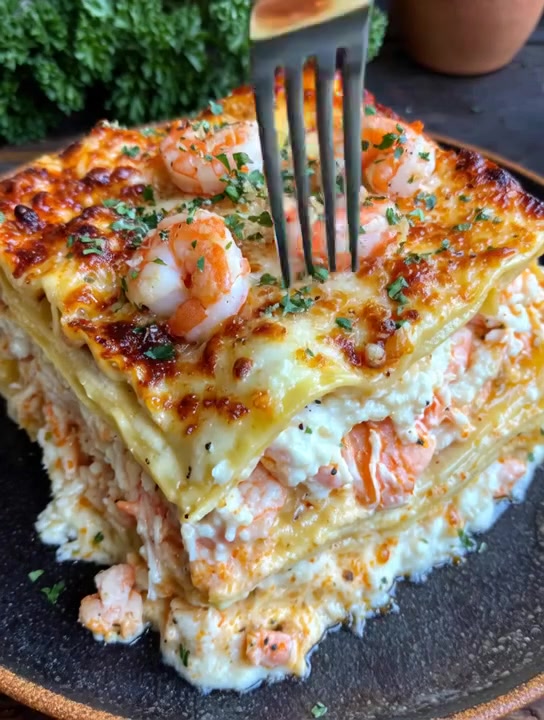
Welcome to a luxurious twist on a beloved Italian classic—Creamy Seafood Lasagna with Shrimp & Crab. This elegant, restaurant-worthy dish transforms traditional lasagna into a sumptuous coastal celebration, layering tender Gulf shrimp, sweet lump crabmeat, and rich, velvety sauces between delicate sheets of no-boil lasagna noodles. Far from ordinary, it bridges the rustic heart of Italian comfort food with the refined essence of fine seafood cuisine. Whether you’re planning an intimate dinner for two, hosting a special-occasion gathering, or simply treating yourself to something extraordinary, this lasagna delivers depth, texture, and harmony in every forkful. Its creamy béchamel base—infused with garlic, white wine, and fresh herbs—cradles the seafood without overwhelming it, while a golden, bubbling Parmesan-pecorino crust adds irresistible crunch and umami richness. Prepare to redefine what lasagna can be.
The History
Lasagna’s roots trace back over 700 years to medieval Italy, where early versions—like the layered pasta dish lasanum (Latin for “cooking pot”)—featured sheets of dough baked with cheese and spices. By the 14th century, the treat appeared in the landmark cookbook Liber de Coquina, calling for layered pasta, grated cheese, and aromatic herbs. Seafood-infused pastas, however, emerged much later—and more regionally. Along Italy’s Adriatic and Tyrrhenian coasts, fishermen and coastal families long incorporated local catches like clams, mussels, and anchovies into pasta bakes and timbales. Yet a true “seafood lasagna” remained rare, largely due to historical limitations: refrigeration was nonexistent, fresh crab and shrimp were highly perishable and geographically constrained, and the pairing of delicate seafood with dense, oven-baked pasta was considered technically risky—overcooking easily turned seafood rubbery or bland.
It wasn’t until the late 20th and early 21st centuries—fueled by globalized seafood distribution, advances in frozen and flash-pasteurized crabmeat, and the rise of fusion culinary philosophy—that chefs and home cooks began reimagining lasagna through a maritime lens. Influences from French gratin techniques, Spanish mariscada (seafood medleys), and even Louisiana-style Creole seafood sensibilities helped shape today’s Creamy Seafood Lasagna. The “creamy” element itself draws inspiration from Northern Italian bianca (white) lasagnas—particularly those from Emilia-Romagna and Liguria—where béchamel replaces tomato sauce to highlight subtler flavors. Our version pays homage to this evolution: honoring tradition while boldly embracing oceanic abundance, modern technique, and accessible luxury.
Ingredients Breakdown
Every exceptional Creamy Seafood Lasagna begins with intentionality—not just in selection, but in understanding *why* each ingredient matters:
- No-Boil Lasagna Noodles (12–15 sheets): Engineered to hydrate fully in the oven, these eliminate pre-cooking and prevent mushiness. Look for high-protein durum wheat varieties—they hold structure better under creamy, moist layers.
- Large Gulf or Argentinian Red Shrimp (1 lb, peeled, deveined, tails off): Gulf shrimp offer sweetness and firm, snappy texture; Argentinian reds bring deeper flavor and superior moisture retention. Avoid “pre-cooked” shrimp—they’ll become tough and grainy when baked.
- Pasteurized Lump Crabmeat (12 oz, fresh or high-quality refrigerated): Opt for jumbo lump or super lump for maximum tenderness and visual appeal. Drain thoroughly—but gently—to preserve delicate flakes. Never use canned crab unless rinsed, picked meticulously, and patted dry—it often carries brine and metallic notes.
- Unsalted Butter (½ cup / 1 stick): Provides foundational richness and emulsifying power for the béchamel. European-style (82% butterfat) yields extra silkiness.
- All-Purpose Flour (⅓ cup): Used to thicken the roux-based béchamel. A light hand prevents gumminess; whisking constantly ensures smoothness.
- Whole Milk (3 cups, warmed): Warm milk integrates seamlessly into the roux, preventing lumps. Whole milk delivers fat-soluble mouthfeel critical for balancing seafood’s natural lean quality.
- Heavy Cream (½ cup): Added at the end for opulent body, subtle tang, and a glossy sheen that enhances visual appeal and creaminess.
- Dry White Wine (½ cup: Sauvignon Blanc, Pinot Grigio, or unoaked Chardonnay): Deglazes the pan, lifts fond, and adds bright acidity that cuts through richness while amplifying seafood sweetness. Never substitute cooking wine—it contains salt and preservatives.
- Fresh Aromatics: 1 small yellow onion (finely diced), 4 garlic cloves (minced), 1 fennel bulb (thinly sliced, fronds reserved): Onion and garlic build savory depth; fennel adds a delicate anise note that complements shellfish naturally—its crisp texture also contributes subtle bite.
- Fresh Herbs: ¼ cup chopped flat-leaf parsley, 2 tbsp fresh dill, 1 tbsp fresh chives: Parsley offers grassy brightness; dill brings cool, maritime fragrance; chives lend mild oniony finesse. Add dill and chives *after* baking to preserve volatile oils.
- Cheeses: 1½ cups freshly grated Parmigiano-Reggiano, 1 cup grated Pecorino Romano, 1 cup shredded low-moisture mozzarella: Parmigiano lends nutty, crystalline umami; Pecorino adds salty, sheepy sharpness; mozzarella provides stretch and melt without greasiness. *Always grate yourself*—pre-grated cheeses contain anti-caking agents that inhibit melting and create graininess.
- Seasonings: 1 tsp freshly grated nutmeg, ½ tsp white pepper (not black), kosher salt to taste, pinch of cayenne (optional): Nutmeg harmonizes with dairy and seafood; white pepper delivers clean heat without visual specks; cayenne adds warmth—not spice—that echoes coastal spice blends.
- Finishing Touches: Lemon zest (from 1 large lemon), 2 tbsp lemon juice, extra virgin olive oil (for drizzling): Lemon brightens the entire profile, cutting fat and lifting aroma. Zest adds essential oils; juice adds acidity. Olive oil adds fruitiness and sheen.
Step-by-Step Recipe
This recipe is methodically structured to ensure success—even for first-time seafood lasagna makers. Follow each stage precisely for optimal texture, flavor layering, and structural integrity.
- Prep & Organize (20 minutes): Preheat oven to 375°F (190°C). Grease a 9×13-inch deep-dish lasagna pan (preferably ceramic or enameled cast iron for even heating). Set out all ingredients. Pat shrimp and crab completely dry with paper towels—this is non-negotiable for preventing watery layers.
- Sauté Aromatics (8 minutes): In a large, heavy-bottomed Dutch oven or skillet, melt 2 tbsp butter over medium-low heat. Add diced onion and fennel; cook gently 5–6 minutes until translucent but not browned. Stir in minced garlic and cook 1 minute until fragrant—do not let it color. Remove from heat and set aside.
- Make the Luxe Béchamel (12 minutes): In the same pot (no need to wash), melt remaining 6 tbsp butter over medium heat. Whisk in flour; cook 2 minutes, stirring constantly, until pale golden and nutty—this eliminates raw flour taste. Gradually whisk in warm milk, ½ cup at a time, ensuring each addition is fully incorporated and smooth before adding more. Bring to a gentle simmer, then reduce heat to low. Cook 5–6 minutes, whisking frequently, until thick enough to coat the back of a spoon. Remove from heat. Whisk in heavy cream, white wine, nutmeg, white pepper, and 1 tsp kosher salt. Stir in the sautéed aromatics. Let cool slightly (5 minutes).
- Prepare Seafood (5 minutes): In a large bowl, combine shrimp, crabmeat, ¼ cup parsley, 1 tbsp dill, lemon zest, and 1 tbsp lemon juice. Gently fold with a silicone spatula—never stir vigorously—to avoid breaking crab lumps. Season lightly with salt (remember cheeses are salty) and a pinch of cayenne if using.
- Assemble with Precision (10 minutes): Spread ¾ cup béchamel evenly across the bottom of the prepared pan. Layer 4 no-boil noodles (slightly overlapping if needed). Spread ⅓ of remaining béchamel (about 1½ cups) over noodles. Dollop and gently spread half the seafood mixture (don’t press down—let it nestle). Sprinkle with ⅓ of Parmigiano and ⅓ of Pecorino. Repeat: noodles → béchamel → remaining seafood → cheeses. Top with final noodle layer. Pour remaining béchamel evenly over top—ensure full coverage to prevent drying. Finish with remaining cheeses and a light sprinkle of mozzarella for golden melt.
- Bake with Steam Control (55–60 minutes): Cover tightly with aluminum foil (tent it slightly so steam doesn’t drip back). Bake 40 minutes. Carefully remove foil. Rotate pan. Continue baking uncovered 15–20 minutes until top is deeply golden, edges are bubbling vigorously, and center is set (a knife inserted should come out clean—not wet). If top browns too quickly, loosely tent again with foil.
- Rest Imperatively (25–30 minutes): Turn off oven. Let lasagna rest *in the turned-off oven* with door ajar for 15 minutes. Then transfer to a wire rack and rest at room temperature for another 10–15 minutes. This allows starches to set, layers to stabilize, and residual heat to finish cooking seafood gently—preventing separation and ensuring clean, defined slices.
- Finish & Serve (3 minutes): Just before serving, sprinkle with remaining 1 tbsp dill, 1 tbsp chives, and a final drizzle of extra virgin olive oil. Serve with lemon wedges on the side.
Tips
- Seafood Safety First: Always purchase shrimp and crab from reputable fishmongers with strong cold-chain practices. Refrigerate immediately and use within 1–2 days. If freezing, freeze raw shrimp in single-layer portions and thaw overnight in the fridge—not at room temperature.
- Texture Mastery: Overmixing seafood = broken crab and chewy shrimp. Fold with a wide spatula using “cut-and-fold” motions. Chill assembled lasagna (unbaked) for up to 24 hours—this firms layers and improves sliceability.
- Béchamel Brilliance: Lumps? Fix them instantly: strain through a fine-mesh sieve before adding to seafood. Too thin? Simmer 1–2 minutes longer. Too thick? Whisk in 1–2 tbsp warm milk. For extra silkiness, blend finished béchamel with an immersion blender for 10 seconds.
- Noodle Know-How: No-boil noodles absorb ~4x their weight in liquid. Ensure your béchamel is adequately voluminous—and don’t skimp on coverage. If using regular noodles, boil *al dente*, rinse in cold water, and lay flat on oiled parchment to prevent sticking.
- Oven Wisdom: Convection ovens bake faster. Reduce temp by 25°F and check at 45 minutes. Glass pans heat slower than metal—add 5 minutes covered time. Ceramic retains heat intensely—resting is even more crucial.
- Resting Is Non-Negotiable: Skipping rest guarantees soupy, collapsed slices. It’s when the magic happens: proteins relax, starches gel, and flavors marry. Set a timer—you’ll thank yourself.
- Serving Sharpness: Use a serrated knife dipped in hot water and wiped clean between cuts. Serve on pre-warmed plates to maintain ideal temperature (140–145°F core).
Variations and Customizations
This recipe is a canvas—adaptable to seasons, preferences, pantries, and dietary needs—without sacrificing elegance or integrity.
Protein Variations
- Surf & Turf Fusion: Add ½ cup finely diced, seared pancetta or prosciutto crisps to the aromatics for savory depth and textural contrast.
- Shellfish Symphony: Replace half the shrimp with ½ cup chopped, steamed mussels (removed from shells) or ¼ cup thinly sliced scallops (pat dry and sear 30 sec per side first).
- Vegetarian “Oceanic” Version: Substitute hearts of palm (shredded, soaked in seaweed broth), king oyster mushrooms (sliced thin, roasted until chewy), and nori flakes (¼ tsp, toasted) for umami and oceanic nuance. Boost with 1 tsp miso paste whisked into béchamel.
Sauce & Flavor Twists
- Provence-Inspired: Stir 2 tbsp tomato paste + 1 tsp herbes de Provence into the aromatics; replace white wine with dry vermouth.
- Coastal Cajun: Sauté 1 diced bell pepper, 1 stalk celery, and ½ tsp smoked paprika with the onions. Use tarragon instead of dill.
- Truffle Elegance: Infuse warm milk with 1 tsp black truffle oil or ½ tsp white truffle paste. Finish with shaved black truffle.
Dietary Adaptations
- Gluten-Free: Use certified GF no-boil lasagna noodles (Tinkyada or Barilla GF). Thicken béchamel with GF all-purpose blend or sweet rice flour.
- Lower-Carb/Keto: Replace noodles with thinly sliced zucchini or eggplant (salted, pressed, and roasted 10 min first). Increase cheese ratio slightly for binding.
- Dairy-Free: Use plant-based butter, unsweetened oat or cashew milk (simmered 5 min to reduce water content), and nutritional yeast + white miso for “cheesy” depth. Skip mozzarella; add toasted almond “ricotta” (blended almonds + lemon + garlic).
- Pescatarian-Approved: Ensure all cheeses are microbial rennet-only (avoid animal rennet if strict)—brands like BelGioioso, Organic Valley, and Cabot are reliable.
Make-Ahead & Freezing Guide
- Refrigerate Assembled (Unbaked): Up to 24 hours. Cover tightly with plastic + foil. Add 5–10 minutes to covered bake time.
- Freeze Unbaked: Wrap pan *extremely* well in plastic, then foil. Freeze up to 3 months. Thaw overnight in fridge before baking (add 10–15 min covered time).
- Freeze Baked & Cooled: Slice, wrap individual portions in parchment + foil, freeze up to 2 months. Reheat covered at 325°F until center reaches 165°F (30–40 min).
- Prep Components Ahead: Béchamel keeps 4 days refrigerated (rewhisk before using). Seafood mix (uncooked) holds 1 day. Cooked noodles (if used) last 2 days.
Health Considerations and Nutritional Value
Creamy Seafood Lasagna is often perceived as indulgent—but with mindful preparation, it delivers impressive nutritional density alongside its decadence. Here’s a detailed, evidence-informed analysis per standard serving (1/12 of recipe):
Macronutrient Profile (Approximate)
- Calories: 425–460 kcal
- Protein: 28–32 g (Excellent source—shrimp provides all 9 essential amino acids; crab offers highly bioavailable zinc and selenium)
- Fat: 22–25 g (65–70% unsaturated—primarily from olive oil, dairy fats, and seafood omega-3s)
- Carbohydrates: 28–31 g (Mostly complex carbs from whole-grain noodles if substituted; fiber ~2–3 g)
- Sugar: <2 g (Naturally occurring only—no added sugars)
Vitamin & Mineral Highlights
- Omega-3 Fatty Acids (EPA/DHA): ~450–600 mg per serving—supports cardiovascular health, cognitive function, and reduces systemic inflammation. Shrimp and crab are among the most sustainable seafood sources of these vital fats.
- Selenium: ~45–55 mcg (100%+ DV)—a potent antioxidant critical for thyroid hormone metabolism and DNA repair. Crab is one of the richest dietary sources.
- Vitamin B12: ~3.5–4.2 mcg (150–175% DV)—essential for nerve health and red blood cell formation. Seafood and dairy provide highly absorbable forms.
- Zinc: ~3.8–4.5 mg (35–40% DV)—supports immune resilience and wound healing. Crabmeat contains zinc in a highly bioavailable protein-bound form.
- Calcium & Vitamin D: From dairy—enhances bone mineral density, especially when paired with magnesium-rich fennel and parsley.
Dietitian-Approved Notes
- Heart-Healthy Modifications: Use 2% milk instead of whole; replace half the butter with olive oil in béchamel; increase fennel and parsley to boost potassium and nitrates (vasodilatory benefits).
- Sodium Awareness: Naturally low—~380–420 mg/serving *before* added salt. Control sodium by omitting added salt during prep and relying on cheese’s inherent savoriness. Ideal for DASH or low-sodium diets.
- Allergen Transparency: Contains crustaceans (shrimp, crab), dairy (milk, cheese, butter), wheat (noodles), and sulfites (in some wines). Easily adaptable for top-9 allergen avoidance—see Variations section.
- Portion Mindfulness: Richness promotes satiety—most enjoy smaller portions (1.5 cups vs. 2 cups) with a large side salad (arugula, lemon vinaigrette, shaved fennel) for volume and phytonutrients.
- Pregnancy-Safe? Yes—when using pasteurized crab and thoroughly cooked shrimp (internal temp 145°F). Avoid raw sprouts or unpasteurized cheeses unless specified safe.
Ingredients
- 12–15 no-boil lasagna noodles (oven-ready, 8.5″ x 4″)
- 1 pound large shrimp (16/20 count), peeled, deveined, tails removed
- 12 ounces premium pasteurized lump crabmeat, carefully picked over and drained
- ½ cup (1 stick) unsalted butter, divided
- ⅓ cup all-purpose flour
- 3 cups whole milk, warmed to 110°F
- ½ cup heavy cream
- ½ cup dry white wine (Sauvignon Blanc or Pinot Grigio)
- 1 small yellow onion, finely diced
- 4 garlic cloves, minced
- 1 fennel bulb (about 8 oz), cored and very thinly sliced (fronds reserved)
- ¼ cup fresh flat-leaf parsley, finely chopped (plus extra for garnish)
- 2 tablespoons fresh dill, chopped (plus extra for garnish)
- 1 tablespoon fresh chives, chopped (plus extra for garnish)
- 1½ cups freshly grated Parmigiano-Reggiano cheese
- 1 cup freshly grated Pecorino Romano cheese
- 1 cup low-moisture mozzarella cheese, shredded
- 1 teaspoon freshly grated nutmeg
- ½ teaspoon freshly ground white pepper
- Kosher salt, to taste (start with 1 tsp, adjust after tasting béchamel)
- Pinch of cayenne pepper (optional)
- Zest and juice of 1 large lemon
- Extra virgin olive oil, for finishing drizzle
Directions
- Preheat oven to 375°F (190°C). Lightly grease a 9×13-inch deep-dish ceramic or metal lasagna pan.
- In a large skillet or Dutch oven, melt 2 tablespoons butter over medium-low heat. Add diced onion and sliced fennel. Cook, stirring occasionally, until softened and translucent (5–6 minutes). Stir in garlic and cook 1 minute until fragrant. Remove from heat; set aside to cool slightly.
- In the same pot, melt remaining 6 tablespoons butter over medium heat. Whisk in flour and cook, stirring constantly, for 2 minutes until golden and nutty. Gradually whisk in warm milk, ½ cup at a time, ensuring each addition is fully smooth before adding more. Bring mixture to a gentle simmer, then reduce heat to low. Cook, whisking frequently, for 5–6 minutes until thickened enough to coat the back of a spoon.
- Remove pot from heat. Whisk in heavy cream, white wine, nutmeg, white pepper, and 1 teaspoon kosher salt. Stir in the cooled onion-fennel-garlic mixture. Taste and adjust seasoning—add more salt only if needed. Let béchamel cool for 5 minutes.
- In a large bowl, gently combine shrimp, crabmeat, ¼ cup parsley, 1 tablespoon dill, lemon zest, and 1 tablespoon lemon juice. Fold with a silicone spatula until just combined. Season lightly with a pinch of salt and optional cayenne.
- Spoon ¾ cup béchamel into the bottom of the prepared pan, spreading evenly. Layer 4 no-boil noodles over sauce (they may overlap slightly). Spread 1½ cups béchamel over noodles. Dollop and gently spread half the seafood mixture over béchamel. Sprinkle with ½ cup Parmigiano, ⅓ cup Pecorino, and ⅓ cup mozzarella. Repeat layers: noodles → 1½ cups béchamel → remaining seafood → remaining cheeses. Top with final 4–5 noodles. Pour remaining béchamel evenly over top, ensuring full coverage. Sprinkle with remaining Parmigiano, Pecorino, and mozzarella.
- Cover pan tightly with aluminum foil (tent slightly). Bake for 40 minutes. Carefully remove foil. Rotate pan. Bake uncovered for 15–20 minutes, until top is deeply golden, edges bubble vigorously, and center is set (insert knife—it should come out clean).
- Turn off oven. Crack oven door open 2 inches and let lasagna rest inside for 15 minutes. Remove and place on a wire rack. Rest at room temperature for 10–15 minutes more.
- Just before serving, sprinkle with remaining 1 tablespoon dill, 1 tablespoon chives, and a generous drizzle of extra virgin olive oil. Serve with lemon wedges.
FAQ
- Can I use frozen shrimp?
- Yes—but thaw *slowly* in the refrigerator overnight. Never microwave or soak in warm water, which causes mushiness and waterlogging. Pat *extremely* dry before mixing.
- Why no tomato sauce?
- Tomato’s acidity can “cook” delicate seafood during baking, making it tough. A rich, neutral béchamel protects texture while enhancing natural sweetness. Tomato lovers can add 1 tbsp sun-dried tomato paste to the aromatics for depth—without acidity.
- My lasagna came out watery. What went wrong?
- Most common causes: 1) Undrained crabmeat or wet shrimp; 2) Undercooked béchamel (needs full thickening time); 3) Skipping the mandatory rest (liquid redistributes during rest); 4) Over-saucing—béchamel must be thick enough to coat a spoon.
- Can I make this ahead for a party?
- Absolutely. Assemble up to 24 hours ahead, cover, and refrigerate. Add 5–10 minutes to covered bake time. For best results, bake the morning of and keep warm in a turned-off oven (door closed) for up to 2 hours before serving.
- What wine pairs best with this dish?
- Choose a crisp, mineral-driven white with bright acidity and subtle salinity: Chablis (unoaked Chardonnay), Vermentino from Sardinia, or a dry Muscadet Sèvre-et-Maine. Avoid oaky or buttery whites—they compete with the béchamel.
- Is there a shortcut for the béchamel?
- We strongly advise against store-bought or powdered versions—their stabilizers and lack of fresh dairy fat compromise texture and flavor. However, you *can*