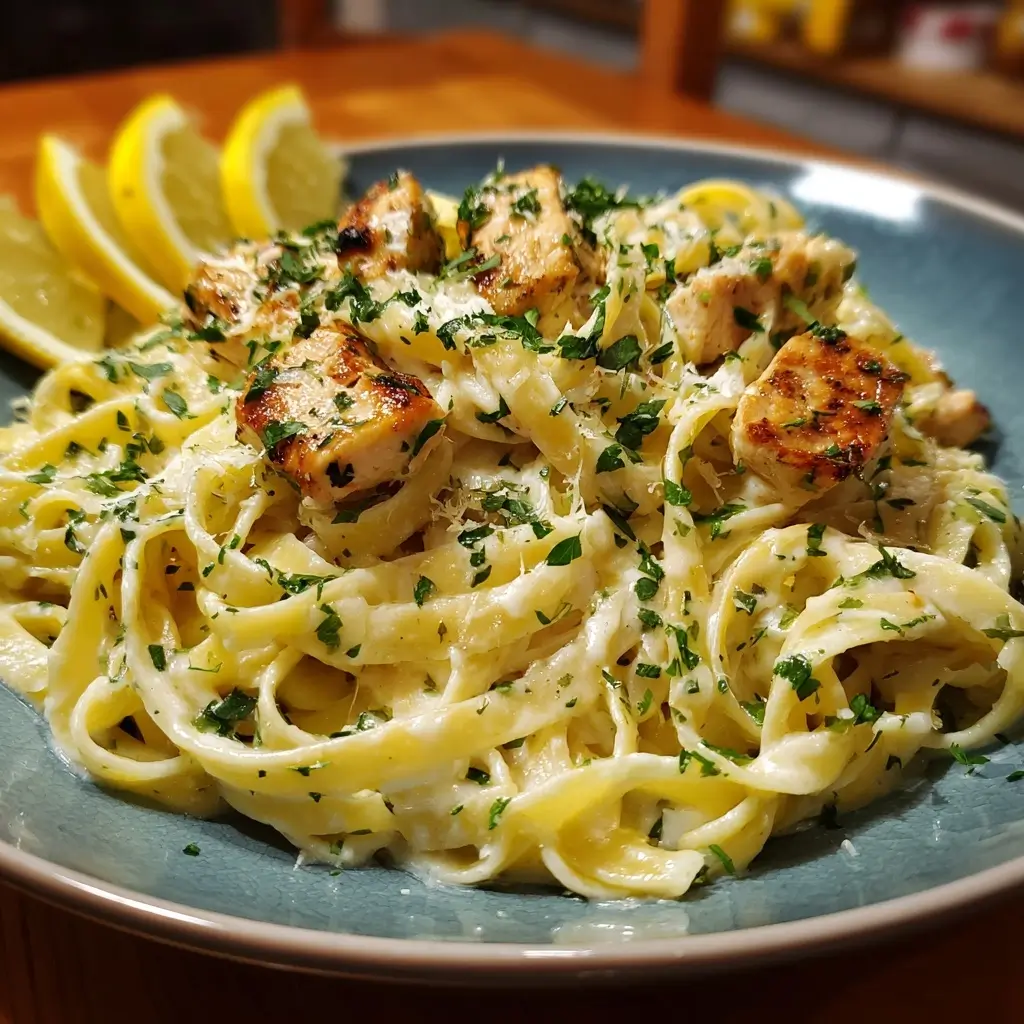
Creamy Garlic Lemon Pasta with Chicken is a luxurious yet simple dish that combines tender chicken, al dente pasta, and a velvety sauce infused with the bright tang of lemon and the rich depth of roasted garlic. This recipe strikes the perfect balance between indulgence and freshness, making it an ideal choice for both weeknight dinners and special occasions. Whether you’re cooking for family or entertaining guests, this elegant meal delivers bold flavors with minimal effort. Below, we dive deep into every aspect of this delectable dish—from its culinary roots to detailed preparation steps, nutritional insights, and creative variations—so you can master it in your own kitchen.
The History
Pasta dishes featuring creamy sauces and protein have long been staples in Italian-American cuisine, evolving from traditional Italian recipes that emphasized fresh ingredients and rustic simplicity. While classic Alfredo sauce originated in Rome as a butter-and-cheese-based dressing for fettuccine, American adaptations introduced heavy cream and additional seasonings for a richer profile. The addition of lemon and garlic reflects Mediterranean influences, where citrus is often used to brighten rich, savory dishes. Chicken became a popular inclusion in the mid-20th century as home cooks sought heartier, more balanced meals. Over time, Creamy Garlic Lemon Pasta with Chicken emerged as a modern fusion of these traditions—offering a harmonious blend of comfort and elegance that resonates with today’s palate preferences for both richness and freshness.
Ingredients Breakdown
Each ingredient in this dish plays a crucial role in building layers of flavor and texture:
- Fettuccine or Linguine: These flat, long noodles hold creamy sauces exceptionally well due to their broad surface area.
- Chicken Breast or Thighs: Lean chicken breasts offer a mild, clean taste, while thighs provide more moisture and depth. Both should be seasoned and seared to lock in juices.
- Heavy Cream: The base of the sauce, providing a luscious mouthfeel and helping emulsify other ingredients.
- Garlic: Freshly minced or roasted garlic adds aromatic complexity; roasting mellows its sharpness and enhances sweetness.
- Lemon: Both zest and juice are essential—zest imparts floral citrus notes without acidity, while juice adds brightness and cuts through the richness.
- Butter: Enhances silkiness and contributes to the golden sheen of the sauce.
- Grated Parmesan Cheese: Adds umami and saltiness, helping thicken the sauce naturally.
- Olive Oil: Used for sautéing chicken and aromatics, contributing a fruity undertone.
- Fresh Herbs (Parsley, Basil, or Chives): Provide color and freshness, balancing the heaviness of the cream.
- Salt and Black Pepper: Fundamental seasoners that elevate all other components.
- Nutmeg (optional): A pinch enhances warmth and complements dairy-based sauces.
Optional additions include sun-dried tomatoes, spinach, mushrooms, or pancetta for extra dimension.
Step-by-Step Recipe
- Prepare the Ingredients: Slice 2 boneless, skinless chicken breasts into thin cutlets. Season both sides with salt, black pepper, garlic powder, and a touch of paprika for color. Mince 4 cloves of garlic. Zest one large lemon and squeeze out about 1/3 cup of juice. Measure 1 cup of grated Parmesan cheese, chop 1/4 cup of fresh parsley, and set aside.
- Cook the Pasta: Bring a large pot of salted water to a boil (use about 1 tablespoon of salt per quart). Add 12 oz of fettuccine and cook according to package instructions until al dente. Reserve 1 cup of pasta water before draining. Do not rinse the pasta—starchy water helps bind the sauce.
- Sear the Chicken: Heat 2 tablespoons of olive oil in a large skillet over medium-high heat. Add chicken in a single layer and cook for 5–6 minutes per side until golden brown and internal temperature reaches 165°F. Transfer to a plate, cover loosely with foil, and let rest for 5 minutes before slicing into strips.
- Build the Sauce: In the same skillet, reduce heat to medium. Add 1 tablespoon of butter and 2 tablespoons of olive oil. Sauté minced garlic for 30–60 seconds until fragrant but not browned. Pour in 1 cup of heavy cream, stirring gently. Let it simmer for 2–3 minutes to slightly reduce.
- Add Citrus and Cheese: Stir in lemon zest, half the lemon juice, and nutmeg (if using). Gradually whisk in Parmesan cheese until fully melted and smooth. Taste and adjust seasoning with salt and pepper.
- Combine Pasta and Sauce: Add the drained pasta to the skillet and toss to coat. If the sauce is too thick, add reserved pasta water 1/4 cup at a time until desired consistency is reached.
- Incorporate Chicken and Finish: Gently fold in sliced chicken and heat through for 1–2 minutes. Remove from heat and stir in remaining lemon juice and chopped parsley. Adjust final seasoning if needed.
- Serve Immediately: Plate the pasta, garnish with extra Parmesan, a sprinkle of red pepper flakes, and a lemon wedge on the side for added zest.
Tips
- Don’t Overcook the Garlic: Burnt garlic turns bitter. Keep the heat moderate and stir constantly.
- Use Room-Temperature Cream: Cold cream may cause the sauce to break or curdle when heated.
- Reserve Pasta Water: The starchy liquid is key for adjusting sauce texture and improving adhesion to noodles.
- Rest the Chicken: Allowing chicken to rest after cooking ensures juiciness when sliced.
- Brighten Before Serving: Adding half the lemon juice at the end preserves its vibrant, fresh flavor.
- Season in Layers: Salt each component (chicken, pasta water, sauce) rather than relying on one big seasoning step.
- One-Pan Option: For easier cleanup, cook chicken, make sauce, and combine everything in the same pan after removing the meat temporarily.
Variations and Customizations
This recipe is highly adaptable to different tastes, dietary needs, and pantry availability:
- Dairy-Free Version: Substitute heavy cream with full-fat coconut milk and use nutritional yeast or vegan Parmesan instead of dairy cheese.
- Gluten-Free Option: Use gluten-free pasta made from rice, corn, or chickpeas. Ensure all other ingredients are certified GF.
- Vegetarian Adaptation: Omit chicken and add grilled zucchini, artichoke hearts, or sautéed mushrooms for substance.
- Seafood Twist: Replace chicken with cooked shrimp or scallops added at the end for a luxurious variation.
- Spicy Kick: Add crushed red pepper flakes during sautéing or drizzle with chili oil before serving.
- Herb Variations: Swap parsley for basil for a sweeter note, or chives for a mild onion flavor.
- Cream Alternatives: Half-and-half or whole milk can be used, though the sauce will be less rich; consider adding a cornstarch slurry to help thicken.
- Lemon Substitutes: Lime or orange can be used in place of lemon for a unique citrus twist, though pairing differs.
- Protein Swaps: Try turkey cutlets, pork tenderloin, or even tofu for alternate protein sources.
- Extra Veggies: Stir in baby spinach, cherry tomatoes, roasted bell peppers, or asparagus for added nutrition and color.
Health Considerations and Nutritional Value
While undeniably rich, this dish can be part of a balanced diet when enjoyed in moderation and with mindful adjustments:
- Calories: A standard serving (about 1.5 cups) ranges from 600–800 calories depending on portion size and ingredient choices.
- Fat Content: High in saturated fat due to heavy cream and cheese. Opt for lower-fat alternatives like half-and-half or evaporated milk to reduce fat content.
- Protein: Chicken provides high-quality protein (~30g per breast), supporting muscle repair and satiety.
- Carbohydrates: Primarily from refined pasta; switching to whole wheat or legume-based pasta increases fiber and nutrients.
- Sodium: Can be high due to cheese and added salt. Use low-sodium broth, reduced-salt cheese, and limit added salt to manage intake.
- Vitamins & Minerals: Lemon contributes vitamin C and antioxidants; garlic has anti-inflammatory properties; Parmesan offers calcium and B12.
- Dietary Modifications:
- Keto-Friendly: Use keto-approved pasta (shirataki or almond flour-based) and increase healthy fats (e.g., avocado or olive oil).
- Heart-Healthy: Focus on lean chicken, minimal butter, and plant-based oils. Include leafy greens for fiber and potassium.
- Balanced Plate Tip: Serve with a side salad or steamed vegetables to boost fiber and micronutrient content.
Ingredients
- 12 oz fettuccine or linguine
- 2 boneless, skinless chicken breasts (about 1 lb)
- Salt and freshly ground black pepper (to taste)
- 1 tsp garlic powder
- 1/2 tsp paprika (optional, for color)
- 3 tbsp olive oil (divided)
- 4 cloves garlic, minced
- 1 tbsp unsalted butter
- 1 cup heavy cream (or substitute)
- Zest of 1 large lemon
- 1/3 cup fresh lemon juice (from 1–2 lemons)
- 1 cup grated Parmesan cheese (freshly shredded preferred)
- 1/4 tsp ground nutmeg (optional)
- 1/4 cup chopped fresh parsley (plus extra for garnish)
- Red pepper flakes (optional, for heat)
Directions
- Season chicken breasts with salt, pepper, garlic powder, and paprika. Set aside.
- Bring a large pot of salted water to a boil. Cook pasta according to package directions until al dente. Reserve 1 cup of pasta water, then drain and set aside.
- Heat 2 tablespoons of olive oil in a large skillet over medium-high heat. Add chicken and cook 5–6 minutes per side until golden and cooked through (internal temp 165°F). Transfer to a plate, cover, and let rest 5 minutes. Slice into strips.
- In the same skillet, reduce heat to medium. Add 1 tablespoon olive oil and butter. Sauté garlic for 30–60 seconds until fragrant.
- Pour in heavy cream and simmer 2–3 minutes. Stir in lemon zest, half the lemon juice, nutmeg (if using), salt, and pepper.
- Gradually whisk in Parmesan until melted and smooth. Simmer another 1–2 minutes until slightly thickened.
- Add cooked pasta to the sauce. Toss to coat, adding reserved pasta water as needed for desired consistency.
- Stir in sliced chicken and heat through for 1–2 minutes.
- Remove from heat. Stir in remaining lemon juice and chopped parsley.
- Taste and adjust seasoning. Serve immediately with extra Parmesan, parsley, lemon wedges, and optional red pepper flakes.
FAQ
Can I make this ahead of time?
Yes, but best served fresh. You can prep ingredients (slice chicken, grate cheese, zest lemon) up to a day ahead. Reheat gently with a splash of cream or broth to revive the sauce.
Why did my sauce separate?
High heat or cold dairy can cause separation. Always warm cream slightly and avoid boiling once cheese is added. If sauce breaks, whisk in a spoonful of cold butter or a bit of pasta water to re-emulsify.
Can I freeze leftovers?
Cream-based sauces don’t freeze well—they tend to separate upon thawing. It’s better to store in the fridge for up to 3 days and reheat gently on the stove.
What pasta works best?
Fettuccine, linguine, tagliatelle, or pappardelle are ideal. Avoid small shapes unless you enjoy a saucier, looser texture.
How do I prevent rubbery chicken?
Avoid overcooking. Use a meat thermometer and remove chicken just before it hits 165°F—it will continue cooking off-heat. Resting also prevents moisture loss.
Is there a lighter version?
Absolutely. Use grilled chicken, whole wheat pasta, and a sauce made with Greek yogurt, low-fat cream cheese, or blended silken tofu for a protein-rich, lower-fat alternative.
Summary
Creamy Garlic Lemon Pasta with Chicken is a sumptuous dish that marries rich, velvety textures with bright citrus and savory herbs. Easy to customize and perfect for any occasion, it’s comfort food elevated with gourmet flair.