Introduction
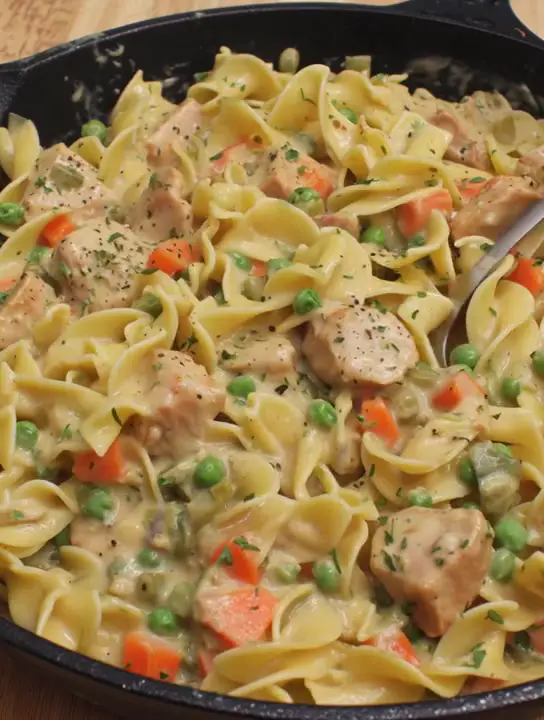
Welcome to the ultimate comfort food upgrade: Creamy Chicken Pot Pie Pasta Skillet. This isn’t your grandmother’s casserole—though it lovingly honors her legacy—but a modern, weeknight-friendly, one-skillet marvel that marries the soul-soothing richness of classic chicken pot pie with the satisfying chew and versatility of pasta. Imagine tender chunks of rotisserie or sautéed chicken nestled in a velvety, herb-kissed sauce brimming with golden carrots, sweet peas, buttery Yukon Gold potatoes, and savory onions—all bound together with al dente fusilli (or your pasta of choice) and finished with a whisper of flaky sea salt and freshly cracked black pepper. Ready in under 40 minutes, requiring only one pan (yes, truly—no boiling water needed for the pasta!), and infinitely adaptable to pantry staples, dietary preferences, and seasonal produce, this dish is the answer to “What’s for dinner?” on even the most chaotic of evenings. Whether you’re feeding picky toddlers, meal-prepping for busy professionals, or hosting a cozy Sunday supper, this skillet delivers restaurant-quality depth, homestyle warmth, and zero stress.
The History
The roots of the Creamy Chicken Pot Pie Pasta Skillet stretch across centuries and continents, weaving together culinary traditions with pragmatic innovation. Its ancestry begins with medieval European “pyes”—savory meat-and-vegetable fillings encased in dense, inedible rye crusts used more for preservation than pleasure. By the 17th century, English settlers brought refined versions to North America, where regional ingredients like chicken, carrots, and potatoes transformed the dish into what we now recognize as American chicken pot pie—a comforting, double-crust baked staple emblematic of hearth and home. Fast-forward to the mid-20th century: the rise of convenience cooking, canned soups, frozen vegetables, and time-saving appliances redefined expectations around family meals. The iconic “cream of mushroom soup” shortcut entered the canon—not out of laziness, but out of love and necessity. Then came the pasta revolution: Italian imports gained mainstream popularity, and home cooks began experimenting—substituting noodles for pastry, swapping stovetop simmering for oven baking, and embracing one-pot efficiency. The modern Creamy Chicken Pot Pie Pasta Skillet emerged organically from food blogs, TikTok recipe hacks, and home kitchen trial-and-error—fueled by Gen Z’s love of creamy textures, Millennials’ demand for minimal cleanup, and every generation’s unwavering craving for nostalgia with a twist. It’s not just a recipe; it’s a cultural artifact of adaptation, resilience, and the universal desire to feed people well—with grace, speed, and heart.
Ingredients Breakdown
Every ingredient in this skillet plays a precise, purposeful role—no filler, no afterthoughts. Here’s why each component matters:
- Chicken breast or thighs (1½ lbs): Thighs offer superior moisture and rich flavor due to their higher fat content, while breasts provide leaner protein and firmer texture. Rotisserie chicken is an excellent time-saving swap—just shred and add at the end to preserve tenderness.
- Garlic (4 cloves, minced): Not just aromatic—it’s the biochemical catalyst. When gently sautéed, garlic releases allicin, which deepens umami and bridges savory notes across the dish.
- Yellow onion (1 large, finely diced): Provides foundational sweetness and body. Slow-cooking until translucent builds a complex base layer; caramelizing slightly adds subtle depth without overwhelming.
- Carrots (2 medium, small-dice): Cut uniformly to ensure even cooking. Their natural sugars bloom when lightly browned, balancing the creaminess and adding vibrant color and beta-carotene.
- Yukon Gold potatoes (2 medium, ½-inch cubes): Chosen for their waxy-yet-creamy starch profile—they hold shape during simmering but also thicken the sauce naturally as they release amylopectin.
- Frozen peas (1 cup): Added late to retain brightness, sweetness, and vibrant green hue. Peas contribute fiber, vitamin K, and a textural pop against the creamy backdrop.
- Dry white wine (½ cup, e.g., Sauvignon Blanc or Pinot Grigio): Deglazes the fond, lifts roasted flavors from the pan, and adds acidity to cut through richness. Non-alcoholic substitute: ¼ cup apple cider vinegar + ¼ cup low-sodium broth.
- Low-sodium chicken broth (2 cups): The hydrophilic backbone—carrying flavor, hydrating starches, and enabling the “pasta cooking in sauce” method. Homemade or high-quality store-bought makes a discernible difference in clarity and savoriness.
- Heavy cream (¾ cup): Adds luxurious mouthfeel and stabilizes the emulsion. For lighter options: full-fat coconut milk (dairy-free), evaporated milk (lower fat), or a roux-thickened whole milk base.
- All-purpose flour (3 tbsp): Used as a slurry (not a roux) to prevent lumps and create seamless thickening without raw flour taste. Gluten-free option: arrowroot or tapioca starch (use 2 tbsp).
- Fresh thyme (1 tbsp leaves, plus stems for infusing): Earthy, floral, and subtly minty—thyme complements poultry and root vegetables better than any other herb. Dried thyme works in a pinch (use 1 tsp), but fresh elevates the entire dish.
- Bay leaf (1, dried or fresh): A quiet powerhouse—adds woody, tea-like nuance and rounds out the savory profile. Always remove before serving.
- Pasta (12 oz short-cut variety): Fusilli, penne, orecchiette, or campanelle are ideal—their nooks trap sauce, while their structure withstands simmering. Avoid delicate pastas like angel hair or fresh ravioli, which will disintegrate.
- Unsalted butter (3 tbsp): For sautéing aromatics and finishing—provides richness, sheen, and a subtle nutty finish when browned slightly.
- Grated Parmesan cheese (½ cup, freshly grated): Umami bomb! Adds saltiness, complexity, and a granular texture that contrasts beautifully with the cream. Pre-grated cheese contains anti-caking agents that hinder melting—always grate fresh.
- Finishing touches: Fresh parsley (for color and freshness), lemon zest (brightens richness), flaky Maldon salt (textural contrast), and cracked black pepper (pungent warmth).
Step-by-Step Recipe
- Prep & Par-Cook Protein (if using raw chicken): Pat chicken dry and season generously with salt and pepper. Heat 1 tbsp oil in a large (12–14 inch) heavy-bottomed skillet or Dutch oven over medium-high heat. Sear chicken until golden and cooked through (~6–8 min per side for breasts; 5–6 min for thighs). Transfer to a cutting board, rest 5 minutes, then dice into ¾-inch pieces. Reserve juices.
- Sauté Aromatics & Vegetables: In the same skillet, reduce heat to medium. Add 2 tbsp butter. Once foaming subsides, add onions, carrots, and potatoes. Cook, stirring occasionally, until onions soften and carrots begin to glisten (~8–10 min). Stir in garlic and cook 1 minute until fragrant—do not brown.
- Build Flavor Foundation: Push veggies to the edges. Sprinkle flour evenly over center. Cook 1 minute, stirring constantly to toast lightly. Pour in wine, scraping vigorously to lift all browned bits (fond)—this is where layers of flavor are born. Simmer 2 minutes until alcohol evaporates and liquid reduces by half.
- Simmer & Hydrate: Add reserved chicken juices (if using raw chicken) or ¼ cup broth, then pour in remaining broth, thyme sprigs, bay leaf, and a pinch of salt. Bring to a gentle simmer. Reduce heat to low, cover, and cook 12–15 minutes, stirring once halfway, until potatoes are just fork-tender but still holding shape.
- Incorporate Pasta & Simmer to Perfection: Stir in uncooked pasta and shredded or diced chicken. Ensure pasta is fully submerged. Increase heat to medium-low, cover, and simmer 13–16 minutes (per package instructions minus 2 min), stirring every 3–4 minutes to prevent sticking and encourage even absorption. Sauce should thicken gradually; if drying too fast, add ¼ cup warm broth.
- Add Delicate Elements & Finish Cream: When pasta is al dente and liquid is mostly absorbed (a creamy, spoon-coating consistency—not soupy, not dry), stir in peas, heavy cream, and grated Parmesan. Cook uncovered 2–3 minutes until sauce coats pasta luxuriously. Discard thyme stems and bay leaf.
- Rest & Elevate: Remove from heat. Stir in remaining 1 tbsp butter, lemon zest, and most of the parsley. Let rest 3–4 minutes—this allows starches to relax and sauce to cling. Taste and adjust seasoning: often needs more salt, a squeeze of lemon juice, or extra black pepper.
- Serve Immediately: Portion into warmed bowls. Garnish with remaining parsley, flaky salt, and a final dusting of Parmesan. Serve with crusty bread for soaking up every last drop—or a simple arugula salad with lemon vinaigrette to balance the richness.
Tips
- Don’t skip the sear: Browning chicken first creates Maillard reaction compounds that deepen the entire dish’s savoriness—even if using rotisserie chicken, briefly sautéing it in butter adds texture and aroma.
- Uniform dicing is non-negotiable: Carrots and potatoes must be cut to identical size—ideally ½-inch dice—to ensure simultaneous tenderness. Uneven cuts lead to mushy potatoes or crunchy carrots.
- Wine matters—but don’t overthink it: Use a wine you’d drink. Avoid “cooking wine”—its salt and preservatives dull flavor. If avoiding alcohol, use broth + vinegar as noted, but do not omit the acid—it’s essential for balance.
- Stir strategically: Stirring every few minutes prevents pasta from clumping or sticking to the bottom—but avoid over-stirring, which can break down starches and make sauce gluey.
- Resist overcooking pasta: Start checking doneness 2 minutes before package suggests. Pasta continues cooking from residual heat and sauce absorption during resting. Al dente is key—mushy pasta ruins texture.
- Cream timing is critical: Adding cream too early causes separation or greasiness. Only incorporate after pasta is nearly done and sauce has reduced to a thick, cohesive base.
- Embrace carryover cooking: Removing from heat 1–2 minutes before ideal doneness lets residual heat finish the job while allowing sauce to settle and thicken further.
- Use a wide, heavy skillet: Ensures even heat distribution and maximizes surface area for evaporation—critical for achieving creamy, not watery, consistency.
- Season in layers: Salt the chicken, season the vegetables, adjust broth, and finish with flaky salt. Layering builds dimension far beyond one-time salting.
- Rest before serving: That 3–4 minute rest isn’t optional—it transforms the dish from “good” to “restaurant-worthy” by letting starches gel and flavors harmonize.
Variations and Customizations
This recipe is a canvas—not a cage. Here’s how to make it uniquely yours:
- Dietary Adaptations:
– Gluten-Free: Use gluten-free pasta (brown rice or chickpea-based hold up best) and replace flour with 2 tbsp arrowroot or tapioca starch mixed with 2 tbsp cold broth.
– Dairy-Free: Substitute butter with olive oil or vegan butter; use full-fat coconut milk instead of heavy cream; omit Parmesan or use nutritional yeast (3 tbsp) + ½ tsp garlic powder + pinch of miso for umami depth.
– Keto/Low-Carb: Replace pasta with spiralized zucchini (add in last 3 minutes), shirataki noodles (pre-boiled and rinsed), or cauliflower rice (add with peas). Boost fat with extra cream and butter; omit potatoes or use turnips. - Protein Swaps:
– Turkey (leftover Thanksgiving!) for earthy, lean richness.
– Smoked sausage or kielbasa for a hearty, peppery twist.
– White beans (cannellini or great northern) + sautéed mushrooms for a vegetarian version bursting with umami and fiber.
– Flaked salmon or cod for a coastal, omega-3–rich variation (add in final 2 minutes to avoid overcooking). - Veggie Boosters:
– Spinach or kale (stir in during last 2 minutes until wilted).
– Roasted Brussels sprouts (halved, tossed in at the end for crunch and bitterness).
– Corn kernels (fresh, frozen, or roasted) for sweetness and pop.
– Leeks instead of onions for milder, sweeter allium notes.
– Celery (1 rib, diced) for classic pot pie trinity (onion-carrot-celery). - Flavor Twists:
– Herbes de Provence Edition: Swap thyme for 1 tsp Herbes de Provence + ½ tsp lavender buds (culinary grade). Finish with crumbled feta.
– Smoky Chipotle: Add 1 tsp chipotle in adobo (minced) with garlic; top with avocado crema and pickled red onions.
– Lemon-Dill: Double lemon zest, add 2 tbsp fresh dill with parsley, and stir in 2 tsp capers at the end.
– Greek-Inspired: Use lemon juice + oregano + spinach + crumbled feta + kalamata olives.
– Curried Coconut: Replace thyme with 1 tbsp curry powder + ½ tsp turmeric; use coconut milk + lime juice + cilantro. - Texture & Topping Ideas:
– Crispy fried shallots or leeks for crunch.
– Toasted panko + melted butter + parsley (broil 2 minutes).
– Crumbled bacon or pancetta (cook first, reserve fat for sautéing).
– Microgreens or edible flowers for elegance.
– A drizzle of truffle oil or chili crisp for gourmet flair.
Health Considerations and Nutritional Value
A single 1¾-cup serving (approx. 1/6th of the full recipe) delivers balanced macro- and micronutrients—especially when prepared mindfully:
- Calories & Macros: ~580 kcal | 38g protein | 52g carbs (8g fiber) | 24g fat (14g sat). Protein comes from chicken and Parmesan; complex carbs from whole vegetables and pasta; healthy fats from butter, cream, and optional olive oil.
- Vitamin Powerhouse: Carrots supply >400% DV vitamin A (beta-carotene); peas deliver vitamin K (for bone health) and folate (crucial for cell repair); potatoes offer potassium (supports blood pressure) and B6 (nerve function); garlic and onions contain allicin and quercetin—potent antioxidants with anti-inflammatory properties.
- Smart Swaps for Specific Goals:
– Lower Sodium: Use no-salt-added broth, skip added salt until tasting, and rely on herbs, citrus, and umami-rich Parmesan for flavor.
– Higher Fiber: Choose whole-grain or legume-based pasta (adds 5–8g fiber/serving); include spinach or kale.
– Heart-Healthy: Replace half the butter with heart-smart olive oil; use evaporated skim milk instead of heavy cream; boost garlic and onions for natural cholesterol support.
– Blood Sugar Friendly: Prioritize low-glycemic veggies (broccoli, asparagus, zucchini), reduce pasta portion by 25%, and pair with a side of vinegar-dressed greens to slow glucose absorption. - Portion Awareness: While nutrient-dense, the cream and cheese contribute saturated fat. Enjoying 1 serving as part of a balanced day—including leafy greens, lean protein, and healthy fats—is perfectly aligned with Mediterranean or DASH diet principles.
- Allergen Notes: Contains dairy (butter, cream, cheese), gluten (pasta, flour), and optionally eggs (if using egg-based pasta). Naturally nut-free, soy-free (unless using soy-based alternatives), and shellfish-free.
- Food Safety Reminder: Always cook chicken to 165°F internal temperature. Store leftovers within 2 hours in airtight containers for up to 4 days refrigerated—or freeze for up to 3 months (thaw overnight in fridge; reheat gently with splash of broth to refresh creaminess).
Ingredients
- 1½ lbs boneless, skinless chicken thighs or breasts (or 3 cups shredded rotisserie chicken)
- 3 tbsp unsalted butter, divided
- 1 large yellow onion, finely diced
- 2 medium carrots, peeled and small-diced (about 1 cup)
- 2 medium Yukon Gold potatoes, peeled and ½-inch diced (about 1½ cups)
- 4 cloves garlic, minced
- ½ cup dry white wine (e.g., Sauvignon Blanc)
- 2 cups low-sodium chicken broth
- 1 tbsp fresh thyme leaves, plus 2–3 sprigs for infusing
- 1 dried bay leaf
- 3 tbsp all-purpose flour (or gluten-free 1:1 blend)
- 12 oz short-cut pasta (fusilli, penne, orecchiette, or campanelle)
- 1 cup frozen peas
- ¾ cup heavy cream
- ½ cup freshly grated Parmesan cheese
- ½ tsp freshly ground black pepper
- 1 tsp kosher salt (plus more to taste)
- Zest of 1 lemon
- ¼ cup fresh flat-leaf parsley, chopped (plus more for garnish)
- Flaky sea salt (e.g., Maldon), for finishing
Directions
- Season chicken generously with salt and pepper. Heat 1 tbsp neutral oil in a large (12–14 inch) heavy-bottomed skillet or Dutch oven over medium-high heat. Sear chicken until deeply golden and cooked through (6–8 min per side for breasts; 5–6 min for thighs). Transfer to a cutting board, let rest 5 minutes, then dice into ¾-inch pieces. Reserve any juices.
- Reduce heat to medium. Add 2 tbsp butter to the same skillet. Once melted and foaming, add onion, carrots, and potatoes. Cook, stirring occasionally, until onions soften and carrots glisten, about 8–10 minutes.
- Stir in garlic and cook 1 minute until fragrant. Push vegetables to the outer edges of the pan. Sprinkle flour evenly over center and cook, stirring constantly, for 1 minute to lightly toast.
- Pour in wine, scraping vigorously with a wooden spoon to lift all browned bits. Simmer 2 minutes until reduced by half and alcohol aroma dissipates.
- Add reserved chicken juices (if using raw chicken) or ¼ cup broth, then pour in remaining broth, thyme sprigs, bay leaf, and a pinch of salt. Bring to a gentle simmer. Reduce heat to low, cover, and cook 12–15 minutes, stirring once halfway, until potatoes are just fork-tender.
- Stir in uncooked pasta and diced chicken. Ensure pasta is fully submerged. Increase heat to medium-low, cover, and simmer 13–16 minutes (per pasta package directions minus 2 minutes), stirring every 3–4 minutes. Add ¼ cup warm broth if drying too quickly.
- When pasta is al dente and liquid is mostly absorbed (creamy, spoon-coating consistency), stir in peas, heavy cream, and grated Parmesan. Cook uncovered 2–3 minutes until sauce thickens and clings luxuriously to pasta.
- Discard thyme sprigs and bay leaf. Remove from heat. Stir in remaining 1 tbsp butter, lemon zest, and ⅓ of the parsley. Let rest 3–4 minutes.
- Taste and adjust seasoning—most often needing more salt, a squeeze of lemon juice, or extra black pepper.
- Portion into warmed bowls. Garnish with remaining parsley, flaky sea salt, and additional Parmesan. Serve immediately.
FAQ
- Can I make this ahead of time?
- Absolutely—but with nuance. Assemble everything except pasta and cream up to 1 day ahead; store covered in fridge. When ready to cook, bring to room temp, add uncooked pasta, and proceed. Fully cooked leftovers reheat beautifully with a splash of broth or milk to restore creaminess—but texture softens slightly after day 2.
- Why cook pasta directly in the sauce instead of boiling separately?
- Cooking pasta in the sauce (called “risotto-style” or “pasta risottata”) allows starches to release directly into the liquid, creating a naturally thick, velvety, emulsified sauce that clings to every noodle. It also infuses pasta with deeper flavor and eliminates a pot—and the risk of overcooking.
- My sauce turned out too thin. How do I fix it?
- Continue simmering uncovered, stirring frequently, for 2–4 minutes. If still loose, make a slurry: whisk 1 tsp cornstarch + 1 tbsp cold broth, stir in, and simmer 1 minute. Avoid flour slurry at this stage—it can turn gummy.
- My sauce broke or looks greasy. What happened?
- Overheating cream or adding it too early (before sauce has reduced and stabilized) causes separation. To rescue: remove from heat, whisk vigorously while slowly drizzling in 2 tbsp cold cream or broth. Or blend ¼ cup sauce + 1 tbsp cold butter in a blender until smooth, then whisk back in.
- Can I freeze this dish?
- Yes—with caveats. Freeze *before* adding cream and Parmesan (they don’t freeze well). Cool completely, portion into freezer-safe containers, and freeze up to 3 months. Thaw overnight in fridge, then reheat gently on stove with added broth, stirring often. Stir in cream and cheese *after* reheating.
- What’s the best pasta to use—and can I use fresh pasta?
- Short, sturdy shapes with ridges or curves (fusilli, penne rigate, campanelle) trap sauce best. Avoid long pasta (spaghetti) or delicate fresh pasta—it becomes mushy. If using fresh pasta, reduce simmer time to 4–6 minutes and add *after* vegetables are tender.
- Is there a way to make it lower in calories without sacrificing creaminess?
- Yes! Replace half the cream with evaporated skim milk or silken tofu blended smooth. Use less butter (1 tbsp total) and bulk up with extra non-starchy veggies (spinach, zucchini, mushrooms). Boost flavor with lemon zest, mustard powder, smoked paprika, or miso paste instead of extra fat.
- Can I use canned vegetables?
- You can—but with trade-offs. Canned carrots or potatoes are overly soft and high in sodium. Frozen peas are ideal (flash-frozen at peak ripeness). If using canned, drain and rinse thoroughly, and add only in the last 2 minutes to prevent disintegration.
- Why do you recommend Yukon Gold potatoes instead of russets?
- Yukon Golds have a balanced starch-to-moisture ratio: creamy enough to enrich sauce, yet waxy enough to hold shape during simmering. Russets become mealy and break down, turning the sauce gluey or cloudy.
- How do I keep the dish from becoming bland?
- Blandness usually stems from under-seasoning or skipping acid. Layer salt at every stage. Always finish with lemon zest or juice—even ½ tsp brightens richness dramatically. Fresh herbs, toasted spices, or umami boosters (soy sauce, Worcestershire, tomato paste) add dimension without heaviness.
Summary
Creamy Chicken Pot Pie Pasta Skillet is a masterclass in modern comfort cooking—melding the nostalgic soul of pot pie with the speed and simplicity of one-pan pasta, all enriched with garden-fresh vegetables, tender chicken, and a luxuriously smooth, herb-infused cream sauce.
With flexible ingredients, adaptable techniques, and nutrition-conscious customizations, it’s a endlessly satisfying, family-approved, weeknight-rescuing dish that proves delicious meals needn’t compromise on flavor, ease, or heart.