Introduction
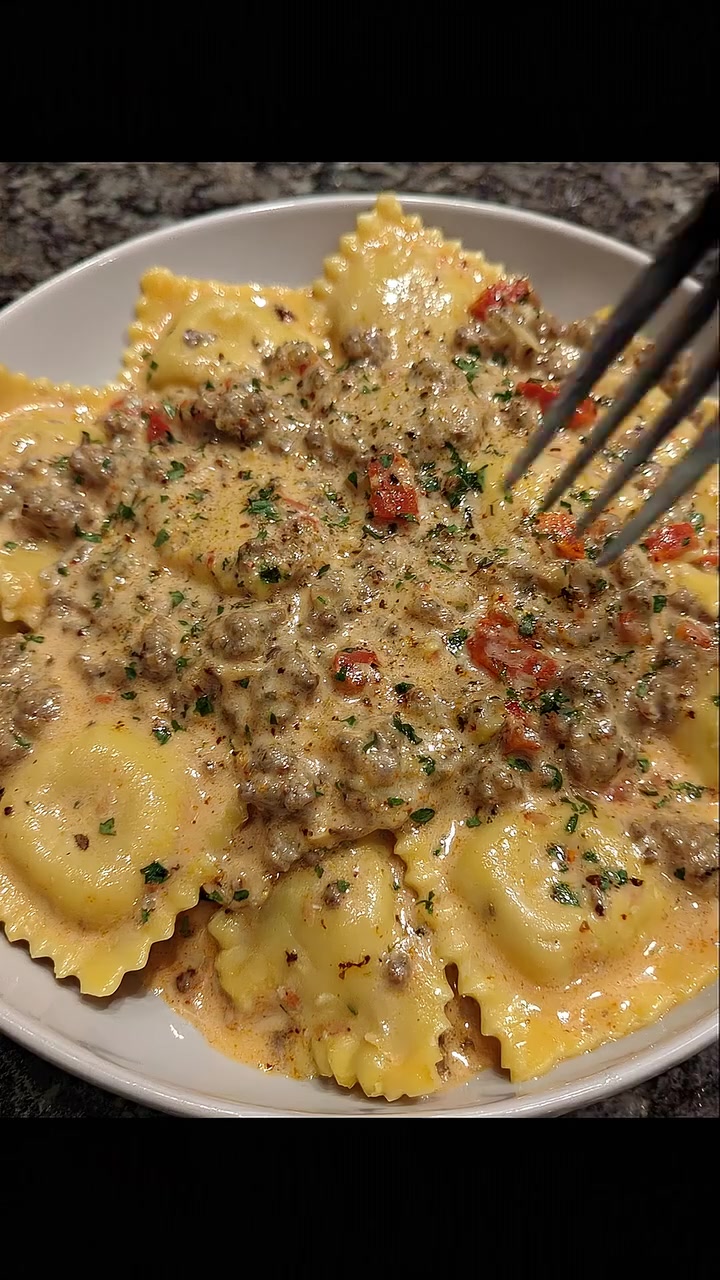
Creamy Cajun Sausage Ravioli is a bold, restaurant-worthy dish that marries the fiery soul of Louisiana cuisine with the comforting elegance of handmade (or high-quality store-bought) ravioli. This dish bursts with layers of flavor—savory andouille or smoked sausage, aromatic Cajun spices, creamy parmesan-infused Alfredo, caramelized onions, garlic, and fresh herbs—all harmonizing in a luxuriously velvety sauce that clings perfectly to tender, pillowy pasta pockets. Whether served as an impressive weeknight dinner, a crowd-pleasing centerpiece for Sunday supper, or a showstopping entrée for entertaining, it delivers depth, heat, richness, and balance in every bite. Its adaptability makes it equally at home in a cozy farmhouse kitchen or a modern urban loft—and its growing popularity across food blogs, TikTok recipe reels, and Southern-inspired supper clubs speaks to its irresistible fusion appeal.
The History
The origins of Creamy Cajun Sausage Ravioli lie not in a single historic cookbook or century-old tradition, but in the dynamic, cross-cultural evolution of American regional cooking. Ravioli itself traces back to medieval Italy, where filled pasta was developed as a method of preserving seasonal ingredients and stretching precious proteins and cheeses. Cajun cuisine, by contrast, emerged in 18th-century Acadiana (southwest Louisiana) from the displaced French-speaking Acadians—refugees from Nova Scotia—who adapted their culinary traditions using local game, seafood, rice, and native spices. The iconic “Cajun trinity” (onions, bell peppers, celery) and spice blends like Tony Chachere’s or Slap Ya Mama were born from necessity and ingenuity.
The fusion of these two worlds began gaining traction in the late 20th century, as chefs and home cooks alike experimented with regional hybrids—think Cajun jambalaya-stuffed manicotti or Creole-spiced tortellini. The rise of premium frozen and artisanal fresh ravioli in the 1990s and early 2000s (especially brands offering cheese, spinach, or even meat-filled varieties) gave home cooks accessible vehicles for bold new fillings and sauces. By the 2010s, food media platforms amplified dishes like Creamy Cajun Sausage Ravioli—often credited to Louisiana-based Italian-American families in Baton Rouge and New Orleans who blended Sunday gravy traditions with backyard boil seasonings. Today, it stands as a delicious emblem of culinary pluralism: an Italian format elevated by Creole-Cajun technique, refined through decades of American home cooking innovation, and continually reinterpreted across generations.
Ingredients Breakdown
Understanding each component unlocks the full potential of this dish. Here’s a detailed breakdown of why each ingredient matters—not just what it does, but how it contributes to texture, aroma, heat profile, umami depth, and structural integrity:
- Andouille Sausage: The cornerstone protein—traditionally a coarse-ground, heavily smoked, garlic-and-pepper-laced pork sausage from Louisiana. Its assertive smokiness and natural fat content render beautifully, lending both richness and backbone. Substitutes like smoked kielbasa or chorizo work—but lack authentic depth; avoid pre-cooked mild sausages unless bolstered with extra smoked paprika and cayenne.
- Fresh Ravioli: Opt for high-quality refrigerated ravioli—either cheese-filled (ricotta-pecorino), spinach-ricotta, or even plain egg dough. Avoid dried ravioli, which overcooks easily and lacks the delicate mouthfeel needed to support the creamy sauce. Homemade ravioli (using 00 flour and pasture-raised eggs) elevates texture dramatically, offering springy chew and buttery tenderness.
- Cajun Spice Blend: Not just heat—it’s complexity. A true blend includes sweet and smoked paprika, garlic powder, onion powder, dried oregano & thyme, white and black pepper, cayenne, and sometimes a whisper of ground allspice or clove. Pre-mixed blends vary widely in salt and heat; always taste and adjust. For authenticity, many chefs toast whole spices (paprika, cumin seeds, coriander) before grinding.
- Heavy Cream & Whole Milk: Provide unctuous body and temperature stability. Heavy cream (36–40% fat) prevents curdling and adds luxurious mouth-coating richness; whole milk tempers intensity while contributing subtle sweetness and aiding emulsification. Never substitute low-fat or non-dairy milks unless using specialized barista oat or cashew cream—otherwise, separation and graininess are likely.
- Grated Parmigiano-Reggiano: Adds salty, nutty, umami-rich depth and helps thicken the sauce naturally via its natural enzymes and granular structure. Freshly grated is essential—pre-grated versions contain anti-caking agents (like cellulose) that inhibit melting and create grittiness.
- Aromatics (Onion, Garlic, Celery, Bell Pepper): The “Holy Trinity” of Cajun cooking—finely diced and slowly softened—not sautéed to brown—to build foundational sweetness and fragrance without bitterness. Yellow onions offer depth; green bell peppers add vegetal brightness; celery contributes earthy minerality.
- Dry White Wine (e.g., Sauvignon Blanc or Pinot Grigio): Deglazes the pan, lifts fond, and introduces bright acidity to cut through fat. Alcohol cooks off, leaving only aromatic esters and fruit notes. Skip if avoiding alcohol—substitute with equal parts low-sodium chicken broth + ½ tsp lemon juice + pinch of sugar.
- Fresh Herbs (Parsley, Green Onions, Optional Thyme): Added at the end for aromatic lift and visual contrast. Flat-leaf parsley offers clean, grassy notes; green onions contribute mild allium sharpness; thyme (if used) should be minced finely and added mid-sauce reduction for subtle floral warmth.
Step-by-Step Recipe
- Prep & Mise en Place: Dice 1 medium yellow onion, 1 small green bell pepper, 1 rib celery, and 3 cloves garlic. Crumble 12 oz (340 g) andouille sausage (remove casings if necessary). Grate 1 cup (100 g) Parmigiano-Reggiano; set aside. Measure 2 tbsp Cajun spice blend, ½ cup dry white wine, 1 cup heavy cream, ½ cup whole milk, 2 tbsp unsalted butter, and 1 tbsp olive oil. Have 16–20 oz (450–570 g) fresh ravioli ready. Chop ¼ cup fresh flat-leaf parsley and 2 tbsp green onions.
- Sauté the Trinity & Sausage: Heat olive oil and 1 tbsp butter in a large, heavy-bottomed skillet or Dutch oven over medium heat. Add diced onion, bell pepper, and celery. Cook gently for 6–8 minutes, stirring occasionally, until softened but not browned. Add garlic and cook 1 minute more until fragrant. Push vegetables to the outer edges; increase heat to medium-high. Add crumbled sausage. Cook 5–7 minutes, breaking up clumps with a wooden spoon, until deeply browned and rendered (fat should pool slightly). Sprinkle in Cajun spice blend and stir constantly for 30 seconds to bloom spices.
- Build the Sauce Base: Pour in white wine, scraping vigorously with a wooden spoon to release all browned bits (fond) from the pan bottom. Simmer 2–3 minutes until reduced by half and alcohol aroma dissipates. Lower heat to medium-low. Stir in heavy cream and whole milk. Bring to a gentle simmer—not a boil—and reduce heat further to low. Let mixture bubble softly for 8–10 minutes, stirring frequently, until slightly thickened and coats the back of a spoon.
- Emulsify with Cheese & Butter: Remove from heat. Gradually whisk in grated Parmigiano-Reggiano, ¼ cup at a time, allowing each addition to fully melt and incorporate before adding more. Return to lowest possible heat and whisk in remaining 1 tbsp butter, one small piece at a time, until glossy and velvety. Season with kosher salt (go easy—sausage and cheese are salty) and freshly ground black pepper. Taste and adjust: add a pinch more cayenne for heat, lemon zest for brightness, or a splash of cream for looseness.
- Cook the Ravioli: Meanwhile, bring a large pot of well-salted water (2 tbsp Diamond Crystal or 1 tbsp Morton kosher salt per 4 quarts) to a rolling boil. Gently add ravioli in batches—do not overcrowd. Stir immediately to prevent sticking. Cook according to package directions (usually 3–4 minutes for fresh), until al dente—just tender with slight resistance at the center. Reserve ½ cup pasta water before draining.
- Combine & Finish: Return sauce to low heat. Carefully add drained ravioli to the skillet. Using a heatproof silicone spatula, gently fold ravioli into sauce for 1–2 minutes, allowing them to absorb flavor without breaking. If sauce thickens too much, add reserved pasta water 1 tbsp at a time until desired consistency is reached (should coat ravioli luxuriously but not pool). Fold in half the parsley and green onions.
- Plate & Garnish: Divide among warmed shallow bowls. Top with remaining herbs, an extra dusting of Parmigiano-Reggiano, a crack of black pepper, and optional microgreens or lemon zest. Serve immediately—this dish waits for no one.
Tips
- Don’t Rush the Trinity: Low-and-slow softening—not browning—is key to sweetness and aromatic clarity. Rushing leads to harsh, bitter notes that overwhelm the delicate ravioli.
- Render Sausage Fully: Let sausage sit undisturbed for 60–90 seconds after adding to pan to develop crust before breaking up. This builds fond and intensifies flavor.
- Wine Matters—But Doesn’t Need to Be Expensive: Choose a dry, acidic white you’d drink—avoid “cooking wine.” Even a $10 bottle adds transformative brightness. Never use anything labeled “cooking sherry” or “cooking wine”—they’re loaded with salt and preservatives.
- Cheese Is Non-Negotiablely Fresh: Pre-grated cheese will never melt smoothly. Use a microplane or box grater for fine, fluffy shreds that integrate seamlessly.
- Pasta Water Is Liquid Gold: Its starch content acts as a natural binder and thickener—never skip reserving it. It also tempers heat when combining hot ravioli with warm sauce.
- Undercook Ravioli Slightly: Since they’ll finish cooking in the hot sauce, pull them 30 seconds before package time. Overcooked ravioli become fragile and mushy.
- Low Heat = Smooth Sauce: Never boil the finished sauce—high heat causes dairy to separate and proteins to seize. Keep it at a bare simmer or remove from heat entirely during cheese incorporation.
- Taste & Adjust Relentlessly: Balance is everything: heat (cayenne), salt (cheese/sausage), acid (wine/lemon), fat (cream/butter), and sweetness (trinity). Adjust incrementally—you can always add more, but you can’t take it away.
- Make Ahead Smartly: You can prep the sausage-trinity base and refrigerate for up to 3 days—or freeze for 2 months. Sauce (without cheese) can be made 1 day ahead and gently reheated with a splash of milk. Never refrigerate or freeze fully assembled dish—the ravioli will absorb too much liquid and turn gummy.
- Use the Right Pan: A wide, shallow skillet (12–14 inches) gives maximum surface area for even heating and easy folding. Avoid narrow, deep pots—they trap steam and encourage clumping.
Variations and Customizations
This recipe is endlessly adaptable—whether accommodating dietary needs, seasonal produce, pantry constraints, or global flavor inspirations. Here are thoughtfully tested variations, each preserving the core spirit while inviting creativity:
Protein Swaps
- Shrimp & Andouille: Add 8 oz peeled, deveined, tail-off Gulf shrimp in the last 2 minutes of sauce simmering—just until opaque and curled. Enhances coastal authenticity.
- Chicken Sausage: Use applewood-smoked chicken andouille or Cajun-style chicken-apple sausage for leaner, milder heat. Boost with ½ tsp liquid smoke and extra cayenne.
- Plant-Based: Swap sausage for seasoned, crumbled tempeh or Beyond Meat Italian sausage—brown thoroughly and add 1 tsp smoked paprika + ½ tsp chipotle powder for depth.
Pasta Alternatives
- Homemade Ravioli: Fill with roasted sweet potato + sage + goat cheese, or crawfish tail meat + tarragon + mascarpone for regional flair.
- Gluten-Free: Use certified GF fresh ravioli (Tinkyada or Lanza brand) or delicate GF tortellini—boil separately and add gently to avoid disintegration.
- Low-Carb/Keto: Substitute with zucchini “ravioli”—thin planks of roasted zucchini layered with ricotta-spinach filling and baked, then topped with sauce.
Sauce Twists
- Smoky Chipotle Cream: Add 1 finely minced chipotle in adobo + 1 tsp adobo sauce during wine reduction for deep, fruity heat.
- Lemon-Herb Brightness: Stir in 1 tsp lemon zest + 1 tbsp lemon juice + 1 tsp chopped fresh dill just before serving.
- Roasted Garlic Depth: Roast 1 whole head of garlic (drizzled with olive oil, wrapped in foil, baked at 400°F for 40 min), squeeze out paste, and whisk in with cream.
- Tomato-Kissed Cajun: Add ¼ cup crushed San Marzano tomatoes with the wine for subtle acidity and color—ideal with shrimp or crab.
Vegetable & Texture Additions
- Seasonal Veg: Stir in 1 cup blanched asparagus tips, sautéed mushrooms, or roasted cherry tomatoes during final fold.
- Crispy Elements: Top with panko breadcrumbs toasted in butter and Cajun spices, or crispy fried shallots for crunch.
- Heat Escalation: Garnish with pickled jalapeños, ghost pepper honey drizzle, or a sprinkle of crushed red pepper flakes.
Health Considerations and Nutritional Value
Creamy Cajun Sausage Ravioli is inherently indulgent—but with mindful tweaks, it can align with diverse wellness goals without sacrificing satisfaction. Below is a balanced nutritional analysis per standard 1¾-cup serving (based on full-fat ingredients and moderate portioning), followed by health-conscious strategies:
Nutrition Snapshot (Approximate per Serving)
- Calories: 680–740 kcal
- Protein: 32–38 g (excellent source—from sausage, cheese, and pasta)
- Total Fat: 38–44 g (of which ~18–22 g saturated—primarily from cream, cheese, and sausage fat)
- Carbohydrates: 52–58 g (mainly complex carbs from pasta; fiber ~2–3 g)
- Sodium: 920–1,150 mg (moderate to high—largely from sausage and cheese; easily adjustable)
- Vitamins & Minerals: Rich in calcium (25% DV), vitamin B12 (45% DV), selenium (35% DV), and niacin (30% DV). Contains lycopene (if tomato variation), antioxidants from bell peppers and parsley, and gut-supportive probiotics (if using fermented cheese or cultured cream).
Wellness-Focused Adaptations
- Lower Sodium: Use low-sodium chicken broth instead of wine, choose uncured, low-salt andouille (like Applegate or Niman Ranch), omit added salt, and rely on herbs/spices for flavor.
- Reduced Saturated Fat: Substitute half the heavy cream with evaporated skim milk or silken tofu blended smooth; use part-skim ricotta ravioli; trim visible fat from sausage before cooking.
- Higher Fiber: Choose whole-wheat or legume-based ravioli (lentil, chickpea); add ½ cup cooked lentils or white beans to the sauce base.
- Keto/Low-Carb Friendly: Replace ravioli with spiralized zucchini (sautéed briefly to remove moisture) or shirataki noodles (well-rinsed and dry-sautéed); boost fats with extra butter and grated aged cheddar.
- Dairy-Free/Vegan: Use coconut cream (full-fat, chilled, solid portion only), nutritional yeast + miso paste for umami, and vegan sausage. Note: texture and mouthfeel differ significantly—emphasize herb freshness and acid balance.
- Heart-Healthy Omega-3 Boost: Top with 1 tbsp chopped walnuts or flaxseed; use omega-3 enriched eggs in homemade ravioli; add ½ tsp ground chia to sauce.
Dietary Notes & Allergen Awareness
- Gluten: Naturally present in wheat-based ravioli. Use certified GF pasta and verify spice blends (some contain gluten fillers).
- Dairy: Present in cream, cheese, and butter. Dairy-free alternatives exist but require careful emulsification techniques.
- Pork: Traditional andouille contains pork. Vegetarian, turkey, or chicken versions are widely available.
- Shellfish: Not present unless shrimp or crawfish are added—clearly label if serving guests with allergies.
- Nut-Free: Naturally compliant—just verify spice blends and ravioli ingredients.
Ingredients
- 1 tablespoon olive oil
- 2 tablespoons unsalted butter, divided
- 1 medium yellow onion, finely diced
- 1 small green bell pepper, finely diced
- 1 rib celery, finely diced
- 3 cloves garlic, minced
- 12 ounces andouille sausage (or smoked Cajun-style sausage), casings removed, crumbled
- 2 tablespoons authentic Cajun spice blend (see note below)
- ½ cup dry white wine (e.g., Sauvignon Blanc or Pinot Grigio)
- 1 cup heavy cream (36–40% fat)
- ½ cup whole milk
- 1 cup freshly grated Parmigiano-Reggiano cheese (not pre-grated)
- 16–20 ounces fresh ravioli (cheese, spinach-ricotta, or plain)
- Kosher salt and freshly ground black pepper, to taste
- ¼ cup fresh flat-leaf parsley, finely chopped
- 2 tablespoons green onions, thinly sliced
Note on Cajun Spice Blend: Combine 1 tbsp sweet paprika, 1 tsp smoked paprika, 1 tsp garlic powder, 1 tsp onion powder, ½ tsp dried oregano, ½ tsp dried thyme, ½ tsp white pepper, ½ tsp black pepper, ¼–½ tsp cayenne pepper (adjust to heat preference), and ¼ tsp celery seed. Store in an airtight jar for up to 6 months.
Directions
- In a large heavy-bottomed skillet or Dutch oven over medium heat, warm olive oil and 1 tablespoon butter. Add diced onion, bell pepper, and celery. Cook gently, stirring occasionally, for 6–8 minutes until softened and translucent—but not browned.
- Add minced garlic and cook 1 minute more, until fragrant.
- Increase heat to medium-high. Push vegetables to the outer edges of the pan. Add crumbled sausage to the center. Cook undisturbed for 60–90 seconds to develop crust, then break up with a wooden spoon. Continue cooking 5–7 minutes, stirring occasionally, until sausage is deeply browned and most fat is rendered.
- Sprinkle Cajun spice blend over mixture. Stir constantly for 30 seconds to toast and bloom spices.
- Pour in white wine. Immediately scrape the bottom of the pan with a wooden spoon to release all browned bits (fond). Simmer 2–3 minutes until wine is reduced by half and alcohol aroma has dissipated.
- Reduce heat to medium-low. Stir in heavy cream and whole milk. Bring to a gentle simmer—small bubbles should barely break the surface. Reduce heat further to low and maintain a soft bubble for 8–10 minutes, stirring frequently, until sauce thickens slightly and coats the back of a spoon.
- Remove pan from heat. Gradually whisk in grated Parmigiano-Reggiano, ¼ cup at a time, allowing each addition to melt fully before adding more. Once fully incorporated, return to the lowest possible heat and whisk in remaining 1 tablespoon butter, one small piece at a time, until glossy and smooth.
- Season with kosher salt (use sparingly—sausage and cheese are salty) and plenty of freshly ground black pepper. Taste and adjust: add more cayenne for heat, lemon zest for brightness, or a splash of cream if too thick.
- While sauce simmers, bring a large pot of generously salted water (2 tbsp kosher salt per 4 quarts) to a full rolling boil.
- Gently add ravioli in batches—do not overcrowd. Stir immediately to prevent sticking. Cook according to package instructions (typically 3–4 minutes for fresh), but pull 30 seconds early for al dente texture.
- Reserve ½ cup pasta water, then carefully drain ravioli in a colander—do not rinse.
- Return sauce to low heat. Gently add drained ravioli to the skillet. Using a heatproof silicone spatula, fold ravioli into sauce for 1–2 minutes, allowing them to absorb flavor without breaking.
- If sauce thickens too much during folding, add reserved pasta water 1 tablespoon at a time until it reaches a luxuriously coating consistency—not runny, not stiff.
- Fold in half the chopped parsley and green onions.
- Divide among warmed shallow bowls. Top with remaining herbs, an extra dusting of Parmigiano-Reggiano, a generous crack of black pepper, and optional lemon zest or microgreens.
- Serve immediately—ideally within 3 minutes of plating—for optimal texture and temperature.
FAQ
Can I use frozen ravioli?
Yes—but with caveats. Frozen ravioli requires longer cooking time (usually 6–8 minutes) and releases more water upon thawing. To prevent sauce thinning: boil frozen ravioli separately, drain *very* well (press gently with paper towels if needed), and add to sauce just before serving. Never add frozen ravioli directly to hot sauce—it will fall apart and cloud the texture.
Why does my sauce break or look grainy?
Three common causes: (1) Overheating—boiling the finished sauce causes dairy proteins to coagulate. Always keep heat low and never let it reach a rapid simmer after cheese is added. (2) Pre-grated cheese—anti-caking agents prevent smooth melting. Always grate fresh. (3) Acid shock—adding lemon juice or wine too aggressively to hot cheese can cause separation. Temper acidity by adding small amounts off-heat, or stir in citrus zest instead of juice.
How do I store and reheat leftovers?
Store cooled ravioli and sauce together in an airtight container for up to 3 days. Reheat gently in a skillet over low heat, adding 1–2 tbsp milk or reserved pasta water to loosen. Stir continuously—do not microwave uncovered (it dries out and separates). For best results, undercook ravioli by 1 minute when making ahead, then finish cooking during reheating.
What wine pairs best with this dish?
A crisp, high-acid white balances the richness: try a Louisiana-grown Chenin Blanc, a Spanish Albariño, or an Oregon Pinot Gris. For red lovers, opt for a light-bodied, low-tannin option like Beaujolais Villages or chilled Barbera—avoid oaky, heavy reds that clash with spice and cream.
Is there a shortcut for homemade ravioli?
Absolutely. Use wonton wrappers—layer two sheets with filling, press edges with water, and cut with a fluted pastry cutter. Or make “ravioli nests”: lay a wonton square, add filling, top with another square, pinch corners to seal, and twist gently into a rose shape. Boil same as traditional ravioli—3 minutes max.
Can I make this dairy-free?
Yes—with adjustments. Replace heavy cream with full-fat canned coconut milk (chill overnight, scoop off solid cream layer); substitute butter with refined coconut oil or vegan butter; use nutritional yeast + white miso (1 tsp) + lemon juice (½ tsp) for cheesy umami; and choose dairy-free ravioli (many gluten-free brands are also dairy-free). Emulsify sauce off-heat and stir constantly to prevent separation.