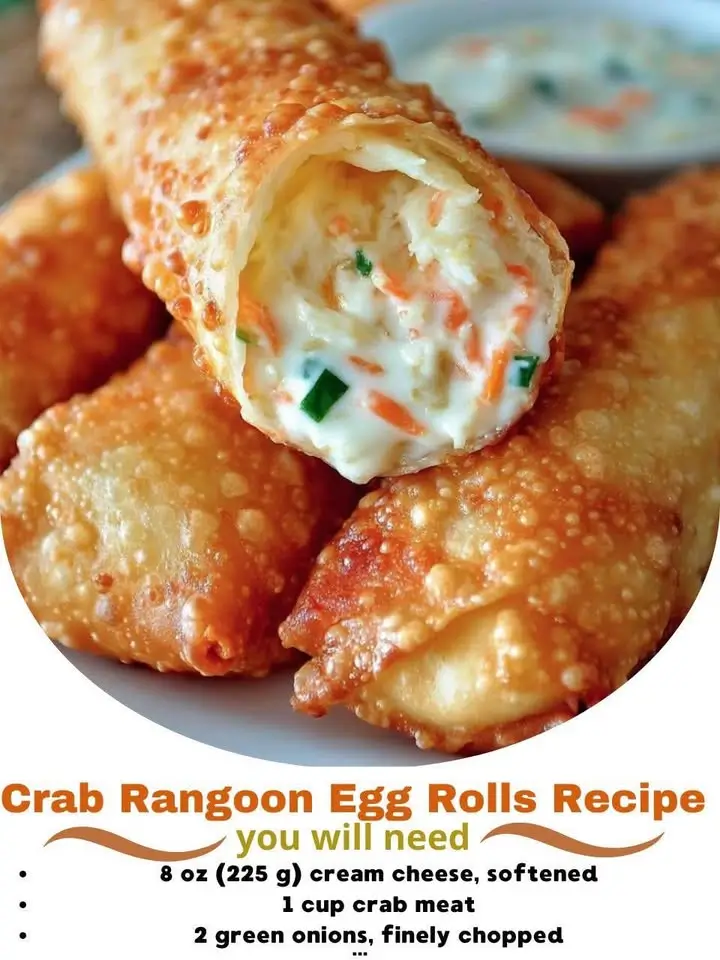
Crab Rangoon Egg Rolls Recipe: A Fusion of Crunch and Creaminess
The story of Crab Rangoon egg rolls is as layered and flavorful as the dish itself. Though often found on American Chinese restaurant menus, Crab Rangoon is not a traditional Chinese recipe but rather a classic example of American-Chinese fusion cuisine. It emerged in the mid-20th century, most likely in tiki bars or Polynesian-themed restaurants that were popular across the United States during the 1950s and 60s. The name “Rangoon” refers to Yangon, the largest city in Myanmar (formerly Burma), lending an exotic flair—though there’s little evidence the dish has roots in Burmese or Southeast Asian cooking. Instead, it was invented in the U.S., possibly by Monarch Foods or created at the now-closed Trader Vic’s chain known for its tropical cocktails and imaginative appetizers. Over time, Crab Rangoon became synonymous with creamy, cheesy, seafood-stuffed fried dumplings, typically served with sweet-and-sour sauce. While the original version was a deep-fried wonton pocket, home cooks and chefs alike have since adapted the concept into larger, heartier egg rolls—bringing more crunch, more filling, and more indulgence to every bite.
Ingredients Breakdown: What Makes This Dish Irresistible?
The magic of Crab Rangoon egg rolls lies in the perfect balance between savory, creamy, and crunchy elements. Each ingredient plays a crucial role in creating that signature flavor and texture combination that keeps people coming back for more.
- Imitation Crab Meat (Surimi): Also known as kanikama, this affordable and accessible seafood product mimics real crab meat using processed fish (usually pollock). It provides the briny, oceanic flavor expected in crab dishes while maintaining a tender, flaky texture when shredded. You can substitute with fresh lump crab meat for a gourmet upgrade.
- Cream Cheese: The star of the filling! Full-fat cream cheese adds richness, tanginess, and helps bind all ingredients together. It melts slightly when cooked, creating that gooey, luscious center. For best results, use brick-style Philadelphia cream cheese, softened at room temperature.
- Green Onions (Scallions): These add freshness, color, and a mild onion bite that cuts through the richness. Both white and green parts are used for maximum flavor.
- Garlic: Fresh minced garlic enhances depth and aroma. Don’t skip it—it’s essential for building umami complexity.
- Soy Sauce: A splash adds saltiness and savoriness without overpowering the delicate seafood notes. Low-sodium soy sauce is recommended to control salt levels.
- Sesame Oil: Just a few drops infuse the filling with nutty, aromatic warmth characteristic of Asian-inspired dishes.
- Egg: Acts as a binder to prevent the filling from leaking out during frying. One beaten egg is usually sufficient for the entire batch.
- Wonton Wrappers or Egg Roll Wrappers: Traditional Crab Rangoon uses small square wonton wrappers, but for egg roll versions, large rectangular egg roll skins are preferred. They provide a thicker, crispier shell after frying.
- Vegetable Oil (for Frying): Neutral oil with a high smoke point like canola, peanut, or sunflower ensures even browning without imparting off-flavors.
- Dipping Sauces: Sweet and sour sauce, duck sauce, plum sauce, or a homemade chili-garlic mayo are classic pairings that complement the creamy, salty-sweet profile.
Step-by-Step Recipe: How to Make Crab Rangoon Egg Rolls at Home
Making Crab Rangoon egg rolls may seem intimidating, but with careful assembly and proper frying technique, you’ll achieve golden, crackling results that rival any restaurant version. Follow these detailed steps for foolproof success.
- Prepare the Filling
In a large mixing bowl, combine 8 oz of softened cream cheese, 1 cup of finely chopped imitation crab meat, 1/4 cup of finely sliced green onions, 1 clove of minced garlic, 1 tsp of soy sauce, 1/2 tsp of sesame oil, and one beaten egg. Mix thoroughly until smooth and well incorporated. Taste and adjust seasoning if needed—add a pinch of white pepper or a squeeze of lemon juice for brightness. Cover and refrigerate for 30 minutes to firm up the mixture, which makes it easier to handle during wrapping. - Set Up Your Workstation
Lay out your egg roll wrappers on a clean, dry surface. Keep them covered with a damp kitchen towel to prevent drying out. Have a small bowl of water ready for sealing the edges. Place the chilled filling nearby in a piping bag or resealable plastic bag with the corner snipped off for easy dispensing. - Fill and Fold the Egg Rolls
Take one egg roll wrapper and place it like a diamond in front of you. Spoon about 2–3 tablespoons of filling near the bottom third of the wrapper. Be careful not to overfill, as this can cause bursting during frying.Fold the bottom corner over the filling, then fold in the left and right corners toward the center (like folding an envelope). Begin rolling upward tightly, ensuring the filling stays compact. Before sealing the final edge, moisten it with water using your fingertip or a pastry brush. Press gently to seal. Repeat with remaining wrappers and filling. If desired, you can lightly beat an extra egg and brush it over the outside of each roll for extra crispness and golden color.
- Preheat the Oil
In a deep pot or Dutch oven, heat 2–3 inches of vegetable oil to 350°F (175°C). Use a deep-fry thermometer for accuracy. The oil must be hot enough to create immediate sizzling upon contact but not so hot that the exterior burns before the inside heats through. - Fry the Egg Rolls
Carefully lower 3–4 egg rolls at a time into the hot oil using tongs or a spider strainer. Do not overcrowd the pot, as this lowers the oil temperature and leads to greasy results. Fry for 2.5 to 3.5 minutes per side, turning occasionally, until deeply golden brown and crispy. Remove and drain on a wire rack set over a baking sheet or paper towels to absorb excess oil. - Serve Immediately
Crab Rangoon egg rolls are best enjoyed fresh and hot. Serve with your favorite dipping sauces such as sweet and sour, spicy mayo, or teriyaki glaze. Garnish with chopped scallions or sesame seeds for visual appeal.
Tips for Perfect Crab Rangoon Egg Rolls Every Time
- Chill the Filling: Cold filling holds its shape better and doesn’t leak out during frying. Refrigerating for at least 30 minutes is highly recommended.
- Avoid Overfilling: Too much filling increases the risk of bursting. Stick to 2–3 tablespoons per roll.
- Seal Tightly: Moistening the edges properly ensures a secure closure. Think of it like sealing a letter—water activates the starch in the wrapper, acting as glue.
- Don’t Skip the Wire Rack: Placing fried rolls directly on paper towels can trap steam and soften the bottom crust. A cooling rack allows air circulation for maximum crispiness.
- Maintain Oil Temperature: Use a thermometer and let the oil return to 350°F between batches. Consistent heat prevents soggy or burnt results.
- Double-Fry for Extra Crisp (Optional): For an ultra-crispy texture, fry once at 325°F to cook through, remove, cool slightly, then fry again at 375°F for 60 seconds.
- Freeze Before Frying for Meal Prep: Assembled uncooked egg rolls can be frozen on a tray, then transferred to a freezer bag. Fry straight from frozen—just add 1–2 minutes to cooking time.
Variations and Customizations: Make It Your Own
While classic Crab Rangoon egg rolls are beloved, feel free to experiment with creative twists to suit dietary preferences or elevate the flavor profile:
- Real Crab Version: Swap imitation crab with fresh Dungeness or lump blue crab meat for a luxurious upgrade. Add a dash of Old Bay seasoning for coastal flair.
- Spicy Kick: Mix in sriracha, chili garlic paste, or diced jalapeños into the filling. Drizzle with spicy mayo for serving.
- Baked Option: For a lighter alternative, brush rolls with oil and bake at 400°F for 20–25 minutes, flipping halfway. They won’t be quite as crispy but still delicious.
- Gluten-Free: Use gluten-free egg roll wrappers (available online or in specialty stores) and tamari instead of soy sauce.
- Vegetarian/Vegan Adaptation: Replace crab with hearts of palm or marinated tofu, use vegan cream cheese and egg replacer. Fry in plant-based oil.
- Mini Wonton Bites: Use small wonton wrappers to make bite-sized versions—perfect for parties. Fry or bake until crisp and serve on toothpicks.
- Add Mushrooms or Water Chestnuts: Finely diced shiitake mushrooms or canned water chestnuts add umami and crunch.
- Herb Infusion: Stir in fresh cilantro, Thai basil, or chives for aromatic complexity.
- Pineapple Addition: A tablespoon of finely chopped pineapple introduces a subtle sweetness reminiscent of the original Trader Vic’s influence.
Health Considerations and Nutritional Value
Crab Rangoon egg rolls are undeniably indulgent—a treat best enjoyed in moderation. Understanding their nutritional content helps you make informed choices, especially if you’re managing dietary goals.
Nutrition Facts (Approximate per serving, 2 medium egg rolls):
- Calories: 320–380
- Total Fat: 20–25g (Saturated Fat: 5–7g)
- Cholesterol: 45–60mg
- Sodium: 500–700mg
- Total Carbohydrates: 25–30g (Fiber: 1g, Sugars: 3–5g)
- Protein: 8–10g
Health Notes:
- High in Sodium: Between soy sauce, imitation crab, and store-bought wrappers, sodium levels can be high. Opt for low-sodium soy sauce and reduced-salt cream cheese to mitigate this.
- Fat Content: Deep frying significantly increases fat content. Baking reduces fat by up to 50%. Using an air fryer (spray with oil, cook at 375°F for 10–12 minutes, flipping halfway) is another healthier option.
- Imitation Crab Concerns: Surimi contains additives like sugar, sorbitol, and preservatives. While safe, those avoiding processed foods may prefer real crab or plant-based alternatives.
- Dairy Sensitivity: Cream cheese is dairy-rich. Lactose-intolerant individuals should consider lactose-free or plant-based substitutes.
- Balancing the Meal: Pair egg rolls with a fresh cucumber salad, steamed edamame, or miso soup to add fiber, vitamins, and balance the meal nutritionally.
Full Ingredient List (Serves 4–6, makes ~12 egg rolls)
- 8 oz cream cheese, softened
- 1 cup imitation crab meat, finely chopped
- 1/4 cup green onions, thinly sliced
- 1 clove garlic, minced
- 1 tsp soy sauce (low-sodium preferred)
- 1/2 tsp sesame oil
- 1 large egg, beaten
- 12 large egg roll wrappers
- 1/4 cup water (for sealing)
- Vegetable oil (for frying – approx. 4–6 cups)
- Salt and white pepper to taste (optional)
- For Serving: Sweet and sour sauce, plum sauce, or spicy mayo
Detailed Directions
- In a medium bowl, combine cream cheese, imitation crab, green onions, garlic, soy sauce, sesame oil, and beaten egg. Mix until completely smooth and uniform. Season with a pinch of salt and white pepper if desired. Cover and chill in the refrigerator for 30 minutes.
- Remove filling from fridge. Lay out egg roll wrappers on a clean surface, keeping unused ones covered.
- Place one wrapper on the work surface in a diamond orientation. Spoon 2–3 tablespoons of filling just below the center.
- Fold the bottom corner over the filling, then fold the left and right corners inward. Roll upward tightly, moisten the top edge with water, and press to seal.
- Repeat for all wrappers. Lightly brush tops with beaten egg for extra browning (optional).
- Heat oil in a heavy-bottomed pot to 350°F. Test with a small piece of wrapper—it should sizzle and rise immediately.
- Fry 3–4 egg rolls at a time, turning occasionally, for 2.5–3.5 minutes until golden brown and crispy.
- Remove with tongs or spider skimmer and drain on a wire rack. Let cool slightly before serving.
- Serve warm with dipping sauces and garnish with green onions or sesame seeds.
Frequently Asked Questions (FAQ)
Can I bake Crab Rangoon egg rolls instead of frying?
Yes! Preheat oven to 400°F. Brush assembled rolls with oil and bake on a parchment-lined baking sheet for 20–25 minutes, flipping halfway, until golden and crisp.
Can I make them ahead of time?
Absolutely. Assemble and freeze uncooked egg rolls on a tray, then transfer to a freezer bag. Fry from frozen, adding 1–2 minutes to cooking time.
Why are my egg rolls soggy?
This usually happens due to oil that’s too cool, overcrowding the pot, or improper draining. Always maintain 350°F and use a wire rack to prevent steaming.
Can I use real crab meat?
Yes, and it’s delicious! Use lump crab meat for best texture. Avoid overmixing to preserve delicate flakes.
Are Crab Rangoon egg rolls gluten-free?
Not traditionally, as wrappers and soy sauce contain wheat. Use gluten-free wrappers and tamari to make them GF.
How long do leftovers last?
Best eaten fresh. Leftovers can be refrigerated for up to 2 days. Reheat in oven or air fryer to restore crispness—microwaving will make them soft.
Can I air fry them?
Yes! Spray assembled rolls with oil and air fry at 375°F for 10–12 minutes, flipping halfway. Result is close to fried with less oil.
What’s the difference between Crab Rangoon and crab rangoon egg rolls?
Traditional Crab Rangoon refers to small fried wontons. Crab Rangoon egg rolls are larger, made with egg roll wrappers, and offer a heartier portion.
Summary
Crab Rangoon egg rolls bring together creamy cheese, savory crab, and a satisfying crunch in every bite—a modern American-Chinese classic reinvented with bold flavor and golden perfection. Easy to customize and perfect for gatherings, game days, or weekend treats, they’re sure to become a favorite in your recipe collection.