Introduction
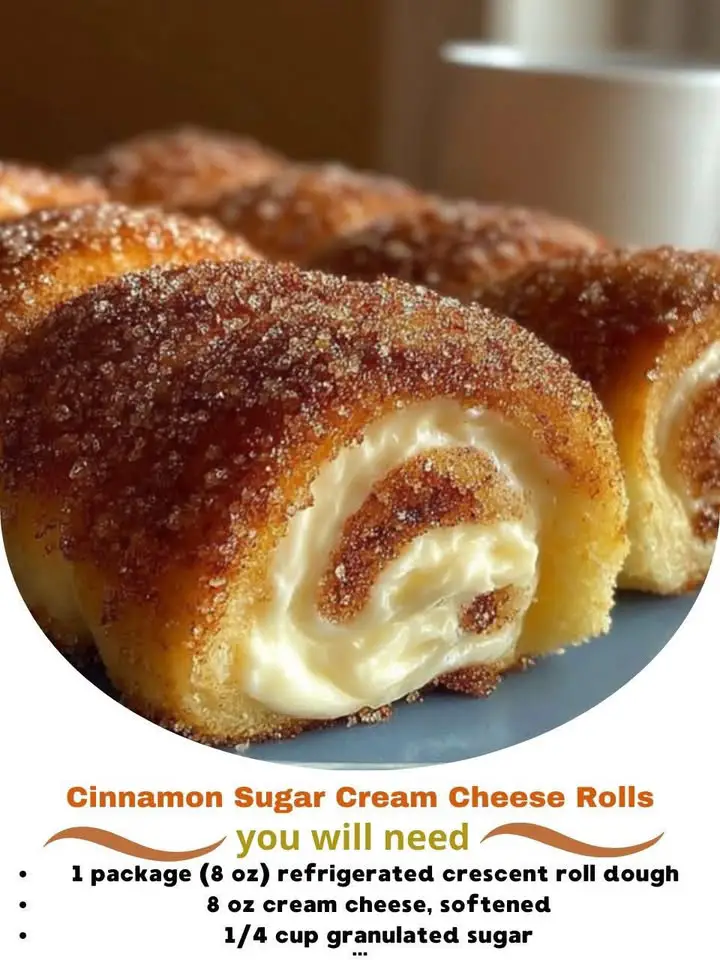
Indulge in the irresistible warmth and comfort of Cinnamon Sugar Cream Cheese Rolls — a decadent, bakery-style treat that marries the flaky tenderness of enriched yeast dough with the luscious tang of cream cheese filling and the nostalgic sweetness of cinnamon-sugar swirl. These rolls are more than just breakfast or dessert; they’re a sensory experience — golden-brown, glossy from a rich glaze, soft and pillowy within, and oozing with creamy, spiced goodness in every bite. Whether served fresh from the oven on a lazy Sunday morning, gifted as a heartfelt homemade present, or featured at holiday brunches and potlucks, these rolls consistently steal the spotlight with their luxurious texture, balanced flavor profile, and artisanal appeal — all achievable right in your own kitchen.
The History
The origins of cinnamon rolls trace back centuries to Scandinavian baking traditions — particularly Sweden’s kardemummabullar, where cardamom-infused buns were often enriched with butter and sugar. By the 19th century, Swedish immigrants brought variations of sweet, spiced yeast buns to North America, where local adaptations flourished. The addition of cream cheese as a distinct filling emerged prominently in the mid-20th century, likely inspired by the rising popularity of Philadelphia Cream Cheese (first mass-marketed in 1872) and the post-war American fascination with richer, more indulgent baked goods. Regional bakeries — especially across the Midwest and Pacific Northwest — began experimenting with cream cheese swirls as a luxurious alternative to traditional cinnamon-only fillings, adding tang, moisture, and structural stability to prevent “weeping” during baking. Over time, home cooks refined techniques for laminating cream cheese into yeasted dough without melting or leaking, leading to the modern Cinnamon Sugar Cream Cheese Roll: a beloved hybrid that honors Old World technique while embracing New World innovation and comfort-food sensibilities.
Ingredients Breakdown
Each component of these rolls plays a precise, interdependent role in achieving the ideal balance of structure, flavor, texture, and visual appeal:
- For the Dough: Warm whole milk (110°F) activates the yeast without scalding it; granulated sugar feeds fermentation and contributes to browning; active dry or instant yeast provides lift and airy crumb; bread flour (higher in gluten than all-purpose) delivers essential elasticity and chew; unsalted butter adds richness, tenderness, and flakiness; large eggs enrich the dough and improve shelf life and color; and fine sea salt enhances flavor and controls yeast activity.
- For the Filling: Full-fat brick-style cream cheese (cold but pliable) ensures spreadability without melting prematurely — its lactic acidity cuts through sweetness and stabilizes the swirl; unsalted butter (softened) binds the cinnamon-sugar mixture and aids in even distribution; dark brown sugar (not light) contributes deep molasses notes, moisture retention, and caramelization; ground cinnamon (preferably Vietnamese or Sri Lankan Ceylon for intensity and complexity) provides warm, woody aroma; and a pinch of freshly grated nutmeg or ground cardamom (optional but highly recommended) adds aromatic nuance and sophistication.
- For the Glaze: Powdered sugar forms the base for smooth consistency; whole milk or heavy cream adjusts thickness and adds subtle richness; pure vanilla extract (not imitation) imparts floral depth; and a tiny pinch of salt balances sweetness and intensifies overall flavor perception.
Step-by-Step Recipe
- Activate the Yeast: In the bowl of a stand mixer fitted with a whisk attachment, combine warm whole milk (110°F), 2 tbsp granulated sugar, and yeast. Let sit undisturbed for 5–8 minutes until frothy and doubled in volume — a sign of vigorous fermentation.
- Mix the Dough: Fit the mixer with a dough hook. Add remaining sugar, eggs, melted (cooled) butter, salt, and 3 cups of bread flour. Mix on low for 2 minutes until shaggy. Gradually add remaining flour (½ cup at a time), mixing until dough clears the sides and begins to cling to the hook. Continue kneading on medium-low for 6–8 minutes until smooth, elastic, and slightly tacky but no longer sticky. (Alternatively, knead by hand for 10–12 minutes on a lightly floured surface.)
- First Rise: Transfer dough to a lightly oiled bowl, turning once to coat. Cover tightly with plastic wrap or a damp linen cloth. Let rise in a warm, draft-free place (ideally 75–80°F) for 1.5–2 hours — or until doubled in size. Gently press two fingers into the dough; if indentations remain slowly, it’s ready.
- Prepare the Filling: While dough rises, beat cold cream cheese and softened butter together in a medium bowl using an electric mixer on medium until completely smooth and lump-free (about 2 minutes). Sift in brown sugar, cinnamon, nutmeg (if using), and salt. Beat on low until fully incorporated and spreadable — do not overmix or incorporate air. Refrigerate for 15–20 minutes to firm up slightly.
- Roll & Fill: Punch down risen dough gently. Turn onto a generously floured surface. Roll into a 16×24-inch rectangle (approx. ¼-inch thick), maintaining even thickness. Spread chilled filling evenly over dough, leaving a ½-inch border along one long edge. Starting from the filled long side, tightly roll dough into a log, pinching seam and ends to seal. Use a sharp, serrated knife dipped in hot water and wiped dry between cuts to slice into 12 equal pieces (each ~2 inches wide).
- Second Rise: Place rolls cut-side up in a buttered 9×13-inch baking dish (or two 8-inch round cake pans), spaced evenly. Cover loosely with oiled plastic wrap or a clean tea towel. Let rise again for 60–90 minutes at room temperature — until puffy, nearly touching, and jiggling softly when pan is gently shaken.
- Bake: Preheat oven to 350°F (convection off). Bake uncovered for 22–28 minutes — rotating pan halfway — until tops are deeply golden, edges are caramelized, and internal temperature reaches 190–195°F (use an instant-read thermometer inserted into center of a roll). Avoid underbaking — underdone rolls will collapse or ooze excessively.
- Cool & Glaze: Let rolls cool in pan on a wire rack for 15 minutes. Meanwhile, whisk glaze ingredients until silky-smooth. Drizzle generously over warm rolls, allowing glaze to pool in crevices. Serve immediately — best enjoyed within 2 hours of baking for peak texture.
Tips
- Yeast Matters: Always verify yeast freshness — expired or improperly stored yeast causes poor rise. Store unopened packets in the freezer; opened jars should be refrigerated and used within 1 month.
- Temperature Control Is Critical: Milk above 115°F kills yeast; below 105°F delays activation. Use a digital thermometer. Likewise, cream cheese must be cold enough to hold shape but soft enough to spread — chill after mixing and before spreading.
- Rolling Surface Wisdom: Chill your rolling pin and work surface for 10 minutes before rolling if your kitchen is warm — this prevents butter and cream cheese from smearing or melting into the dough.
- Cutting Precision: Use dental floss for ultra-clean, non-squished cuts: slide under roll, cross ends above, and pull sharply upward. Ideal for delicate fillings.
- Don’t Rush the Rises: Under-risen dough yields dense rolls; over-risen leads to collapsed structure and sour flavor. When in doubt, rely on visual cues (doubled size, jiggle test) over clock time.
- Baking Pan Choice: Light-colored metal pans promote even browning. Dark nonstick pans may cause over-browning on bottoms — reduce oven temp by 25°F if using.
- Glaze Timing: Apply glaze only after 15-minute cooling — too hot and it melts away; too cool and it won’t absorb. For extra sheen, add ½ tsp light corn syrup to glaze.
- Freezing Success: Unbaked rolls freeze beautifully: after cutting, place on parchment-lined tray, freeze solid (2 hrs), then transfer to airtight freezer bag. Bake straight from frozen — add 8–10 minutes to bake time and cover loosely with foil first 15 minutes.
Variations and Customizations
These rolls are a canvas for creativity — adaptable to seasons, dietary preferences, and global flavors:
- Maple Pecan Swirl: Replace brown sugar with pure maple sugar or add 2 tbsp real maple syrup to filling; fold in ½ cup toasted pecans. Top with candied pecans pre-bake.
- Apple Spice: Sauté 1 finely diced Granny Smith apple with 1 tbsp butter, 1 tsp cinnamon, and 1 tbsp brown sugar until tender; cool completely and layer between cream cheese and cinnamon sugar.
- Orange-Cream Cheese: Add 1 tbsp finely grated orange zest + 1 tsp orange extract to cream cheese filling; glaze with orange-infused glaze (substitute 1 tbsp orange juice for milk).
- Vegan Adaptation: Use plant-based milk (soy or oat), vegan butter, flax “eggs” (1 tbsp ground flax + 2.5 tbsp water per egg), and high-fat vegan cream cheese (e.g., Kite Hill or Miyoko’s). Proofing times may increase by 20–30 minutes.
- Gluten-Free Option: Substitute certified GF all-purpose blend with xanthan gum (like King Arthur Measure for Measure or Bob’s Red Mill 1-to-1); add 1 tsp psyllium husk powder to improve elasticity. Expect slightly denser crumb — best served same-day.
- Mini Rolls: Divide dough into 24 portions for bite-sized versions — bake 14–18 minutes. Perfect for parties or portion control.
- Savory-Sweet Fusion: Add 2 tbsp crumbled cooked bacon and ¼ tsp black pepper to filling; finish with flaky sea salt over glaze.
- Chai-Spiced: Infuse milk with chai tea bags (steep 5 min, cool), then use in dough. Add ½ tsp ginger, ¼ tsp cloves, and ⅛ tsp black pepper to filling.
Health Considerations and Nutritional Value
While Cinnamon Sugar Cream Cheese Rolls are inherently indulgent, mindful preparation can enhance nutritional integrity without sacrificing enjoyment. A standard serving (1 roll, approx. 140g) contains approximately 320–360 calories, 16–18g fat (9–10g saturated), 38–42g carbohydrates (24–28g sugars), 5–6g protein, and 180–220mg sodium. Key considerations include:
- Sugar Moderation: Brown sugar contributes moisture and flavor, but reducing by 25% (to ¾ cup) maintains structure while lowering glycemic impact. Consider coconut sugar for lower GI — though note it lacks molasses flavor and may darken rolls.
- Fat Quality: Using grass-fed butter and full-fat organic cream cheese increases beneficial CLA and vitamin K2. Avoid margarine or low-fat “cream cheese spreads” — they contain gums, stabilizers, and excess sodium that compromise texture and health profile.
- Fiber Boost: Substitute up to ⅓ of bread flour with whole wheat pastry flour or oat flour for added B vitamins and soluble fiber — just increase milk by 1–2 tbsp to compensate for absorption.
- Allergen Awareness: Naturally free of nuts and soy (unless added), but always verify cream cheese label for dairy derivatives. For lactose sensitivity, use lactose-free milk and lactose-free cream cheese (e.g., Green Valley Creamery).
- Portion Mindfulness: Serve alongside Greek yogurt, seasonal fruit, or a small green salad to balance meal composition. One roll satisfies sweet cravings more effectively than multiple smaller, highly processed pastries.
- Dietary Context: Not suitable for keto or low-carb diets due to flour and sugar content. However, they fit well within a Mediterranean or flexitarian framework when enjoyed occasionally and paired with whole foods.
Notably, cinnamon itself offers bioactive compounds like cinnamaldehyde and polyphenols linked to antioxidant activity, improved insulin sensitivity, and anti-inflammatory effects — making these rolls a rare example of pleasure and phytonutrient synergy.
Ingredients
For the Dough
- 1 cup (240ml) whole milk, warmed to 110°F
- ¼ cup (50g) granulated sugar, divided
- 2¼ tsp (7g) active dry yeast (or 2 tsp instant yeast)
- 4 cups (500g) bread flour, plus extra for dusting (spooned & leveled)
- 2 large eggs, room temperature
- ⅓ cup (75g) unsalted butter, melted and cooled
- 1½ tsp fine sea salt
For the Filling
- 12 oz (340g) full-fat brick-style cream cheese, cold
- ¼ cup (57g) unsalted butter, softened to room temperature
- 1 cup (220g) packed dark brown sugar
- 2½ tbsp ground cinnamon (preferably Vietnamese or Ceylon)
- ¼ tsp freshly grated nutmeg (optional but recommended)
- ¼ tsp fine sea salt
For the Glaze
- 2 cups (240g) powdered sugar, sifted
- 3–4 tbsp whole milk or heavy cream
- 1½ tsp pure vanilla extract
- Pinch of fine sea salt
Directions
- In the bowl of a stand mixer, whisk together warm milk, 2 tbsp granulated sugar, and yeast. Let rest 5–8 minutes until foamy and fragrant.
- Fitted with dough hook, add remaining sugar, eggs, cooled melted butter, salt, and 3 cups flour. Mix on low 2 minutes. Gradually add remaining flour, ½ cup at a time, until dough pulls from sides. Knead on medium-low 6–8 minutes until smooth, supple, and slightly tacky.
- Transfer to oiled bowl, turn to coat, cover, and rise 1.5–2 hours at 75–80°F until doubled.
- Beat cream cheese and butter until smooth. Add brown sugar, cinnamon, nutmeg, and salt; beat on low until homogenous. Refrigerate 15–20 minutes.
- Punch down dough. Roll on floured surface to 16×24-inch rectangle. Spread filling evenly, leaving ½-inch border. Roll tightly; seal seam and ends. Slice into 12 equal pieces with serrated knife or dental floss.
- Arrange in buttered 9×13-inch pan. Cover; rise 60–90 minutes until puffy and nearly touching.
- Preheat oven to 350°F. Bake 22–28 minutes until deep golden and internal temp reads 190–195°F.
- Cool 15 minutes. Whisk glaze ingredients until smooth. Drizzle generously over warm rolls. Serve immediately.
FAQ
- Can I make the dough the night before?
- Absolutely — prepare dough through first rise, punch down, cover tightly, and refrigerate overnight (up to 16 hours). Next morning, let sit at room temperature 30 minutes before rolling and filling. Cold dough handles beautifully and develops deeper flavor.
- Why did my cream cheese leak out during baking?
- Most commonly due to warm filling (softened too much), insufficient chilling before rolling, or overfilling. Always refrigerate filling 15–20 minutes before spreading, and ensure dough remains cool during assembly. Also, avoid stretching dough thin at edges — thicker borders prevent blowouts.
- Can I use a different type of cheese?
- Neufchâtel (lower-fat cream cheese) works but yields less richness and may weep more. Mascarpone is too soft and high-moisture — not recommended. Avoid whipped cream cheese — air pockets cause uneven baking and collapse.
- My rolls didn’t rise much — what went wrong?
- Possible culprits: expired yeast, milk too hot/cold, cold kitchen environment (<70°F), or excessive salt inhibiting yeast. Always proof yeast first, and consider using a proofing box, oven with light on, or microwave with hot water bowl to create ideal rising conditions.
- How do I store leftovers?
- Store unfrosted rolls covered at room temperature up to 2 days. Reheat in 350°F oven for 8–10 minutes until warmed through. Frosted rolls keep best refrigerated up to 4 days — reheat gently to avoid glaze separation. Freeze unbaked or baked (unfrosted) up to 3 months.
- Can I make these gluten-free?
- Yes — use a trusted 1:1 GF flour blend *with xanthan gum*, add 1 tsp psyllium husk powder, and increase liquid by 1–2 tbsp. Expect slight density; serve same-day for best texture. Note: GF dough does not require punching down — handle minimally.
- Is there a way to reduce the sugar without ruining texture?
- You can safely reduce total sugar by up to 25% (e.g., 3 tbsp in dough + ¾ cup brown sugar in filling). Beyond that, fermentation slows, browning diminishes, and moisture balance shifts. Consider using monk fruit–erythritol blends *only in glaze*, not dough or filling — sugar plays functional roles beyond sweetness.
- What’s the best cinnamon to use?
- Vietnamese (Saigon) cinnamon has intense, spicy-sweet heat and highest oil content — ideal for bold flavor. Ceylon (“true” cinnamon) is milder, woodier, and more complex. Avoid cassia from unknown sources — may contain coumarin. Toast whole sticks and grind fresh for maximum aroma.
Summary
Cinnamon Sugar Cream Cheese Rolls are a masterclass in layered indulgence — combining time-honored yeast-dough technique with luxuriously tangy-sweet filling and a silken vanilla glaze for a treat that delights both tradition and innovation.
With meticulous attention to temperature, timing, and ingredient quality — plus endless room for creative customization — these rolls transform humble pantry staples into unforgettable moments of warmth, generosity, and homemade joy.