Cinnamon Roll French Toast Bites: The Ultimate Brunch Indulgence
Introduction
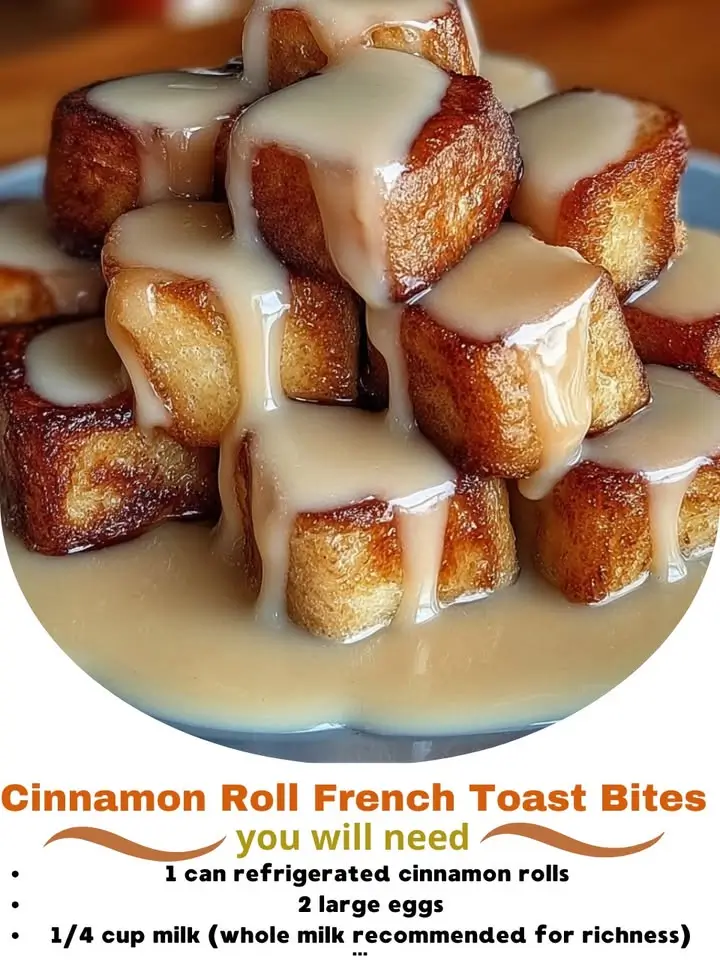
Welcome to a decadent twist on two beloved breakfast classics—French toast and cinnamon rolls. Imagine golden, custard-soaked bread pieces infused with warm cinnamon sugar, pan-seared to perfection, then drizzled with a rich cream cheese glaze that tastes just like the swirl in your favorite bakery-style cinnamon roll. These Cinnamon Roll French Toast Bites are more than just a dish; they’re an experience. Perfect for lazy weekend mornings, holiday brunches, baby showers, or anytime you want to treat yourself (or someone special) to a little culinary magic.
With their bite-sized format, these morsels are ideal for sharing, serving at buffets, or arranging elegantly on a platter with fresh fruit and powdered sugar snowdrifts. They combine comfort, convenience, and crave-worthy flavor into one irresistible package. Whether you’re cooking for kids, guests, or just satisfying your own sweet tooth, this recipe delivers both visual appeal and taste sensation in every bite.
The History
French toast has roots stretching back to ancient Rome, where a similar dish called pullum dulcis was made by soaking bread in milk and eggs before frying it. Over centuries, this humble preparation evolved across Europe, becoming pain perdu (“lost bread”) in France—a way to repurpose stale loaves. By the Middle Ages, spiced variations using cinnamon, nutmeg, and honey began emerging, laying the groundwork for modern interpretations.
Cinnamon rolls, on the other hand, trace their origins to Swedish kanelbullar, which gained popularity in Scandinavia during the 19th century. As Scandinavian immigrants brought their baking traditions to America, cinnamon rolls became a staple of church potlucks, diners, and family kitchens. The Pillsbury Bake-Off contests of the mid-20th century helped popularize ready-to-bake versions, making them accessible nationwide.
The fusion of these two iconic treats into “Cinnamon Roll French Toast” is a relatively recent innovation, likely born from the American love of mashups and indulgent brunch culture. Social media platforms like Instagram and Pinterest have amplified its popularity, turning what might have once been a whimsical experiment into a viral sensation. Today’s version—bitesized, shareable, and dripping with cream cheese icing—is emblematic of contemporary comfort food creativity.
Ingredients Breakdown
Every great recipe starts with quality ingredients, and this one balances richness, texture, and spice perfectly. Here’s a detailed look at each component:
- Bread (1 loaf brioche or challah): These enriched egg breads are essential—they’re soft, slightly sweet, and absorb custard beautifully without falling apart. Their high butter and egg content gives them a luxurious mouthfeel that mimics pastry.
- Eggs (6 large): Provide structure and richness to the custard mixture, helping create a tender interior when cooked.
- Milk (2 cups whole milk or half-and-half): Adds moisture and creaminess. For extra decadence, substitute part of the milk with heavy cream.
- Vanilla extract (2 teaspoons): Enhances sweetness and adds aromatic depth. Pure extract yields better flavor than imitation.
- Granulated sugar (1/4 cup): Sweetens the custard base subtly so the glaze remains the star.
- Ground cinnamon (2 tablespoons): The heart of the “cinnamon roll” identity. Use freshly ground if possible for maximum warmth and aroma.
- Nutmeg (1/4 teaspoon, optional): Complements cinnamon with a gentle earthy note—common in traditional cinnamon roll fillings.
- Salted butter (1/2 cup, melted + extra for frying): Enriches the custard and helps develop a golden crust during searing. Salted butter enhances overall flavor balance.
- Powdered sugar (for dusting and glaze): Used both as garnish and in the frosting for smooth consistency and quick dissolving.
Cream Cheese Glaze Ingredients:
- Cream cheese (8 oz, softened): Forms the base of the iconic cinnamon roll frosting. Full-fat works best for creamy texture and tangy contrast.
- Unsalted butter (2 tablespoons, softened): Makes the glaze spreadable and glossy.
- Powdered sugar (1 1/2 cups): Sweetens and thickens the glaze to drizzling perfection.
- Vanilla extract (1 teaspoon): Ties the glaze back to the French toast flavor profile.
- Milk or cream (1–2 tablespoons): Adjusts consistency for easy drizzling.
Optional add-ins include raisins, chopped pecans, or even mini chocolate chips stirred into the custard for extra flair.
Step-by-Step Recipe
Follow these detailed instructions to achieve perfectly golden, custardy-on-the-inside, crisp-on-the-outside Cinnamon Roll French Toast Bites every time.
- Prep the Bread: Select a day-old brioche or challah loaf for optimal texture. Slice off the crusts (optional but recommended for elegance), then cut the bread into 1-inch cubes. You’ll need about 4–5 cups of cubes depending on loaf size.
- Make the Custard Mixture: In a large bowl, whisk together 6 eggs until fully beaten. Gradually add 2 cups of whole milk (or half-and-half), 1/4 cup granulated sugar, 2 teaspoons vanilla extract, 2 tablespoons ground cinnamon, 1/4 teaspoon nutmeg (if using), and 1/2 cup melted salted butter. Whisk vigorously until smooth and well combined.
- Soak the Bread: Place the bread cubes in a shallow casserole dish or large tray. Slowly pour the custard mixture over the cubes, ensuring all pieces are submerged. Gently press down with a spatula to help absorption. Let soak for 20–30 minutes at room temperature, flipping halfway through to ensure even saturation. Avoid over-soaking, which can make the bread mushy.
- Preheat Skillet or Griddle: Heat a nonstick skillet, griddle, or cast iron pan over medium heat. Add a tablespoon of butter and let it melt, coating the surface evenly.
- Cook the Bites: Using tongs or a slotted spoon, lift soaked bread cubes from the custard (let excess drip off) and place them on the hot skillet. Cook for 2–3 minutes per side, turning gently with a spatula, until deeply golden brown and slightly crisp on the outside. The inside should be fluffy and custard-like. Repeat in batches, adding more butter as needed between rounds.
- Prepare the Cream Cheese Glaze: While the bites cook, make the glaze. In a medium bowl, beat 8 oz softened cream cheese and 2 tbsp softened unsalted butter with an electric mixer until smooth and creamy. Gradually add 1 1/2 cups powdered sugar, 1 tsp vanilla extract, and 1–2 tbsp milk or cream. Mix until silky and drizzle-able. Taste and adjust sweetness or thickness as desired.
- Assemble and Serve: Transfer cooked French toast bites to a serving platter. Drizzle generously with warm cream cheese glaze. Finish with a dusting of powdered sugar, a sprinkle of ground cinnamon, and optional garnishes like fresh berries, banana slices, toasted pecans, or edible flowers for presentation.
Tips
- Use Stale Bread: Slightly dried-out bread absorbs custard better without disintegrating. If your loaf is fresh, toast it lightly in the oven (300°F for 10 minutes) before cubing.
- Don’t Rush the Soak: Allowing enough soaking time ensures deep flavor penetration and a custardy center. But don’t exceed 30–40 minutes total unless refrigerating overnight (see variations).
- Control Heat: Cooking over medium heat prevents burning while allowing thorough internal cooking. Too high = burnt outsides, soggy centers.
- Butter Matters: Real butter provides unmatched flavor and browning. Margarine or oil won’t give the same richness.
- Glaze Consistency: If the glaze thickens too much, thin it with additional milk, one teaspoon at a time. For a firmer set, chill briefly before drizzling.
- Serve Immediately: These bites are best enjoyed warm, right after cooking. Reheating can dry them out.
- Batch Cooking? Keep finished bites warm in a 200°F oven on a wire rack-lined baking sheet to prevent sogginess while finishing the batch.
Variations and Customizations
This recipe is highly adaptable—perfect for tailoring to dietary needs, seasonal ingredients, or creative inspiration.
- Oven-Baked Version: For hands-off cooking, preheat oven to 375°F. Arrange soaked bread cubes on a parchment-lined baking sheet. Bake 20–25 minutes, flipping halfway, until puffed and golden. Ideal for feeding crowds.
- Overnight Make-Ahead: Combine bread and custard in a sealed container and refrigerate overnight (up to 12 hours). Cook fresh in the morning—perfect for stress-free holiday brunches.
- Dairy-Free Option: Substitute milk with almond, oat, or coconut milk. Use vegan butter and dairy-free cream cheese (like Kite Hill or Miyoko’s) for the glaze.
- Gluten-Free Adaptation: Use gluten-free brioche or challah-style bread. Ensure all other ingredients (especially powdered sugar) are certified GF.
- Vegan Twist: Replace eggs with flax eggs (6 tbsp ground flaxseed + 18 tbsp water, rested 10 mins), use plant-based milk and butter, and choose vegan cream cheese. Add a pinch of turmeric for color if desired.
- Filling Variations: Stir mini marshmallows, chopped apples, or caramel bits into the custard before soaking for fun flavor twists.
- Savory-Sweet Fusion: Reduce sugar to 1 tbsp, omit cinnamon, and add grated cheddar and scallions for a brunch-savory take.
- Mini Muffin Pan Method: Press soaked bread into greased mini muffin tins and bake 15–18 minutes for cute, uniform shapes—great for parties.
Health Considerations and Nutritional Value
While undeniably indulgent, understanding the nutritional profile helps you enjoy mindfully—or modify for balance.
Per Serving (Approx. 6–8 bites, without fruit toppings):
- Calories: ~450–550 kcal
- Total Fat: 25–30g (Saturated: 14–18g)
- Carbohydrates: 50–60g (Sugars: 30–35g)
- Protein: 8–10g
- Cholesterol: ~180mg
- Sodium: ~400–600mg (varies with butter and bread choice)
Key Considerations:
- High in Saturated Fat and Sugar: Due to butter, cream, eggs, and glaze. Best enjoyed occasionally rather than daily.
- Refined Carbs: White bread and added sugars contribute to rapid blood sugar spikes. Pair with protein (e.g., Greek yogurt) or fiber-rich fruit (berries, apples) to slow digestion.
- Lactose and Egg Sensitivities: Not suitable for those with dairy or egg allergies unless modified with substitutes.
- Portion Control: Serve in small portions alongside fresh fruit salad or greens to balance the meal.
- Healthier Tweaks:
- Use whole grain brioche or sourdough for added fiber.
- Reduce sugar in custard by half and rely on ripe bananas or maple syrup for natural sweetness.
- Lighten the glaze with Neufchâtel cheese (one-third less fat) or Greek yogurt.
- Skip the glaze dip and offer it on the side for dipping control.
Ingredients
For the French Toast Bites:
- 1 loaf brioche or challah bread (about 16 oz), cut into 1-inch cubes
- 6 large eggs
- 2 cups whole milk or half-and-half
- 1/4 cup granulated sugar
- 2 teaspoons pure vanilla extract
- 2 tablespoons ground cinnamon
- 1/4 teaspoon ground nutmeg (optional)
- 1/2 cup salted butter, melted (plus extra for cooking)
- Powdered sugar, for dusting
For the Cream Cheese Glaze:
- 8 oz cream cheese, softened
- 2 tablespoons unsalted butter, softened
- 1 1/2 cups powdered sugar
- 1 teaspoon vanilla extract
- 1–2 tablespoons milk or heavy cream
Directions
- Trim crusts from the bread if desired, then cut into 1-inch cubes. Set aside in a large bowl or dish.
- In another large bowl, whisk together eggs, milk, granulated sugar, vanilla extract, cinnamon, nutmeg (if using), and melted butter until smooth and uniformly blended.
- Pour the custard mixture over the bread cubes. Gently stir or press down to ensure all pieces are coated. Let sit for 20–30 minutes, flipping halfway through.
- While soaking, prepare the glaze: In a mixing bowl, beat cream cheese and butter until creamy. Gradually add powdered sugar, vanilla, and milk. Beat until smooth and drizzle-consistent. Set aside.
- Heat a skillet or griddle over medium heat. Add a tablespoon of butter and swirl to coat.
- Using a slotted spoon, place soaked bread cubes on the skillet in a single layer. Cook 2–3 minutes per side until golden brown and cooked through. Work in batches, adding butter as needed.
- Transfer cooked bites to a serving plate. Drizzle generously with cream cheese glaze and finish with a dusting of powdered sugar.
- Serve immediately with fresh fruit, maple syrup, or whipped cream if desired.
FAQ
Can I freeze Cinnamon Roll French Toast Bites?
Yes! After cooking and cooling completely, freeze in a single layer on a tray, then transfer to an airtight container. Reheat in a 350°F oven for 10–12 minutes or microwave briefly. Note: Glaze should be added fresh after reheating.
Can I make this ahead of time?
Absolutely. Assemble the soaked bread and custard the night before and refrigerate. Cook fresh in the morning for maximum texture and flavor.
What kind of bread works best?
Brioche and challah are top choices due to their soft crumb and richness. Avoid dense whole wheat or sourdough unless specifically seeking a heartier texture.
Is there a way to make this less sweet?
Yes. Reduce sugar in the custard to 1–2 tablespoons and skip the glaze or replace it with a light honey-yogurt drizzle.
Can I use store-bought cinnamon roll dough instead?
While not traditional, yes—you can cube unbaked Pillsbury-style cinnamon roll dough, dip in egg wash, and fry. However, this changes the texture significantly and lacks the French toast essence.
How do I keep the bites warm for a crowd?
Place them on a wire rack over a baking sheet in a 200°F oven. This keeps them warm and prevents steaming/sogginess.
Are these kid-friendly?
Extremely! Kids love the sweet, soft texture and fun size. Serve with fruit skewers for a balanced kids’ plate.
Summary
Cinnamon Roll French Toast Bites blend the cozy warmth of cinnamon-swirled pastries with the creamy richness of classic French toast into one unforgettable brunch masterpiece. Served warm with luscious cream cheese glaze, they’re guaranteed to steal the show at any gathering.