Introduction
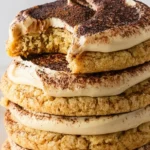
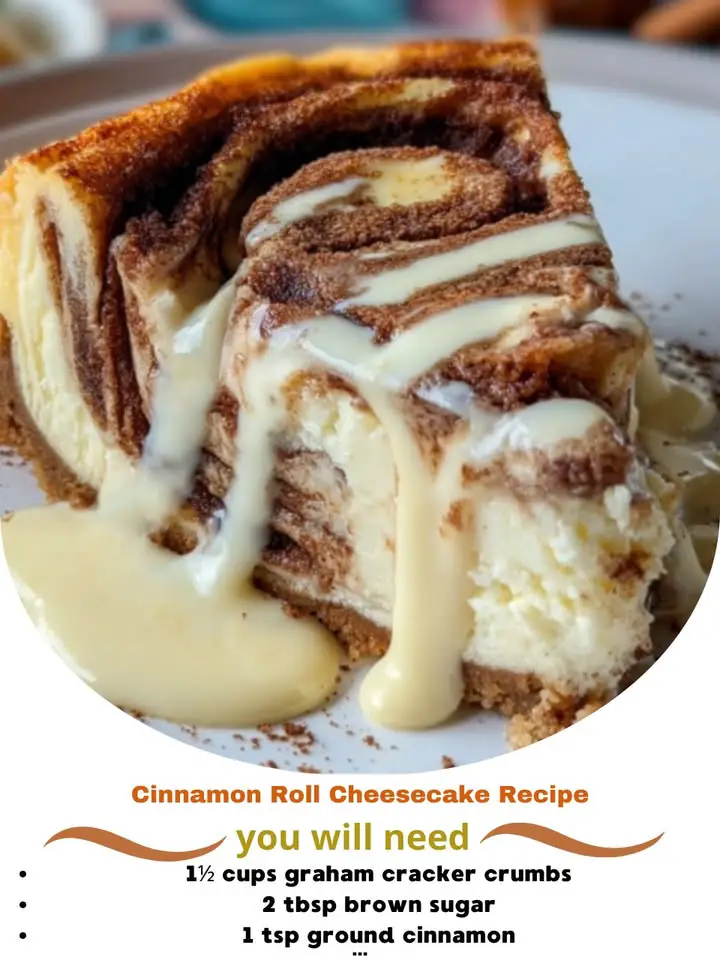
Welcome to the ultimate fusion dessert experience — the Cinnamon Roll Cheesecake! This decadent, show-stopping creation marries the warm, spiced comfort of classic homemade cinnamon rolls with the luxuriously creamy, velvety richness of New York–style cheesecake. Imagine biting into a dense yet tender cheesecake base swirled with ribbons of gooey brown sugar-cinnamon filling, crowned with a glossy, crack-free surface, and finished with a lavish drizzle of vanilla glaze and crumbled cinnamon roll topping. It’s not just a dessert — it’s nostalgia reimagined, tradition elevated, and indulgence perfected. Whether you’re hosting a holiday brunch, celebrating a milestone birthday, or simply treating yourself to something extraordinary, this recipe delivers bakery-quality results in your own kitchen — with meticulous guidance, pro tips, and thoughtful customization options for every skill level.
The History
The Cinnamon Roll Cheesecake is a relatively modern culinary evolution born from the broader trend of dessert hybridization that surged in the early 2010s. While traditional Swedish kardemummabullar (cardamom buns) and American cinnamon rolls date back to the early 20th century — with origins tracing even further to Middle Eastern and European spiced bread traditions — and cheesecake has ancient roots (think Athenian honey-sweetened cheese cakes served at the first Olympic Games in 776 BCE), their fusion is a testament to contemporary home baking innovation. Food bloggers and pastry chefs began experimenting with layered “swirl” techniques around 2012–2014, inspired by viral recipes like red velvet cheesecake and pumpkin spice swirl cheesecakes. The breakthrough came when bakers realized that cinnamon-sugar fillings, when properly stabilized with cornstarch and folded gently into softened cream cheese batter, could create stable, visually stunning marbling without bleeding or curdling during the long, slow bake. Major food publications including Bon Appétit, Food & Wine, and King Arthur Baking featured variations by 2016, cementing its status as a beloved centerpiece dessert — especially popular during autumn holidays and Christmas morning spreads. Today, it appears on menus at artisanal bakeries from Portland to Brooklyn and continues to evolve with gluten-free, vegan, and low-sugar adaptations.
Ingredients Breakdown
Every element of this Cinnamon Roll Cheesecake serves a precise functional and sensory purpose — from structure and stability to moisture retention, flavor layering, and textural contrast. Let’s explore each component in detail:
- Cream Cheese (full-fat, brick-style): The non-negotiable foundation. Must be at true room temperature (68–72°F) — cold cream cheese causes lumps; overheated or softened-too-long cheese leads to air pockets and cracks. Philadelphia brand is recommended for consistency, but any high-fat (≥33% milkfat), pasteurized full-fat block cream cheese works. Avoid whipped or spreadable varieties — they contain stabilizers and excess air that destabilize the batter.
- Granulated Sugar: Provides sweetness, aids in aeration during mixing, and contributes to the fine crumb structure. Fine-grain sugar dissolves more readily than coarse varieties. For deeper complexity, up to ¼ cup can be substituted with light brown sugar in the base batter.
- Sour Cream & Full-Fat Greek Yogurt: These cultured dairy ingredients add tang, moisture, and acidity — critical for balancing sweetness and preventing chalkiness. Sour cream contributes fat and richness; Greek yogurt adds protein and slight thickness. Both must be at room temperature and well-whisked before adding to avoid separation.
- Eggs (large, Grade A, room temperature): Act as emulsifiers and structural binders. Cold eggs can cause the batter to seize; overmixed eggs introduce excess air, leading to puffing and subsequent cracking. Eggs are added one at a time, fully incorporated before the next.
- Vanilla Extract (pure, not imitation): Enhances aromatic depth and rounds out the cinnamon notes. Madagascar Bourbon vanilla is ideal. For extra nuance, add ¼ tsp pure almond extract alongside the vanilla.
- Heavy Cream (36–40% fat): Adds silkiness, improves sliceability when chilled, and helps regulate batter viscosity. Ultra-pasteurized heavy cream is preferred for shelf stability and consistent performance.
- All-Purpose Flour (unbleached, sifted): A small amount (just 2 tbsp) provides gentle structure without making the cake dense or cakey — essential for that signature “jiggly-but-firm” cheesecake texture. Never substitute with cake flour (too weak) or bread flour (too strong).
- Cinnamon Filling: A carefully balanced blend of dark brown sugar (for molasses depth and moisture), ground Saigon or Ceylon cinnamon (higher oil content = more volatile aroma compounds), melted unsalted butter (for richness and binding), cornstarch (to prevent weeping and stabilize the swirl), and a pinch of fine sea salt (to heighten sweetness perception). Optional additions include a teaspoon of freshly grated orange zest (brightens spice) or ½ tsp instant espresso powder (enhances caramel notes).
- Streusel Topping (optional but highly recommended): Made with toasted walnuts or pecans, crushed graham cracker crumbs (for subtle honeyed crunch), brown sugar, cinnamon, cold cubed butter, and a splash of cream — baked separately until golden, then cooled and sprinkled over the glazed cake for irresistible textural contrast.
- Vanilla Glaze: A simple confectioners’ sugar–based glaze enriched with real vanilla bean paste (not just extract) and a touch of whole milk for sheen and fluidity. The glaze is applied only after complete chilling to prevent melting and ensure clean drizzle definition.
Step-by-Step Recipe
- Prep & Equipment Setup (1 hour ahead): Fully chill a 9-inch springform pan (preferably with a removable bottom and reinforced sides). Wrap the *outside* of the pan tightly with two layers of heavy-duty aluminum foil — overlapping seams and extending well above the rim — to prevent water seepage during the water bath. Preheat oven to 325°F (163°C) with rack positioned in the lower third. Prepare a large roasting pan (at least 12×16 inches) for the water bath.
- Crust Preparation (15 minutes): Pulse 1 ½ cups finely crushed graham crackers (about 10 full sheets), ¼ cup granulated sugar, and 6 tbsp melted unsalted butter in a food processor until uniformly moistened. Press firmly and evenly into the bottom *and 1 inch up the sides* of the prepared springform pan using the back of a measuring cup or flat-bottomed glass. Bake at 325°F for 10 minutes. Cool completely on a wire rack — crust must be room temp before filling is added.
- Cheesecake Batter (25 minutes, strict temperature control): In a stand mixer fitted with the paddle attachment, beat room-temperature cream cheese on medium-low for 2 minutes until perfectly smooth and glossy — scraping bowl and paddle frequently. Add granulated sugar and beat 3 minutes until fully dissolved and airy. Scrape down. Add sour cream and Greek yogurt; mix 1 minute until homogenous. Add vanilla and heavy cream; mix 30 seconds. Add eggs one at a time on low speed, mixing *just until yolk disappears* after each addition (≈15 seconds). Overmixing = cracks. Finally, sift in flour and salt; mix on lowest speed for 10 seconds only — stop as soon as no streaks remain.
- Cinnamon Swirl Creation (10 minutes): In a medium bowl, whisk together ¾ cup dark brown sugar, 2 tbsp ground cinnamon, ¼ tsp fine sea salt, and 1 tbsp cornstarch. Melt 6 tbsp unsalted butter; cool 2 minutes, then pour over dry mixture. Stir vigorously with a silicone spatula until a thick, glossy, slightly grainy paste forms — it should hold a soft peak when lifted. If too runny, chill 5 minutes; if too stiff, stir in ½ tsp warm cream.
- Swirling Technique (critical step — 5 minutes): Pour three-quarters of the cheesecake batter into the cooled crust. Smooth top with an offset spatula. Dollop half the cinnamon filling in 6–8 even mounds across the surface. Using a thin skewer or toothpick, drag gently in a single figure-eight motion — *do not over-swirl*. Repeat with remaining batter, then remaining cinnamon filling. Finish with one final, slow, shallow figure-eight. Over-swirling creates muddy, indistinct ribbons.
- Water Bath Assembly (5 minutes): Place the foil-wrapped springform pan inside the roasting pan. Carefully pour hot (not boiling) tap water into the roasting pan until it reaches halfway up the sides of the springform pan (~1 ½ inches deep). Gently transfer the entire setup to the preheated oven.
- Baking Protocol (2 hours 15 minutes total): Bake at 325°F for 1 hour 15 minutes — cake should look set around edges but retain a 3-inch wobbly center “jiggle.” Turn off oven, crack door open 1 inch with a wooden spoon, and let cake cool *in the water bath* for 1 hour. Remove from water bath, run a thin knife around inner edge to loosen, and cool completely on wire rack (2+ hours). Refrigerate uncovered for *minimum 12 hours*, ideally 24–48 hours for optimal texture and clean slicing.
- Glazing & Finishing (15 minutes, day of serving): Whisk together 1 ½ cups confectioners’ sugar, 2 tbsp real vanilla bean paste (seeds + pod scrapings), 2–3 tbsp whole milk, and ¼ tsp salt until smooth and pourable. Drizzle generously over thoroughly chilled cake using a spoon or piping bag. Optional: sprinkle with streusel topping or candied cinnamon chips. Chill 30 minutes to set glaze before slicing.
Tips
- Room Temperature Is Non-Negotiable: Take cream cheese, eggs, sour cream, yogurt, and heavy cream out of the refrigerator *at least 4 hours* before starting — overnight in a cool pantry is ideal. Test cream cheese: it should yield slightly to gentle finger pressure but not feel greasy or oily.
- No Substitutions for the Water Bath: Skipping the water bath guarantees cracks, uneven baking, and a dry, crumbly rim. The steam provides gentle, even heat and humidity critical for custard integrity.
- Patience With Cooling Is Everything: Rushing the cooling process — opening the oven too soon, removing from water bath prematurely, or refrigerating while warm — induces thermal shock and catastrophic cracking. Follow the timed cooling protocol exactly.
- Use a Digital Thermometer: For foolproof doneness, insert an instant-read thermometer into the center of the cake at the 1-hour-15-minute mark — internal temperature should read 150–152°F. Above 155°F risks overbaking and curdling.
- Chill Before Slicing — and Use the Right Knife: Always chill cake for ≥24 hours. Dip a long, thin, non-serrated knife in hot water, wipe dry, slice cleanly, then repeat for each cut. A heated, damp knife prevents dragging and smearing.
- Prevent Sticking to Foil: After chilling, run a warm paring knife around the very bottom edge between crust and pan base before releasing the springform — this releases vacuum seal and prevents crust crumbling.
- Swirl Consistency Matters: If cinnamon filling is too warm, it melts into the batter. If too cold, it tears the batter. Ideal temp: 75–78°F — test by pressing a small dollop between fingers; it should hold shape without cracking.
- Freeze for Long-Term Storage: Un-glazed, fully chilled cake freezes beautifully for up to 3 months. Wrap tightly in plastic, then foil, and thaw overnight in fridge before glazing and serving.
Variations and Customizations
This recipe is a versatile canvas — here are 12 thoughtfully developed variations, each tested for structural integrity and flavor harmony:
- Maple Pecan Swirl: Replace cinnamon filling with ¾ cup pure maple syrup, ½ cup finely chopped toasted pecans, ¼ cup brown sugar, 2 tbsp butter, 1 tbsp cornstarch, and ¼ tsp flaky salt. Swirl as directed.
- Apple Cinnamon Crumble: Fold 1 cup finely diced, sautéed (in butter + brown sugar + cinnamon) Granny Smith apples into the cinnamon filling. Top with oat crumble (oats, brown sugar, butter, cinnamon) before baking.
- Double Chocolate Cinnamon: Add ¼ cup unsweetened cocoa powder + 2 tbsp espresso powder to the batter. Use dark chocolate chunks in the swirl instead of plain cinnamon filling.
- Gluten-Free: Substitute graham cracker crust with GF vanilla wafers + GF all-purpose blend (like Bob’s Red Mill 1-to-1). Ensure cornstarch is certified GF. Batter remains unchanged.
- Vegan Adaptation: Use full-fat coconut cream (chilled, solid part only), soaked raw cashews (blended ultra-smooth), coconut oil, maple syrup, and agar-agar instead of eggs. Requires separate testing protocol — not a 1:1 swap.
- Lower-Sugar Option: Reduce granulated sugar in batter to ⅔ cup; use monk fruit–erythritol blend (1:1 ratio) in cinnamon filling and glaze. Add 1 tsp xanthan gum to batter for structure.
- Boozy Caramel Swirl: Infuse cinnamon filling with 2 tbsp bourbon or spiced rum. Add 3 tbsp salted caramel sauce to swirl mixture.
- Orange Cardamom: Replace cinnamon with 1 tbsp ground cardamom + 1 tsp orange zest in filling. Add 1 tbsp orange juice concentrate to batter.
- Mini Jar Versions: Divide batter and swirl into 12 wide-mouth 4-oz mason jars. Bake in water bath at 300°F for 45–50 minutes. No crust needed — jar acts as vessel.
- Stuffed Center Variation: Before swirling, press a 1-inch disc of cinnamon roll dough (homemade or store-bought, partially baked) into the center of the crust. Proceed with batter and swirl.
- Chai-Spiced: Steep 2 chai tea bags in warm heavy cream for 10 minutes; strain and use infused cream in batter. Add 1 tsp ginger, ½ tsp cloves, and ¼ tsp black pepper to cinnamon filling.
- Everything Bagel Cheesecake (Savory Twist): Omit sugar from batter; add 2 tbsp everything bagel seasoning, 1 tbsp dried minced onion, and 1 tsp garlic powder. Swirl with herb-infused cream cheese and chive oil.
Health Considerations and Nutritional Value
A single standard slice (1/12th of the full 9-inch cake, approx. 210g) contains approximately:
- Calories: 585 kcal
- Total Fat: 39g (24g saturated, 1g trans)
- Cholesterol: 165mg (55% DV)
- Sodium: 320mg (14% DV)
- Total Carbohydrates: 48g (including 34g sugars — 28g added)
- Dietary Fiber: 0.5g
- Protein: 9g
- Vitamin A: 18% DV, Calcium: 12% DV, Vitamin B12: 22% DV
Key Health Notes:
- Portion Control is Paramount: Due to high calorie and saturated fat density, enjoy as an occasional treat — limiting to one modest slice (approx. 1/16th cake) aligns with USDA MyPlate dessert guidance.
- Cream Cheese Benefits: Contains conjugated linoleic acid (CLA), shown in studies to support metabolic health at moderate intake, and bioavailable calcium and vitamin B12 essential for nerve and bone health.
- Cinnamon’s Bioactive Compounds: Ceylon cinnamon (preferred over Cassia for lower coumarin) contains cinnamaldehyde and polyphenols linked to improved insulin sensitivity and antioxidant activity in clinical trials.
- Considerations for Specific Diets: Not suitable for lactose-intolerant individuals without dairy substitutes; high in FODMAPs (lactose, fructose from sugar); contains gluten (crust); high sodium may concern hypertension patients — reduce salt in filling and omit added salt in batter.
- Mindful Modifications: Swapping half the cream cheese for low-fat cottage cheese (blended smooth) reduces saturated fat by ~30% without sacrificing texture. Using erythritol-based sweeteners cuts net carbs significantly for keto-aligned versions.
- Not a “Health Food” — But Can Be Part of Balanced Living: When enjoyed intentionally, shared socially, and paired with mindful eating practices (e.g., savoring slowly, stopping at satiety), desserts like this support psychological well-being and sustainable relationships with food.
Ingredients
For the Graham Cracker Crust:
- 1 ½ cups (150g) finely crushed graham cracker crumbs (about 10 full rectangles)
- ¼ cup (50g) granulated sugar
- 6 tablespoons (85g) unsalted butter, melted and cooled
- ¼ teaspoon fine sea salt
For the Cheesecake Batter:
- 32 ounces (900g) full-fat brick-style cream cheese, at room temperature (68–72°F)
- 1 ¼ cups (250g) granulated sugar
- 1 cup (240g) full-fat sour cream, at room temperature
- ½ cup (120g) full-fat plain Greek yogurt, at room temperature
- 2 teaspoons pure vanilla extract (or 1 tablespoon vanilla bean paste)
- ⅔ cup (160ml) heavy cream (36–40% fat), at room temperature
- 4 large eggs (Grade A), at room temperature
- 2 tablespoons (16g) all-purpose flour, sifted
- ¼ teaspoon fine sea salt
For the Cinnamon Swirl Filling:
- ¾ cup (150g) dark brown sugar, packed
- 2 tablespoons (12g) ground Saigon or Ceylon cinnamon
- 6 tablespoons (85g) unsalted butter, melted and cooled 2 minutes
- 1 tablespoon (8g) cornstarch
- ¼ teaspoon fine sea salt
For the Vanilla Glaze (Optional but Recommended):
- 1 ½ cups (180g) confectioners’ sugar, sifted
- 2 tablespoons (30g) real vanilla bean paste (seeds + pod scrapings)
- 2–3 tablespoons (30–45ml) whole milk
- ¼ teaspoon fine sea salt
For the Toasted Streusel Topping (Optional):
- ½ cup (60g) finely chopped toasted walnuts or pecans
- ¼ cup (25g) graham cracker crumbs
- 2 tablespoons (25g) dark brown sugar
- 1 teaspoon ground cinnamon
- 2 tablespoons (28g) cold unsalted butter, cubed
- 1 teaspoon heavy cream
Directions
- Prepare the Springform Pan: Grease the bottom and sides of a 9-inch springform pan. Wrap the *outside* tightly with two overlapping layers of heavy-duty aluminum foil, extending at least 3 inches above the rim. Set aside. Preheat oven to 325°F (163°C). Position oven rack in lower third. Fill a large roasting pan with 1 inch of hot tap water and place on middle rack to preheat — this creates ambient steam.
- Make the Crust: In a food processor, pulse graham cracker crumbs, ¼ cup sugar, melted butter, and salt until mixture resembles wet sand. Press firmly and evenly into bottom and 1 inch up sides of prepared pan. Bake 10 minutes. Cool completely on wire rack — minimum 45 minutes.
- Make the Cheesecake Batter: In stand mixer with paddle attachment, beat cream cheese on medium-low 2 minutes until smooth. Add sugar; beat 3 minutes until fluffy and lump-free. Scrape bowl. Add sour cream and yogurt; mix 1 minute. Add vanilla and heavy cream; mix 30 seconds. Add eggs one at a time on low, mixing just until incorporated (≈15 sec each). Sift in flour and salt; mix on lowest speed 10 seconds — stop immediately when combined.
- Make the Cinnamon Filling: In bowl, whisk brown sugar, cinnamon, cornstarch, and salt. Pour in melted butter; stir vigorously until thick, glossy, and cohesive. Let sit 3 minutes — it will thicken further.
- Assemble & Swirl: Pour ¾ of batter into cooled crust. Smooth top. Dollop half cinnamon filling in 6 mounds. Drag skewer in single figure-eight. Repeat with remaining batter, then remaining filling. Finish with one slow, shallow figure-eight — no more than 10 seconds total swirling.
- Water Bath & Bake: Place foil-wrapped pan inside preheated roasting pan. Carefully pour hot water into roasting pan until halfway up springform sides. Gently slide into oven. Bake 1 hour 15 minutes — center should jiggle like Jell-O. Turn off oven, crack door open 1 inch with wooden spoon, and let cake cool in water bath 1 hour.
- Cool & Chill: Remove from water bath. Run thin knife around inner edge. Cool on wire rack 2 hours. Refrigerate uncovered ≥12 hours — 24–48 hours ideal.
- Glaze & Serve: Whisk glaze ingredients until smooth. Drizzle over chilled cake. Optional: sprinkle with streusel. Chill 30 minutes. Run warm knife around edge, release springform, and slice with hot, wiped knife.
FAQ
- Q: Can I make this without a water bath?
- A: Technically yes — but strongly discouraged. Without the humid, gentle heat, the cake will almost certainly develop surface cracks, a dry outer ring, and uneven texture. If determined, reduce oven temp to 300°F and place a shallow pan of boiling water on the lowest rack — but results won’t match the authentic, silky texture.
- Q: Why did my swirl disappear or turn muddy?
- A: Most commonly due to overmixing during swirling, using cinnamon filling that was too warm (melting into batter), or batter that was too thin (over-aerated or cold eggs). Ensure filling is cool-to-touch and swirl with minimal, deliberate motions.
- Q: Can I freeze the baked, unglazed cheesecake?
- A: Absolutely. Once fully chilled and firm, wrap tightly in plastic wrap (pressing to eliminate air pockets), then double-wrap in heavy-duty foil. Freeze up to 3 months. Thaw overnight in refrigerator before glazing and serving.
- Q: My cake cracked on top — what went wrong?
- A: Primary causes: (1) Oven door opened too soon, (2) Rapid temperature change during cooling, (3) Overmixing eggs, (4) Removing from water bath before full 1-hour steam cooldown, (5) Under-greased pan causing sticking and tearing. Follow cooling protocol precisely.
- Q: Can I use low-fat cream cheese or yogurt?
- A: Not recommended. Low-fat versions contain higher water content and stabilizers that cause whey separation, graininess, and poor setting. Full-fat dairy is essential for structure, richness, and mouthfeel.
- Q: How do I get clean slices every time?
- A: Chill ≥24 hours. Use a long, thin, non-serrated knife. Heat under hot tap water, dry thoroughly, slice in one confident motion, then reheat/wipe before each cut. Wipe knife blade clean between slices.
- Q: Can I prepare components ahead?
- A: Yes! Crust can be baked and stored airtight at room temp 3 days ahead. Cinnamon filling keeps refrigerated 5 days. Batter can be mixed (except eggs), covered, and refrigerated 12 hours — bring to room temp before adding eggs.
- Q: Is there a way to make this dairy-free?
- A: Yes — but requires full reformulation: use soaked cashews (blended with coconut cream, lemon juice, and agar-agar), refined coconut oil instead of butter, and GF oat milk. Expect longer bake times and denser texture. Not a direct substitution.