Introduction
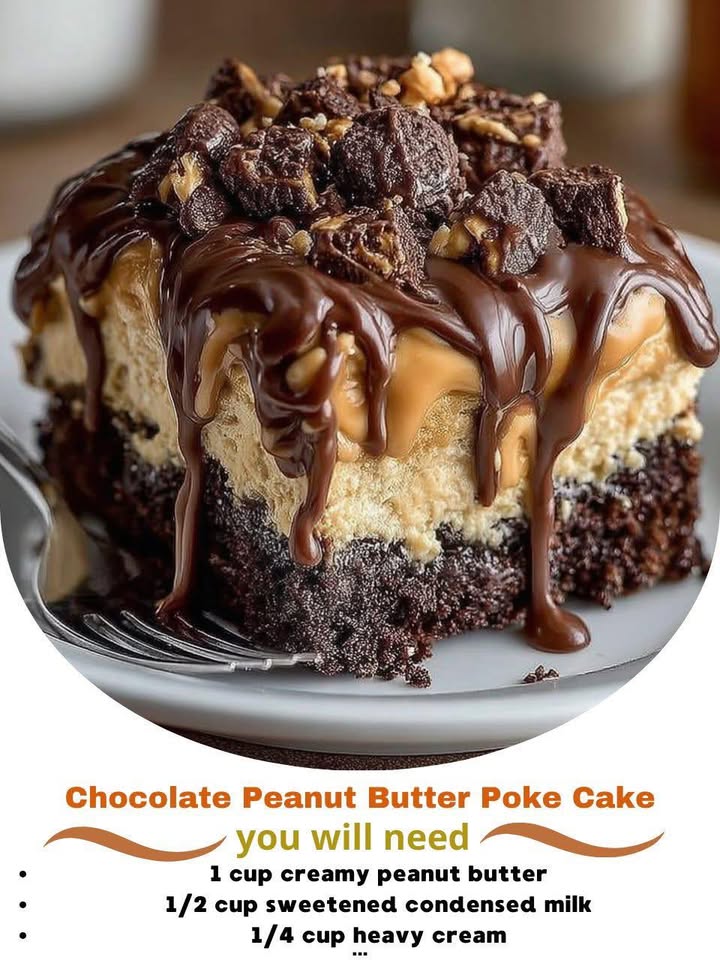
Indulge in the ultimate dessert experience with Chocolate Peanut Butter Poke Cake — a rich, moist, and irresistibly decadent treat that marries two of America’s most beloved flavors. This no-bake (well, almost — you’ll need to bake the cake base!) crowd-pleaser combines the deep, velvety allure of chocolate cake with the creamy, salty-sweet punch of peanut butter, all elevated by a luscious, syrupy soak and crowned with layers of texture and flavor. Whether it’s for a summer potluck, a birthday celebration, game-day gathering, or just a well-deserved “me-time” dessert, this poke cake delivers maximum impact with minimal fuss. Its genius lies in its simplicity: a baked chocolate cake is pierced (or “poked”) while still warm, allowing a rich, custom-infused liquid mixture to seep deep into every crumb — resulting in an impossibly moist, intensely flavored dessert that stays tender for days.
The History
Poke cakes trace their origins back to mid-20th-century American home cooking — a product of post-war ingenuity, pantry staples, and the rise of convenience baking. The concept emerged alongside the popularity of boxed cake mixes in the 1950s and ’60s, when home bakers sought ways to elevate store-bought desserts with minimal effort and maximal flavor. The term “poke cake” comes from the literal action of poking holes into a freshly baked cake using a fork, skewer, or even the handle of a wooden spoon — a technique designed to create channels for flavorful fillings to penetrate deeply. Early versions often featured Jell-O gelatin mixtures, sweetened condensed milk, or canned fruit syrups. As American palates evolved and peanut butter became a cultural staple (thanks in part to wartime rationing and its high protein content), bakers began experimenting with savory-sweet pairings. By the 1980s and ’90s, regional cookbooks and church social recipe collections started featuring chocolate-peanut butter variations — particularly across the South and Midwest — where peanut butter was not just a spread but a culinary cornerstone. Today, the Chocolate Peanut Butter Poke Cake stands as a beloved modern classic: a nostalgic yet ever-evolving dessert that honors its humble roots while embracing contemporary tastes — from vegan adaptations to keto-friendly swaps and gourmet garnishes like flaky sea salt and house-made peanut brittle.
Ingredients Breakdown
Understanding each component is key to mastering this dessert — and knowing *why* each ingredient matters helps you troubleshoot, substitute intelligently, and elevate your results.
- Chocolate Cake Base: Typically made from a high-quality devil’s food or fudge-style box mix (for reliability and richness) or a scratch version using Dutch-processed cocoa, espresso powder (to deepen chocolate notes without adding coffee flavor), and buttermilk (for tenderness and acidity). Oil-based cakes perform better than butter-based ones here — oil retains moisture longer and absorbs the poke mixture more evenly.
- Poke Mixture: A dynamic blend usually centered around creamy peanut butter (smooth, natural, or even powdered), melted semi-sweet or dark chocolate, warm evaporated milk or heavy cream (for silkiness and fat content), and a touch of corn syrup or honey (to prevent graininess and add gloss). Some recipes include a splash of vanilla extract, a pinch of flaky salt, or even a tablespoon of bourbon for complexity.
- Whipped Topping: Traditionally stabilized whipped cream (made with cold heavy cream, powdered sugar, and vanilla) or Cool Whip® for convenience and stability. For a richer finish, consider a peanut butter Swiss meringue buttercream or a ganache drizzle.
- Garnishes: More than decoration — they’re functional flavor and textural accents. Chopped roasted peanuts (salted or unsalted), peanut butter cups (mini or chopped), chocolate shavings, caramel drizzle, flaky sea salt, crushed pretzels (for sweet-salty-crunch contrast), or even freeze-dried banana chips (a nod to classic PB&J).
- Secret Enhancers (Optional but Recommended): A tablespoon of instant espresso powder in the cake batter; ¼ tsp ground cinnamon or smoked paprika in the poke mixture for warmth; a few drops of orange extract to brighten the chocolate; or a swirl of raspberry coulis beneath the whipped topping for a vibrant, tart counterpoint.
Step-by-Step Recipe
- Preheat & Prep: Preheat oven to 350°F (175°C). Grease and flour a 9×13-inch metal baking pan (metal conducts heat more evenly than glass for poke cakes) or line with parchment paper for foolproof removal. If using a box mix, follow package instructions *exactly*, substituting water with brewed strong coffee (cooled) and oil with melted coconut oil or vegetable oil — and add 1 extra large egg for structure.
- Bake the Cake: Pour batter into prepared pan and bake for 28–32 minutes (start checking at 26), or until a toothpick inserted into the center comes out with *moist crumbs* (not wet batter, but not completely clean — this ensures optimal absorbency). Do NOT overbake.
- Poke While Warm: Remove cake from oven and place on a wire rack. Immediately — while still piping hot — use the handle of a wooden spoon, a chopstick, or a clean kitchen fork to poke holes ½ inch apart, penetrating all the way to the bottom of the pan. Aim for 40–50 holes total. Work quickly before the cake cools and sets.
- Prepare the Poke Mixture: In a medium saucepan over low heat, combine 1 cup creamy peanut butter, ½ cup heavy cream, ¼ cup granulated sugar, 2 tbsp light corn syrup, and a pinch of salt. Stir constantly until smooth and just beginning to bubble at edges (~4–5 minutes). Remove from heat and whisk in 1 cup finely chopped semi-sweet chocolate until fully melted and glossy. Stir in 1 tsp pure vanilla extract and ¼ tsp instant espresso powder (optional but recommended). Let cool slightly — it should be warm and pourable, not hot enough to melt the cake.
- Soak Thoroughly: Slowly pour the warm peanut butter-chocolate mixture evenly over the poked cake. Use a silicone spatula to gently nudge any pooling liquid into the holes. Let sit undisturbed for 20 minutes at room temperature to allow full absorption.
- Chill & Set: Refrigerate uncovered for at least 2 hours — preferably 4–6 hours or overnight. This step is non-negotiable: chilling firms the cake, sets the filling, prevents topping slippage, and allows flavors to meld.
- Whip the Topping: In a chilled bowl, beat 2 cups cold heavy whipping cream, ⅓ cup powdered sugar, and 1½ tsp vanilla until stiff peaks form (~3–4 minutes). For extra stability (especially in warm climates), add 1 tsp unflavored gelatin bloomed in 1 tbsp cold water and warmed until liquid (but not hot) — fold in at the end.
- Assemble & Garnish: Spread whipped cream evenly over chilled cake. Drizzle with additional melted peanut butter or chocolate ganache. Scatter generously with chopped salted peanuts, mini peanut butter cups, and a delicate sprinkle of flaky sea salt. For visual drama, pipe rosettes of extra whipped cream along the edges.
- Rest Before Serving: Return to refrigerator for 30 minutes before slicing. Use a sharp knife dipped in hot water and wiped dry between cuts for clean, elegant slices.
Tips
- Temperature is Everything: Poke the cake *immediately* after removing from the oven — residual heat opens the crumb structure for superior absorption. If the cake cools too much, the holes will seal and the mixture will pool.
- Don’t Skimp on the Poke: Shallow or sparse poking = uneven saturation. Go deep, go dense, go consistent. A meat thermometer works surprisingly well for uniform, clean holes.
- Use Real Peanut Butter: Avoid “natural” brands with oil separation unless thoroughly stirred and warmed — their high oil content can make the cake greasy. Opt for brands like Jif, Skippy, or Smucker’s creamy varieties for ideal emulsification.
- Layer Your Flavors: Add depth by brushing the *bottom* of the baked cake with a thin layer of warmed peanut butter before poking — it creates a rich base note that shines through every bite.
- Stabilize Your Whipped Cream: Unstabilized whipped cream weeps and deflates. Use powdered sugar (not granulated), chill all equipment, and consider the gelatin or cream cheese method for events lasting longer than 2 hours.
- Storage Wisdom: Keep covered tightly with plastic wrap pressed directly onto the surface (to prevent drying) and refrigerated for up to 5 days. Do not freeze the fully assembled cake — the whipped cream breaks down. Freeze the baked-and-poked base (before topping) for up to 3 months; thaw overnight in fridge, then proceed with poke mixture and topping.
- Slicing Secret: Run your knife under hot water, wipe dry, and slice with gentle sawing motion — repeat for each cut. Serve chilled, never at room temperature, to preserve structure and contrast.
- Taste Balance Tip: If your final dessert tastes overly sweet, a tiny pinch of flaky salt added *just before serving* (not during prep) will recalibrate the entire flavor profile — enhancing peanut butter’s savoriness and chocolate’s bitterness.
Variations and Customizations
This cake is gloriously adaptable — whether you’re accommodating dietary needs, celebrating seasonal ingredients, or simply chasing novelty. Here are meticulously tested, chef-approved variations:
- Vegan Chocolate Peanut Butter Poke Cake: Use a vegan chocolate cake mix (or scratch version with flax eggs and almond milk), replace dairy cream with full-fat coconut cream (chilled overnight, solid part only), swap peanut butter for certified vegan brand, and use coconut sugar or maple syrup in the poke mixture. Top with coconut whipped cream and toasted coconut flakes.
- Keto/Low-Carb Version: Bake a keto chocolate cake (almond flour + cocoa + erythritol + eggs + butter), poke with holes, and soak in a mixture of melted sugar-free chocolate chips, powdered erythritol, unsweetened almond milk, and natural peanut butter (check label for hidden sugars). Top with whipped heavy cream sweetened with monk fruit and garnish with crushed sugar-free peanut butter cups.
- Gluten-Free Adaptation: Choose a certified GF chocolate cake mix (like King Arthur or Simple Mills), ensure all other ingredients (including peanut butter and chocolate) are GF-certified, and use GF cornstarch if thickening is needed in the poke mixture. Always verify labels — cross-contamination is common in nut butters.
- Protein-Packed Power Cake: Add 2 scoops chocolate or vanilla whey or plant-based protein powder to the cake batter (reduce cocoa by 1 tbsp to compensate), stir 1 scoop unflavored collagen peptides into the warm poke mixture, and top with Greek yogurt whipped cream (blend 1 cup full-fat Greek yogurt + ½ cup heavy cream + ¼ cup powdered sugar + 1 tsp vanilla until airy).
- Spiced Southern Style: Infuse the poke mixture with ½ tsp ground cinnamon, ¼ tsp cayenne (for subtle heat), and 1 tbsp molasses. Garnish with candied pecans and a drizzle of bourbon caramel.
- Decadent Gourmet Twist: Soak with a dark chocolate–peanut butter ganache (70% chocolate + warm heavy cream + smooth peanut butter + sea salt), top with salted caramel buttercream, and finish with gold leaf flakes, edible flowers, and hand-cut chocolate curls.
- Mini Individual Pokes: Bake cake in a muffin tin (lined with parchment liners), poke each cupcake while warm, soak individually, chill, then top with piped whipped cream and a single mini Reese’s. Perfect for portion control and party presentation.
- Seasonal Fruit Fusion: After soaking and chilling, layer a thin stratum of fresh raspberry or blackberry compote *under* the whipped cream. Or fold mashed ripe bananas into the whipped topping for a nostalgic PB&J riff.
Health Considerations and Nutritional Value
While Chocolate Peanut Butter Poke Cake is undeniably a dessert — not a health food — understanding its nutritional composition empowers mindful enjoyment and informed customization. A standard 9×13-inch cake yields approximately 16 servings. Per average slice (1/16th of recipe), values are approximate:
- Calories: ~420–510 kcal (varies significantly based on peanut butter type, cream fat %, and toppings)
- Total Fat: 26–32g (of which 10–14g saturated — largely from chocolate, peanut butter, and cream)
- Carbohydrates: 44–52g (including 32–40g added sugars from cake mix, sugar in poke mixture, and powdered sugar in topping)
- Protein: 7–10g (primarily from peanut butter and eggs — a modest but meaningful contribution)
- Fiber: 2–3g (low unless whole grain or high-fiber cake base is used)
- Sodium: 320–480mg (elevated due to peanut butter, cake mix, and added salt — watch if managing hypertension)
Nutritional Highlights:
- Peanut Butter: Provides heart-healthy monounsaturated fats, vitamin E, magnesium, and niacin — supporting cardiovascular function and antioxidant defense.
- Dark Chocolate (70%+): Rich in flavonoids and theobromine, linked to improved endothelial function, reduced inflammation, and mild mood elevation.
- Heavy Cream: Contains conjugated linoleic acid (CLA), which some studies associate with metabolic benefits — though quantity per serving is small.
Considerations for Sensitive Diets:
- Allergens: Contains peanuts, dairy, eggs, wheat (gluten), and soy (common in chocolate and peanut butter). Always verify labels for shared facility warnings.
- Sugar Sensitivity: High glycemic load may affect blood sugar stability — pairing with a protein-rich meal or choosing lower-sugar alternatives helps mitigate spikes.
- Digestive Notes: High fat content may trigger discomfort for those with gallbladder issues or irritable bowel syndrome (IBS); smaller portions and thorough chewing are advised.
- Mindful Enjoyment Strategy: Serve smaller portions (1/20th instead of 1/16th), emphasize satiety with a balanced pre-dessert meal rich in fiber and protein, and savor slowly — research shows slower consumption enhances satisfaction and reduces overall intake.
Ingredients
Makes one 9×13-inch cake (16–20 servings)
- 1 (18.25 oz) box premium devil’s food cake mix (or scratch equivalent: 1¾ cups all-purpose flour, ¾ cup unsweetened cocoa powder, 2 cups granulated sugar, 1½ tsp baking powder, 1½ tsp baking soda, 1 tsp salt, 2 large eggs, 1 cup buttermilk, ½ cup vegetable oil, 2 tsp vanilla extract, 1 cup hot brewed coffee)
- 1 cup creamy, no-stir peanut butter (e.g., Jif or Skippy)
- ½ cup heavy whipping cream
- ¼ cup granulated sugar
- 2 tbsp light corn syrup
- ¼ tsp fine sea salt
- 1 cup semi-sweet chocolate chips or finely chopped chocolate (60% cacao)
- 1 tsp pure vanilla extract
- ¼ tsp instant espresso powder (optional but highly recommended)
- 2 cups cold heavy whipping cream (for topping)
- ⅓ cup powdered sugar
- 1½ tsp pure vanilla extract
- ½ cup salted roasted peanuts, roughly chopped
- ½ cup mini peanut butter cups, halved or quartered
- Flaky sea salt (e.g., Maldon), for finishing
Directions
- Preheat oven to 350°F (175°C). Grease and flour a 9×13-inch metal baking pan or line with parchment paper, leaving overhang on two sides for easy lifting.
- Prepare cake batter according to package instructions (or your chosen scratch recipe), using cold buttermilk and hot coffee for maximum tenderness and depth. Pour evenly into prepared pan.
- Bake for 28–32 minutes, rotating pan halfway through, until a toothpick inserted into the center emerges with moist crumbs clinging to it (not wet batter, not completely clean).
- Remove cake from oven and immediately — while scalding hot — use the handle of a wooden spoon to poke holes ½ inch apart, all the way to the bottom of the pan. Aim for consistent depth and spacing.
- In a small saucepan over low heat, combine peanut butter, heavy cream, granulated sugar, corn syrup, and salt. Stir constantly with a heatproof spatula until smooth, warm, and beginning to shimmer at edges — about 4–5 minutes. Do not boil.
- Remove from heat. Whisk in chocolate chips until fully melted and glossy. Stir in vanilla extract and espresso powder. Let cool 2–3 minutes — mixture should be warm and fluid, not hot.
- Pour peanut butter–chocolate mixture evenly over poked cake. Gently tilt pan or use spatula to encourage liquid into all holes. Let stand at room temperature for 20 minutes.
- Refrigerate uncovered for at least 4 hours — ideally overnight — to fully set and chill.
- Just before serving, prepare topping: In a large chilled bowl, beat cold heavy cream, powdered sugar, and vanilla on medium-high speed until stiff peaks form, 3–4 minutes. Do not overbeat.
- Spread whipped cream evenly over chilled cake. Drizzle with extra melted peanut butter or chocolate ganache. Scatter with chopped peanuts, mini peanut butter cups, and a whisper of flaky sea salt.
- Return to refrigerator for 30 minutes. Slice with hot, wiped knife. Store covered in refrigerator for up to 5 days.
FAQ
- Can I use natural peanut butter?
- Yes — but with caveats. Natural peanut butter separates, so stir it vigorously until completely homogenous, then gently warm it (with a bit of cream) before mixing into the poke sauce. Avoid brands with added palm oil or hydrogenated fats, which can harden when chilled.
- Why did my poke mixture pool on top instead of absorbing?
- Likely causes: cake was too cool when poked (crumbs sealed), holes weren’t deep enough, or poke mixture was too thick/cooled too much before pouring. Next time: poke immediately, go deeper, and keep mixture warm (but not hot) — reheat gently if needed.
- Can I make this ahead?
- Absolutely — and it’s encouraged! The cake tastes best after 8–24 hours of chilling. Prepare the base and poke mixture up to 2 days ahead; assemble topping and garnish the morning of serving.
- What if I don’t have heavy cream?
- You can substitute full-fat canned coconut milk (solid part only, chilled) for dairy-free needs, or evaporated milk for lighter texture — but avoid skim or low-fat milk; they lack the fat needed to carry flavor and create stable saturation.
- Can I use a different cake flavor?
- Yes — but adjust accordingly. Yellow or white cake works beautifully with peanut butter, but reduce added sugar in the poke mixture by 1 tbsp. Red velvet adds festive flair; spice cake introduces warm complexity. Avoid strongly flavored bases like lemon or carrot — they clash with peanut butter’s robustness.
- How do I prevent the whipped cream from deflating?
- Chill bowl and beaters for 15 minutes first. Use powdered sugar (its cornstarch stabilizes). Beat only until stiff peaks — overbeating causes graininess and collapse. For guaranteed stability, fold in 1 tsp dissolved unflavored gelatin (bloomed in 1 tbsp cold water, then microwaved 5 seconds).
- Is there a way to reduce the sweetness without ruining texture?
- Yes — decrease granulated sugar in the poke mixture to 2 tbsp, use bittersweet chocolate (70% cacao), skip powdered sugar in the whipped cream (rely on vanilla and salt for balance), and amplify salt in garnish. The peanut butter’s natural savoriness will shine.
- Can I freeze this cake?
- Freeze only the baked-and-poked base (without topping or garnish) for up to 3 months. Thaw overnight in fridge, then proceed with poke mixture (slightly warmed), chill 4+ hours, and finish with fresh whipped cream and garnishes.
- Why does my cake taste bland?
- Common culprits: low-quality cocoa or peanut butter, skipping espresso powder (which amplifies chocolate), omitting salt (which balances sweetness), or using stale ingredients. Always taste your poke mixture before pouring — adjust salt, vanilla, or acidity (a drop of vinegar) as needed.
- Can kids help make this?
- Yes — with supervision! Kids can measure dry ingredients, stir batter, poke holes (with a blunt chopstick), pour cooled poke mixture, and scatter garnishes. It’s a fun, tactile, and rewarding baking project that teaches patience, sequencing, and flavor layering.
Summary
Chocolate Peanut Butter Poke Cake is a masterclass in effortless indulgence — a luxuriously moist chocolate foundation transformed by a deeply flavorful, peanut butter–chocolate soak, crowned with ethereal whipped cream and textural garnishes that deliver salty, crunchy, and creamy contrasts in every bite.
Rooted in mid-century American ingenuity and endlessly customizable for dietary needs, seasons, and occasions, it’s more than a dessert: it’s a canvas for creativity, a vessel for comfort, and a timeless crowd-pleaser that proves the most memorable treats are often born from simplicity, warmth, and a little well-placed poke.