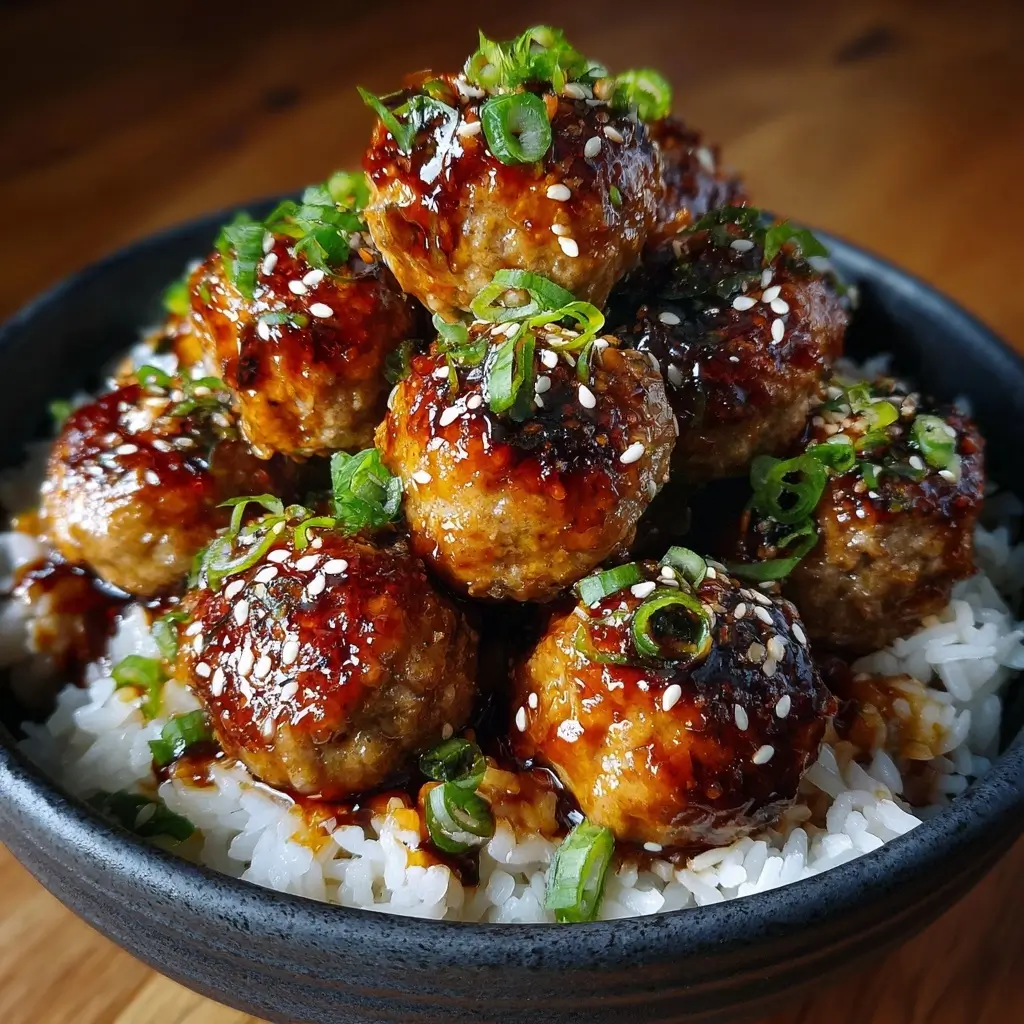
Chicken Teriyaki Meatballs: A Flavorful Fusion of Japanese and American Comfort
The story of Chicken Teriyaki Meatballs is a delicious example of culinary cross-pollination between Eastern and Western food traditions. While teriyaki, a classic Japanese cooking technique involving the grilling or broiling of foods with a sweet soy-based glaze, has been a staple in Japanese cuisine since the Edo period (1603–1868), meatballs are traditionally associated with European and Middle Eastern dishes. The fusion of these two culinary worlds began gaining popularity in the mid-20th century, particularly in the United States, where home cooks and chefs alike started experimenting with Asian-inspired flavors in familiar Western formats. Chicken Teriyaki Meatballs emerged as a modern comfort food sensation, combining the tender juiciness of chicken meatballs with the glossy, umami-rich sweetness of teriyaki sauce. Today, this dish is celebrated not only for its bold flavor profile but also for its versatility—appearing on appetizer platters, dinner tables, rice bowls, and even party spreads. Its widespread appeal lies in the balance of savory, sweet, and slightly tangy notes that satisfy a broad range of palates.
Ingredients Breakdown: Building Layers of Flavor
The success of Chicken Teriyaki Meatballs hinges on the careful selection and balancing of ingredients. At the core are ground chicken thighs, which offer more fat and moisture than breast meat, resulting in tender, succulent meatballs. To enhance texture and binding, panko breadcrumbs act as a light filler, while a beaten egg ensures cohesion. Fresh aromatics play a pivotal role: finely minced garlic and grated ginger provide a zesty, warming kick that complements the richness of the chicken. Green onions contribute freshness and subtle oniony depth. For seasoning within the meat mixture, a splash of low-sodium soy sauce adds saltiness without overpowering, while a touch of sesame oil imparts a nutty fragrance essential to Asian cuisine.
The homemade teriyaki sauce—far superior to store-bought versions—is made from scratch using quality components: soy sauce forms the savory backbone, brown sugar delivers caramelized sweetness, mirin (a sweet Japanese rice wine) enhances depth and gloss, and sake (or dry white wine) introduces a subtle complexity and helps deglaze the pan. A slurry of cornstarch and water thickens the sauce into a luscious glaze that clings beautifully to each meatball. Optional garnishes like toasted sesame seeds and sliced green onions elevate both visual appeal and flavor. Using fresh, high-quality ingredients ensures that every bite bursts with authentic, balanced taste.
Step-by-Step Recipe: Crafting Perfection One Ball at a Time
- Prepare the Meatball Mixture: In a large mixing bowl, combine 1 pound of ground chicken thigh, 1/3 cup panko breadcrumbs, 1 beaten egg, 2 tablespoons finely chopped green onions, 1 tablespoon grated fresh ginger, 2 minced garlic cloves, 2 tablespoons low-sodium soy sauce, and 1 teaspoon sesame oil. Mix gently with your hands or a fork until just combined—overmixing can lead to tough meatballs.
- Form the Meatballs: Scoop out about 1 tablespoon of the mixture per meatball and roll into smooth, uniform spheres (roughly 1-inch in diameter). Place them on a parchment-lined tray. You should get around 24–28 meatballs depending on size.
- Sear the Meatballs: Heat 1–2 tablespoons of neutral oil (like canola or vegetable) in a large non-stick skillet or sauté pan over medium-high heat. Working in batches to avoid crowding, cook the meatballs for 2–3 minutes per side, turning gently with tongs or a spoon, until golden brown on all sides and cooked through (internal temperature should reach 165°F). Remove and set aside.
- Make the Teriyaki Sauce: In a small saucepan, whisk together 1/2 cup soy sauce, 1/4 cup brown sugar, 1/4 cup mirin, 2 tablespoons sake (or dry white wine), and 2 teaspoons grated ginger. Bring to a simmer over medium heat, stirring occasionally.
- Thicken the Glaze: In a separate small bowl, mix 1 tablespoon cornstarch with 2 tablespoons cold water to make a slurry. Slowly pour the slurry into the simmering sauce, whisking constantly. Continue cooking for 2–3 minutes until the sauce thickens to a syrupy consistency.
- Coat the Meatballs: Return the seared meatballs to the skillet (or place them back into the saucepan if it’s large enough). Pour the prepared teriyaki sauce over them, gently tossing or spooning the glaze to coat evenly. Simmer for 3–5 minutes to allow the flavors to meld and the meatballs to absorb the sauce.
- Serve Warm: Transfer to a serving dish, drizzle with extra sauce, and garnish with toasted sesame seeds and sliced green onions. Serve immediately with steamed rice, noodles, or as an appetizer with toothpicks.
Tips for Success: Mastering the Details
- Use Ground Chicken Thighs: They have more fat than breast meat, preventing dryness during cooking.
- Don’t Overmix: Gently blend ingredients to keep meatballs tender; overworking leads to a dense texture.
- Uniform Size: Use a cookie scoop or measuring spoon to ensure even cooking and consistent appearance.
- Sear Properly: Get a good crust by preheating the pan and avoiding overcrowding. This enhances flavor via the Maillard reaction.
- Simmer, Don’t Boil: When adding meatballs to the sauce, keep heat at a gentle simmer to prevent breaking apart.
- Chill Before Cooking (Optional): For firmer meatballs, refrigerate formed balls for 15–30 minutes before searing.
- Double the Sauce: If serving over rice or noodles, consider making extra teriyaki glaze for generous coating.
- Rest Before Serving: Let meatballs sit for 5 minutes after glazing—this allows juices to redistribute.
Variations and Customizations: Make It Your Own
One of the greatest strengths of Chicken Teriyaki Meatballs is their adaptability. For a spicier twist, stir 1–2 teaspoons of sriracha or chili garlic paste into the teriyaki sauce, or sprinkle with crushed red pepper flakes before serving. For a gluten-free version, substitute tamari or coconut aminos for soy sauce and use gluten-free panko breadcrumbs. Vegetarian enthusiasts might experiment with plant-based ground “chicken” alternatives, though texture adjustments may be needed. To add fruitiness, incorporate 2 tablespoons of pineapple juice into the teriyaki sauce—it pairs wonderfully with the savory elements and echoes Hawaiian-style teriyaki.
Diet-conscious cooks can bake the meatballs instead of pan-searing: arrange on a greased baking sheet and bake at 400°F for 18–22 minutes, turning halfway, until cooked through. For meal prep lovers, these meatballs freeze exceptionally well—store in an airtight container with sauce for up to 3 months. Reheat in a skillet or microwave. For an elegant presentation, serve on a bed of jasmine rice with stir-fried vegetables, or skewer with bamboo picks for cocktail hour. You can even turn them into sliders by placing them in mini buns with pickled cucumbers and a drizzle of mayo-mirin sauce.
Health Considerations and Nutritional Value
Chicken Teriyaki Meatballs can be a nutritious addition to a balanced diet when prepared with mindful ingredient choices. Ground chicken is a lean protein source, rich in essential amino acids, niacin, and selenium. By choosing dark meat, you gain more flavor and moisture, though it contains slightly more fat than breast—approximately 7–9 grams of fat per 3-ounce serving. The homemade teriyaki sauce allows control over sugar content; reducing brown sugar to 2–3 tablespoons cuts down on added sugars compared to commercial sauces, which often contain high-fructose corn syrup.
A typical serving (4 meatballs with 2 tablespoons sauce) contains roughly 220–250 calories, 15–18g protein, 10–12g fat, and 18–22g carbohydrates. Sodium levels depend on soy sauce used—opting for low-sodium versions can reduce sodium by up to 40%. Incorporating more vegetables—such as mixing finely diced mushrooms or zucchini into the meat mixture—can boost fiber and micronutrient content. For heart-healthy benefits, use olive oil instead of vegetable oil and limit added sugars. Pairing with brown rice or quinoa increases whole grain intake, enhancing satiety and digestive health. As always, portion control and balance with other food groups are key to maintaining dietary wellness.
Ingredients
- 1 pound ground chicken (preferably thigh)
- 1/3 cup panko breadcrumbs (gluten-free if needed)
- 1 large egg, beaten
- 2 tablespoons finely chopped green onions
- 1 tablespoon freshly grated ginger
- 2 cloves garlic, minced
- 2 tablespoons low-sodium soy sauce (or tamari)
- 1 teaspoon sesame oil
- 1–2 tablespoons neutral oil (for searing)
- 1/2 cup soy sauce (low-sodium)
- 1/4 cup packed brown sugar (or coconut sugar)
- 1/4 cup mirin (sweet rice wine)
- 2 tablespoons sake or dry white wine
- 1 tablespoon cornstarch
- 2 tablespoons cold water
- Toasted sesame seeds and sliced green onions (for garnish)
Directions
- In a large bowl, combine ground chicken, panko, egg, green onions, ginger, garlic, soy sauce, and sesame oil. Mix until just incorporated.
- Roll mixture into 1-inch meatballs and place on a lined tray.
- Heat oil in a skillet over medium-high heat. Sear meatballs in batches until golden and cooked through (about 8–10 minutes total). Set aside.
- In a saucepan, combine 1/2 cup soy sauce, brown sugar, mirin, sake, and 1 tablespoon ginger. Simmer for 3 minutes.
- Whisk cornstarch and water; stir into sauce. Cook 2–3 minutes until thickened.
- Return meatballs to pan, coat with sauce, and simmer 3–5 minutes.
- Garnish with sesame seeds and green onions. Serve hot.
FAQ
Can I make these meatballs ahead of time?
Yes! Prepare and shape the meatballs up to 24 hours in advance and refrigerate. You can also fully cook and store them in the fridge for up to 4 days or freeze for 3 months.
Can I bake instead of pan-sear?
Absolutely. Preheat oven to 400°F, place meatballs on a greased baking sheet, and bake for 18–22 minutes, flipping halfway, until internal temperature reaches 165°F.
Is mirin necessary?
Mirin adds authentic sweetness and shine. If unavailable, substitute with 1/4 cup rice vinegar mixed with 1 tablespoon sugar, though the flavor will differ slightly.
How do I prevent meatballs from falling apart?
Ensure the mixture includes a binder (egg and breadcrumbs), avoid overmixing, and chill briefly before cooking if needed.
Are these suitable for kids?
Yes! Kids love the sweet-savory flavor. Serve in smaller sizes as finger food or over fun-shaped pasta.
Can I use chicken breast instead of thigh?
You can, but breast meat is leaner and may result in drier meatballs. Consider adding 1 tablespoon of olive oil or grated zucchini to retain moisture.
What sides go well with Chicken Teriyaki Meatballs?
Excellent pairings include steamed white or brown rice, soba noodles, stir-fried vegetables, edamame, cucumber salad, or cauliflower rice for a low-carb option.
Summary (in two lines)
Chicken Teriyaki Meatballs bring together the juicy tenderness of ground chicken with the glossy, sweet-savory richness of homemade teriyaki glaze—a harmonious fusion of Japanese technique and American comfort food ingenuity. Easy to customize, nutritious when balanced, and endlessly versatile, they’re destined to become a beloved staple in your recipe repertoire.