Introduction
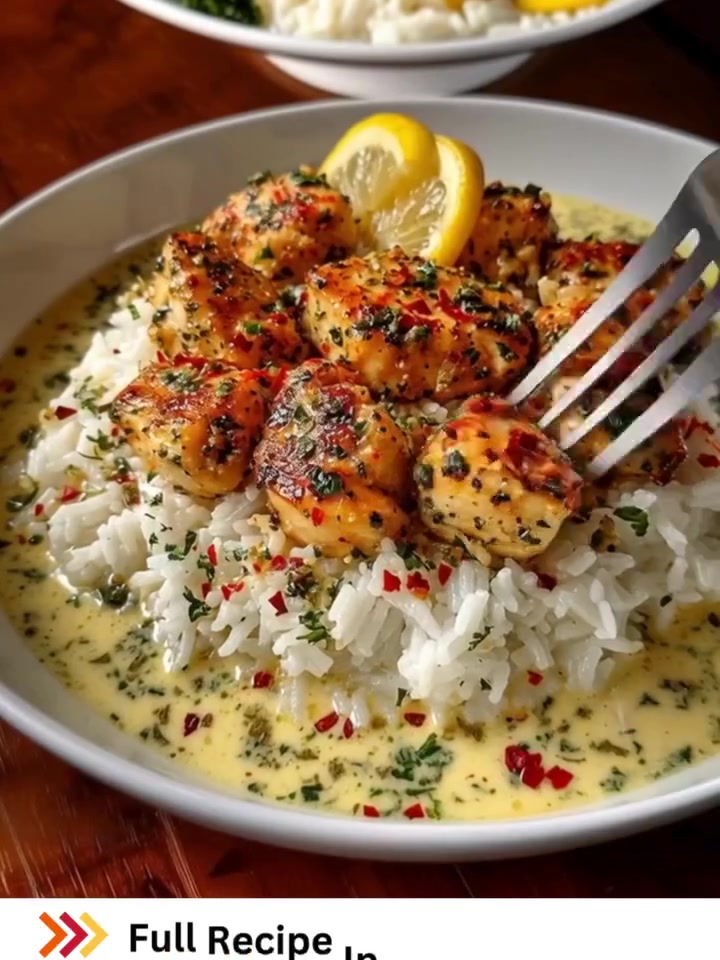
Chicken Scampi with Garlic Parmesan Rice is a restaurant-worthy, yet surprisingly approachable weeknight dinner that marries the bright, briny elegance of classic Italian-American scampi with the rich, creamy comfort of herb-flecked rice. Unlike traditional shrimp scampi—which relies on delicate seafood—this elevated variation swaps in tender, pan-seared chicken breast or thighs, offering heartier protein and greater versatility without sacrificing flavor. The dish delivers a symphony of textures and tastes: golden-crisp chicken kissed with lemon zest and garlic, nestled atop luxuriously creamy rice infused with roasted garlic, freshly grated Parmigiano-Reggiano, butter, and a whisper of white wine. It’s elegant enough for date night or holiday entertaining, yet streamlined enough for busy parents juggling after-school carpools and homework deadlines. What truly sets this recipe apart is its intentional layering of flavor—not just in the sauce, but in every component: from the slow-toasted garlic in the rice to the carefully timed addition of cold butter at the end of the scampi preparation, which emulsifies into a silken, glossy finish. Whether you’re a seasoned home cook refining your sauté technique or a beginner seeking a foolproof gateway into gourmet-style cooking, Chicken Scampi with Garlic Parmesan Rice promises satisfaction, sophistication, and soul-warming deliciousness in every bite.
The History
The origins of “scampi” trace back to Italy, where the term originally referred to a type of langoustine—a small lobster-like crustacean native to the Mediterranean—and the dish scampi alla busara (from the Adriatic coast) featured these shellfish stewed in tomato, garlic, and wine. However, in the United States—particularly post-World War II—the meaning evolved dramatically. American chefs and Italian immigrants adapted the concept using more accessible and affordable ingredients, most notably shrimp, leading to the now-iconic shrimp scampi: a quick sauté of shrimp in garlic, butter, lemon, white wine, and parsley. The word “scampi” became less about the ingredient and more about a *style*—a light, garlicky, citrus-kissed, butter-enriched preparation emphasizing freshness and simplicity. Chicken scampi emerged organically as a natural extension: a protein swap born of practicality, dietary preference (e.g., allergies, cost, availability), and culinary curiosity. It gained mainstream traction in the 1970s–80s through supper club menus, early food television (think Julia Child’s influence on home techniques), and regional Italian-American restaurants across the Northeast. Meanwhile, Garlic Parmesan Rice evolved separately—rooted in rustic Italian risotto traditions and French pilaf methods—but found synergy with scampi through mid-century American “complete meal” trends that emphasized harmony between protein and starch. Modern iterations, like this one, reflect a thoughtful fusion: honoring the scampi technique’s integrity while elevating the rice from a mere side to a co-star—slow-infused with roasted garlic, enriched with aged Parmesan and mascarpone for depth, and finished with fresh herbs for aromatic lift. This recipe stands as both homage and innovation—a bridge between Old World tradition and New World ingenuity.
Ingredients Breakdown
Understanding each ingredient’s role is key to mastering this dish—not just for replication, but for confident customization and troubleshooting. Below is a granular analysis:
- Chicken Breast (or Thighs): Boneless, skinless chicken breasts are lean and cook quickly, ideal for weeknights—but they demand careful attention to avoid dryness. We recommend pounding them to an even ½-inch thickness for uniform searing and tenderness. For deeper flavor and forgiving texture, boneless, skinless chicken thighs are an excellent alternative—they contain more fat and collagen, yielding juicier, more flavorful results, especially when cooked slightly longer. Both benefit immensely from a brief marinade (even 15 minutes) in olive oil, lemon juice, garlic powder, salt, and black pepper.
- Garlic (Fresh, Roasted, and Minced): Triple-layered garlic usage is non-negotiable for complexity. First, whole garlic cloves are roasted until sweet, nutty, and caramelized—then mashed into the rice for foundational depth. Second, fresh minced garlic is added early to the scampi pan to bloom in olive oil, building aromatic base notes. Third, a final sprinkle of raw, finely grated garlic (added off-heat just before serving) delivers a bright, pungent top note that cuts through richness—ensuring garlic isn’t one-dimensional, but dynamic and evolving across the palate.
- Dry White Wine (e.g., Pinot Grigio, Sauvignon Blanc, or Unoaked Chardonnay): Essential for deglazing and building umami-rich depth. Choose a wine you’d actually drink—avoid “cooking wine” (it’s loaded with salt and preservatives). The alcohol cooks off, leaving behind bright acidity, fruity esters, and subtle mineral notes that balance the butter and cheese. If avoiding alcohol, substitute with a mixture of ¾ cup low-sodium chicken broth + 2 tbsp fresh lemon juice + 1 tsp white wine vinegar for comparable brightness and acidity.
- Lemon (Zest & Juice): Lemon zest contains volatile citrus oils—intensely aromatic and fragrant—while the juice provides clean, tart acidity. Zesting *before* juicing maximizes yield and prevents bitterness from the pith. Always use fresh lemons; bottled juice lacks nuance and can taste metallic or flat.
- Parmigiano-Reggiano (Authentic, Grated Fresh): Not just “Parmesan.” True Parmigiano-Reggiano—DOP-certified, aged 24+ months—offers crystalline crunch, deep nuttiness, and savory umami (glutamates) that no pre-grated, cellulose-dusted supermarket “parmesan” can replicate. It melts into the rice with luxurious silkiness and adds a salty, complex backbone to the scampi sauce. Reserve a small amount for garnish—it should glisten under ambient light.
- Unsalted Butter (European-Style, High Fat): The scampi’s soul. European-style butter (82–86% fat) yields richer flavor and superior emulsification. Cold, cubed butter is whisked in *off the heat* at the very end—this “mounting” technique creates a stable, velvety, restaurant-quality sauce that clings to the chicken without breaking. Salted butter is discouraged here, as salt levels must be precisely controlled across multiple components (chicken seasoning, broth, cheese).
- Long-Grain White Rice (e.g., Jasmine or Basmati): Chosen over Arborio for its fluffy, separate grains and neutral canvas—ideal for absorbing bold flavors without turning gummy. Jasmine offers subtle floral sweetness; Basmati lends delicate nuttiness and exceptional elongation. Rinsing is critical (3–4 changes of cold water) to remove excess surface starch and prevent clumping.
- Heavy Cream (Optional but Recommended): A small splash (2–3 tbsp) added to the rice during the final steam phase introduces gentle richness and creaminess—without heaviness. It amplifies the Parmesan’s melt and creates a subtle sheen. For dairy-free, sub with full-fat canned coconut milk (unsweetened) or cashew cream.
- Fresh Parsley & Chives: Flat-leaf parsley provides grassy, peppery freshness and visual vibrancy; chives lend delicate onion essence and fine texture. Always add herbs *after* cooking—heat dulls their volatile oils and turns them brown and bitter.
Step-by-Step Recipe
- Prep & Marinate Chicken (15–30 min ahead): Place 1.5 lbs boneless, skinless chicken breasts (or thighs) on a cutting board. Cover with plastic wrap and gently pound to ½-inch uniform thickness using a meat mallet or heavy skillet. In a bowl, combine 2 tbsp extra-virgin olive oil, 1 tbsp fresh lemon juice, 1 tsp garlic powder, 1 tsp kosher salt, ½ tsp freshly ground black pepper, and a pinch of red pepper flakes (optional). Add chicken, turning to coat. Refrigerate uncovered for 15 minutes (or up to 30 min)—no longer, or the acid may begin to “cook” the surface.
- Roast Garlic for Rice (Start 30 min before cooking): Preheat oven to 400°F (200°C). Slice the top ¼ inch off 1 whole head of garlic to expose cloves. Drizzle generously with olive oil, wrap tightly in foil, and roast for 35–40 minutes, until cloves are deeply golden, soft, and spreadable. Cool slightly, then squeeze roasted garlic pulp into a small bowl; mash with a fork until smooth. Set aside.
- Prepare Garlic Parmesan Rice (Simultaneous with Chicken Cooking): Rinse 1.5 cups jasmine or basmati rice in cold water until water runs clear (approx. 3–4 rinses). In a medium saucepan, heat 1 tbsp olive oil over medium heat. Add ½ cup finely diced yellow onion and sauté 3–4 min until translucent. Stir in 2 minced garlic cloves and 1 tsp dried oregano; cook 30 seconds until fragrant. Add rinsed rice; toast 2 minutes, stirring constantly, until grains turn translucent at edges. Pour in 3 cups low-sodium chicken broth, 2 tbsp lemon juice, 1 tsp lemon zest, ½ tsp salt, and the mashed roasted garlic. Bring to a vigorous boil. Reduce heat to the lowest possible setting, cover tightly with a lid wrapped in a clean kitchen towel (to trap steam), and simmer 18 minutes—do NOT lift lid. Remove from heat; let steam, covered, 10 minutes. Fluff with fork. Gently fold in ¾ cup freshly grated Parmigiano-Reggiano, 2 tbsp cold unsalted butter, 2 tbsp heavy cream (if using), 2 tbsp chopped fresh parsley, and 1 tbsp snipped chives. Cover and rest 5 minutes.
- Cook Chicken Scampi (The Core Sear & Sauce): Heat a large stainless steel or cast-iron skillet over medium-high heat. Add 2 tbsp olive oil. Pat chicken *very dry* with paper towels—this ensures proper sear, not steam. Season lightly with salt. Add chicken to hot pan; cook undisturbed 5–6 minutes until deeply golden and ~75% cooked through. Flip; cook 4–5 minutes more until internal temperature reaches 165°F (74°C) and juices run clear. Transfer to a clean plate; tent loosely with foil. Discard all but 1 tbsp oil/fat from pan. Reduce heat to medium. Add 4 tbsp cold unsalted butter. Once melted, add 6 cloves finely minced fresh garlic; sauté 60–90 seconds until fragrant but *not browned*. Pour in ½ cup dry white wine; scrape browned bits (fond) from pan bottom with a wooden spoon—this is flavor gold. Simmer 2–3 minutes until reduced by half. Stir in 2 tbsp lemon juice, 1 tsp lemon zest, and ¼ tsp red pepper flakes. Return chicken to pan, spooning sauce over it. Simmer gently 1–2 minutes to warm through. Remove from heat. Whisk in remaining 2 tbsp cold butter, one cube at a time, until fully emulsified and glossy. Finish with 3 tbsp chopped fresh parsley, 1 tbsp grated raw garlic (optional but recommended), and additional lemon zest.
- Plate & Serve Immediately: Spoon a generous portion of warm Garlic Parmesan Rice into wide, shallow bowls. Top with chicken, spooning ample scampi sauce over and around. Garnish with extra grated Parmigiano-Reggiano, microplaned lemon zest, a few whole parsley leaves, and a drizzle of high-quality extra-virgin olive oil. Serve with lemon wedges on the side for an extra burst of acidity.
Tips
- Dry Chicken = Golden Chicken: Moisture is the enemy of searing. Always pat chicken thoroughly dry—even after marinating—with paper towels immediately before adding to the pan. Wet surfaces steam instead of sear, resulting in pale, rubbery chicken.
- Don’t Crowd the Pan: Cook chicken in batches if your skillet isn’t large enough to hold pieces without touching. Overcrowding drops the pan temperature, causing steaming and uneven browning.
- Control Garlic Burn: Garlic burns easily—especially minced. Always add it *after* your base fat is hot but *before* the pan is smoking. Keep heat at medium (not medium-high) and stir constantly. If it darkens, discard and start over—the bitterness will ruin the sauce.
- Wine Reduction is Non-Negotiable: Simmering the wine until reduced by half concentrates flavor and eliminates raw alcohol harshness. Skipping this step yields a thin, sharp, unbalanced sauce.
- Butter Emulsification Science: Adding cold butter *off the heat*, in small cubes, while whisking vigorously, allows the milk solids and water to disperse evenly in the warm (not hot) fat—creating a stable, creamy emulsion. If the pan is too hot, butter breaks; if too cool, it won’t incorporate smoothly.
- Rice Resting is Crucial: That final 10-minute steam (with lid on, off heat) allows residual heat to finish cooking the grains and redistributes moisture evenly—eliminating mushiness and ensuring fluffy, separate grains.
- Acid Balance Test: Before serving, taste the scampi sauce. It should be bright but not sour, rich but not cloying. Adjust with tiny increments: a pinch of salt enhances all flavors; a drop more lemon juice lifts richness; a tiny knob of cold butter rounds sharpness.
- Make-Ahead Friendly: Roast garlic can be made 3 days ahead and refrigerated in oil. Rice (un-garnished) holds well for 2 days chilled—reheat gently with a splash of broth. Chicken can be fully cooked, cooled, and sliced—then gently warmed in the finished sauce just before serving.
Variations and Customizations
This recipe is a vibrant template—not a rigid formula. Here’s how to adapt it thoughtfully:
- Protein Swaps: Try boneless pork chops (thin-cut, marinated 30 min), firm white fish fillets (cod, halibut—add in last 2 minutes of sauce), or plant-based: seared extra-firm tofu (pressed, marinated, pan-fried) or king oyster mushrooms (sliced thick, roasted or sautéed until meaty). For vegetarians, omit chicken entirely and build a “scampi” sauce with artichoke hearts, sun-dried tomatoes, capers, and white beans.
- Gluten-Free Adaptation: Naturally gluten-free—just verify all broth, wine, and seasonings are certified GF (some broths contain wheat-derived dextrin or yeast extract). Use tamari instead of soy sauce if adding umami depth.
- Dairy-Free / Vegan Version: Replace butter with refined coconut oil or vegan butter (Miyoko’s or Earth Balance). Swap Parmigiano-Reggiano for nutritional yeast + white miso paste (1 tbsp yeast + 1 tsp miso per ½ cup rice) + lemon zest. Use unsweetened almond or oat milk instead of cream. Garnish with toasted pine nuts for richness.
- Low-Carb / Keto Option: Replace rice with cauliflower rice (sautéed in olive oil until tender, then folded with roasted garlic, Parmesan, butter, and herbs) or shirataki rice (rinsed, boiled 3 min, pan-dried). Increase healthy fats: add avocado slices or a dollop of herbed aioli.
- Spice & Herb Twists: Add 1 tsp smoked paprika to chicken marinade for depth; stir 1 tbsp chopped sun-dried tomatoes into scampi sauce; infuse rice with 1 tsp saffron threads bloomed in warm broth; top with crispy pancetta or prosciutto crumbles; swap parsley for fresh basil or dill for a different aromatic profile.
- One-Pan / Sheet Pan Method: For ultimate ease: roast chicken and vegetables (asparagus, cherry tomatoes, zucchini) together at 425°F for 20–25 min. Meanwhile, prepare rice separately. Deglaze roasting pan drippings with wine and lemon for a rustic, caramelized scampi-style sauce.
- Meal Prep / Freezer-Friendly: Fully assembled (chicken + sauce + rice) freezes well for up to 3 months in airtight containers. Thaw overnight in fridge; reheat gently on stove with splash of broth to refresh sauce. Freeze rice separately for best texture.
Health Considerations and Nutritional Value
A single serving (1 chicken breast + 1.25 cups rice + sauce) provides approximately:
- Calories: ~680 kcal (moderate for a balanced dinner—adjust portions for specific goals)
- Protein: ~48g (excellent source—supports muscle maintenance, satiety, and metabolic health)
- Fat: ~32g (predominantly unsaturated from olive oil and Parmesan; includes ~14g saturated fat—well within daily limits for most adults when part of a varied diet)
- Carbohydrates: ~45g (mainly complex carbs from rice; fiber ~1.5g—boost with ½ cup sautéed spinach stirred into rice at the end)
- Sodium: ~820mg (moderate—easily reduced by using low-sodium broth, omitting added salt in marinade, and choosing unsalted butter)
- Vitamins & Minerals: Rich in B6 and B12 (chicken), calcium and phosphorus (Parmesan), vitamin C and potassium (lemon), selenium (garlic), and antioxidants (olive oil polyphenols). Garlic contributes allicin, linked to cardiovascular and immune support when consumed raw or lightly cooked.
Nutritionist Notes:
- This dish aligns well with Mediterranean and DASH diet principles—emphasizing lean protein, heart-healthy fats, whole grains (when using brown rice), and abundant aromatics.
- To increase fiber and micronutrients: Stir 1 cup baby spinach or kale into hot rice just before serving—it wilts instantly, adding iron, folate, and lutein.
- For blood sugar management: Pair with a side salad (mixed greens, cucumber, vinaigrette) to slow glucose absorption. Consider swapping ¼ of rice for riced broccoli or lentils for lower glycemic impact.
- Those monitoring cholesterol can enjoy this confidently—dietary cholesterol (from chicken and cheese) has minimal impact on blood cholesterol for most people; saturated fat intake matters more, and this recipe uses moderate, high-quality sources.
- It’s naturally low in added sugars (<1g/serving) and free from artificial preservatives, colors, or flavors—making it ideal for clean-eating or whole-foods-focused lifestyles.
Ingredients
For the Garlic Parmesan Rice:
- 1.5 cups jasmine or basmati rice, rinsed until water runs clear
- 1 tbsp extra-virgin olive oil
- ½ cup finely diced yellow onion
- 2 cloves garlic, minced
- 1 tsp dried oregano
- 3 cups low-sodium chicken broth (or vegetable broth for vegetarian version)
- 2 tbsp fresh lemon juice
- 1 tsp lemon zest
- ½ tsp kosher salt (adjust to taste)
- 1 whole head garlic, roasted (see Step-by-Step)
- ¾ cup freshly grated Parmigiano-Reggiano cheese (not pre-grated)
- 2 tbsp cold unsalted butter
- 2 tbsp heavy cream (optional, for extra richness)
- 2 tbsp chopped fresh flat-leaf parsley
- 1 tbsp snipped fresh chives
For the Chicken Scampi:
- 1.5 lbs boneless, skinless chicken breasts or thighs, pounded to ½-inch thickness
- 2 tbsp extra-virgin olive oil (for marinating)
- 1 tbsp fresh lemon juice (for marinating)
- 1 tsp garlic powder
- 1 tsp kosher salt
- ½ tsp freshly ground black pepper
- Pinch of red pepper flakes (optional)
- 2 tbsp olive oil (for searing)
- 4 tbsp cold unsalted butter, divided
- 6 cloves garlic, finely minced
- ½ cup dry white wine (e.g., Pinot Grigio)
- 2 tbsp fresh lemon juice
- 1 tsp lemon zest
- ¼ tsp red pepper flakes
- 3 tbsp chopped fresh flat-leaf parsley
- 1 tbsp finely grated raw garlic (optional, for bright finish)
- Additional lemon zest and grated Parmigiano-Reggiano for garnish
- Lemon wedges, for serving
Directions
- Marinate Chicken: In a bowl, whisk together 2 tbsp olive oil, 1 tbsp lemon juice, 1 tsp garlic powder, 1 tsp salt, ½ tsp pepper, and optional red pepper flakes. Add chicken, turning to coat. Refrigerate uncovered for 15–30 minutes.
- Roast Garlic: Preheat oven to 400°F. Slice top off 1 head garlic, drizzle with olive oil, wrap in foil, and roast 35–40 minutes until soft and golden. Cool, squeeze pulp, and mash. Set aside.
- Cook Rice: Rinse rice. In a saucepan, heat 1 tbsp oil over medium heat. Sauté onion 3–4 min. Add 2 minced garlic cloves and oregano; cook 30 sec. Stir in rice; toast 2 min. Add broth, 2 tbsp lemon juice, 1 tsp zest, ½ tsp salt, and roasted garlic. Bring to boil. Reduce heat to low, cover tightly (lid + towel), simmer 18 min. Turn off heat; steam covered 10 min. Fluff. Fold in ¾ cup Parmesan, 2 tbsp butter, 2 tbsp cream (if using), parsley, and chives. Cover; rest 5 min.
- Sear Chicken: Heat 2 tbsp oil in large skillet over medium-high. Pat chicken dry. Season lightly with salt. Cook 5–6 min per side until golden and 165°F internally. Transfer to plate; tent with foil.
- Make Scampi Sauce: Discard all but 1 tbsp oil/fat from skillet. Reduce heat to medium. Melt 4 tbsp butter. Add 6 minced garlic cloves; cook 60–90 sec until fragrant. Add wine; scrape fond. Simmer 2–3 min until reduced by half. Stir in 2 tbsp lemon juice, 1 tsp zest, and red pepper flakes. Return chicken to pan; simmer 1–2 min.
- Emulsify & Finish: Remove from heat. Whisk in remaining 2 tbsp cold butter, one cube at a time, until glossy. Stir in parsley and optional raw garlic. Taste; adjust salt/acid.
- Plate: Spoon rice into bowls. Top with chicken, generous sauce, extra Parmesan, lemon zest, parsley, and olive oil drizzle. Serve with lemon wedges.
FAQ
- Can I use frozen chicken?
- Yes—but thaw completely in the refrigerator overnight (not at room temperature). Pat *extremely* dry before marinating and searing. Frozen-thawed chicken may release more liquid; consider increasing initial sear time by 1 minute per side to compensate.
- Why does my scampi sauce break or look greasy?
- This usually happens if butter is added while the pan is too hot (causing separation) or too cold (preventing emulsification). Always remove from heat first. Ensure butter is cold but pliable—not frozen or softened. Whisk vigorously as you add cubes one at a time.
- Can I make this dairy-free?
- Absolutely. Substitute butter with refined coconut oil or high-quality vegan butter. Replace Parmesan with 3 tbsp nutritional yeast + 1 tsp white miso + 1 tsp lemon zest per ½ cup rice. Use unsweetened plant-based cream (cashew or oat) instead of heavy cream.
- Is brown rice okay for the Garlic Parmesan Rice?
- Yes—but it requires adjustments. Use 1 cup brown rice + 2.5 cups broth. Toast as directed. Simmer covered 40–45 minutes, then steam 10 minutes. Fold in cheese and butter after resting—it may absorb more liquid, so add 1–2 tbsp warm broth if needed for creaminess.
- How do I store and reheat leftovers?
- Store rice and chicken/scampi separately in airtight containers for up to 4 days. Reheat rice with 1–2 tsp broth in a covered pan over low heat, stirring gently. Reheat chicken in its sauce on medium-low, adding a splash of broth or lemon juice to refresh moisture. Avoid microwaving rice uncovered—it dries out.
- Can I double this recipe for a crowd?
- Yes—but cook chicken in batches to maintain sear quality. Prepare rice in a large Dutch oven. Double all sauce ingredients, but keep the same wine reduction timing—just use a wider, shallower pan to increase surface area for faster evaporation.
- What wine pairs best with this dish?
- A crisp, high-acid white complements the lemon and garlic