Introduction
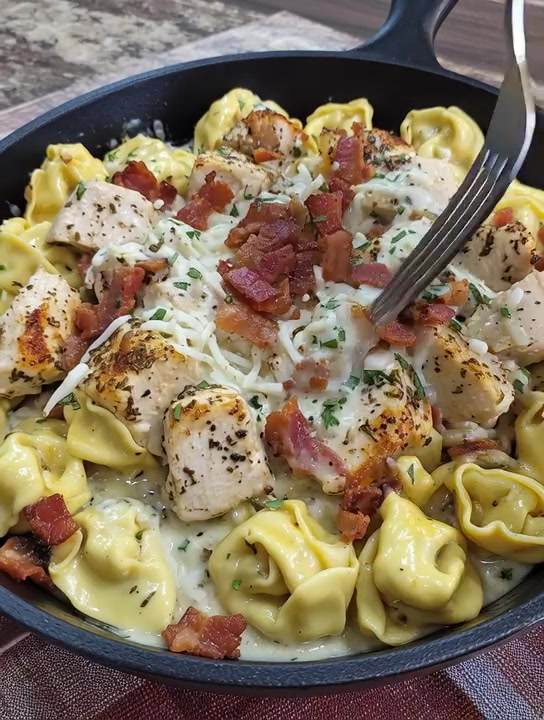
Chicken Alfredo Tortellini Bake is a rich, comforting, and crowd-pleasing casserole that masterfully combines the creamy elegance of classic Alfredo sauce with the delightful bite of cheese-filled tortellini and tender, savory roasted chicken. Unlike traditional stovetop pasta dishes, this baked version delivers a luxuriously cohesive texture—golden-brown on top, velvety and bubbling beneath—with layers of flavor that deepen during slow oven baking. It’s the ultimate fusion of Italian-American comfort food and modern weeknight practicality: easy enough for busy evenings yet impressive enough for potlucks, holiday sideboards, or cozy Sunday dinners. Whether you’re feeding a hungry family, hosting casual guests, or meal-prepping for the week ahead, this dish satisfies cravings with its harmonious balance of protein, pasta, dairy, and herbs—all without requiring gourmet technique.
The History
While no single chef or region can claim definitive authorship of the Chicken Alfredo Tortellini Bake, its roots trace back through several culinary evolutions. The original Fettuccine Alfredo was created in early 20th-century Rome by restaurateur Alfredo di Lelio as a simple, butter-and-cheese remedy for his wife’s postpartum appetite—later popularized in the U.S. by Hollywood stars who dined there in the 1920s. Over decades, American interpretations transformed it into a cream-and-Parmesan-laden staple, often incorporating heavy cream, garlic, and sometimes chicken—giving rise to “Chicken Alfredo” as a menu mainstay by the 1970s. Meanwhile, refrigerated and frozen cheese tortellini became widely available in U.S. supermarkets beginning in the 1960s (pioneered by brands like Buitoni and later expanded by Rana and DeLallo), offering home cooks a convenient, flavorful alternative to long-cook fresh pasta. The logical next step—baking the components together—emerged organically from mid-century American casserole culture, where convenience foods, canned soups, and oven-to-table dishes defined domestic cooking. By the 1990s and early 2000s, food blogs and community cookbooks began documenting variations combining pre-cooked chicken, tortellini, and homemade or jarred Alfredo sauce—culminating in today’s elevated, from-scratch-friendly Chicken Alfredo Tortellini Bake: a celebration of accessibility, adaptability, and indulgent nostalgia.
Ingredients Breakdown
Understanding each component’s role ensures optimal texture, flavor balance, and structural integrity in the final bake:
- Tortellini: Use refrigerated (not dried or frozen unless fully thawed and pre-boiled) cheese tortellini—typically filled with ricotta, Parmesan, and mozzarella. Their delicate, pillowy texture absorbs sauce beautifully without turning mushy. Avoid spinach or meat-filled varieties unless intentionally customizing; plain cheese offers clean, creamy synergy with Alfredo.
- Chicken: Boneless, skinless chicken breasts or thighs—cut into uniform ¾-inch cubes or thin strips. Thighs add richer flavor and moisture; breasts offer leaner texture. Fully cooked before baking (via sautéing, grilling, or poaching) to prevent drying out during oven time.
- Alfredo Sauce Base: A true homemade version starts with a roux (butter + flour) for stability, then builds with warm whole milk or half-and-half, freshly grated Parmigiano-Reggiano (never pre-grated—its anti-caking agents inhibit melting), and a touch of nutmeg for aromatic depth. Heavy cream adds silkiness but isn’t mandatory; many chefs prefer milk + cream combo for balanced richness.
- Aromatics & Seasonings: Sautéed shallots or yellow onions provide sweetness; minced garlic (added late to avoid bitterness) delivers pungent warmth; white pepper enhances without visual specks; a splash of dry white wine (e.g., Pinot Grigio) lifts acidity and cuts fat.
- Cheese Topping: A blend of shredded mozzarella (for melt and stretch) and finely grated Parmesan or Pecorino Romano (for salty umami and browning). Optional: a dusting of fontina or provolone for subtle tang.
- Herbs & Finishes: Fresh parsley added just before serving brightens visually and aromatically; optional lemon zest or a drizzle of truffle oil elevates sophistication without overpowering.
Step-by-Step Recipe
- Prep & Pre-Cook Chicken: Pat 1.5 lbs boneless, skinless chicken breasts or thighs very dry. Season generously with salt, black pepper, and ½ tsp garlic powder. Heat 2 tbsp olive oil in a large nonstick skillet over medium-high heat. Cook chicken in a single layer (work in batches if needed) until golden and internal temperature reaches 165°F (about 5–7 minutes per side). Transfer to a cutting board, rest 5 minutes, then dice into ¾-inch pieces. Set aside.
- Prepare Tortellini: Bring a large pot of heavily salted water (2 tbsp kosher salt) to a rolling boil. Add 16 oz refrigerated cheese tortellini. Cook 1–2 minutes *less* than package directions (they’ll finish cooking in the oven). Drain thoroughly—no rinsing—and gently toss with 1 tsp olive oil to prevent sticking. Set aside.
- Build the Roux & Sauce Base: In the same skillet (wipe clean if greasy), melt 4 tbsp unsalted butter over medium heat. Whisk in ¼ cup all-purpose flour; cook 2 minutes, stirring constantly, until golden and fragrant (do not brown). Gradually whisk in 2 cups warmed whole milk (microwave 30 sec), then 1 cup warmed half-and-half. Whisk continuously until smooth and thickened (5–7 min). Reduce heat to low.
- Enrich & Flavor the Sauce: Whisk in 1 cup freshly grated Parmigiano-Reggiano, ½ cup grated Romano, ¼ tsp freshly grated nutmeg, ¼ tsp white pepper, and 2 minced garlic cloves. Simmer 3 minutes. Stir in ¼ cup dry white wine (optional but recommended) and simmer 1 more minute to burn off alcohol. Taste and adjust salt—remember cheeses are salty!
- Combine Components: In a large mixing bowl, gently fold together cooked chicken, drained tortellini, Alfredo sauce, and ½ cup shredded low-moisture mozzarella. Ensure even coating—no dry pockets. Fold in ¼ cup chopped fresh parsley (reserve some for garnish).
- Assemble & Top: Transfer mixture to a lightly greased 9×13-inch ceramic or glass baking dish (avoid metal for even browning). Smooth top. Sprinkle evenly with remaining 1 cup shredded mozzarella and ¼ cup grated Parmesan. For extra crunch, add 2 tbsp panko breadcrumbs mixed with 1 tsp melted butter.
- Bake: Cover dish tightly with aluminum foil. Bake at 375°F for 25 minutes. Remove foil and bake uncovered 12–15 minutes more, until top is deeply golden, edges are bubbling vigorously, and internal temperature reads 165°F when checked with an instant-read thermometer in the center.
- Rest & Serve: Let stand uncovered for 10 minutes before serving—this allows sauce to reabsorb and prevents scalding bites. Garnish with reserved parsley, lemon zest, and a light crack of black pepper.
Tips
- Prevent Sauce Breakage: Always warm dairy before adding to roux. Never boil the finished sauce—high heat causes proteins to separate. If sauce appears grainy, whisk in 1 tsp cold butter off-heat.
- Tortellini Texture Control: Undercooking is essential—overcooked tortellini becomes gummy in the oven. Test at 1 minute less than directed; it should be *al dente*, with slight resistance.
- Chicken Moisture Retention: Brining chicken (15 min in 1 qt water + 2 tbsp salt) before cooking locks in juiciness. Or marinate 30 min in olive oil, lemon juice, garlic, and herbs.
- Make-Ahead Friendly: Assemble up to 24 hours ahead—cover and refrigerate unbaked dish. Add 10–15 minutes to covered bake time if going straight from fridge to oven.
- Browning Boost: For deeper color, broil 1–2 minutes after baking—watch closely! Alternatively, rub top cheese with a tiny bit of Dijon mustard before baking for complex caramelization.
- Sauce Consistency Hack: If sauce thickens too much before combining, stir in warm milk, 1 tbsp at a time. If too thin after baking, let rest 10 min—the starches will continue to thicken.
- Layering Logic: Place ⅓ of tortellini-chicken mix in dish, pour ½ sauce over, repeat, top with final ⅓ mix and cheese. Creates even distribution and prevents bottom-heavy sogginess.
- Equipment Matters: Use a heavy-bottomed skillet for sauce (prevents scorching); ceramic baking dish retains heat longer for even cooking than glass.
Variations and Customizations
This recipe is inherently adaptable—here’s how to personalize it while preserving its soul:
- Vegetable-Forward: Sauté 1 cup sliced mushrooms + 1 cup baby spinach with the aromatics; fold in with chicken. Add roasted cherry tomatoes or caramelized onions for sweetness.
- Protein Swaps: Replace chicken with grilled shrimp (add in last 5 minutes of baking), crumbled Italian sausage (pre-cooked and drained), or plant-based chicken strips (ensure they’re oven-safe).
- Pasta Alternatives: Substitute with ravioli (cheese, butternut squash, or lobster), fresh fettuccine cut into 1-inch ribbons, or gluten-free tortellini (check starch content—some GF versions absorb more liquid).
- Sauce Twists: Stir in 2 tbsp sun-dried tomato paste for umami depth; swirl in ¼ cup pesto at the end for herbal brightness; add 1 tsp smoked paprika for subtle warmth.
- Dietary Modifications: Dairy-Free: Use cashew cream (soaked + blended), nutritional yeast, and vegan mozzarella shreds. Gluten-Free: Swap flour roux for 1 tbsp cornstarch + 2 tbsp cold milk slurry; use certified GF tortellini and tamari instead of soy sauce if adding umami boosters.
- Global Inspirations: Italian Herb: Add 1 tsp dried oregano + ½ tsp red pepper flakes. Tuscan: Stir in ¼ cup chopped artichoke hearts + 2 tbsp capers. Truffle: Finish with 1 tsp white truffle oil + shaved truffle.
- Lighter Version: Use 1% milk, reduce cheese by ¼ cup, substitute half the mozzarella with part-skim ricotta, and increase veggies to 2 cups (zucchini, bell peppers, asparagus).
- Breakfast Bake: Add 4 beaten eggs + ½ cup cottage cheese to cooled mixture; bake 35–40 min at 350°F for a frittata-style twist.
Health Considerations and Nutritional Value
A 1-cup serving (approx. 1/6 of recipe) contains roughly:
- Calories: 420–480 kcal (varies by cheese type, cream ratio, and chicken cut)
- Protein: 28–32g (excellent source—chicken + dairy + pasta provide complete amino acid profile)
- Fat: 20–24g (mostly unsaturated from olive oil and dairy; saturated fat ~11g—reducible via lower-fat dairy swaps)
- Carbohydrates: 34–38g (primarily complex carbs from pasta; fiber ~2g—boostable with whole-wheat or legume-based tortellini)
- Sodium: 620–780mg (moderate—controlled by low-sodium broth, reduced cheese, and omitting added salt in sauce)
- Vitamins & Minerals: Rich in calcium (35% DV), vitamin B12 (45% DV), phosphorus, selenium, and riboflavin—especially when using high-quality, grass-fed dairy and pasture-raised chicken.
Key Health Notes:
- Lactose Sensitivity: Most aged cheeses (Parmigiano, Romano) contain minimal lactose. Using lactose-free milk or adding lactase enzyme drops makes this fully accessible.
- Heart Health: Omega-3s increase significantly if chicken is pasture-raised or if flaxseed meal is sprinkled into breadcrumb topping.
- Gut-Friendly Option: Fermented cheeses (aged cheddar, Gouda) or adding 2 tbsp sauerkraut juice to sauce boosts probiotics.
- Blood Sugar Balance: Pair with a side salad dressed in vinegar-based vinaigrette to lower overall glycemic load.
- Allergen Alert: Contains wheat (pasta), dairy (cheese, butter, cream), and egg (tortellini filling). Always verify labels on store-bought components.
Ingredients
- 1.5 lbs boneless, skinless chicken breasts or thighs
- 2 tbsp olive oil, divided
- 1 tsp kosher salt, plus more to taste
- ½ tsp black pepper, plus more to taste
- ½ tsp garlic powder
- 16 oz refrigerated cheese tortellini (plain, not spinach or meat)
- 4 tbsp unsalted butter
- ¼ cup all-purpose flour (or gluten-free 1:1 blend)
- 2 cups whole milk, warmed
- 1 cup half-and-half, warmed
- 1 cup freshly grated Parmigiano-Reggiano
- ½ cup freshly grated Pecorino Romano
- ¼ tsp freshly grated nutmeg
- ¼ tsp white pepper
- 2 cloves garlic, minced
- ¼ cup dry white wine (optional but recommended)
- 1 cup shredded low-moisture mozzarella
- ¼ cup panko breadcrumbs (optional, for crunch)
- 1 tbsp melted butter (for panko)
- ¼ cup chopped fresh flat-leaf parsley, divided
- 1 tsp lemon zest (optional, for garnish)
Directions
- Preheat oven to 375°F. Lightly grease a 9×13-inch baking dish.
- Season chicken with 1 tsp salt, ½ tsp pepper, and garlic powder. Heat 1 tbsp olive oil in a large skillet over medium-high. Cook chicken until golden and internal temp reaches 165°F (5–7 min/side). Rest 5 min, then dice.
- Bring 4 quarts salted water to boil. Cook tortellini 1–2 min less than package says. Drain, toss with remaining 1 tsp olive oil, set aside.
- In same skillet, melt butter. Whisk in flour; cook 2 min. Gradually whisk in warmed milk and half-and-half until smooth. Simmer 5–7 min until thickened.
- Reduce heat to low. Whisk in cheeses, nutmeg, white pepper, garlic, and wine. Simmer 3–4 min. Taste; adjust salt if needed.
- In large bowl, combine chicken, tortellini, sauce, and 2 tbsp parsley. Gently fold until evenly coated.
- Transfer to prepared dish. Smooth top. Sprinkle with mozzarella, then panko-butter mix (if using).
- Cover tightly with foil. Bake 25 min. Uncover; bake 12–15 min more until golden and bubbling.
- Let rest 10 min. Garnish with remaining parsley and lemon zest. Serve warm.
FAQ
- Can I use frozen tortellini?
- Yes—but thaw completely in refrigerator overnight, then parboil for 1 minute in boiling water before draining and using. Skipping thawing leads to icy pockets and uneven baking.
- Why does my sauce break or look greasy?
- Common causes: overheating after cheese is added, using pre-grated cheese (with cellulose), or adding cold dairy to hot roux. Fix: Whisk in 1 tsp cold butter off-heat, or blend with immersion blender for 10 seconds.
- Can I make this vegetarian?
- Absolutely. Omit chicken and add 1.5 cups roasted vegetables (cauliflower, zucchini, cherry tomatoes) + ½ cup toasted walnuts or pine nuts. Boost umami with 1 tbsp white miso paste stirred into warm sauce.
- How do I reheat leftovers without drying out?
- Individual portions: Microwave covered with damp paper towel at 50% power for 90 sec, then 30-sec intervals. Full dish: Cover with foil, bake at 325°F for 20–25 min until heated through. Stir in 2 tbsp warm milk or cream before reheating.
- Is it safe to assemble and refrigerate overnight before baking?
- Yes—store covered tightly in fridge up to 24 hours. Add 10–15 minutes to initial covered bake time. Ensure internal temp reaches 165°F before serving.
- What’s the best cheese for maximum melt and flavor?
- Parmigiano-Reggiano provides salt and depth; low-moisture mozzarella gives stretch; a small amount of fontina adds buttery nuance. Avoid American cheese slices or highly processed shreds—they don’t integrate well.
- Can I freeze this bake?
- Unbaked: Assemble, cover double-wrapped in plastic + foil, freeze up to 3 months. Thaw overnight in fridge before baking (add 15–20 min covered time). Baked: Freeze cooled dish in airtight container up to 2 months—reheat covered at 325°F until steaming throughout (45–60 min).
- My tortellini turned mushy—what went wrong?
- Overcooking before baking is the #1 culprit. Also check expiration date—older refrigerated tortellini softens faster. Always undercook by 1–2 minutes and rely on oven time to finish.
- Can I use jarred Alfredo sauce?
- You can—but quality varies widely. Choose refrigerated, not shelf-stable versions; avoid those with “natural flavors” or excessive gums. Enhance with ¼ cup grated cheese, 1 tsp lemon juice, and 1 tbsp butter to enrich flavor and texture.
- How do I add more vegetables without watering it down?
- Sauté or roast veggies first to evaporate moisture. Spinach? Wilt in skillet, squeeze *very* dry. Zucchini? Salt slices, wait 10 min, pat dry. Mushrooms? Cook until all liquid evaporates.
Summary
Chicken Alfredo Tortellini Bake is a luscious, layered casserole that transforms pantry staples into a restaurant-worthy centerpiece—featuring tender chicken, pillowy cheese tortellini, and a velvety, herb-kissed Alfredo sauce crowned with golden, cheesy crispness. With make-ahead flexibility, endless customization options, and nutritionally balanced macros, it’s equally suited for weeknight ease, holiday entertaining, or freezer-friendly meal prep.