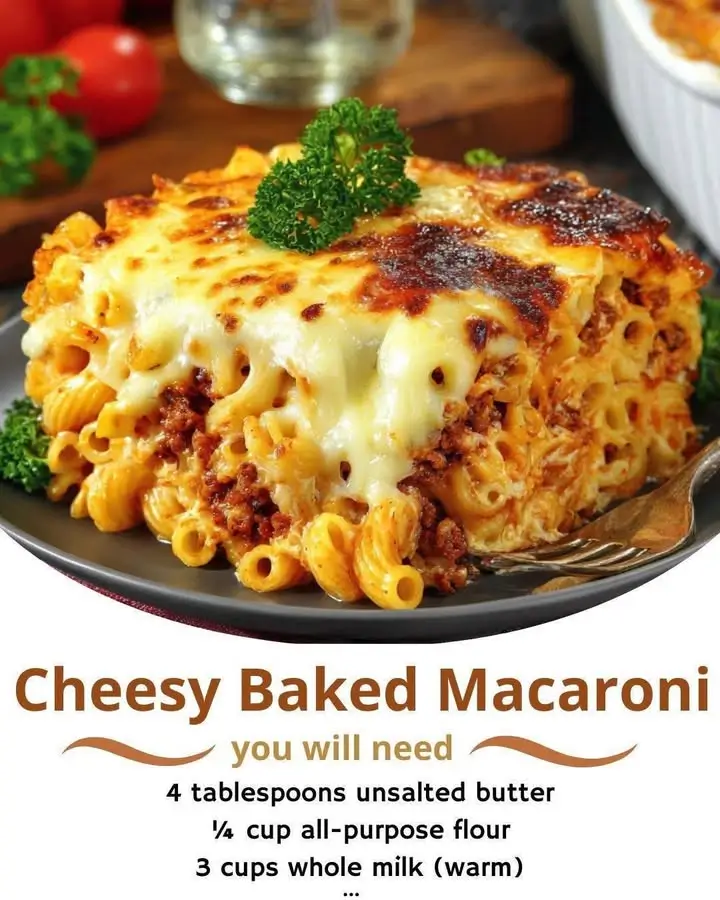
Cheesy Baked Macaroni Recipe: The Ultimate Comfort Food Delight
If there’s one dish that warms the soul, brings families together, and satisfies even the pickiest eaters, it’s cheesy baked macaroni. This classic American casserole—often lovingly called “baked mac and cheese”—is a timeless favorite served at dinner tables, potlucks, holiday feasts, and weeknight suppers across the country. With its golden-brown crust, velvety cheese sauce, and perfectly tender pasta, this recipe is pure comfort in every bite. Whether you’re cooking for your kids, hosting guests, or treating yourself after a long day, this cheesy baked macaroni recipe will deliver rich flavor, creamy texture, and that irresistible gooeyness we all crave.
The History of Cheesy Baked Macaroni
The roots of macaroni and cheese stretch back centuries, far beyond modern American kitchens. While pasta originated in Italy and cheese has been a staple in European diets since ancient times, the concept of combining the two likely began in the 13th century. Italian cookbook author Master Martino of Como included a recipe for “de lasanis” (an early form of layered pasta with cheese) in his Liber de Coquina, considered one of the first known cookbooks.
The dish evolved as it crossed borders. In England during the 14th century, “Makaroni bake” was mentioned in The Forme of Cury, a royal culinary manuscript. However, it wasn’t until the 18th century that macaroni and cheese gained widespread popularity in Europe and America. Thomas Jefferson, one of America’s Founding Fathers, played a pivotal role in popularizing the dish. After encountering macaroni in Paris during his time as U.S. Minister to France, he brought the pasta back to Monticello and even served a version of mac and cheese at a state dinner in 1802. He famously used a macaroni machine imported from Naples, making him an early mac and cheese influencer!
By the 20th century, especially during the Great Depression and World War II, mac and cheese became a household staple due to its affordability, shelf-stable ingredients, and hearty satisfaction. The invention of boxed mac and cheese by Kraft Foods in 1937 revolutionized convenience cooking, but homemade versions like this cheesy baked macaroni recipe have always held a special place in gourmet and family kitchens alike. Today, it stands as a symbol of comfort, creativity, and culinary heritage.
Ingredients Breakdown: What Makes This Mac & Cheese Irresistible?
The magic of this cheesy baked macaroni lies not just in its simplicity, but in the quality and harmony of its ingredients. Each component plays a crucial role in achieving that perfect balance of creaminess, richness, and crunch. Let’s dive into the details:
- Pasta: Elbow macaroni is the traditional choice for its ability to hold sauce, but you can also use cavatappi, shells, or penne. Using high-quality durum wheat semolina pasta ensures a firm yet tender bite after baking.
- Butter: Unsalted butter gives richness and helps create the roux base of the cheese sauce. It adds a luxurious mouthfeel and enhances the overall flavor profile.
- Flour: All-purpose flour is essential for thickening the milk into a smooth béchamel sauce, which forms the foundation of the cheese sauce.
- Milk: Whole milk is preferred for its fat content, contributing to a creamy texture. For extra richness, substitute part of the milk with half-and-half or heavy cream.
- Mustard (dry or Dijon): A small amount of mustard enhances the cheese flavor without making the dish taste spicy or tangy. It acts as a flavor amplifier, cutting through the richness.
- Garlic Powder and Onion Powder: These add depth and savory notes without overpowering the cheese.
- Salt and Black Pepper: Essential seasonings to balance and elevate the entire dish.
- Nutmeg (optional): Just a pinch of freshly grated nutmeg adds warmth and complexity—a secret ingredient in many gourmet mac and cheese recipes.
- Cheeses: This is where the real magic happens:
- Sharp Cheddar: The star of the show. Sharp cheddar melts beautifully and provides a bold, tangy flavor.
- Gruyère or Fontina: These alpine cheeses melt smoothly and add a nutty, buttery richness.
- Mozzarella: Adds stringy, gooey texture and mild flavor.
- Parmesan: Offers a salty, umami kick and helps form a crispy top layer when baked.
- Breadcrumbs: Panko breadcrumbs are ideal for topping—they crisp up beautifully and provide a delightful contrast to the creamy interior. Toss them with melted butter and a sprinkle of herbs for extra flavor.
- Optional Add-ins: Cooked bacon, sautéed mushrooms, caramelized onions, roasted broccoli, or diced ham can be folded into the macaroni for added texture and heartiness.
Step-by-Step Recipe: How to Make Cheesy Baked Macaroni
Follow these detailed steps to create a restaurant-quality, deeply satisfying cheesy baked macaroni casserole right in your own kitchen.
Ingredients
- 16 oz (about 4 cups) elbow macaroni
- ½ cup (1 stick) unsalted butter
- ½ cup all-purpose flour
- 4 cups whole milk (warmed)
- 1 tsp dry mustard or 1 tbsp Dijon mustard
- 1 tsp garlic powder
- 1 tsp onion powder
- ½ tsp ground black pepper
- ¼ tsp ground nutmeg (optional)
- 1 tsp salt (adjust to taste)
- 4 cups shredded sharp cheddar cheese
- 1½ cups shredded Gruyère or Fontina cheese
- 1 cup shredded mozzarella cheese
- ½ cup grated Parmesan cheese
- 1½ cups panko breadcrumbs
- 3 tbsp melted butter (for topping)
- 1 tbsp chopped fresh parsley (optional, for garnish)
Directions
- Preheat Oven: Set your oven to 375°F (190°C). Grease a 9×13-inch baking dish with butter or non-stick spray.
- Cook the Pasta: Bring a large pot of salted water to a boil. Add the macaroni and cook according to package instructions until al dente (usually 7–8 minutes). Drain and set aside. Do not overcook, as the pasta will continue to absorb liquid in the oven.
- Make the Roux: In a large saucepan or Dutch oven, melt ½ cup (1 stick) of butter over medium heat. Once melted, whisk in the flour and cook for 2–3 minutes, stirring constantly, until the mixture turns a light golden color and smells slightly nutty. This is your roux—the base of the sauce.
- Add Milk Gradually: Slowly pour in the warm milk, whisking continuously to prevent lumps. Continue cooking and whisking until the mixture thickens and coats the back of a spoon (about 5–7 minutes). Avoid boiling; keep heat at medium-low.
- Season the Sauce: Stir in the mustard, garlic powder, onion powder, black pepper, nutmeg (if using), and salt. Taste and adjust seasoning as needed.
- Add the Cheese: Reduce heat to low. Gradually add the shredded cheddar, Gruyère, and mozzarella, stirring until each addition is fully melted and the sauce is smooth and velvety. Remove from heat once all cheese is incorporated. Do not rush this step—adding cheese too quickly can cause separation.
- Combine with Pasta: Pour the cheese sauce over the cooked macaroni in a large bowl. Gently fold together until every noodle is evenly coated. If desired, stir in any optional add-ins like cooked bacon or vegetables at this stage.
- Transfer to Baking Dish: Pour the macaroni mixture into the greased 9×13-inch baking dish, spreading it out evenly.
- Prepare the Topping: In a small bowl, mix the panko breadcrumbs with 3 tablespoons of melted butter and ¼ cup of grated Parmesan. Sprinkle this mixture evenly over the top of the macaroni.
- Bake: Place the dish in the preheated oven and bake for 25–30 minutes, or until the top is golden brown and the edges are bubbling. For an extra-crispy crust, broil for 2–3 minutes at the end (watch closely to avoid burning).
- Rest Before Serving: Remove from the oven and let the macaroni rest for 5–10 minutes. This allows the sauce to set slightly, making it easier to serve without being too runny.
- Garnish and Serve: Sprinkle with fresh parsley if desired, and serve warm.
Tips for Perfect Cheesy Baked Macaroni Every Time
- Use Freshly Shredded Cheese: Pre-shredded cheese contains anti-caking agents that can make the sauce grainy. For the smoothest texture, shred your own cheese from a block.
- Warm the Milk: Cold milk can shock the roux and cause lumps. Warm it slightly before adding to the saucepan.
- Don’t Overcook the Pasta: Since the macaroni bakes further in the oven, undercooking it slightly on the stove ensures it stays firm and doesn’t turn mushy.
- Layer the Flavors: Taste your sauce before adding the pasta. Adjust salt, mustard, or spices to ensure balanced flavor.
- Let It Rest: Always allow the baked macaroni to sit for 5–10 minutes after coming out of the oven. This helps the sauce reabsorb and solidify slightly, giving you clean, scoopable portions.
- Bake in Individual Ramekins: For a fancy presentation or portion control, divide the mixture among oven-safe ramekins and top with breadcrumbs. Bake for 20–25 minutes.
- Avoid Curdling: Keep the heat low when melting cheese and never boil the cheese sauce. High heat can break the emulsion, leading to a separated, oily texture.
- Freeze for Later: Assemble the macaroni (without baking), cover tightly, and freeze for up to 3 months. Thaw overnight in the fridge before baking as directed, adding 5–10 minutes to the baking time.
Variations and Customizations
This recipe is incredibly versatile. Here are some creative twists to suit different tastes and occasions:
- Buffalo Chicken Mac & Cheese: Fold in shredded rotisserie chicken tossed in buffalo sauce. Top with blue cheese crumbles before baking.
- Lobster Macaroni: Add chunks of cooked lobster meat and a splash of sherry to the sauce for a luxurious upgrade.
- Vegetarian Garden Mac: Mix in roasted bell peppers, zucchini, spinach, and sun-dried tomatoes for a colorful, nutrient-packed version.
- Truffle Mac & Cheese: Drizzle with truffle oil and sprinkle with truffle salt before serving for a gourmet touch.
- Spicy Jalapeño Popper Mac: Add diced jalapeños and cream cheese to the sauce, then top with bacon and extra cheddar.
- Smoky BBQ Pulled Pork Mac: Stir in leftover pulled pork and a bit of BBQ sauce. Top with crushed potato chips for crunch.
- Gluten-Free Option: Use gluten-free pasta and substitute the all-purpose flour with cornstarch or a gluten-free flour blend.
- Dairy-Free Version: Replace butter with vegan margarine, milk with unsweetened almond or oat milk, and use dairy-free cheese alternatives.
- Low-Carb/Keto Mac: Use spiralized cauliflower or low-carb pasta alternatives like shirataki noodles. Thicken the sauce with xanthan gum instead of flour.
Health Considerations and Nutritional Value
While cheesy baked macaroni is undeniably indulgent, it can still be enjoyed as part of a balanced diet—with mindful modifications.
Nutritional Breakdown (Per Serving, Approx. 1/8 of Recipe):
- Calories: ~550–600 kcal
- Fat: ~30g (including 18g saturated fat)
- Carbohydrates: ~45g
- Protein: ~25g
- Fiber: ~2g
- Sodium: ~800–1000mg (varies based on cheese and added salt)
- Calcium: ~40% of Daily Value
- Vitamin A, B12, Phosphorus: Significant amounts from dairy
Healthier Modifications:
- Reduce Fat: Use 2% milk, reduced-fat cheese, and less butter. You can also replace half the cheese with pureed cauliflower or butternut squash for creaminess with fewer calories.
- Increase Fiber: Use whole wheat or legume-based pasta (like chickpea or lentil pasta) to boost protein and fiber content.
- Lower Sodium: Choose lower-sodium cheeses and reduce added salt. Boost flavor with herbs like thyme, rosemary, or smoked paprika.
- Add Vegetables: Incorporate steamed broccoli, peas, kale, or roasted butternut squash to increase vitamins and fiber.
- Portion Control: Serve smaller portions alongside a fresh green salad or grilled vegetables to balance the meal.
Frequently Asked Questions (FAQ)
Can I make cheesy baked macaroni ahead of time?
Yes! Assemble the dish up to 24 hours in advance, cover, and refrigerate. When ready to bake, add 5–10 minutes to the baking time. You can also freeze the unbaked casserole for up to 3 months.
Why is my mac and cheese grainy?
This usually happens when the cheese is added too quickly or at too high a temperature. Always melt cheese slowly over low heat and remove the sauce from the burner before adding.
Can I use evaporated milk?
Yes! Evaporated milk creates a richer, creamier sauce and helps prevent curdling. Substitute 1–2 cups of regular milk with evaporated milk for enhanced texture.
How do I reheat leftovers?
Reheat individual portions in the microwave with a splash of milk to restore creaminess. For larger amounts, cover with foil and bake at 350°F for 15–20 minutes.
What’s the best cheese for mac and cheese?
A blend works best. Sharp cheddar provides flavor, while Gruyère, Fontina, or Monterey Jack improve meltability. Avoid pre-shredded cheese for the smoothest results.
Can I make this stovetop-only (no bake)?
Absolutely! Skip the baking step and serve immediately after mixing the pasta with the cheese sauce for a creamy, no-crust version.
How long do leftovers last?
Store in an airtight container in the refrigerator for up to 4 days. Reheat gently to preserve texture.
Summary
Cheesy baked macaroni is the ultimate comfort food—creamy, rich, and deeply satisfying, with a golden crust and layers of melty, flavorful cheese. Perfect for family dinners, holidays, or meal prep, this timeless recipe is endlessly customizable and sure to become a staple in your kitchen.