Introduction
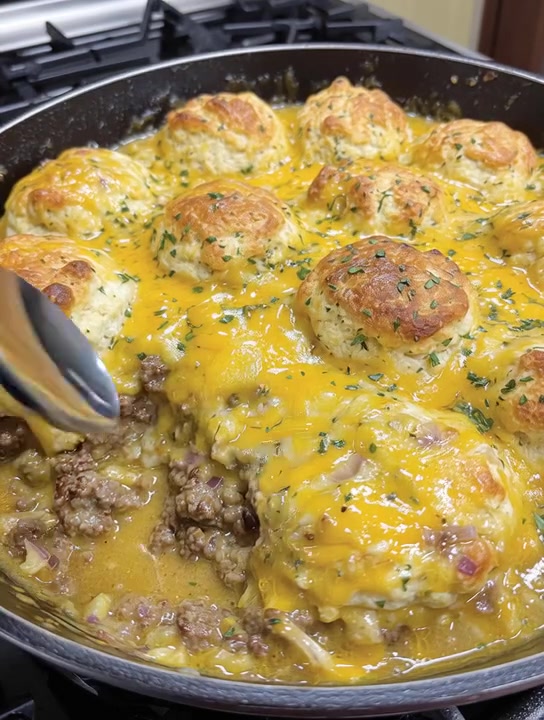
Welcome to the ultimate comfort food experience—Cheddar Bay Hamburger Casserole! This rich, hearty, and irresistibly cheesy casserole brings together the beloved flavors of classic Cheddar Bay Biscuits (popularized by Red Lobster) and a savory ground beef base, all baked into one cohesive, oven-to-table masterpiece. It’s more than just dinner—it’s nostalgia, warmth, and indulgence in every bite. Whether you’re feeding a hungry family after soccer practice, hosting a casual Sunday supper, or seeking a make-ahead meal that reheats beautifully, this casserole delivers on flavor, texture, and ease. With its golden biscuit topping studded with sharp cheddar and aromatic herbs, a deeply seasoned meat-and-vegetable layer, and a luscious creamy sauce binding it all together, this dish bridges the gap between rustic home cooking and restaurant-worthy appeal—all without requiring culinary expertise.
The History
The origins of Cheddar Bay Hamburger Casserole are delightfully modern and grassroots—born not from ancient tradition, but from the enthusiastic fusion of two American comfort food icons: Red Lobster’s legendary Cheddar Bay Biscuits and the timeless hamburger casserole. Red Lobster introduced Cheddar Bay Biscuits in 1986 as a complimentary, made-from-scratch side that quickly became a cultural phenomenon—so much so that fans began clamoring for copycat recipes, baking mixes, and even frozen versions. Meanwhile, hamburger casseroles have long been staples of mid-century American home kitchens, appearing in church cookbooks, Betty Crocker guides, and 1950s community recipe collections as economical, one-dish meals built around affordable ground beef, pantry staples, and convenient canned goods.
By the early 2010s, food bloggers and Pinterest creators began experimenting with “biscuit-topped” variations—replacing traditional crumb or cheese crusts with spooned biscuit batter. The logical next step? Swapping generic biscuit dough for a seasoned, cheddar-laced version inspired by Red Lobster’s signature blend of sharp white cheddar, garlic powder, onion powder, parsley, and buttery richness. The first documented “Cheddar Bay Hamburger Casserole” appeared on several Southern food blogs around 2014–2015, often credited to home cooks looking to recreate the restaurant experience at home—and elevate weeknight dinners with minimal extra effort. Since then, it has evolved across regional adaptations—from Tex-Mex spiced versions with jalapeños and pepper jack to Midwest-style iterations with tater tots or cream of mushroom soup—and remains a top-performing recipe on food-sharing platforms, consistently trending during holiday prep seasons and back-to-school meal planning.
Ingredients Breakdown
Understanding each component—and why it matters—elevates your casserole from good to extraordinary. Let’s dissect the layers:
For the Hamburger Base:
- Ground Beef (85/15 lean-to-fat ratio): Provides rich flavor and natural moisture. Avoid ultra-lean beef (93/7), which can dry out; the fat renders and enriches the sauce.
- Yellow Onion & Garlic: A foundational aromatic duo—onion adds sweetness and body when sautéed, while fresh minced garlic delivers pungent depth (never substitute garlic powder here for the base).
- Carrots & Celery (optional but highly recommended): Part of the “mirepoix trifecta,” they add subtle earthiness, texture, and nutritional balance. Finely diced ensures even cooking and seamless integration.
- Tomato Paste: Concentrated umami powerhouse—deepens color, adds caramelized sweetness, and thickens the sauce naturally without flour clumps.
- Worcestershire Sauce: Fermented tang and anchovy-based savoriness that enhances beef’s inherent richness—use authentic Lea & Perrins for best results.
- Beef Broth (low-sodium): Adds liquid volume and savory backbone; low-sodium allows precise salt control, especially critical when pairing with salty cheese and seasoned biscuits.
- Bay Leaves & Dried Thyme: Earthy, woodsy notes that complement beef without overpowering. Remove bay leaves before assembling topping.
- Heavy Cream or Full-Fat Evaporated Milk: Introduces luxurious silkiness and prevents curdling in the final bake—dairy fat stabilizes the sauce amid high heat.
For the Cheddar Bay Biscuit Topping:
- All-Purpose Flour (or Half-Whole Wheat Blend): The structural base—provides lift and tenderness. For extra nutrition, substitute up to ½ cup with white whole wheat flour (not regular whole wheat, which weighs down biscuits).
- Baking Powder & Baking Soda: Dual leaveners—baking powder provides primary rise, while baking soda reacts with buttermilk’s acidity for extra fluff and browning.
- Granulated Sugar (small amount): Not for sweetness, but to feed yeast-like reactions, aid browning, and balance cheddar’s sharpness.
- Kosher Salt & Black Pepper: Essential seasoning—don’t skip freshly cracked black pepper for warmth.
- Sharp White Cheddar Cheese (freshly grated): The star. Pre-shredded cheese contains anti-caking agents (like cellulose) that inhibit melt and create graininess—always grate your own from a block for optimal creaminess and pull.
- Fresh Parsley (flat-leaf): Bright, clean herbal note that cuts through richness—add just before baking for maximum vibrancy.
- Garlic Powder & Onion Powder: Layered savory depth—these dried aromatics bloom in the heat and meld seamlessly into the biscuit crumb.
- Cold Unsalted Butter (cut into small cubes): Creates flaky, tender layers as steam forms during baking. Must be cold—warm butter melts prematurely and yields dense, greasy biscuits.
- Full-Fat Buttermilk: Acidic, tangy, and thick—activates leaveners, tenderizes gluten, and contributes signature Cheddar Bay flavor. Shelf-stable buttermilk alternatives (powder + water) work in a pinch, but fresh cultured buttermilk is ideal.
- Melted Butter & Everything Bagel Seasoning (for finishing): Brushed post-bake for glossy sheen, added richness, and textural contrast—the seasoning offers sesame, garlic, onion, and poppy seed crunch.
Step-by-Step Recipe
This detailed, chef-tested method ensures foolproof results—every time. Timing notes included for efficiency.
- Prep & Preheat (10 minutes): Position oven rack in center position. Preheat oven to 400°F (200°C). Lightly grease a deep 9×13-inch ceramic or metal baking dish (avoid glass for high-heat biscuit topping—it can shatter or overbrown edges). Gather all ingredients and equipment: large skillet, wooden spoon, medium mixing bowl, box grater, whisk, silicone spatula, ice cream scoop (¼-cup size recommended for even biscuit mounds).
- Sauté Aromatics (6–8 minutes): Heat 1 tbsp olive oil in large skillet over medium heat. Add finely diced onion, carrots, and celery. Sauté 4–5 minutes until softened and translucent—but not browned. Stir in minced garlic and tomato paste; cook 1 minute more, stirring constantly, until paste darkens slightly and becomes fragrant. This step—“cooking the paste”—is non-negotiable for depth.
- Brown the Beef (7–9 minutes): Increase heat to medium-high. Add ground beef, breaking apart with wooden spoon. Cook undisturbed 2 minutes to develop fond (browned bits), then continue stirring until no pink remains (~5 more minutes). Drain excess fat *only if visibly pooling* (a tablespoon or less is ideal for flavor). Return skillet to low heat.
- Build the Sauce (5 minutes): Stir in Worcestershire sauce, 1 tsp black pepper, 1 tsp dried thyme, 2 bay leaves, and 1 tsp kosher salt. Pour in 1 cup low-sodium beef broth, scraping bottom to lift fond. Simmer gently 3 minutes. Reduce heat to lowest setting and stir in ½ cup heavy cream (or evaporated milk) and 2 tbsp unsalted butter. Simmer 2 more minutes—do not boil vigorously. Remove from heat. Discard bay leaves. Taste and adjust seasoning: it should taste robust, balanced, and slightly under-salted (biscuit topping adds more salt later).
- Transfer & Level (2 minutes): Pour hot beef mixture into prepared baking dish. Use spatula to spread evenly and smooth surface. Let rest 3 minutes—this prevents biscuit dough from “melting” on contact.
- Prepare Biscuit Dough (10 minutes, keep cold): In medium bowl, whisk together 2 cups flour, 1 tbsp baking powder, ½ tsp baking soda, 1 tbsp sugar, 1 tsp kosher salt, 1 tsp garlic powder, 1 tsp onion powder, and ½ tsp black pepper. Add ½ cup (1 stick) cold unsalted butter, cut into ½-inch cubes. Using pastry cutter or fingers, work butter into flour until mixture resembles coarse crumbs with some pea-sized pieces remaining. Stir in 1 cup (4 oz) freshly grated sharp white cheddar and 2 tbsp chopped fresh parsley. Gradually pour in 1 cup cold full-fat buttermilk while stirring with fork until just combined—dough will be shaggy and slightly sticky. Do *not* overmix; lumps are fine. Let rest 2 minutes.
- Top & Portion (3 minutes): Drop chilled biscuit dough by generous ¼-cup portions (use ice cream scoop) evenly over beef layer. Gently press edges to seal gaps—do not flatten. Dough should mound slightly for optimal rise.
- Bake (25–28 minutes): Place dish on center oven rack. Bake 25 minutes—biscuits should be puffed, golden around edges, and just beginning to brown on top. Rotate pan front-to-back for even baking. Continue baking 2–3 minutes until center biscuits reach 205°F internally (instant-read thermometer) and surface is deep golden with visible cheddar bubbles. Avoid opening oven before 22 minutes—steam is essential for rise.
- Finish & Rest (5 minutes): Remove from oven. Immediately brush tops with 3 tbsp melted unsalted butter. Sprinkle generously with everything bagel seasoning (about 1½ tbsp). Let rest 5 minutes before serving—this allows internal temperature to equalize and sauce to settle, preventing runny slices.
Tips
- Grate Your Own Cheese: Pre-shredded cheddar contains potato starch and cellulose—these interfere with melting, causing separation and graininess. Freshly grated cheese melts smoothly and binds the biscuit crumb.
- Buttermilk Temperature Matters: Always use cold buttermilk—warm liquid activates leaveners too early, resulting in flat biscuits. Chill measuring cup beforehand if kitchen is warm.
- Don’t Skip the Tomato Paste Step: Cooking it with aromatics for 60–90 seconds caramelizes natural sugars and eliminates raw, tinny flavor—this is where 80% of the sauce’s complexity comes from.
- Rest the Filling Before Topping: Allowing the hot beef layer to cool 3 minutes prevents the cold biscuit dough from seizing and spreading. It also helps avoid a “steamed” rather than “baked” top.
- Use an Ice Cream Scoop: Ensures uniform biscuit size, consistent baking, and professional presentation. A ¼-cup scoop holds ~3 oz dough—perfect for 12 even mounds.
- Rotate the Pan Mid-Bake: Ovens have hot spots. Rotating at 22 minutes guarantees even browning—especially important for the biscuit crown.
- Check Internal Temperature: Biscuits are done when center reaches 205°F—not just golden on top. Underbaked biscuits collapse; overbaked become tough and dry.
- Rest Before Serving: Cutting too soon releases steam and causes sauce to pool. Five minutes allows starches to set and structure to stabilize.
- Make-Ahead Friendly: Assemble casserole through step 7 (topped with dough), cover tightly with plastic wrap, and refrigerate up to 24 hours. Add 5–7 minutes to bake time if going straight from fridge to oven.
- Freeze for Later: Bake fully, cool completely, wrap in double layer plastic + foil, freeze up to 3 months. Reheat covered at 325°F for 45 minutes, uncover last 10 minutes to crisp top.
Variations and Customizations
This casserole is gloriously adaptable—here are 12 thoughtfully tested variations, each preserving structural integrity and flavor harmony:
Dietary & Lifestyle Adaptations:
- Gluten-Free: Substitute 1:1 gluten-free all-purpose flour blend (with xanthan gum) in biscuit dough. Use GF Worcestershire and certified GF beef broth. Add ½ tsp psyllium husk to dough for elasticity.
- Lower-Carb/Keto: Replace biscuit layer with “cloud bread” topping: whip 4 egg whites to stiff peaks, fold in 4 oz cream cheese, 1 cup shredded cheddar, 2 tbsp almond flour, 1 tsp garlic powder, and 1 tbsp parsley. Spoon over filling and bake as directed.
- Dairy-Free: Use vegan cheddar shreds (Miyoko’s or Daiya Cutting Board), dairy-free butter (Miyoko’s or Earth Balance), and unsweetened plain coconut milk + 1 tsp vinegar (as buttermilk substitute). Note: texture will be slightly denser.
- Vegetarian “Beefless” Version: Swap ground beef for 2 cups cooked brown lentils + 1 cup crumbled tempeh sautéed in tamari and smoked paprika. Boost umami with 1 tbsp soy sauce and 1 tsp liquid smoke in sauce.
Flavor & Regional Twists:
- Tex-Mex Cheddar Bay: Add 1 diced jalapeño (seeds removed), 1 tsp chipotle powder, and ½ cup black beans to filling. Top biscuits with pepper jack instead of white cheddar and finish with cilantro-lime crema.
- Italian Herb Garden: Replace thyme/bay with 1 tbsp Italian seasoning, add ½ cup ricotta to sauce, and top with mozzarella-provolone blend + basil ribbons post-bake.
- Breakfast-for-Dinner: Add 4 beaten eggs and ¼ cup half-and-half to filling before baking. Top with chive-bacon biscuit dough and serve with hot sauce.
- Smoky BBQ Fusion: Stir ⅓ cup Kansas City–style BBQ sauce into filling. Use smoked gouda in biscuits and finish with crispy fried onions.
- Mushroom & Swiss: Sauté 2 cups sliced cremini mushrooms with onions; replace cheddar with gruyère and fontina in biscuits. Add 1 tsp thyme and 1 tbsp Dijon to sauce.
Texture & Presentation Upgrades:
- Crunchy Topping Boost: Mix ¼ cup panko breadcrumbs + 2 tbsp melted butter + 1 tbsp grated parmesan into biscuit dough before portioning.
- Stuffed Biscuits: Flatten each dough portion, place ½ tsp Dijon mustard + small cube of brie inside, seal, and place seam-side down.
- Individual Servings: Bake in six 8-oz ramekins—reduce bake time to 20–22 minutes. Perfect for portion control or dinner parties.
Health Considerations and Nutritional Value
A single serving (1/8 of 9×13-inch casserole, approx. 1.5 cups) contains approximately:
- Calories: 520–580 kcal
- Protein: 28–32 g (excellent source—beef + cheddar + dairy provide complete amino acid profile)
- Total Fat: 30–34 g (of which 16–18 g saturated—primarily from cheese, butter, and beef fat)
- Carbohydrates: 34–38 g (mainly from flour, but includes 3–4 g fiber from vegetables and optional whole wheat flour)
- Sodium: 780–920 mg (moderate—reduced by using low-sodium broth and omitting added salt in filling)
- Vitamins & Minerals: Rich in Vitamin B12 (beef), Calcium (cheddar, dairy), Vitamin A (carrots, cheddar), Zinc (beef), and Selenium (chicken/egg analogs in dairy).
Smart Swaps for Health-Conscious Cooks:
- Boost Fiber: Add ½ cup cooked quinoa or barley to filling—or substitute ½ cup flour in biscuit dough with oat flour.
- Reduce Saturated Fat: Use 90/10 lean beef, replace half the butter in biscuits with cold Greek yogurt (¼ cup), and opt for reduced-fat sharp cheddar (note: may affect melt—grate finely and add 1 tsp cornstarch to cheese).
- Lower Sodium Strategy: Omit added salt in filling; rely on herbs, garlic, and umami (tomato paste, Worcestershire) for flavor. Rinse canned beans (if using) and choose no-salt-added broth.
- Gut-Friendly Twist: Stir 2 tbsp kimchi brine or 1 tsp apple cider vinegar into filling for probiotic support and bright acidity.
- Diabetes-Friendly Tip: Serve with a side salad dressed in lemon-tahini (no added sugar) to slow glucose response. Monitor carb portions via flour reduction (replace ¼ cup flour with almond flour).
Note: While indulgent, this casserole offers substantial protein and nutrients—making it more nutritionally dense than many processed convenience meals. Balanced with vegetables on the side (roasted broccoli, green salad), it fits comfortably within varied dietary patterns including Mediterranean, DASH, and flexitarian approaches.
Ingredients
For the Hamburger Base:
- 1 tbsp olive oil
- 1 medium yellow onion, finely diced (about 1 cup)
- 2 medium carrots, peeled and finely diced (about ¾ cup)
- 2 ribs celery, finely diced (about ½ cup)
- 4 cloves garlic, minced (about 1 tbsp)
- 2 tbsp tomato paste
- 1.5 lbs 85/15 ground beef
- 2 tbsp Worcestershire sauce
- 1 tsp dried thyme
- 2 large bay leaves
- 1 tsp freshly cracked black pepper
- 1 tsp kosher salt (plus more to taste)
- 1 cup low-sodium beef broth
- ½ cup heavy cream or full-fat evaporated milk
- 2 tbsp unsalted butter
For the Cheddar Bay Biscuit Topping:
- 2 cups all-purpose flour (or 1½ cups AP + ½ cup white whole wheat)
- 1 tbsp baking powder
- ½ tsp baking soda
- 1 tbsp granulated sugar
- 1 tsp kosher salt
- 1 tsp garlic powder
- 1 tsp onion powder
- ½ tsp freshly cracked black pepper
- ½ cup (1 stick) unsalted butter, cold and cubed
- 1 cup (4 oz) sharp white cheddar cheese, freshly grated
- 2 tbsp fresh flat-leaf parsley, finely chopped
- 1 cup full-fat buttermilk, well-chilled
For Finishing:
- 3 tbsp unsalted butter, melted
- 1½ tbsp everything bagel seasoning
Directions
- Preheat oven to 400°F (200°C). Lightly grease a 9×13-inch baking dish.
- In a large skillet over medium heat, warm olive oil. Add onion, carrots, and celery; sauté 4–5 minutes until softened. Stir in garlic and tomato paste; cook 1 minute until fragrant and paste darkens.
- Increase heat to medium-high. Add ground beef, breaking apart. Cook undisturbed 2 minutes, then stir until no pink remains (~5 more minutes). Drain excess fat only if pooling.
- Reduce heat to low. Stir in Worcestershire, thyme, bay leaves, black pepper, and salt. Pour in broth, scraping pan. Simmer 3 minutes. Stir in cream and 2 tbsp butter; simmer 2 more minutes. Remove from heat; discard bay leaves. Taste and adjust seasoning.
- Pour hot mixture into prepared dish. Smooth surface. Let rest 3 minutes.
- In a medium bowl, whisk dry ingredients (flour through pepper). Cut in cold butter until crumbly. Stir in cheddar and parsley. Gradually stir in buttermilk until just combined (shaggy, lumpy dough).
- Drop dough by ¼-cup portions evenly over filling. Gently press edges to seal.
- Bake 25–28 minutes, until biscuits are puffed, golden, and register 205°F internally.
- Remove from oven. Brush tops with melted butter. Sprinkle with everything bagel seasoning.
- Let rest 5 minutes before serving.
FAQ
- Can I use ground turkey or chicken instead of beef?
- Absolutely—but adjust moisture and seasoning. Ground turkey/chicken is leaner and drier. Add 1 tbsp olive oil to skillet before sautéing aromatics, and increase broth to 1¼ cups. Boost umami with 1 tsp soy sauce or fish sauce in filling. Opt for dark-meat turkey for best texture.
- Why does my biscuit topping sink or become gummy?
- Three common causes: (1) Filling was too hot when topped—always rest 3 minutes; (2) Buttermilk or butter wasn’t cold enough—chill both for 10 minutes prior; (3) Overmixing dough—stir only until no dry flour remains. Also, avoid opening oven before 22 minutes.
- Can I prepare this casserole ahead of time?
- Yes! Fully assemble (through step 7), cover tightly with plastic wrap, and refrigerate up to 24 hours. Bake straight from fridge—add 5–7 minutes to total time. For longer storage, bake fully, cool, wrap well, and freeze up to 3 months. Reheat covered at 325°F for 45 minutes, then uncover to crisp.
- What if I don’t have buttermilk?
- Make a substitute: combine 1 cup whole milk + 1 tbsp white vinegar or lemon juice. Let sit 5–10 minutes until slightly curdled. Do not use skim milk—it lacks fat needed for tender biscuits.
- Can I add vegetables like corn or peas?
- Yes—but add frozen (not canned) vegetables directly to filling *after* simmering, and heat through for 1 minute before transferring to dish. Canned veggies add excess water and dilute flavor. Limit to 1 cup total to avoid sogginess.
- Is there a way to make this in a slow cooker?
- Not recommended for the biscuit topping—it won’t rise or brown properly. However, you *can* prepare the filling in a slow cooker (brown beef & aromatics first, then add remaining filling ingredients except cream/butter; cook on LOW 4–5 hours), then transfer to baking dish, stir in cream/butter, top with biscuit dough, and bake as directed.
- How do I reheat leftovers without drying them out?
- Individual portions: microwave covered with damp paper towel on medium power for 90 seconds. Full dish: cover with foil, bake at 325°F for 20–25 minutes. For crisp topping, uncover last 5 minutes and broil 1–2 minutes (watch closely!).
- Can I use a different cheese in the biscuits?
- You can—but sharpness and melt matter. Good substitutes: aged Gouda, Asiago, or Fontina. Avoid mozzarella alone (too mild, too stretchy) or feta (too crumbly/salty). For best results, blend ¾ cup cheddar + ¼ cup another flavorful cheese.
- What sides pair well with this casserole?
- Keep it balanced: a simple arugula salad with lemon vinaigrette, roasted asparagus, honey-glazed carrots, or a tangy cucumber-dill slaw cut the richness beautifully. Avoid heavy starches—this dish already delivers substantial carbs and fat.
- My biscuits didn’t rise much—what went wrong?
- Leavener failure is usually due to