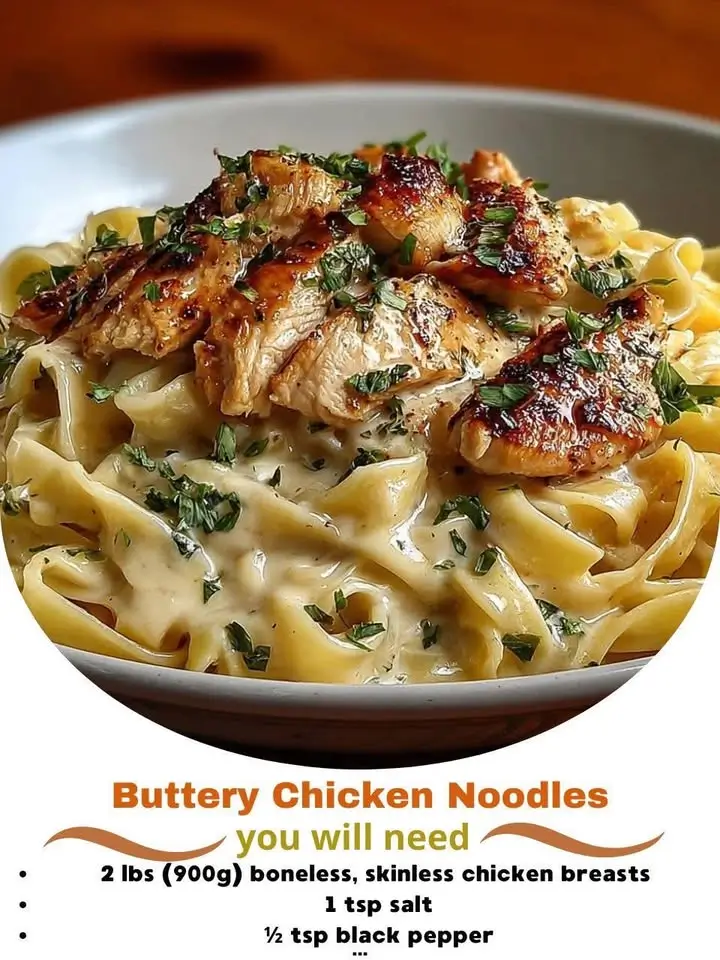
Buttery Chicken Noodles: A Comforting Culinary Delight
There’s something deeply comforting about a warm, rich bowl of Buttery Chicken Noodles. This dish brings together the savory tenderness of chicken with the smooth, silky texture of butter-kissed noodles, creating a harmony of flavors that satisfies both the palate and the soul. Whether served as a weeknight dinner or a cozy weekend treat, this recipe is designed to deliver maximum flavor with minimal effort. In this comprehensive guide, we’ll explore the history behind this beloved comfort food, break down each ingredient for optimal taste, provide detailed step-by-step instructions, offer expert tips, suggest creative variations, examine nutritional aspects, answer common questions, and wrap it all up in a concise summary. Let’s dive into the world of Buttery Chicken Noodles—where simplicity meets indulgence.
The History of Buttery Chicken Noodles
The origins of Buttery Chicken Noodles can be traced back to traditional home cooking across various cultures where simple ingredients were transformed into nourishing meals. While not tied to one specific country or region, this dish embodies elements found in American Southern cuisine, European farmhouse cooking, and even Asian stir-fry traditions. Historically, families relied on readily available staples like chicken, butter, and dried or fresh noodles to create hearty dishes that could feed multiple generations. During times of scarcity, such as the Great Depression or post-war periods, combining leftover roasted chicken with buttery pasta became a clever way to stretch proteins and make satisfying meals from limited resources.
In mid-20th century American households, recipes featuring buttered noodles gained popularity due to their ease, affordability, and universal appeal—especially among children. The addition of shredded chicken elevated the dish from a side to a main course, making it a go-to option for busy parents. Over time, regional adaptations emerged: some added garlic and herbs, others incorporated cream or cheese. Today, Buttery Chicken Noodles remain a symbol of culinary comfort, often passed down through family cookbooks and handwritten notes tucked inside kitchen drawers. Its evolution reflects broader trends in home cooking—moving from necessity to nostalgia, and now to a celebrated classic enjoyed by people of all ages.
Ingredients Breakdown: What Makes This Dish Shine
The magic of Buttery Chicken Noodles lies in its carefully balanced ingredients. Each component plays a vital role in building layers of flavor, texture, and aroma. Here’s an in-depth look at what goes into this delectable dish:
- Chicken Breast or Thighs (2 cups, cooked and shredded): Boneless, skinless chicken breasts are lean and mild, absorbing surrounding flavors beautifully. Alternatively, thighs offer more moisture and richness due to their higher fat content, ideal for those who prefer juicier meat.
- Butter (½ cup unsalted): High-quality unsalted butter provides a creamy mouthfeel and nutty depth. It acts as both a flavor carrier and a cooking medium, helping to brown aromatics and coat every noodle evenly.
- Egg Noodles (8 oz dry): These flat, ribbon-like noodles have a slightly chewy texture and porous surface that soaks up butter and seasonings exceptionally well. You can substitute with fettuccine, tagliatelle, or even wide rice noodles for gluten-free versions.
- Garlic (4 cloves, minced): Fresh garlic adds pungency and warmth. When sautéed gently in butter, it mellows into a sweet, aromatic base that enhances the entire dish.
- Shallot or Yellow Onion (½ cup finely diced): Shallots offer a delicate onion-garlic hybrid flavor, while yellow onions bring more bite and sweetness when caramelized. Both contribute complexity to the sauce.
- Fresh Parsley (¼ cup chopped): Adds a pop of color and a bright, herbaceous note that cuts through the richness of the butter.
- Lemon Zest (from 1 lemon): A small amount lifts the dish with citrusy freshness, balancing the heaviness of the butter and enhancing other flavors.
- Chicken Broth (¾ cup low-sodium): Used to deglaze the pan and create a light, flavorful sauce. Low-sodium broth allows better control over salt levels.
- Heavy Cream or Half-and-Half (½ cup optional): For extra richness and silkiness. Omit for a lighter version or replace with evaporated milk or plant-based creamers.
- Salt and Freshly Ground Black Pepper (to taste): Essential for seasoning. Always adjust at the end after tasting.
- Nutmeg (a pinch): Often used in egg noodle dishes, a touch of nutmeg complements dairy and enhances warmth without being overpowering.
- Grated Parmesan Cheese (½ cup, optional): Adds umami and a salty tang. Best stirred in just before serving to prevent clumping.
Optional enhancements include mushrooms (sautéed), peas (frozen or fresh), spinach, sun-dried tomatoes, or crispy bacon bits for additional texture and flavor contrast.
Step-by-Step Recipe: How to Make Buttery Chicken Noodles
Follow these detailed steps to prepare a restaurant-quality batch of Buttery Chicken Noodles right in your own kitchen. This method ensures even cooking, deep flavor development, and a perfectly balanced final dish.
- Prepare Ingredients: Begin by gathering and prepping all ingredients. Shred or dice the cooked chicken into bite-sized pieces. Mince the garlic, dice the shallot or onion, chop the parsley, zest the lemon, and measure out the broth, cream, and spices. Having everything ready (mise en place) streamlines the cooking process.
- Cook the Noodles: Bring a large pot of salted water to a boil. Add the egg noodles and cook according to package instructions until al dente—usually 6–8 minutes. Drain thoroughly but do not rinse; residual starch helps the sauce cling to the noodles. Set aside.
- Sauté Aromatics: In a large skillet or Dutch oven over medium heat, melt ¼ cup of the butter. Add the diced shallot or onion and cook for 3–4 minutes, stirring occasionally, until softened and translucent. Do not let it brown too much unless you want a deeper, caramelized flavor.
- Add Garlic and Seasonings: Stir in the minced garlic, nutmeg, and a pinch of black pepper. Cook for 30–60 seconds, just until fragrant. Be careful not to burn the garlic, which can turn bitter.
- Deglaze with Broth: Pour in the chicken broth, scraping up any browned bits from the bottom of the pan. Allow the liquid to simmer for 2–3 minutes, reducing slightly and concentrating flavor.
- Incorporate Cream (Optional): If using heavy cream or half-and-half, add it now and stir to combine. Simmer gently for another 2–3 minutes to thicken slightly. Taste and adjust seasoning with salt if needed.
- Add Chicken: Stir in the shredded chicken and warm through for 2–3 minutes. Ensure the chicken is fully coated in the sauce and heated to an internal temperature of 165°F (74°C).
- Finish with Butter and Noodles: Reduce heat to low. Add the drained noodles to the skillet. Drop in the remaining ¼ cup of cold butter, cut into small cubes. Gently toss everything together using tongs or two forks, allowing the butter to melt slowly and coat the noodles evenly. The residual heat will emulsify the butter into a glossy, luxurious coating.
- Final Touches: Remove from heat. Stir in the chopped parsley, lemon zest, and grated Parmesan (if using). Toss once more until fully combined.
- Serve Immediately: Plate the Buttery Chicken Noodles hot, garnished with extra parsley, a sprinkle of Parmesan, and cracked black pepper. Serve with crusty bread or a crisp green salad on the side.
Tips for Perfect Buttery Chicken Noodles Every Time
- Use Quality Butter: Opt for real, high-fat European-style or cultured butter for superior flavor and richness. Avoid margarine or low-fat spreads, which contain water and additives that affect texture.
- Don’t Overcook the Noodles: Al dente is key. Mushy noodles absorb too much sauce and fall apart when tossed. Test a minute before the package suggests.
- Reserve Pasta Water: Before draining, save about ½ cup of starchy pasta water. If the sauce seems too thick or dry, add a splash to loosen it while maintaining cling.
- Warm Your Skillet: Adding cold noodles to a hot sauce prevents sogginess and promotes even heating. Pre-warming the skillet also helps maintain consistent temperature.
- Add Butter Off Heat: Incorporating the final portion of butter off the burner creates a silky, restaurant-style finish known as monter au beurre. This technique prevents greasiness and ensures emulsification.
- Season in Layers: Salt each component—noodles, sauce, chicken—as you go, then fine-tune at the end. This builds depth rather than relying on one heavy seasoning.
- Let Chicken Rest Before Shredding: If poaching or roasting chicken yourself, allow it to rest for 10 minutes before shredding to retain juices.
- Infuse the Butter (Advanced Tip): For gourmet flair, infuse the butter beforehand with herbs like thyme, rosemary, or bay leaf. Strain before use for a subtle aromatic boost.
Variations and Customizations
One of the greatest strengths of Buttery Chicken Noodles is its adaptability. Below are several creative twists to suit different tastes, dietary needs, or seasonal ingredients:
- Creamy Mushroom & Chicken Version: Sauté sliced cremini or shiitake mushrooms with the onions for an earthy, umami-rich upgrade. Finish with a splash of white wine before adding broth.
- Herb-Forward with Dill and Chives: Swap parsley for fresh dill and chives for a lighter, springtime feel. Pairs especially well with lemon zest.
- Spicy Kick: Add red pepper flakes (¼–½ tsp) with the garlic, or drizzle with chili oil before serving for heat lovers.
- Gluten-Free Option: Use gluten-free egg noodles or rice noodles. Be cautious during cooking—they often require less time and can become gummy if overcooked.
- Dairy-Free/Lighter Version: Replace butter with olive oil or vegan butter, and skip the cream. Use coconut milk (light) or cashew cream for richness without dairy.
- Vegetarian Adaptation: Omit chicken and use sautéed tofu, tempeh, or chickpeas. Substitute vegetable broth for chicken broth.
- Mediterranean Twist: Add sun-dried tomatoes, Kalamata olives, artichoke hearts, and crumbled feta. Garnish with oregano instead of parsley.
- Breakfast-for-Dinner Style: Top with a fried or poached egg. The runny yolk blends beautifully with the buttery noodles.
- Kid-Friendly Version: Skip strong herbs and spices. Add steamed peas or carrots and call it “Chicken Mac” for picky eaters.
- Gourmet Upgrade: Stir in truffle oil, shaved Parmigiano-Reggiano, or seared scallops for a special occasion twist.
Health Considerations and Nutritional Value
While Buttery Chicken Noodles are undeniably rich and indulgent, they can be adapted to fit various health goals. Here’s a breakdown of the standard recipe’s nutritional profile per serving (based on 4 servings):
| Nutrient | Amount Per Serving |
|---|---|
| Calories | Approx. 520–600 kcal |
| Total Fat | 28–35g (Saturated: 15–18g) |
| Cholesterol | 120–140mg |
| Sodium | 450–700mg (varies by broth and added salt) |
| Carbohydrates | 40–45g (Fiber: 2g, Sugar: 3g) |
| Protein | 30–35g |
| Vitamin A, C, Iron, Calcium | Moderate amounts depending on ingredients |
Health Notes:
- High in Saturated Fat: Due to butter and optional cream, this dish is relatively high in saturated fats. To reduce, use less butter, substitute with olive oil, or omit cream.
- Protein-Rich: Chicken provides high-quality protein essential for muscle repair and satiety.
- Refined Carbs: Egg noodles are made from refined flour. For a healthier carb source, use whole wheat noodles, chickpea pasta, or zucchini noodles (zoodles).
- Low Fiber: Traditional version lacks fiber. Boost it by adding vegetables like broccoli, spinach, peas, or kale.
- Suitable for Low-Carb Diets? Not inherently, but can be modified with low-carb noodles (shirataki, konjac) or spiralized vegetables.
- Allergens: Contains dairy, eggs (in noodles), and possibly gluten. Always check labels if serving those with allergies.
To make a heart-healthier version: use grass-fed butter in moderation, increase vegetables, choose skinless chicken breast, and serve in smaller portions alongside a side salad.
Ingredients
- 2 cups cooked chicken, shredded or diced (breast or thigh)
- 8 oz (about 225g) dried egg noodles
- ½ cup (1 stick / 113g) unsalted butter, divided
- ½ cup finely diced shallot or yellow onion
- 4 cloves garlic, minced
- ¾ cup low-sodium chicken broth
- ½ cup heavy cream or half-and-half (optional)
- ¼ cup fresh parsley, chopped
- Zest of 1 lemon
- ½ cup grated Parmesan cheese (optional)
- Salt and freshly ground black pepper to taste
- Pinch of ground nutmeg
Directions
- Bring a large pot of salted water to a boil. Cook egg noodles according to package directions until al dente. Drain and set aside.
- In a large skillet over medium heat, melt ¼ cup butter. Add shallot or onion and cook until soft and translucent, about 3–4 minutes.
- Stir in minced garlic, nutmeg, and a pinch of black pepper. Cook for 30–60 seconds until fragrant.
- Pour in chicken broth, scraping up any browned bits. Simmer for 2–3 minutes to reduce slightly.
- If using, stir in heavy cream and simmer gently for another 2–3 minutes.
- Add shredded chicken and warm through for 2–3 minutes.
- Reduce heat to low. Add cooked noodles and the remaining ¼ cup butter (cut into cubes).
- Gently toss until butter melts and coats the noodles evenly.
- Remove from heat. Stir in parsley, lemon zest, and Parmesan (if using).
- Season with salt and additional pepper to taste. Serve immediately.
FAQ: Frequently Asked Questions About Buttery Chicken Noodles
Q: Can I use rotisserie chicken?
A: Absolutely! Rotisserie chicken is a fantastic time-saver and adds excellent flavor. Just remove the skin and bones, then shred the meat.
Q: Can I make this ahead of time?
A: Yes, but best results come from reheating gently. Store components separately: noodles in one container, sauce with chicken in another. Reheat sauce, add noodles, and finish with fresh butter and herbs.
Q: Why did my sauce separate?
A: This usually happens if the heat is too high when adding butter or cream. Always keep the temperature low when finishing with dairy to prevent breaking.
Q: Can I freeze Buttery Chicken Noodles?
A: Freezing is possible, but dairy-based sauces may separate upon thawing. For best quality, freeze without cream or butter and add fresh when reheating.
Q: What kind of noodles work best?
A: Egg noodles are traditional, but fettuccine, linguine, or wide rice noodles also work well. Avoid very thin pastas like angel hair, which can get lost in the rich sauce.
Q: How do I reheat leftovers?
A: Reheat in a skillet over medium-low heat with a splash of broth or water to refresh the sauce. Microwave works too, but stir every 30 seconds to avoid drying.
Q: Is this recipe kid-friendly?
A: Yes! Most children love the mild, buttery flavor. You can puree some of the sauce for younger eaters or mix in peas and carrots for added nutrition.
Q: Can I make it spicy?
A: Definitely. Add crushed red pepper flakes, cayenne, or a dash of hot sauce to the sauce while cooking. Sriracha drizzled on top adds nice heat.
Summary
Buttery Chicken Noodles are a timeless comfort dish that combines tender chicken, rich butter, and perfectly cooked egg noodles into a satisfying meal. Easy to customize and endlessly delicious, it’s perfect for quick dinners, meal prep, or feeding a hungry family.