Introduction
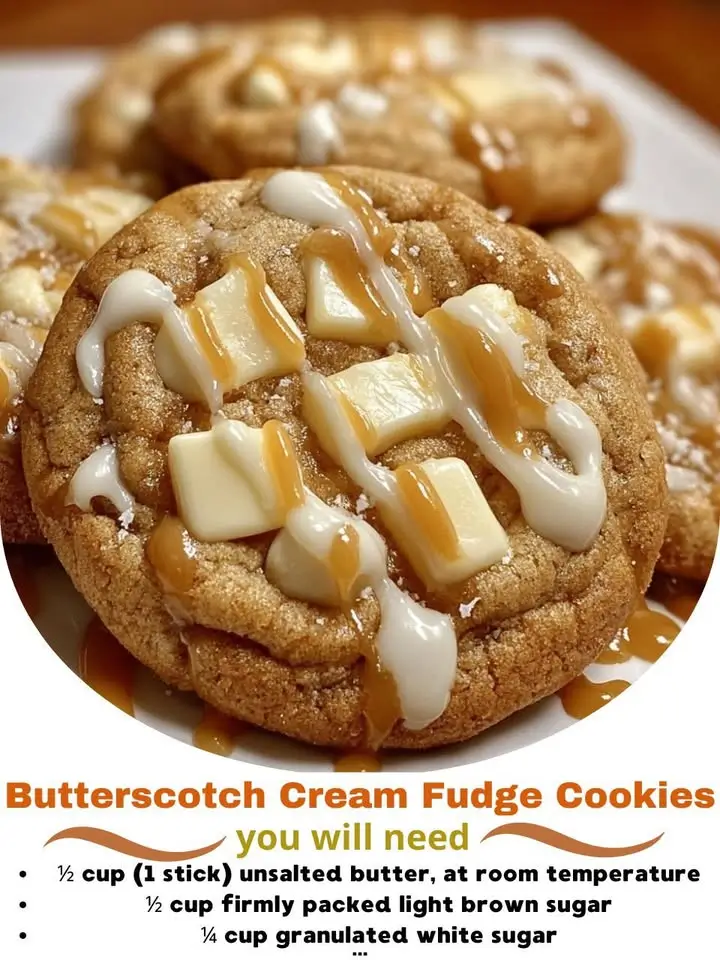
Indulge in the rich, buttery decadence of Butterscotch Cream Fudge Cookies—a dessert lover’s dream come true. These luscious cookies combine the deep, caramel-like flavor of butterscotch with a creamy, fudgy texture that melts in your mouth. Perfect for holiday gatherings, afternoon tea, or as a sweet treat to brighten any day, these cookies offer a nostalgic charm with a luxurious twist. Whether you’re a seasoned baker or trying your hand at cookie-making for the first time, this recipe promises a delightful experience from start to finish. With their golden-brown edges, soft centers, and irresistible aroma wafting through the kitchen, Butterscotch Cream Fudge Cookies are destined to become a family favorite.
The History
Butterscotch has a storied past that dates back to the mid-19th century in England, specifically in Doncaster, Yorkshire. Originally made from brown sugar and butter (hence the name “butterscotch”), the confection was slow-cooked to develop its signature rich, molasses-kissed flavor. The term “scotch” may derive from “score” or “cut,” referring to how the candy was traditionally scored before breaking. Over time, butterscotch found its way into various desserts—pies, puddings, sauces, and eventually cookies. The fusion of butterscotch with cookie dough began gaining popularity in American home baking during the early 20th century, particularly as brown sugar became more widely available and affordable. Cream-based additions like cream cheese or whipped cream came later, adding a velvety texture that elevated traditional butterscotch cookies into what we now know as Butterscotch Cream Fudge Cookies. Today, these cookies represent a harmonious blend of old-world charm and modern indulgence, cherished across generations for their comforting sweetness and gourmet appeal.
Ingredients Breakdown
The magic of Butterscotch Cream Fudge Cookies lies in the careful selection and balance of ingredients, each playing a vital role in creating their signature taste and texture:
- Unsalted Butter: Provides richness and helps create a tender crumb. Using unsalted butter allows control over the salt content.
- Brown Sugar (packed): The star of butterscotch flavor. Its molasses content adds moisture, chewiness, and deep caramel notes.
- Granulated Sugar: Balances sweetness and aids in browning and slight crispness on the edges.
- Large Eggs: Act as a binder and add structure while contributing to the soft, cake-like interior.
- Vanilla Extract: Enhances overall flavor with warm, aromatic depth.
- All-Purpose Flour: Forms the base structure of the cookies. Sifted for even distribution and lightness.
- Baking Soda: A leavening agent that helps the cookies rise slightly and spread evenly.
- Salt: Balances sweetness and enhances other flavors.
- Butterscotch Chips: The heart of the recipe—providing bursts of gooey, buttery-sweet flavor in every bite. Can be substituted or supplemented with butterscotch morsels or even homemade butterscotch chunks.
- Cream Cheese (softened): Adds creaminess and richness, giving the cookies a fudgy, almost truffle-like consistency.
- Heavy Cream or Whipping Cream: Introduces moisture and silkiness, contributing to the “cream” aspect of the fudge texture.
- Optional Add-ins: Chopped pecans, walnuts, or toasted coconut can enhance texture and complexity.
Each ingredient is chosen not just for flavor, but for its functional role in achieving the perfect balance between chewy, soft, and melt-in-your-mouth delicious.
Step-by-Step Recipe
- Preheat the Oven: Begin by preheating your oven to 350°F (175°C). Line two large baking sheets with parchment paper or silicone baking mats to prevent sticking and ensure even baking.
- Cream the Butter and Sugars: In a large mixing bowl, beat 1 cup (2 sticks) of softened unsalted butter with 1 cup of packed light brown sugar and 1/2 cup of granulated sugar using an electric mixer on medium speed. Beat for 2–3 minutes until the mixture is light, fluffy, and pale in color.
- Add Eggs and Vanilla: Add 2 large eggs, one at a time, beating well after each addition. Mix in 2 teaspoons of pure vanilla extract until fully incorporated.
- Incorporate Cream Cheese: Add 4 ounces (half a block) of softened cream cheese to the mixture. Beat on low speed until smooth and fully blended. This step gives the cookies their ultra-moist, fudgy core.
- Mix Dry Ingredients: In a separate bowl, whisk together 2 1/4 cups of all-purpose flour, 1 teaspoon of baking soda, and 1/2 teaspoon of salt. Ensure there are no lumps for a consistent texture.
- Combine Wet and Dry Mixtures: Gradually add the dry ingredients to the wet mixture, mixing on low speed until just combined. Do not overmix, as this can lead to tough cookies.
- Stir in Heavy Cream: Slowly pour in 1/4 cup of heavy cream while mixing on low. This step is crucial—it creates a silky batter that bakes into a dense, moist cookie with a fudge-like interior.
- Fold in Butterscotch Chips: Using a spatula, gently fold in 2 cups of butterscotch chips. For extra decadence, reserve a handful to press onto the tops of the cookies before baking.
- Scoop the Dough: Use a cookie scoop or tablespoon to portion out rounded balls of dough (about 1.5 tablespoons each). Place them 2 inches apart on the prepared baking sheets to allow for spreading.
- Bake: Bake in the preheated oven for 10–12 minutes, or until the edges are lightly golden and the centers still look slightly underdone. The cookies will continue to set as they cool.
- Cool: Allow the cookies to cool on the baking sheet for 5 minutes before transferring them to a wire rack to cool completely. This prevents breakage and helps maintain their soft texture.
Tips
- Use Room Temperature Ingredients: Ensure butter, eggs, and cream cheese are at room temperature (about 68–70°F) for smooth blending and even texture.
- Don’t Overbake: Remove cookies when the edges are set but centers appear soft. They firm up upon cooling and remain chewy.
- Chill the Dough (Optional): For thicker cookies with less spread, chill the dough for 30–60 minutes before baking.
- Measure Flour Correctly: Spoon flour into the measuring cup and level it off—don’t pack or tap it down—to avoid dry, dense cookies.
- Rotate Baking Sheets: Halfway through baking, rotate the pans front-to-back for even browning, especially if your oven has hot spots.
- Use Quality Butterscotch Chips: Opt for brands like Guittard, Hershey’s, or Ghirardelli for superior flavor and meltability.
- Store Properly: Keep cookies in an airtight container at room temperature for up to 5 days. For longer storage, freeze for up to 3 months.
- Double Batch Friendly: This recipe scales well—just double all ingredients except the baking time.
Variations and Customizations
While classic Butterscotch Cream Fudge Cookies are divine on their own, feel free to experiment with creative twists:
- Nutty Delight: Fold in 1/2 cup of chopped toasted pecans or walnuts for added crunch and earthy contrast.
- Coconut Bliss: Add 1/2 cup of sweetened shredded coconut for a tropical flair that pairs beautifully with butterscotch.
- Chocolate Swirl: Mix in 1/2 cup of semi-sweet chocolate chips for a butterscotch-chocolate fusion.
- Spiced Version: Add 1/2 teaspoon of ground cinnamon or a pinch of nutmeg for warmth and complexity.
- Gluten-Free Option: Substitute all-purpose flour with a high-quality gluten-free flour blend containing xanthan gum.
- Dairy-Free Adaptation: Use plant-based butter, vegan cream cheese, and coconut cream instead of dairy products.
- Mini Cookies: Make bite-sized versions using a teaspoon-sized scoop—perfect for parties or cookie trays.
- Stuffed Cookies: Place a small square of soft caramels or a dollop of butterscotch sauce in the center before baking for a gooey surprise.
- Cookie Sandwiches: Pair two cookies with a layer of whipped cream cheese frosting or buttercream for an elegant dessert.
Health Considerations and Nutritional Value
While Butterscotch Cream Fudge Cookies are undeniably indulgent, being mindful of ingredients and portion size can help balance enjoyment with health awareness:
- Calories: One average-sized cookie contains approximately 180–220 calories, depending on size and add-ins.
- Sugar Content: High in sugars due to brown sugar, granulated sugar, and butterscotch chips. A single cookie may contain 15–20g of sugar.
- Fat: Contains saturated fat from butter and cream cheese. Using reduced-fat alternatives can lower fat content slightly, though texture may be affected.
- Portion Control: Enjoy 1–2 cookies as a treat rather than consuming multiple in one sitting.
- Dietary Modifications: For a lighter version, consider reducing sugar by 25%, using natural sweeteners like coconut sugar, or incorporating applesauce as a partial fat substitute (though this alters texture).
- Allergens: Contains dairy, eggs, and wheat. Always check labels if serving those with allergies, especially with store-bought butterscotch chips which may have cross-contamination risks.
- Occasional Indulgence: Best enjoyed as part of a balanced diet. Their richness means a little goes a long way!
Ingredients
- 1 cup (2 sticks) unsalted butter, softened
- 1 cup packed light brown sugar
- 1/2 cup granulated sugar
- 2 large eggs
- 2 teaspoons pure vanilla extract
- 4 oz cream cheese, softened
- 2 1/4 cups all-purpose flour
- 1 teaspoon baking soda
- 1/2 teaspoon salt
- 1/4 cup heavy cream or whipping cream
- 2 cups butterscotch chips
- Optional: 1/2 cup chopped pecans or walnuts
Directions
- Preheat oven to 350°F (175°C). Line baking sheets with parchment paper.
- In a large bowl, cream together butter, brown sugar, and granulated sugar until light and fluffy.
- Add eggs one at a time, beating well after each. Stir in vanilla extract.
- Beat in cream cheese until smooth and fully incorporated.
- In a separate bowl, whisk together flour, baking soda, and salt.
- Gradually add dry ingredients to wet mixture, mixing on low until combined.
- Pour in heavy cream slowly, mixing until batter is smooth and creamy.
- Fold in butterscotch chips (and nuts, if using) with a spatula.
- Scoop dough into 1.5-tablespoon balls and place 2 inches apart on baking sheets.
- Bake for 10–12 minutes until edges are golden and centers are soft.
- Cool on baking sheet for 5 minutes, then transfer to wire rack to cool completely.
- Store in an airtight container at room temperature.
FAQ
Q: Can I use margarine instead of butter?
A: While possible, real butter is recommended for the best flavor and texture. Margarine may alter the taste and cause excess spreading.
Q: Why are my cookies too flat?
A: This could be due to melted butter, overcreaming, or warm dough. Chill the dough before baking and ensure butter is softened, not melted.
Q: Can I make the dough ahead of time?
A: Yes! Prepare the dough up to 2 days in advance and refrigerate in an airtight container. Let sit at room temperature for 15 minutes before scooping.
Q: How do I make the cookies chewier?
A: Increase brown sugar slightly, reduce baking time by 1 minute, and avoid overmixing. The cream cheese and heavy cream already contribute to chewiness.
Q: Can I freeze the baked cookies?
A: Absolutely. Freeze cooled cookies in a single layer, then transfer to a freezer-safe bag for up to 3 months. Thaw at room temperature.
Q: Are butterscotch chips the same as butterscotch morsels?
A: Yes, the terms are often used interchangeably. Both refer to sweet, butter-flavored baking chips designed to hold shape when baked.
Q: Can I use milk instead of heavy cream?
A: Milk can be used in a pinch, but it will result in less richness and a slightly drier texture. For best results, stick with heavy cream.
Summary
Butterscotch Cream Fudge Cookies are a heavenly blend of buttery richness, deep caramel flavor, and luxuriously soft texture—perfect for satisfying any sweet craving.
Baked to golden perfection with a fudgy center and studded with gooey butterscotch chips, these cookies are a timeless treat that brings joy in every bite.