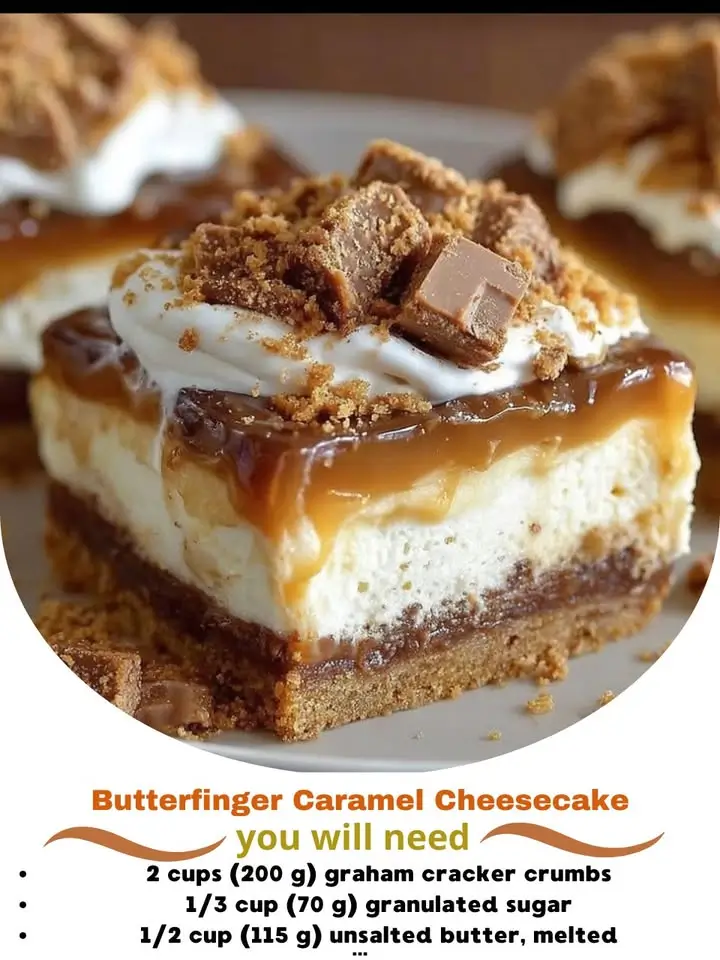
Butterfinger Caramel Cheesecake: A Decadent Dessert Fusion
The History of a Sweet Sensation
The Butterfinger Caramel Cheesecake is not just a dessert—it’s an evolution of classic American indulgence. While cheesecake has roots stretching back to ancient Greece, where it was served to athletes during the first Olympic games, its modern creamy, rich form became popular in the United States during the early 20th century, especially with the invention of cream cheese by William Lawrence in 1872. The addition of candy bars to desserts began gaining momentum in the mid-1900s, as confectioners and home bakers alike sought to elevate traditional treats with bold, nostalgic flavors.
Enter the Butterfinger—a crispy, peanut-butter-flavored candy bar introduced by the Nestlé company in 1923. Known for its unique “crispety, crunchety, peanut-buttery” texture, the Butterfinger quickly became a beloved staple in lunchboxes and Halloween buckets. Its ability to shatter into delightful shards made it perfect for incorporating into baked goods. Meanwhile, caramel’s rich, buttery sweetness has long been celebrated in desserts ranging from tarts to cookies. Combining these three powerhouses—cheesecake, Butterfinger, and caramel—was inevitable.
The Butterfinger Caramel Cheesecake emerged in the late 1990s and early 2000s as part of a broader trend of candy-infused desserts popularized by gourmet bakeries and food bloggers. It wasn’t long before this luxurious fusion found its way into holiday menus, dinner parties, and even upscale dessert cafes. Today, it stands as a testament to the creativity of modern baking—an elegant twist on tradition that satisfies both texture and taste cravings.
Ingredients Breakdown: What Makes This Cheesecake Irresistible?
To create the ultimate Butterfinger Caramel Cheesecake, every ingredient plays a vital role in building layers of flavor, texture, and richness. Here’s a detailed look at what goes into this show-stopping dessert:
- Cream Cheese: The foundation of any great cheesecake. Full-fat, brick-style cream cheese ensures a luxuriously smooth and dense filling. It should be softened to room temperature to avoid lumps.
- Granulated Sugar: Adds sweetness while helping to stabilize the structure of the cheesecake during baking.
- Sour Cream: Contributes tanginess and moisture, balancing the richness and preventing the cake from becoming too heavy.
- Vanilla Extract: Enhances overall flavor with its warm, floral notes—pure vanilla is always recommended over imitation.
- Eggs: Act as a binder and provide lift. They should be added one at a time and mixed gently to prevent air bubbles and cracking.
- Butterfingers: Crushed into fine crumbs and coarse pieces for both crust and mix-ins. Their peanut-butter crunch adds contrast to the creamy base.
- Graham Crackers: Combined with Butterfinger pieces to form a complex, textured crust with sweet and nutty undertones.
- Melted Butter: Binds the crust ingredients together, ensuring it holds its shape when sliced.
- Heavy Cream or Whipping Cream: Used in the filling for silkiness and sometimes in caramel sauce preparation.
- Caramel Sauce: Store-bought or homemade, this golden syrup swirled into the batter and drizzled on top delivers deep, buttery sweetness.
- Sea Salt (flaky): A pinch sprinkled on top enhances all the flavors and creates a salted-caramel effect.
- Whipped Cream (optional topping): For serving, adding lightness to each bite.
- Extra Crushed Butterfingers: For garnish, providing visual appeal and extra crunch.
Step-by-Step Recipe: How to Make Butterfinger Caramel Cheesecake
Ingredients You’ll Need:
- 2 cups graham cracker crumbs (about 14 full sheets)
- 1 cup finely crushed Butterfinger candy bars (divided use)
- 6 tablespoons unsalted butter, melted
- ¼ teaspoon salt
- 4 (8 oz) packages cream cheese, softened
- 1½ cups granulated sugar
- 1 cup sour cream
- 2 teaspoons pure vanilla extract
- 4 large eggs, at room temperature
- ½ cup heavy cream
- ⅓ cup chopped Butterfinger pieces (for mixing in)
- ½ cup thick caramel sauce (plus more for drizzling)
- Flaky sea salt, for garnish
Equipment Needed:
- 9-inch springform pan
- Food processor or zip-top bag and rolling pin
- Mixing bowls (large and medium)
- Electric hand mixer or stand mixer
- Spatula
- Roasting pan (for water bath)
- Parchment paper (optional, for easier removal)
Directions:
- Preheat Oven & Prepare Pan: Preheat your oven to 325°F (165°C). Grease the sides of a 9-inch springform pan and line the bottom with parchment paper if desired for easier release.
- Make the Crust: In a medium bowl, combine graham cracker crumbs, 1 cup of crushed Butterfingers, melted butter, and salt. Mix until the texture resembles wet sand. Press firmly and evenly into the bottom of the prepared pan. Use the bottom of a glass to compact it well. Bake for 10 minutes, then remove and let cool while you prepare the filling. Reduce oven temperature to 300°F (150°C) for the cheesecake.
- Prepare Filling: In a large bowl, beat the softened cream cheese on medium speed until smooth and creamy (about 2 minutes). Gradually add sugar and continue beating until fully incorporated and fluffy.
- Add Wet Ingredients: Mix in sour cream and vanilla extract until combined. Scrape down the sides of the bowl as needed.
- Incorporate Eggs: Add eggs one at a time, mixing on low speed after each addition just until the yolk disappears. Overmixing can introduce too much air, leading to cracks. Then mix in heavy cream until smooth.
- Add Mix-Ins: Gently fold in ⅓ cup of chopped Butterfinger pieces using a spatula. Reserve the rest for topping.
- Swirl in Caramel: Drizzle about half of the ½ cup caramel sauce into the batter. Use a knife or skewer to gently swirl it—don’t overmix, or you’ll lose the marbled effect.
- Transfer to Pan: Pour the batter over the cooled crust. Smooth the top with an offset spatula.
- Create a Water Bath: Wrap the outside of the springform pan tightly with two layers of aluminum foil to prevent water leakage. Place the pan inside a larger roasting pan. Carefully pour hot water into the outer pan until it reaches halfway up the sides of the springform (this is called a bain-marie or water bath, which prevents cracking and ensures even cooking).
- Bake: Place in the oven and bake for 75–90 minutes. The cheesecake is done when the edges are set but the center still jiggles slightly like Jell-O when nudged.
- Cool Gradually: Turn off the oven, crack the door open with a wooden spoon, and let the cheesecake cool inside for 1 hour. This prevents sudden temperature changes that cause cracks.
- Chill: Remove from the water bath, run a knife around the edge (to prevent sticking), and refrigerate for at least 6 hours—preferably overnight—for best texture and clean slicing.
- Final Touches: Before serving, drizzle generously with warmed caramel sauce, sprinkle with additional crushed Butterfingers, and finish with a pinch of flaky sea salt. Serve chilled.
Tips for the Perfect Butterfinger Caramel Cheesecake
- Room Temperature Ingredients Are Key: Cold cream cheese or eggs can lead to a lumpy batter. Allow all dairy ingredients to sit out for at least 1–2 hours before starting.
- Avoid Overmixing: Once you add the eggs, mix only until just combined. Overbeating incorporates excess air, which expands and collapses during baking, causing cracks.
- Use a Water Bath: Even if it seems fussy, the water bath is essential for gentle, even heat distribution. It’s the secret to a silky, crack-free surface.
- Don’t Rush Cooling: Sudden temperature shifts cause contraction and cracking. Letting it cool slowly in the turned-off oven makes a significant difference.
- Chill Thoroughly: A minimum of 6 hours is necessary, but 8–12 hours is ideal. This allows the proteins in the eggs and dairy to fully set.
- Sharp Knife for Slicing: Dip a thin, sharp knife in hot water and wipe it clean between each slice for neat, professional cuts.
- Homemade Caramel Boost: Elevate the recipe by making your own salted caramel sauce. It adds depth and control over sweetness.
- Freeze Butterfingers Before Crushing: For cleaner shards and less dust, freeze the candy bars for 15–20 minutes before crushing.
Variations and Customizations
The Butterfinger Caramel Cheesecake is highly adaptable. Whether you’re catering to dietary needs, seasonal themes, or just want to experiment, here are some delicious twists:
- No-Bake Version: Create a no-bake cheesecake using whipped cream, gelatin, and cold-set technique. Fold in crushed Butterfingers and swirl with chilled caramel. Set in the fridge for 6+ hours.
- Mini Cheesecakes: Use a muffin tin with cupcake liners to make individual servings. Adjust baking time to 25–30 minutes.
- Different Candy Swaps: Try Snickers, Reese’s Cups, or Crunch bars for alternate textures and flavors.
- Gluten-Free Option: Use gluten-free graham crackers and verify that the Butterfinger brand used is processed in a gluten-free facility (some may have cross-contamination).
- Dairy-Free/Lactose-Free: Substitute with vegan cream cheese, coconut-based sour cream, and dairy-free chocolate-covered peanut butter candies. Use plant-based butter and cream alternatives.
- Keto-Friendly: Use almond flour and sugar-free graham crackers for the crust, low-carb sweeteners like erythritol in the filling, and sugar-free caramel sauce. Choose a keto-compliant peanut-butter-flavored candy alternative.
- Layered Look: Create distinct layers by pouring plain batter first, then a layer of caramel and crushed Butterfingers, followed by more batter.
- Seasonal Themes: Add orange zest and dark chocolate curls for a Christmas version, or pastel-colored candies for Easter.
- Boozy Twist: Infuse the caramel with a tablespoon of bourbon or Baileys for an adult-only dessert.
- Crust Variations: Replace graham crackers with Oreo cookies, shortbread, or pretzels for a salty-sweet twist.
Health Considerations and Nutritional Value
While undeniably delicious, the Butterfinger Caramel Cheesecake is a high-calorie, sugar-dense dessert best enjoyed in moderation. Here’s a nutritional breakdown per average slice (assuming 12 slices):
| Nutrient | Amount per Slice |
|---|---|
| Calories | ~580–650 kcal |
| Total Fat | ~38–42g |
| Saturated Fat | ~20–24g |
| Cholesterol | ~130–150mg |
| Sodium | ~350–450mg |
| Total Carbohydrates | ~58–65g |
| Sugars | ~45–50g |
| Dietary Fiber | ~1–2g |
| Protein | ~9–11g |
Key Health Notes:
- High in Saturated Fat: From cream cheese, butter, and candy. Those monitoring heart health should consume sparingly.
- Sugar Content: Significant due to caramel, candy, and added sugar. Diabetics should consider sugar-free alternatives.
- Allergens: Contains milk, eggs, peanuts (in Butterfingers), and wheat. Not suitable for individuals with these allergies unless modified.
- Portion Control: Cutting smaller slices helps manage calorie intake while still enjoying the experience.
- Balanced Pairing: Serve with fresh berries or a side salad to balance the meal.
Frequently Asked Questions (FAQ)
- Can I make this cheesecake ahead of time?
- Absolutely! This cheesecake tastes even better after chilling overnight. You can prepare it 2–3 days in advance and store it covered in the refrigerator.
- Why did my cheesecake crack?
- Cracking is usually caused by overmixing, rapid cooling, or too high baking temperature. Using a water bath and gradual cooling helps prevent this.
- Can I freeze Butterfinger Caramel Cheesecake?
- Yes! Wrap tightly in plastic and then foil. Freeze for up to 2 months. Thaw overnight in the fridge before serving. Note: texture may soften slightly.
- How do I store leftovers?
- Cover loosely with plastic wrap or place under a cake dome in the refrigerator. Consume within 5 days for best quality.
- Can I use a different pan size?
- You can use an 8-inch pan for a taller cheesecake (extend baking time by 10–15 minutes), or a 10-inch for a thinner one (reduce time slightly).
- Is there a way to reduce the sweetness?
- Yes—use less sugar in the filling (start with 1 cup instead of 1½), choose a darker, less sweet caramel, or increase the tang with extra sour cream.
- Can I make it without a springform pan?
- It’s challenging, but possible with a regular cake pan lined well with parchment. However, removal will be harder and may damage the crust.
- Are Butterfingers gluten-free?
- Traditional Butterfingers contain wheat and are not gluten-free. Look for specialty brands or substitutes if needed.
Summary
The Butterfinger Caramel Cheesecake is a decadent masterpiece that combines the creamy luxury of cheesecake with the nostalgic crunch of Butterfinger and the buttery richness of caramel. Perfect for holidays, celebrations, or when you simply crave something extraordinary.