Introduction
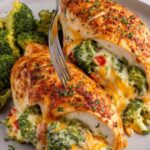
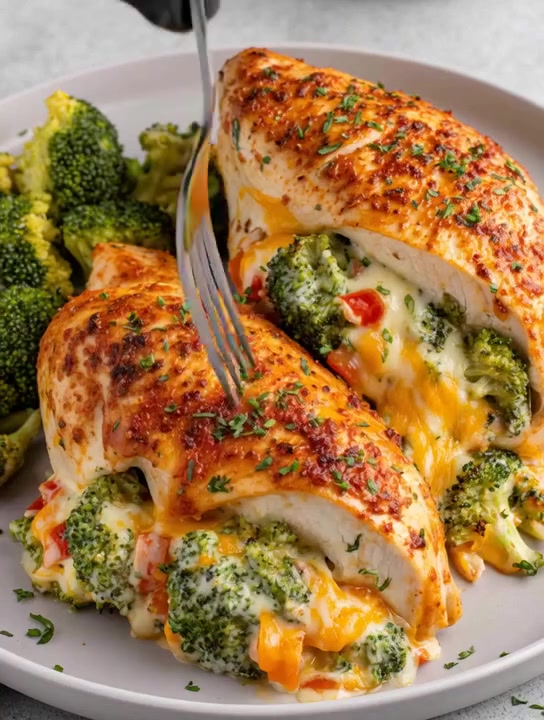
Broccoli Cheese Stuffed Chicken is a culinary masterpiece that marries the wholesome heartiness of lean protein with the vibrant nutrition of vegetables and the rich, creamy comfort of melted cheese. This dish transcends the ordinary weeknight dinner—it’s an elegant yet approachable centerpiece that impresses guests, satisfies picky eaters, and delivers balanced flavor in every bite. Whether you’re meal prepping for the week, hosting a casual Sunday supper, or seeking a family-friendly recipe that doesn’t compromise on taste or texture, this stuffed chicken breast promises juiciness, depth, and delightful contrast: tender herb-seasoned chicken enveloping a savory, velvety filling of steamed broccoli, sharp cheddar, creamy cream cheese, garlic, and just a hint of Dijon mustard for brightness. It’s comfort food reimagined—sophisticated enough for special occasions, simple enough for Tuesday night.
The History
While no single origin story defines Broccoli Cheese Stuffed Chicken, its roots lie in the broader American tradition of “stuffed poultry,” which gained momentum in the mid-20th century as home cooks sought creative ways to elevate affordable, versatile chicken breasts. The post-war rise of convenience ingredients—like processed cheeses, frozen broccoli florets, and pre-shredded dairy products—paved the way for accessible, time-saving stuffed preparations. Simultaneously, the 1970s and ’80s saw a surge in “gourmet” home cooking, fueled by television chefs and cookbooks emphasizing presentation and layered flavors—making rolled or pocketed chicken breasts a staple in recipes promising both elegance and ease. Broccoli and cheese, a beloved duo since the advent of classic American casseroles like broccoli cheese casserole (popularized in mid-century church cookbooks and community fundraisers), naturally migrated into protein-centric dishes as health consciousness grew alongside flavor expectations. By the 2000s, food blogs and recipe-sharing platforms amplified variations—adding sun-dried tomatoes, roasted garlic, or Greek yogurt substitutions—transforming this dish from a regional favorite into a nationally celebrated, endlessly adaptable main course. Today, it stands as a testament to culinary evolution: where nutrition, nostalgia, and modern technique converge on one sizzling sheet pan.
Ingredients Breakdown
Every element in Broccoli Cheese Stuffed Chicken plays a deliberate role—not just in flavor, but in texture, moisture retention, binding integrity, and nutritional synergy. Let’s explore each component in detail:
- Chicken Breasts (boneless, skinless): Opt for uniform, thick-cut breasts (6–8 oz each) to ensure even cooking and ample cavity space. Pounding them to ¼-inch thickness increases surface area for stuffing while preventing tearing during rolling. Their mild flavor serves as the perfect canvas, while their high protein content anchors satiety and supports muscle maintenance.
- Fresh Broccoli Florets: Chosen over frozen for superior texture and less water release—critical to avoid a soggy filling. Lightly blanched (90 seconds in salted boiling water, then shocked in ice water), it retains vibrant color, crisp-tender bite, and concentrated nutrients—including sulforaphane, a potent antioxidant linked to cellular health.
- Sharp Cheddar Cheese: Aged for at least 6 months, its bold, tangy, crystalline complexity cuts through richness and binds seamlessly when melted. Its higher fat content (vs. low-fat alternatives) contributes essential mouthfeel and prevents dryness. Avoid pre-shredded varieties containing anti-caking agents (e.g., cellulose), which inhibit smooth melting.
- Cream Cheese (full-fat, brick-style): Acts as the luxurious binder—providing creaminess, acidity, and structural cohesion. Its slight tang balances the cheddar’s sharpness, while its fat content locks in moisture during baking. Neufchâtel or reduced-fat versions lack sufficient stability and may weep or separate under heat.
- Garlic (fresh, minced): Raw garlic offers pungent, aromatic depth; lightly sautéing it in olive oil before mixing mellows its bite and infuses the entire filling with golden, savory warmth—enhancing digestibility and adding allicin, a compound studied for immune support.
- Green Onions (scallions): Used both in the filling and as garnish, their delicate onion-sweetness and subtle crunch provide aromatic brightness and visual appeal. The green parts are especially rich in lutein and zeaxanthin—nutrients vital for eye health.
- Dijon Mustard: More than a flavor accent—its vinegar base slightly acidifies the filling, enhancing cheese meltability and helping emulsify fats. Its complex spice profile (brown mustard seeds, white wine, tarragon) adds dimension without overpowering.
- Fresh Herbs (thyme & parsley): Thyme contributes earthy, floral notes that complement poultry naturally; parsley adds freshness and chlorophyll-rich vibrancy. Both are packed with antioxidants and volatile oils shown to support anti-inflammatory pathways.
- Olive Oil (extra-virgin): Used for searing and drizzling—its polyphenols remain stable at moderate roasting temps, contributing heart-healthy monounsaturated fats and a nuanced fruitiness that elevates the entire dish.
- Salt, Black Pepper, and Paprika (smoked or sweet): Salt enhances all other flavors and aids protein denaturation for tenderness; freshly ground black pepper adds warm pungency; smoked paprika contributes subtle depth, aroma, and natural capsaicin—linked to metabolic benefits.
Step-by-Step Recipe
- Prep the Chicken: Place two boneless, skinless chicken breasts between two sheets of parchment paper or plastic wrap. Using a meat mallet or heavy skillet, gently pound each to an even ¼-inch thickness—starting from the center and working outward. Be careful not to tear; if small rips occur, press edges together—they’ll seal during baking. Transfer to a clean plate, season both sides generously with kosher salt, freshly ground black pepper, and ½ tsp smoked paprika. Refrigerate uncovered for 15 minutes—this helps the surface dry slightly for better sear adhesion.
- Blanch the Broccoli: Bring 4 cups of well-salted water to a rolling boil. Add 2 cups of small, uniform broccoli florets and cook exactly 90 seconds—no more, no less. Immediately drain and plunge into a bowl of ice water to halt cooking and lock in vivid green color. Drain thoroughly, then pat *completely dry* with clean kitchen towels or paper towels—excess moisture is the #1 cause of filling leakage.
- Prepare the Filling: In a medium nonstick skillet over medium-low heat, warm 1 tbsp extra-virgin olive oil. Add 2 cloves finely minced garlic and 2 thinly sliced green onions (white and light green parts only). Sauté 60–90 seconds until fragrant but not browned. Remove from heat and let cool 2 minutes. In a large mixing bowl, combine the cooled garlic-onion mixture, blanched broccoli, 1 cup shredded sharp cheddar, 4 oz full-fat cream cheese (softened to room temperature), 1 tbsp Dijon mustard, 1 tsp fresh thyme leaves, 2 tbsp finely chopped fresh parsley, ¼ tsp grated lemon zest, and a pinch of freshly grated nutmeg. Fold gently with a spatula until fully integrated—do not overmix. Taste and adjust: add salt only if needed (cheddar and mustard are already salty).
- Stuff and Roll: Lay each pounded chicken breast flat on a clean work surface. Spoon ⅓ to ½ cup of filling evenly across the center third of each breast, leaving a ½-inch border on all sides. Carefully lift the long side closest to you and fold it over the filling, then roll away from you, tucking in the sides as you go to form a tight, compact cylinder. Secure each roll with 2–3 toothpicks inserted horizontally—place one near the center and one near each end to prevent unraveling. Optional but highly recommended: chill rolls for 20 minutes before cooking—this firms the filling and improves sear integrity.
- Sear for Flavor & Structure: Heat 1.5 tbsp olive oil in a heavy-bottomed oven-safe skillet (cast iron preferred) over medium-high heat until shimmering but not smoking. Pat rolls *very dry* with paper towels. Place seam-side down first—press gently for 10 seconds to seal—then sear undisturbed for 2–3 minutes per side (including ends) until deeply golden brown and crusty. This Maillard reaction builds foundational umami and creates a protective barrier against moisture loss.
- Roast to Perfection: Transfer skillet to a preheated 375°F (190°C) oven. Roast uncovered for 22–28 minutes—timing depends on thickness. Internal temperature must reach 165°F (74°C) at the thickest part of the chicken (avoid touching filling or toothpicks). For extra browning and caramelization, broil on high for the final 1–2 minutes—but watch closely.
- Rest and Serve: Remove from oven, tent loosely with foil, and rest for 8–10 minutes. This allows juices to redistribute and the filling to settle—preventing gushy leaks upon slicing. Carefully remove toothpicks. Slice diagonally into 1-inch medallions using a sharp, non-serrated knife. Garnish with remaining green onion tops, extra parsley, and a light drizzle of high-quality olive oil or lemon-infused aioli.
Tips
- Pounding Precision: Always pound chicken *against the grain*—this shortens muscle fibers for maximum tenderness. Use the flat side of the mallet, not the ridged side, to avoid shredding.
- Dryness is Non-Negotiable: Wet chicken = poor sear = steam instead of crust. Pat breasts *twice*: once after pounding, again right before searing. Same goes for broccoli—squeeze gently in a towel if needed.
- Toothpick Strategy: Use wooden toothpicks—soak in water for 15 minutes beforehand to prevent burning. Insert perpendicular to the roll’s length for best hold. Mark insertion points with a light knife nick so removal is foolproof.
- Thermometer Discipline: Rely on a digital instant-read thermometer—not time alone. Ovens vary, and stuffing density affects heat transfer. Probe horizontally into the thickest chicken portion, avoiding cheese pockets.
- Carryover Cooking: Chicken continues to rise 5–7°F after removal from heat. Pull at 160°F if confident in your thermometer—rest will bring it to safe 165°F.
- No-Stick Skillet Hack: If using nonstick, skip the initial sear and roast directly—but expect less flavor depth. For cast iron or stainless, preheat the empty pan for 3 minutes before adding oil.
- Slicing Technique: Use a gentle sawing motion—not downward pressure—to preserve roll structure. Wipe knife clean between slices for neat presentation.
- Make-Ahead Magic: Assemble rolls up to 24 hours ahead; store covered on a parchment-lined tray in the coldest part of your fridge. Sear and roast straight from cold—no need to temper.
- Leftover Reinvention: Dice chilled leftovers into salads, fold into omelets, or shred for quesadillas—the cheesy broccoli filling holds up beautifully.
Variations and Customizations
This recipe is a vibrant template—designed to evolve with your pantry, dietary goals, and seasonal inspiration. Here are thoughtfully tested adaptations:
- Gluten-Free & Grain-Free: Already naturally GF! Ensure Dijon mustard is certified gluten-free (some contain malt vinegar). For paleo compliance, omit cheese and replace with mashed cauliflower + avocado + lemon juice + herbs.
- Lower-Carb/Keto: Boost fat and reduce carbs by adding 2 tbsp crumbled cooked bacon, ¼ cup grated Parmesan, and 1 tbsp chopped walnuts to the filling. Serve with roasted asparagus or zucchini ribbons instead of grains.
- Dairy-Free: Substitute cashew cream cheese (soaked raw cashews blended with lemon, nutritional yeast, and salt) for cream cheese; use aged coconut milk cheddar-style shreds (like Daiya Cutting Board or Violife) and a splash of unsweetened almond milk for moisture.
- Vegan “Stuffed Chicken”: Use thick slabs of pressed extra-firm tofu or seitan cutlets. Marinate 30 minutes in tamari, garlic, smoked paprika, and liquid smoke. Stuff with a blend of riced cauliflower, nutritional yeast, turmeric, and steamed broccoli.
- Mediterranean Twist: Replace cheddar with crumbled feta and cream cheese with whipped goat cheese. Add 2 tbsp chopped Kalamata olives, 1 tsp dried oregano, and ¼ cup sun-dried tomatoes (oil-packed, patted dry).
- Spicy Southwest: Stir 1 finely diced chipotle in adobo, 1 tsp ground cumin, and 2 tbsp chopped cilantro into the filling. Top finished rolls with avocado crema and pickled red onions.
- Herb Garden Delight: Swap thyme for 1 tbsp chopped fresh dill + 1 tbsp chives. Add 2 tbsp grated Gruyère for nutty complexity and finish with edible pansies.
- Umami Bomb: Sauté 1 tsp dried porcini mushrooms (rehydrated and finely minced) with the garlic. Add 1 tsp white miso paste to the cream cheese before mixing. Finish with black sesame seeds.
- Sheet Pan Simplified: Skip searing—place unstuffed chicken breasts on a parchment-lined sheet pan, top each with filling, fold edges over, and secure. Drizzle with oil and roast at 400°F for 25–30 minutes.
- Grill-Roasted Version: Sear rolls on a preheated grill over direct medium-high heat (2 min/side), then move to indirect zone, cover, and grill at 375°F for 20–25 minutes.
Health Considerations and Nutritional Value
A single serving (one 6-oz stuffed chicken breast, approx. 300g cooked) delivers a robust, bioavailable nutrient profile—thoughtfully balanced for sustained energy, cellular repair, and metabolic support:
- Protein Powerhouse: ~42g high-quality complete protein—containing all 9 essential amino acids—supports muscle synthesis, satiety signaling (leptin & ghrelin regulation), and enzyme production. Chicken breast is especially rich in leucine, the key trigger for muscle protein synthesis.
- Fiber & Phytonutrients: Broccoli contributes ~5g dietary fiber (20% DV), plus glucosinolates (especially sulforaphane), which activate Nrf2 pathways—enhancing the body’s natural detoxification enzymes and exhibiting studied anti-cancer properties in preclinical models.
- Vitamin Synergy: One serving provides >200% DV Vitamin K (from broccoli and parsley), critical for blood clotting and bone mineralization; 150% DV Vitamin C (broccoli + lemon zest), boosting collagen formation and iron absorption from the chicken; and significant folate, B6, and potassium.
- Smart Fat Profile: While containing saturated fat (primarily from cheese and cream cheese), the majority of fat comes from monounsaturated (olive oil) and beneficial short-chain fatty acids (in fermented cheeses). These fats improve LDL particle size, support brain health, and enhance absorption of fat-soluble vitamins (A, D, E, K).
- Sodium Awareness: Naturally moderate at ~480mg per serving (without added table salt)—well below the 2,300mg daily limit. For hypertension concerns, reduce added salt by half and emphasize herbs, citrus, and smoked paprika for flavor.
- Glycemic Impact: Effectively zero glycemic load—ideal for insulin-sensitive individuals, prediabetics, or those following low-glycemic eating patterns. No added sugars or refined starches.
- Digestive Support: Garlic and parsley contain prebiotic fructans; broccoli provides indigestible fiber that feeds beneficial gut microbiota. Pair with a fermented side (sauerkraut, kimchi) for enhanced probiotic synergy.
- Considerations for Specific Needs: Those with lactose intolerance may tolerate aged cheddar (naturally low-lactose) and full-fat cream cheese (minimal lactose); for severe sensitivity, opt for lactose-free dairy or plant-based alternatives. Those managing histamine levels should consume within 24 hours of preparation and avoid extended storage.
Ingredients
- 2 large boneless, skinless chicken breasts (about 1 lb / 450g total)
- Kosher salt and freshly ground black pepper (to taste)
- ½ tsp smoked paprika (or sweet paprika)
- 2 cups small broccoli florets (about 1 small head)
- 1 tbsp extra-virgin olive oil (plus more for drizzling)
- 2 cloves garlic, finely minced
- 3 green onions, thinly sliced (reserve dark green tops for garnish)
- 1 cup (4 oz / 115g) sharp cheddar cheese, freshly shredded
- 4 oz (115g) full-fat brick cream cheese, softened to room temperature
- 1 tbsp Dijon mustard (stone-ground preferred)
- 1 tsp fresh thyme leaves (or ½ tsp dried)
- 2 tbsp fresh parsley, finely chopped
- ¼ tsp finely grated lemon zest
- Pinch of freshly grated nutmeg
- Wooden toothpicks (soaked in water for 15 minutes)
Directions
- Place chicken breasts between two sheets of parchment paper. Pound evenly to ¼-inch thickness using a meat mallet or heavy skillet. Season both sides with salt, pepper, and paprika. Refrigerate uncovered for 15 minutes.
- Bring 4 cups salted water to a boil. Blanch broccoli florets for 90 seconds. Drain and immediately submerge in ice water. Drain again and pat *extremely dry* with towels.
- In a small skillet, heat 1 tbsp olive oil over medium-low. Sauté garlic and white/light green parts of green onions for 60–90 seconds until fragrant. Cool 2 minutes.
- In a large bowl, combine cooled garlic mixture, broccoli, cheddar, cream cheese, Dijon, thyme, parsley, lemon zest, and nutmeg. Fold gently until homogenous. Taste and adjust seasoning.
- Lay each chicken breast flat. Spread ⅓–½ cup filling across center third, leaving ½-inch borders. Roll tightly, tucking sides in. Secure with 2–3 soaked toothpicks.
- Chill rolls for 20 minutes (optional but recommended).
- Heat 1.5 tbsp olive oil in an oven-safe skillet over medium-high. Pat rolls dry. Sear seam-side down first, then all sides and ends, 2–3 minutes each, until deeply golden.
- Transfer skillet to preheated 375°F (190°C) oven. Roast 22–28 minutes, until internal temp reaches 165°F (74°C) in thickest chicken portion.
- Rest, covered loosely with foil, for 8–10 minutes. Remove toothpicks. Slice diagonally. Garnish with reserved green onion tops, extra parsley, and a drizzle of olive oil.
FAQ
- Can I use frozen broccoli?
- Yes—but thaw completely, then squeeze *aggressively* in a clean towel to remove every drop of water. Frozen broccoli releases significantly more liquid than fresh, increasing risk of leakage and steaming instead of roasting. Fresh is strongly preferred for texture and flavor integrity.
- What if my chicken tears while pounding?
- Small tears are normal and fixable! Gently press edges together with your fingers—they’ll fuse during cooking. For larger rips, place a small patch of extra-thin chicken slice over the tear before stuffing. Alternatively, use the “butterfly” method: slice horizontally almost through, open like a book, then pound—eliminating stretch-related tears entirely.
- Can I make this ahead and freeze?
- Absolutely. Assemble rolls, insert toothpicks, wrap *tightly* in plastic wrap, then place in a freezer bag (remove air). Freeze up to 3 months. Thaw overnight in the fridge before searing and roasting. Do not thaw at room temperature.
- Why does my filling leak out during cooking?
- Three primary causes: 1) Excess moisture in broccoli (pat dry thoroughly), 2) Under-seared exterior (ensure deep golden crust on all sides before roasting), 3) Overstuffing (use no more than ½ cup per 6-oz breast). Chilling rolls before cooking also dramatically reduces leakage.
- Can I cook this without an oven-safe skillet?
- Yes. Sear in any heavy skillet, then carefully transfer rolls to a parchment-lined baking dish. Pour ¼ cup low-sodium chicken broth into the dish to keep environment moist. Cover tightly with foil and bake at 375°F for 25 minutes, then uncover and bake 5–10 minutes more to crisp tops.
- Is there a way to make it lower in calories?
- Reduce cream cheese to 2 oz and add 2 tbsp plain nonfat Greek yogurt for creaminess and protein. Use reduced-fat cheddar (but not fat-free—melting suffers). Increase broccoli to 2.5 cups for volume and fiber. Calorie reduction: ~80–100 kcal per serving, with minimal impact on satisfaction.
- What sides pair best with this dish?
- Light, acidic, or texturally contrasting sides shine: Lemon-dressed arugula salad with shaved fennel; garlic-herb roasted baby potatoes; quinoa pilaf with toasted almonds and dried cherries; or simply steamed green beans with slivered almonds and a squeeze of Meyer lemon.
- Can I use turkey or pork instead of chicken?
- Turkey breast cutlets work identically—just reduce roasting time by 3–5 minutes (turkey cooks faster). Pork tenderloin medallions (½-inch thick) are excellent too—season with sage and apple butter in the filling, and roast to 145°F internal temp for juicy results.
- How do I reheat leftovers without drying them out?
- Low and slow is key. Place slices in a covered dish with 1 tbsp broth or water. Reheat in a 300°F oven for 12–15 minutes—or microwave at 50% power in 30-second bursts, covered with a damp paper towel. Never reheat at full power.
- What wine or beverage pairs well?
- A crisp, unoaked Chardonnay or dry Riesling balances richness with acidity. For non-alcoholic: sparkling water with lemon and a sprig of rosemary, or chilled green tea with a hint of ginger.
Summary
Broccoli Cheese Stuffed Chicken is a triumph of intentional cooking—where tender, herb-kissed chicken envelopes a luxuriously creamy, nutrient-dense filling of vibrant broccoli and artisanal cheese, all elevated by smart techniques like precise blanching, thorough drying, and strategic searing.
It’s a dish that nourishes deeply, satisfies completely, and adapts gracefully—whether you’re feeding a family, entertaining guests, following specific dietary frameworks, or simply craving food that feels both comforting and consciously crafted.