Blackened Cajun Chicken Bowls: A Flavor-Packed Southern Delight
When it comes to bold, smoky, and spicy flavors that dance on your palate, few dishes can rival the Blackened Cajun Chicken Bowl. This vibrant, hearty meal brings together the fiery essence of Creole seasoning with tender chicken, fresh vegetables, and a medley of wholesome grains or bases like rice, quinoa, or greens. Originating from the rich culinary traditions of Louisiana, this dish has evolved into a modern staple in both home kitchens and trendy eateries across America. Whether you’re looking for a high-protein dinner, a nutritious lunch option, or a way to spice up your weekly meal prep, the Blackened Cajun Chicken Bowl delivers on every level—flavor, texture, and nutrition.
The History Behind the Heat
The roots of blackened chicken trace back to 1980s New Orleans, where legendary chef Paul Prudhomme revolutionized American cuisine with his iconic “blackened redfish.” At K-Paul’s Louisiana Kitchen, Chef Prudhomme developed a technique involving coating fish (and later chicken) in a robust blend of spices and searing it in a scorching cast-iron skillet until a dark, flavorful crust formed—hence the term “blackened.” The method was inspired by traditional Cajun and Creole cooking, which emphasizes bold seasonings, local ingredients, and rustic preparation styles.
Cajun cuisine itself stems from the Acadian people—French settlers expelled from Nova Scotia in the 18th century—who settled in rural Louisiana and adapted their French culinary heritage with local ingredients like peppers, onions, garlic, and smoked meats. Over time, the blackening technique spread beyond seafood and became a popular way to prepare chicken, offering a restaurant-quality experience at home. Today, blackened Cajun chicken bowls reflect a fusion of this deep cultural history with contemporary food trends focused on balanced, colorful, and satisfying meals served in a bowl format.
Ingredients Breakdown: Building Layers of Flavor
The magic of a Blackened Cajun Chicken Bowl lies not just in its heat, but in the harmony of components that come together to create a complete, satisfying dish. Let’s break down each element:
- Cajun Seasoning Blend: The heart of the dish. A mix typically includes paprika, cayenne pepper, garlic powder, onion powder, dried thyme, oregano, black pepper, white pepper, salt, and sometimes mustard powder. This creates the signature smoky-spicy profile.
- Chicken Breast or Thighs: Boneless, skinless chicken breasts are lean and widely used, though thighs offer more moisture and richness, especially when seared at high heat.
- Oil with High Smoke Point: Avocado oil, grapeseed oil, or clarified butter (ghee) are ideal for achieving that perfect blackened crust without burning.
- Grain Base: White or brown rice, cilantro-lime rice, quinoa, farro, or cauliflower rice for a low-carb alternative. Each adds a different texture and nutritional profile.
- Vegetables: Bell peppers (red, yellow, green), red onion, zucchini, corn, cherry tomatoes, or even okra—common in Cajun cooking—add color, crunch, and nutrients.
- Legumes: Black beans, kidney beans, or pinto beans boost fiber and plant-based protein, making the bowl more filling and balanced.
- Toppings: Sliced avocado, pickled red onions, crumbled feta or cotija cheese, chopped green onions, fresh cilantro, or a dollop of creole remoulade or ranch dressing elevate freshness and creaminess.
- Liquid Elements: A splash of lemon juice, lime juice, hot sauce (like Crystal or Tabasco), or a drizzle of olive oil ties everything together.
Step-by-Step Recipe: Crafting Your Perfect Bowl
Follow these detailed steps to make a restaurant-worthy Blackened Cajun Chicken Bowl at home:
- Prepare the Chicken: Start with 1.5 to 2 pounds of boneless, skinless chicken breasts or thighs. Pat them dry thoroughly with paper towels—this is crucial for proper searing. Trim excess fat and pound thicker pieces to an even thickness (about ¾ inch) to ensure even cooking.
- Season Generously: In a small bowl, mix 2–3 tablespoons of homemade or store-bought Cajun seasoning. Coat both sides of the chicken evenly, pressing the spices into the meat. For extra flavor, let it sit for 15–30 minutes at room temperature (or up to 2 hours refrigerated).
- Heat the Skillet: Place a heavy cast-iron skillet over medium-high to high heat. Add 1–2 tablespoons of high-smoke-point oil and swirl to coat. The pan should be hot enough that a drop of water sizzles and evaporates instantly.
- Sear the Chicken: Carefully place the chicken in the skillet. Do not overcrowd—cook in batches if necessary. Sear for 4–5 minutes per side, depending on thickness, until deeply browned with a blackened crust and the internal temperature reaches 165°F (74°C). Avoid moving the chicken too much to allow the crust to form.
- Rest the Chicken: Transfer the chicken to a cutting board and let it rest for 5–7 minutes. This keeps the juices inside. Then slice into thin strips or cubes.
- Prepare the Base: While the chicken cooks, prepare your grain base. Cook 1 cup of rice or quinoa according to package instructions. For extra flavor, cook rice in chicken broth and stir in lime zest, chopped cilantro, and a squeeze of lime juice.
- Sauté the Vegetables: In the same skillet (wipe out excess char if desired), add a bit more oil and sauté sliced bell peppers and onions over medium heat for 6–8 minutes until tender-crisp. Add corn, zucchini, or other veggies as desired. Season lightly with salt and a pinch of Cajun seasoning.
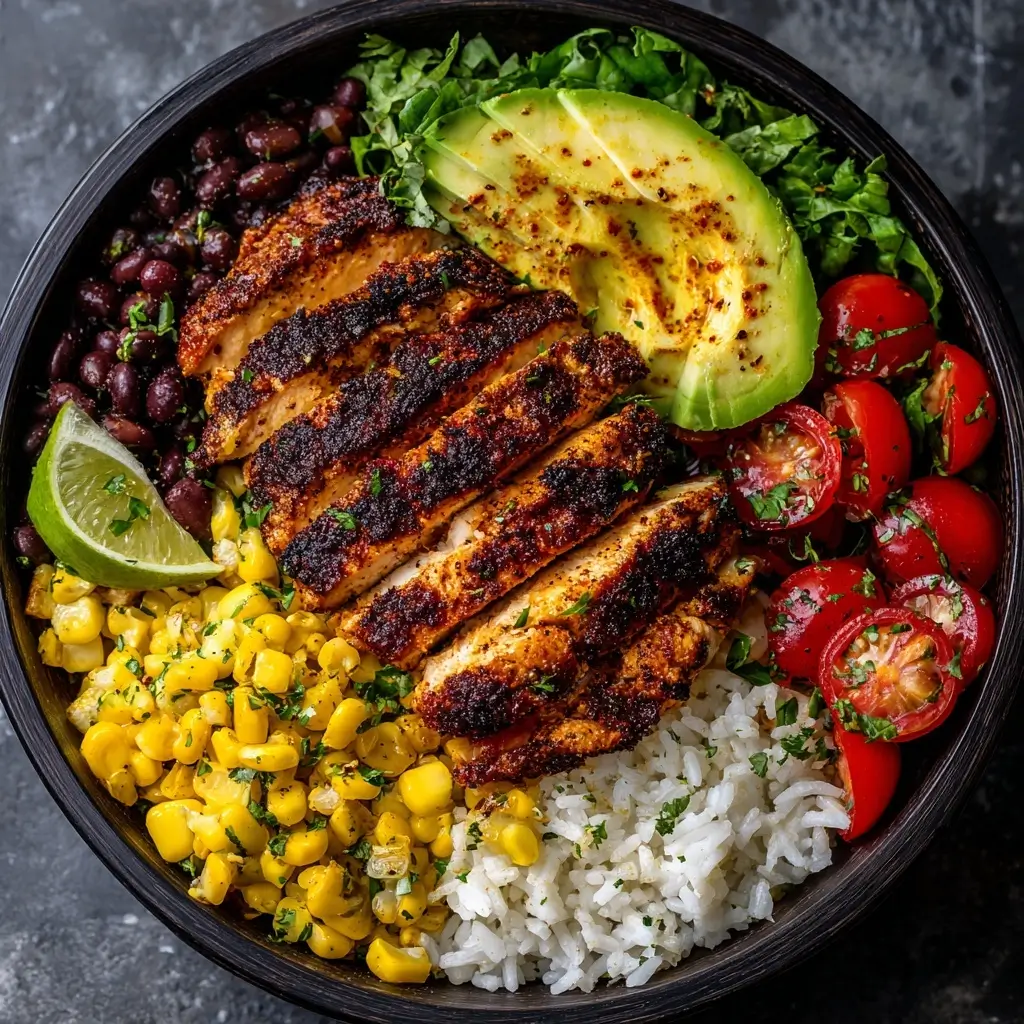
- Assemble the Bowls: In each serving bowl, start with a generous scoop of warm grains. Top with sautéed vegetables, blackened chicken slices, beans (if using), avocado slices, and any additional toppings like pickled onions, cheese, or fresh herbs.
- Finish with Flair: Drizzle with creole mayo (mix mayo with hot sauce, garlic, and lemon juice), ranch, or a simple vinaigrette. Add a wedge of lime for squeezing over the top.
- Serve Immediately: Enjoy while hot and fragrant, with layers of spice, smoke, and freshness dancing in every bite.
Pro Tips for Success
- Dry Chicken is Key: Moisture prevents proper browning. Always pat chicken dry before seasoning.
- Don’t Skip the Rest: Letting the chicken rest ensures juicy results. Cutting too soon releases precious juices.
- Ventilate Your Kitchen: Blackening creates smoke. Turn on your exhaust fan, open windows, or consider doing it outdoors on a grill.
- Make Your Own Cajun Seasoning: It’s easy and customizable. Try adjusting the cayenne for more or less heat.
- Batch Cooking: Make extra chicken and seasoning for meal prep. Blackened chicken stores well in the fridge for up to 4 days.
- Balance the Heat: If the spice level overwhelms, serve with cooling elements like sour cream, yogurt, or coleslaw.
- Use Fresh Spices: Old spices lose potency. Replace your spice blends every 6–12 months for maximum flavor.
Variations and Customizations
The beauty of the Blackened Cajun Chicken Bowl is its versatility. Here are creative ways to tailor it to your taste or dietary needs:
- Low-Carb/Keto Version: Swap grains for cauliflower rice or a bed of mixed greens. Use full-fat toppings like avocado, cheese, and olive oil-based dressings.
- Paleo-Friendly: Omit beans and grains. Serve over roasted sweet potatoes or zucchini noodles. Use coconut aminos instead of soy-based sauces if needed.
- Vegan Twist: Replace chicken with blackened tofu, tempeh, or portobello mushrooms. Use the same Cajun seasoning and searing technique.
- Seafood Option: Try blackened shrimp or catfish fillets instead of chicken for a coastal twist.
- Mexican-Cajun Fusion: Add pico de gallo, black beans, corn, and tortilla strips for a Tex-Mex flair. Use chipotle powder in the seasoning.
- Breakfast Bowl: Top with a fried or poached egg for a protein-packed morning meal.
- Meal Prep Friendly: Portion ingredients separately in containers. Assemble and reheat as needed, adding fresh toppings last.
- Spice Level Control: Reduce or omit cayenne for mild versions. Add smoked paprika for depth without heat.
Health Considerations and Nutritional Value
A well-balanced Blackened Cajun Chicken Bowl can be a powerhouse of nutrition when thoughtfully composed. Here’s a breakdown of key health aspects:
- High-Quality Protein: Chicken breast provides lean protein (about 26g per 3 oz), essential for muscle repair and satiety.
- Fiber-Rich Components: Beans, whole grains, and vegetables contribute dietary fiber (8–12g per bowl), supporting digestion and blood sugar control.
- Healthy Fats: Avocado and olive oil provide monounsaturated fats, which support heart health and nutrient absorption.
- Vitamins & Minerals: Bell peppers (vitamin C), leafy greens (vitamin K), tomatoes (lycopene), and garlic (antioxidants) add phytonutrient diversity.
- Sodium Awareness: Store-bought Cajun seasoning and canned beans can be high in sodium. Opt for low-sodium versions or make your own spice blend and rinse beans thoroughly.
- Spice Benefits: Capsaicin in cayenne pepper may boost metabolism and reduce inflammation, though effects vary by individual.
- Balanced Macros: A typical bowl contains approximately 400–600 calories, with a balance of protein (30–40g), complex carbs (35–50g), and healthy fats (15–20g), depending on ingredients.
- Allergen Notes: Naturally gluten-free if using certified GF grains and seasonings. Dairy-free if omitting cheese. Always check labels for cross-contamination risks.
Full Ingredient List
Serves 4
For the Blackened Chicken:
- 1.5 lbs (680g) boneless, skinless chicken breasts or thighs
- 3 tbsp Cajun seasoning (see recipe below)
- 2 tbsp avocado oil or ghee
- Salt (optional, depending on seasoning blend)
Homemade Cajun Seasoning (makes ~¼ cup):
- 1 tbsp smoked paprika
- 1 tsp garlic powder
- 1 tsp onion powder
- 1 tsp dried oregano
- 1 tsp dried thyme
- 1 tsp freshly ground black pepper
- ½ tsp white pepper (optional, for heat)
- ½ tsp cayenne pepper (adjust to taste)
- 1 tsp salt (reduce if using pre-salted blend)
- ½ tsp ground mustard (optional)
For the Bowls:
- 1 cup uncooked long-grain white rice, brown rice, or quinoa (yields ~3 cups cooked)
- 1 tbsp olive oil or butter
- 1 red bell pepper, sliced
- 1 yellow bell pepper, sliced
- 1 medium red onion, sliced
- 1 cup corn kernels (fresh, frozen, or roasted)
- 1 cup black beans or kidney beans, rinsed and drained
- 1 large avocado, sliced
- ¼ cup pickled red onions (optional)
- ¼ cup crumbled feta or cotija cheese (optional)
- 2 tbsp chopped fresh cilantro or green onions
- 1 lime, cut into wedges
For the Creole Remoulade (Optional Sauce):
- ½ cup mayonnaise (or Greek yogurt for lighter version)
- 1 tbsp Dijon mustard
- 1 tbsp lemon juice or apple cider vinegar
- 1 tsp hot sauce (Tabasco or Crystal)
- 1 clove garlic, minced
- ½ tsp smoked paprika
- Salt and pepper to taste
Detailed Directions
- Make the Cajun Seasoning: In a small bowl, combine all seasoning ingredients. Store extras in an airtight jar for up to 6 months.
- Cook the Grain Base: Rinse rice or quinoa under cold water. Cook according to package directions using water or low-sodium chicken broth. Once done, fluff with a fork and stir in 1 tsp lime juice and 1 tbsp chopped cilantro if desired. Keep warm.
- Prepare the Chicken: Pat chicken dry and season generously on both sides with Cajun spice mix. Let sit 15–30 minutes at room temperature.
- Heat the Skillet: Place a cast-iron or heavy-bottomed skillet over medium-high heat. Add oil and heat until shimmering and very hot.
- Sear the Chicken: Add chicken to the skillet. Sear undisturbed for 4–5 minutes until a dark crust forms. Flip and cook another 4–6 minutes until internal temperature hits 165°F. Transfer to a plate, tent with foil, and rest.
- Sauté Vegetables: In the same pan, add olive oil if needed. Sauté onions and bell peppers over medium heat for 6–8 minutes until softened but still crisp. Add corn and beans; warm through. Season lightly with salt and a pinch of Cajun seasoning.
- Make the Sauce: Whisk all remoulade ingredients in a small bowl. Adjust seasoning to taste. Cover and refrigerate until serving.
- Assemble Bowls: Divide rice among four bowls. Top with sautéed vegetables, beans, sliced blackened chicken, avocado, pickled onions, cheese, and herbs.
- Finish and Serve: Drizzle with remoulade or your preferred sauce. Serve with lime wedges for squeezing.
Frequently Asked Questions (FAQ)
What does “blackened” mean?
Blackening refers to a cooking technique where meat is coated in spices and seared at high heat until a dark, flavorful crust forms. It’s not burnt—it’s caramelized seasoning and proteins creating a smoky, spicy exterior.
Can I bake the chicken instead of searing?
Yes, though you won’t get the same crust. Preheat oven to 400°F (200°C), place seasoned chicken on a greased baking sheet, and bake for 20–25 minutes. Broil for the last 2–3 minutes to darken the top.
Is Cajun seasoning the same as Creole seasoning?
They’re similar but differ slightly. Cajun seasoning tends to be spicier with more cayenne, while Creole seasoning includes more herbs like basil and marjoram. Often used interchangeably.
How spicy is this dish?
Adjustable! The heat depends on cayenne amount. Start with ½ tsp and increase. Serve with cooling sides if sensitive to spice.
Can I use frozen chicken?
Not recommended. Always thaw chicken completely before cooking for even searing and food safety.
How do I store leftovers?
Store components separately in airtight containers in the fridge for up to 4 days. Reheat chicken and veggies gently. Add fresh toppings when serving.
Can I freeze blackened chicken?
Yes. Cooked chicken freezes well for up to 3 months. Thaw overnight in the fridge and reheat in a skillet or microwave.
What sides go well with this bowl?
Cornbread, hush puppies, coleslaw, collard greens, or a simple green salad complement the bold flavors beautifully.
Summary
The Blackened Cajun Chicken Bowl is a celebration of bold Southern flavors, combining perfectly seared, spice-crusted chicken with vibrant vegetables, wholesome grains, and creamy toppings for a meal that’s as nutritious as it is delicious. Rooted in Louisiana tradition yet endlessly adaptable, this bowl satisfies cravings for heat, comfort, and balance in one unforgettable dish.