Introduction
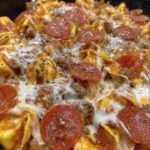
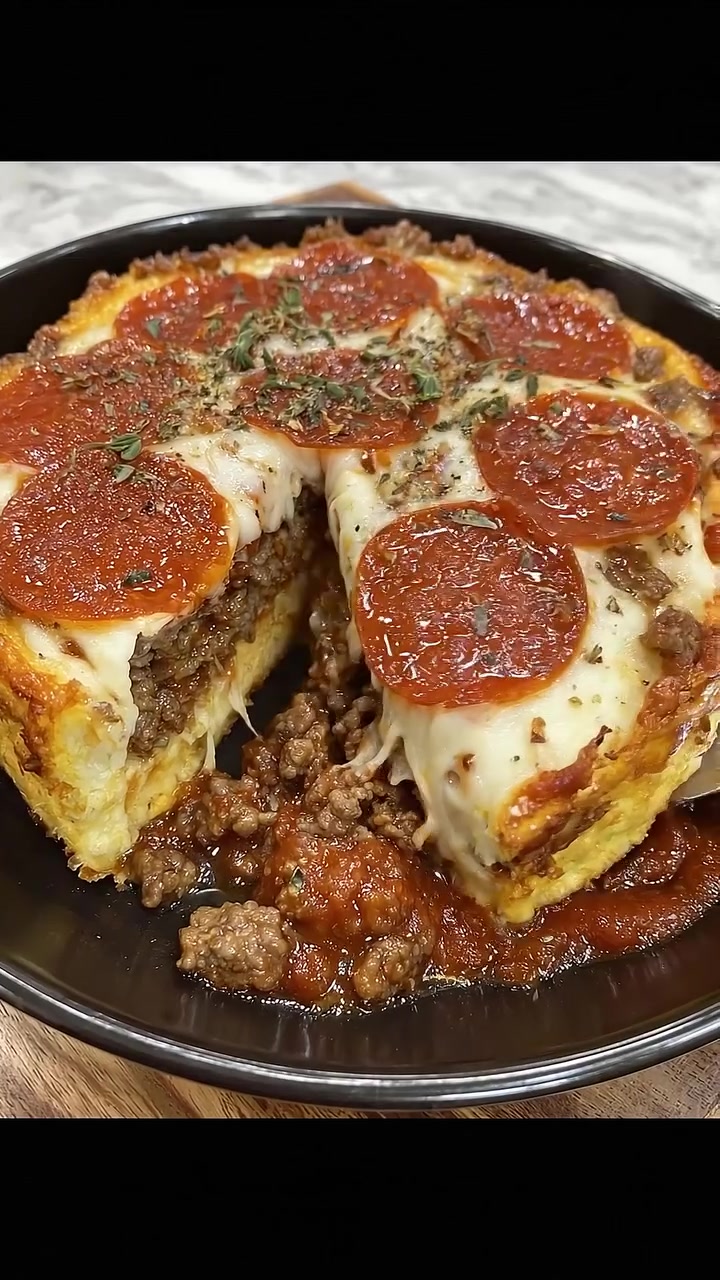
The Bisquick Impossible Pizza Pie is a beloved, no-fuss, retro-inspired comfort dish that blurs the line between savory casserole and pizza — without requiring dough, yeast, or even a traditional crust. Despite its name suggesting culinary magic (or perhaps impossibility), this dish is remarkably simple, economical, and forgiving — making it a staple in home kitchens across America for over half a century. It’s not technically a “pizza” in the Neapolitan sense, nor a “pie” in the dessert tradition — rather, it’s a hearty, custard-based, skillet-baked creation where layers of cheese, pepperoni, and seasonings are enveloped in a light, golden Bisquick batter that puffs up like a savory soufflé while baking. Its charm lies in its deceptive simplicity: minimal prep, pantry-staple ingredients, one-dish convenience, and crowd-pleasing flavor — ideal for busy weeknights, potlucks, church suppers, or unexpected guests.
The History
The origins of the Bisquick Impossible Pizza Pie trace back to the mid-20th century, when General Mills launched Bisquick in 1931 as the first widely marketed all-purpose baking mix — a revolutionary product designed to simplify scratch baking during the Great Depression. By the 1950s and 60s, Bisquick had become synonymous with quick, reliable, and versatile cooking, and home economists and test kitchens began developing creative “impossible” recipes — a category defined by batters that separate during baking into distinct layers: a crispy bottom crust, a rich custard-like middle, and a tender, golden top. The term “impossible” referred to the seemingly magical way the ingredients self-organized without manual layering or pre-baking steps. While the exact genesis of the pizza variation is unattributed to a single creator, it emerged prominently in Bisquick’s official cookbooks and regional community cookbooks (especially in the Midwest and South) by the late 1960s. Early versions featured basic tomato sauce, American cheese, and ground beef — but as pepperoni gained popularity and refrigerated pizza toppings became ubiquitous in supermarkets, the pepperoni-and-mozzarella rendition solidified as the most iconic. Over time, it evolved from a humble “frugal family supper” into a nostalgic cultural touchstone — frequently revived on food blogs, Pinterest boards, and TikTok recipe videos under hashtags like #ImpossiblePizza and #BisquickHack.
Ingredients Breakdown
Every ingredient in the Bisquick Impossible Pizza Pie serves a precise functional and flavor role — and understanding their contributions helps troubleshoot, adapt, and perfect the dish:
- Bisquick Original Mix (2 cups): The structural backbone — its blend of bleached flour, shortening, leavening agents (baking soda + sodium aluminum phosphate), and salt provides lift, tenderness, and subtle richness. *Crucially*, only Original (not Heart Smart, Gluten Free, or Buttermilk varieties) delivers the proper fat content and chemical balance for the “impossible” layer separation.
- Milk (1¼ cups): Hydrates the dry mix and activates gluten and leaveners. Whole milk yields the creamiest texture and best rise; reduced-fat (2%) works acceptably, but skim milk may result in a drier, flatter pie. Buttermilk can be substituted for tang and extra tenderness — just reduce added salt slightly.
- Eggs (3 large): Provide structure, richness, emulsification, and leavening assistance. Room-temperature eggs incorporate more evenly and improve batter aeration. Cold eggs may cause slight curdling but won’t ruin the dish.
- Pizza Sauce (1 cup, homemade or high-quality store-bought): Adds acidity, umami, and moisture. Opt for a thick, low-sugar marinara (avoid overly watery or sweet “pizza sauce” blends). San Marzano–based sauces or brands like Rao’s, Victoria, or Muir Glen offer depth without excess liquid that could inhibit rising.
- Shredded Mozzarella Cheese (2 cups, low-moisture, part-skim or whole-milk): Melts smoothly, stretches beautifully, and forms the essential cheesy layer. Pre-shredded cheese contains anti-caking starches (like cellulose) that can impede melting — freshly grated melts more evenly and contributes superior texture.
- Sliced Pepperoni (1½ cups, about 4 oz): Provides salty, spicy, umami punch and signature pizza character. Thin-sliced, “cup-and-char” style pepperoni curls attractively and crisps at the edges. For less sodium, seek nitrate-free or natural-casing options. Turkey pepperoni or plant-based alternatives work well for dietary adaptations.
- Grated Parmesan or Romano Cheese (¼ cup): Adds savory complexity, saltiness, and nutty depth — especially important if using milder mozzarella. Freshly grated is vastly superior to shelf-stable shakers.
- Garlic Powder (1 tsp), Onion Powder (½ tsp), Dried Oregano (1 tsp), Dried Basil (½ tsp): Build aromatic foundation. Toasting these spices briefly in a dry pan before adding enhances their volatility and flavor release — an optional but impactful pro tip.
- Salt (¼ tsp) and Black Pepper (¼ tsp, freshly ground): Fine-tune seasoning. Adjust based on saltiness of cheeses and pepperoni — always taste sauce before assembling.
- Olive Oil or Butter (1 tbsp, for greasing skillet): Ensures easy release and promotes crisp, golden bottom crust formation. Clarified butter adds luxury; infused garlic oil introduces subtle nuance.
Step-by-Step Recipe
- Preheat & Prep: Position oven rack in the center position and preheat oven to 375°F (190°C). Generously grease a 10-inch cast-iron skillet (or deep 9×13-inch baking dish) with olive oil or butter — ensuring both bottom and sides are coated. Cast iron is highly recommended for superior heat retention and crust development.
- Layer the Savory Base: Spread the 1 cup of pizza sauce evenly across the bottom of the prepared skillet. Sprinkle with 1 cup of shredded mozzarella, followed by all the pepperoni slices in an even layer. Distribute the remaining 1 cup mozzarella over the pepperoni. Finish with the grated Parmesan and all dried herbs (oregano, basil, garlic powder, onion powder), plus salt and pepper.
- Prepare the Batter: In a large mixing bowl, whisk together the 2 cups Bisquick mix, 1¼ cups milk, and 3 large eggs until *just combined*. Do not overmix — a few small lumps are acceptable and preferable to developing excess gluten, which would yield toughness. Let the batter rest for 3–5 minutes; this allows the flour to fully hydrate and the leaveners to begin activating.
- Pour & Distribute: Carefully pour the batter over the layered ingredients in the skillet. Gently tilt and swirl the skillet to ensure the batter flows evenly into all corners and covers the toppings completely. Avoid stirring or pressing down — the magic happens when layers remain distinct before baking.
- Bake with Precision: Place skillet in preheated oven and bake for 45–55 minutes. Do NOT open the oven door for the first 35 minutes — sudden temperature drops can cause collapse. The pie is done when the top is deeply golden brown, puffed and set (no jiggle in the center), and a toothpick inserted 1 inch from the edge comes out clean. The center may appear slightly soft but will firm upon resting.
- Cool & Set: Remove from oven and let rest on a wire rack for *at least 15–20 minutes* before slicing. This critical step allows residual heat to finish cooking the center, enables the custard layer to fully coagulate, and lets the layers stabilize — preventing a runny, soupy cut. Cutting too soon is the #1 cause of “failure.”
- Serve: Slice into wedges (for skillet) or squares (for baking dish) using a sharp chef’s knife wiped clean between cuts. Serve warm, garnished optionally with fresh basil, red pepper flakes, or a drizzle of high-quality extra-virgin olive oil.
Tips
- Skillet Matters: A well-seasoned 10-inch cast-iron skillet produces the crispiest, most flavorful bottom crust. If using a nonstick or stainless steel pan, increase oil/butter to 1½ tbsp and consider preheating the empty pan in the oven for 5 minutes before greasing and assembling — this jumpstarts crust formation.
- Temperature Control: Use an oven thermometer. Many home ovens run hot or cold; even a 25°F variance affects rise and browning. If your pie browns too quickly on top but remains unset underneath, tent loosely with foil after 30 minutes.
- Fresh vs. Pre-Shredded Cheese: This cannot be overstated. Pre-shredded cheeses contain potato starch and cellulose, which absorb moisture unevenly and hinder meltability. Grating your own mozzarella and Parmesan takes 90 seconds and transforms texture.
- Sauce Consistency Check: Spoon a tablespoon of your sauce onto a plate. If liquid pools around the edges within 30 seconds, simmer it uncovered for 5–7 minutes to reduce excess water — watery sauce = soggy bottom and poor layer separation.
- Batter Resting is Non-Negotiable: That 3–5 minute pause allows the Bisquick’s leaveners to begin reacting with moisture and acid (from milk), resulting in better volume and a more tender crumb. Skipping it risks a dense, gummy texture.
- No Peeking Policy: Opening the oven before 35 minutes risks thermal shock, causing the delicate custard layer to fall. Set a timer and resist temptation — trust the process.
- Cooling is Part of Baking: That 15–20 minute rest isn’t passive — it’s active carryover cooking. The internal temperature rises 5–10°F, proteins fully set, and steam redistributes, yielding clean slices instead of a cheesy landslide.
- Reheating Right: To revive leftovers without drying out, cover tightly with foil and warm in a 325°F oven for 15–20 minutes, or use a skillet over low heat, covered, for 8–10 minutes. Microwaving alone makes it rubbery.
Variations and Customizations
The Impossible Pizza Pie is inherently adaptable — a blank canvas for creativity, dietary needs, and seasonal abundance. Here’s how to make it your own:
- Meat Lovers’ Deluxe: Replace half the pepperoni with cooked, crumbled Italian sausage (fennel-forward) and diced cooked bacon. Add ½ cup chopped roasted red peppers for sweetness and color.
- Garden Veggie: Swap pepperoni for sautéed mushrooms, spinach (well-drained and squeezed), zucchini ribbons, and caramelized onions. Boost umami with sun-dried tomatoes (oil-packed, finely chopped) and a sprinkle of nutritional yeast.
- White Pizza Version: Omit tomato sauce entirely. Use a base of garlic-infused ricotta (1 cup mixed with 2 minced garlic cloves, 1 tbsp lemon zest, S&P), topped with mozzarella, fontina, sautéed leeks, and fresh thyme. Finish with truffle oil drizzle.
- Breakfast Pizza Pie: Replace sauce with ½ cup sour cream + 2 tbsp Dijon mustard. Layer with sharp cheddar, cooked breakfast sausage or ham, and green onions. Top batter with everything bagel seasoning.
- Southwest Fiesta: Use enchilada sauce instead of pizza sauce. Layer with pepper jack, black beans (rinsed and drained), corn kernels, pickled jalapeños, and cilantro. Garnish with avocado crema and lime wedges.
- Gluten-Free Adaptation: Substitute certified GF Bisquick or a 1:1 GF baking mix (like King Arthur or Bob’s Red Mill). Add ½ tsp xanthan gum if not included. Ensure all other ingredients (sauce, cheese, pepperoni) are GF-certified due to cross-contamination risks.
- Dairy-Free/Vegan: Use dairy-free milk (unsweetened soy or oat), flax eggs (3 tbsp ground flax + 9 tbsp water, rested 5 min), vegan mozzarella shreds (Miyoko’s or Violife), and plant-based pepperoni (Lightlife or Yves). Replace Parmesan with hemp seed “parm.” Note: Texture and rise will differ, but flavor remains satisfying.
- Mini Individual Pies: Grease six 6-ounce ramekins or muffin tin cups. Divide sauce, cheese, and toppings equally. Pour batter to fill ¾ full. Bake at 375°F for 28–32 minutes. Perfect for portion control or kids’ meals.
- Brunch Twist: Add ½ cup crumbled feta and ¼ cup chopped kalamata olives to the topping layer. Stir 1 tsp smoked paprika into the batter for depth.
Health Considerations and Nutritional Value
A standard 12-serving recipe (using whole milk, regular cheeses, and conventional pepperoni) yields approximately 290–320 calories per slice, with 14–17g protein, 18–22g carbohydrates (including 1g fiber), and 18–21g total fat (8–10g saturated). Sodium runs high — typically 580–720mg per serving — primarily from pepperoni, cheese, and Bisquick’s inherent salt content. While not a low-calorie or low-sodium dish, it offers notable nutritional strengths: high-quality complete protein from eggs and dairy, calcium and vitamin D from cheese and fortified milk, and B vitamins (especially B12 and riboflavin) from eggs and dairy. To enhance nutritional density and balance:
- Boost Veggies: Incorporate 1 cup finely grated carrots, zucchini, or spinach into the batter — they add moisture, fiber, and micronutrients without altering texture.
- Smart Cheese Swaps: Use part-skim mozzarella and reduce Parmesan to 2 tbsp. Add ¼ cup crumbled goat cheese for tang and probiotics.
- Leaner Proteins: Choose turkey pepperoni (30% less sodium, 40% less fat) or lean ground chicken/turkey sautéed with Italian herbs.
- Whole Grain Option: While traditional Bisquick isn’t whole grain, you can substitute up to ½ cup of the Bisquick with whole wheat pastry flour or oat flour for added fiber — though expect slightly denser texture and reduced rise.
- Portion Mindfulness: Serve with a large side salad (mixed greens, cherry tomatoes, cucumber, vinaigrette) to increase volume, fiber, and satiety without excess calories.
- Allergen Notes: Contains wheat (gluten), dairy, and eggs. Naturally soy-free and nut-free (verify pepperoni and cheese labels for soy lecithin or shared equipment warnings).
Consult a registered dietitian for personalized modifications, especially for hypertension, diabetes, or renal diets where sodium, potassium, or phosphorus management is essential.
Ingredients
- 2 cups Bisquick Original mix (NOT Heart Smart or Gluten Free)
- 1¼ cups whole milk (or 2% for lighter version)
- 3 large eggs, room temperature
- 1 cup thick pizza sauce or marinara (low-sugar, no added water)
- 2 cups low-moisture mozzarella cheese, freshly shredded
- 1½ cups sliced pepperoni (thin, cup-and-char style preferred)
- ¼ cup grated Parmesan or Pecorino Romano cheese
- 1 teaspoon garlic powder
- ½ teaspoon onion powder
- 1 teaspoon dried oregano
- ½ teaspoon dried basil
- ¼ teaspoon fine sea salt (adjust to taste)
- ¼ teaspoon freshly ground black pepper
- 1 tablespoon olive oil or unsalted butter, for greasing
Directions
- Preheat oven to 375°F (190°C). Generously grease a 10-inch cast-iron skillet (or 9×13-inch baking dish) with olive oil or butter.
- In the prepared skillet, spread pizza sauce in an even layer. Sprinkle with 1 cup mozzarella, then evenly distribute pepperoni slices. Top with remaining 1 cup mozzarella, followed by Parmesan, garlic powder, onion powder, oregano, basil, salt, and pepper.
- In a large bowl, whisk Bisquick, milk, and eggs until *just combined* (do not overmix). Let batter rest 3–5 minutes.
- Pour batter over toppings. Gently tilt skillet to spread evenly. Do not stir.
- Bake 45–55 minutes, until top is deep golden, puffed, and set (toothpick inserted near edge comes out clean). Do not open oven for first 35 minutes.
- Remove from oven and let rest on wire rack for 15–20 minutes before slicing.
- Serve warm, garnished with fresh basil, red pepper flakes, or olive oil if desired.
FAQ
- Why is it called “Impossible”?
- Because the batter magically separates during baking into three distinct layers — a crispy bottom crust, a creamy custard middle, and a tender, golden top — without any manual layering or pre-baking. It defies expectations of a poured batter.
- Can I make it ahead of time?
- Yes! Assemble the night before: layer sauce, cheese, and pepperoni in the greased skillet, cover tightly with plastic wrap, and refrigerate. In the morning, whisk batter and pour over cold layers. Add 5–8 minutes to bake time since starting cold.
- My pie didn’t rise — what went wrong?
- Common causes: expired Bisquick (check leavener freshness), cold eggs/milk (bring to room temp), overmixing batter (develops gluten), opening oven too early, or using a non-Original Bisquick variety. Also verify oven temperature accuracy.
- Can I freeze it?
- Yes — fully baked and cooled pies freeze well for up to 3 months. Wrap tightly in foil, then place in freezer bag. Thaw overnight in fridge, then reheat covered at 325°F for 25–35 minutes until heated through.
- What if I don’t have a cast-iron skillet?
- A 9×13-inch glass or ceramic baking dish works perfectly — bake time may increase by 5–10 minutes. Avoid shallow pie plates; depth is needed for proper layering.
- Can I use leftover pasta sauce?
- Only if it’s thick and low-moisture. Watery or oily sauces prevent proper rising. Simmer thin sauces 10–15 minutes to reduce before using.
- Is there a way to make it crispier on top?
- Broil for the final 1–2 minutes (watch closely!) or brush the top with melted butter + garlic powder before baking. A convection oven setting also enhances browning.
- Can kids help make this?
- Absolutely! Children can measure dry ingredients, shred cheese (with supervision), layer toppings, and gently pour batter. It’s a fantastic introduction to baking science and kitchen confidence.
- How do I know when it’s done?
- Visual cues: deep golden-brown top, puffed appearance, and edges pulling slightly from skillet. Internal cue: toothpick inserted 1 inch from edge should come out clean; center should be set (not jiggly) — though it will continue setting while resting.
- Can I double the recipe?
- Yes — use a 12-inch skillet or two 9×13 dishes. Increase bake time by 8–12 minutes and rotate pans halfway through for even baking.
Summary
The Bisquick Impossible Pizza Pie is a time-tested, pantry-powered marvel — a golden, cheesy, savory custard pie that bakes itself into distinct, delicious layers with zero effort beyond pouring and waiting.
It’s nostalgic yet endlessly customizable, humble yet impressive, and proof that extraordinary flavor and comforting satisfaction can emerge from astonishingly simple, accessible ingredients — truly impossible only until you try it.