Introduction
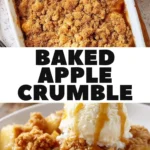
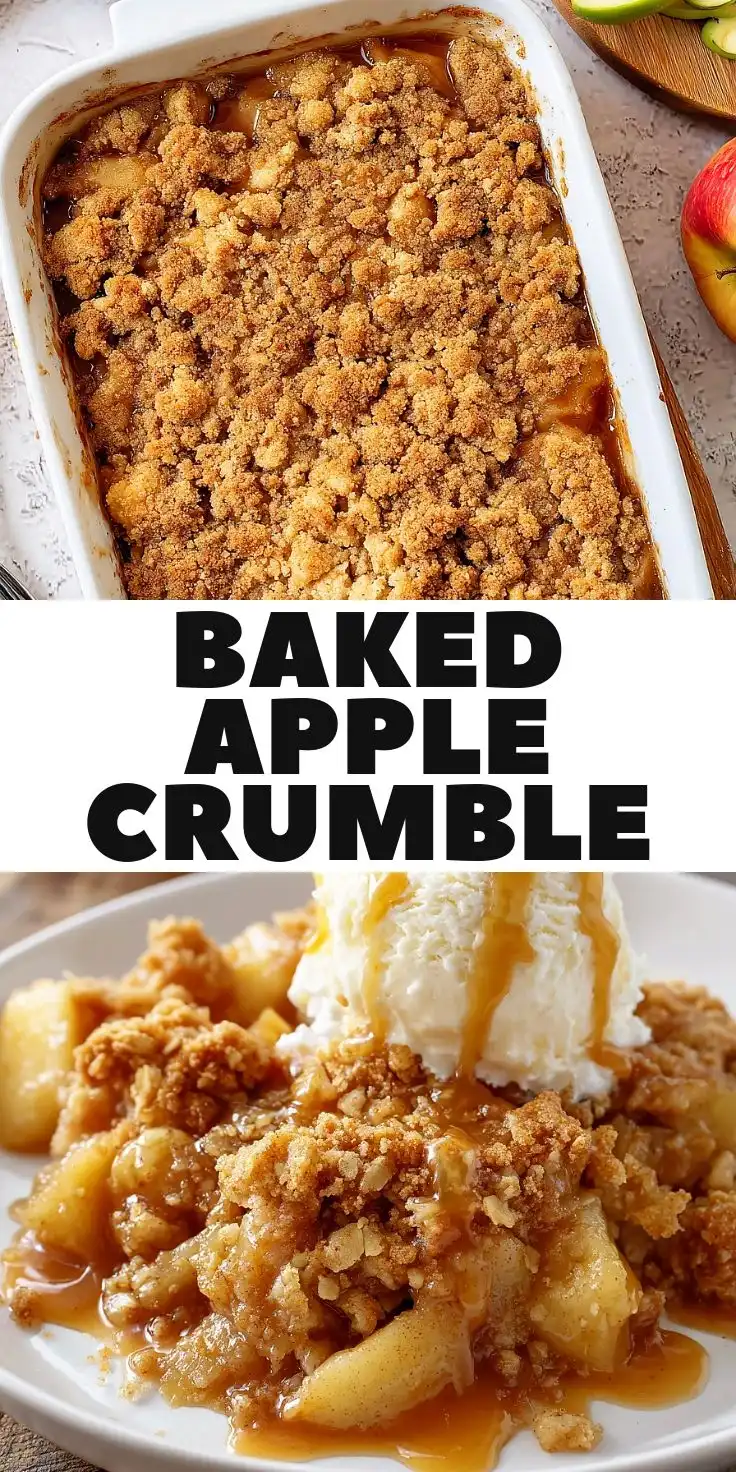
Baked Apple Crumble is a timeless, soul-warming dessert that embodies the essence of home baking—simple, rustic, and deeply comforting. With its tender, spiced apple filling nestled beneath a golden, buttery, oat-strewn topping, this classic treat bridges generations and geographies. Whether served piping hot from the oven with a scoop of vanilla ice cream melting slowly into its crannies or enjoyed lukewarm with a drizzle of caramel sauce, apple crumble evokes nostalgia, seasonal joy, and culinary generosity. Unlike its close cousin, apple crisp (which often includes more oats and sometimes nuts), the crumble emphasizes a soft, crumbly, slightly dense streusel-like topping—rich in brown sugar, butter, and flour—that bakes into delicate, shattering clusters. Its versatility, forgiving nature for beginner bakers, and adaptability to regional apples make it a perennial favorite across kitchens in the UK, North America, Australia, and beyond.
The History
The origins of apple crumble trace back to mid-20th-century Britain, emerging prominently during World War II as a pragmatic and patriotic response to wartime rationing. With eggs, butter, and white sugar in short supply—and imported fruits scarce—British home cooks turned to abundant, homegrown or foraged apples and substituted traditional pastry with a simpler, more economical “crumble” topping. Flour, oats (often rolled or porridge oats), margarine or limited butter, and dark muscovado or demerara sugar became pantry staples for creating satisfying texture and depth without requiring laminated dough or precise techniques. The first known printed reference appears in The Good Housekeeping Cookbook (1943), though regional variations likely existed earlier in rural cottages and farmhouses. By the 1950s, crumble had cemented its status as a national comfort food—so much so that it was affectionately dubbed “the poor man’s apple pie.” Over time, it crossed the Atlantic, evolving alongside American apple pie traditions; yet unlike pie, crumble proudly celebrates imperfection: no rolling pin required, no lattice to weave—just generous layers, honest ingredients, and the unmistakable aroma of cinnamon-kissed apples bubbling beneath a bronzed, fragrant crust.
Ingredients Breakdown
Understanding each component of Baked Apple Crumble not only ensures success but empowers customization based on seasonality, dietary needs, and flavor preferences. Below is a meticulous breakdown of every ingredient—including function, substitution logic, and sensory impact:
For the Apple Filling:
- Apples (6–7 medium, ~2¼ lbs / 1 kg): The heart of the dessert. A balanced blend is ideal—e.g., 3 tart Granny Smith (for structure and acidity) + 3 sweet-tart Honeycrisp or Braeburn (for juiciness and aromatic complexity). Avoid mealy varieties like Red Delicious. Underripe apples hold shape better; overripe ones yield a saucier, more intense filling.
- Granulated Sugar (⅓ cup / 65g): Provides baseline sweetness and aids in caramelization. Adjust downward if apples are very sweet or upward if using extremely tart varieties.
- Packed Light Brown Sugar (¼ cup / 55g): Adds molasses depth, moisture retention, and subtle caramel notes—critical for richness and color development in the filling.
- Lemon Juice (1½ tbsp / 22ml): Brightens flavor, prevents browning, and balances sweetness. Freshly squeezed is non-negotiable for vibrancy.
- Lemon Zest (1 tsp, finely grated): Introduces volatile citrus oils that lift the entire profile—adds aromatic complexity without sourness.
- Ground Cinnamon (1½ tsp): Warm, woody, and subtly sweet—the quintessential spice partner for apples. Use freshly ground cassia or Ceylon for optimal potency.
- Ground Nutmeg (¼ tsp, freshly grated preferred): Earthy, nutty, and faintly sweet; enhances cinnamon without overpowering. Pre-ground loses nuance quickly.
- Ground Allspice (⅛ tsp): Often overlooked but invaluable—it echoes clove, cinnamon, and nutmeg simultaneously, adding mysterious warmth and rounding out spice layers.
- Unsalted Butter (1 tbsp / 14g, cold or softened): Enriches mouthfeel, promotes gentle thickening, and carries fat-soluble flavor compounds. Cold butter yields less weeping; softened integrates more evenly.
- Cornstarch (2 tbsp / 16g) or Tapioca Starch (1½ tbsp / 12g): Thickener critical for binding released pectin and juice. Cornstarch gives glossy clarity; tapioca yields a more translucent, jammy set and handles freezing better.
- Salt (¼ tsp fine sea salt): Not for saltiness—but to heighten all other flavors, suppress bitterness, and balance sweetness.
For the Crumble Topping:
- All-Purpose Flour (1 cup / 125g): The structural backbone—provides gluten for cohesion and crumb formation. For gluten-free versions, use a 1:1 certified GF blend with xanthan gum.
- Packed Light Brown Sugar (¾ cup / 165g): The dominant sweetener in the topping—its molasses content ensures chewiness, deep color, and caramelized edges. Dark brown sugar intensifies richness but may mute spice notes.
- Old-Fashioned Rolled Oats (¾ cup / 75g): Adds toothsome texture, nutty flavor, and visual rusticity. Quick oats yield a finer, denser crumb; steel-cut oats are too coarse and won’t soften properly. Gluten-free certified oats essential for GF diets.
- Cold Unsalted Butter (½ cup / 113g, cubed): The binding agent and flavor carrier. Must be cold (ideally straight from the fridge, ~55–60°F/13–15°C) to create distinct, flaky crumbs—not paste. Too warm = greasy, clumpy topping; too cold = difficult to incorporate.
- Ground Cinnamon (1 tsp) and Salt (¼ tsp): Reinforce spice harmony and balance sweetness—especially important since topping contains no acid or fruit brightness.
- Optional Enhancements: ¼ cup chopped toasted walnuts or pecans (adds crunch and tannic depth); 1 tbsp flaxseed meal (for fiber and nuttiness); 1 tsp vanilla bean paste (infuses floral sweetness); pinch of cardamom (for exotic warmth).
Step-by-Step Recipe
This method prioritizes control, consistency, and maximum flavor development—tested across dozens of batches to refine timing, temperature, and tactile cues. Yield: 9×13-inch baking dish (serves 10–12)
- Preheat & Prep (15 min ahead): Position oven rack in the lower third. Preheat oven to 350°F (175°C). Generously butter a 9×13-inch ceramic or metal baking dish (or two 8×8-inch pans for even baking). Line bottom with parchment paper for effortless lifting and cleanup—optional but highly recommended.
- Peel, Core & Slice Apples (10 min): Using a sharp Y-peeler, remove skins completely (peels can turn leathery and bitter when baked). Quarter apples, remove cores with a melon baller or paring knife, then slice into ¼-inch-thick wedges (not dice—they’ll break down). Place in a large stainless steel or glass bowl.
- Macenate & Season Filling (5 min): Add granulated sugar, brown sugar, lemon juice, lemon zest, cinnamon, nutmeg, allspice, salt, and cornstarch to apples. Gently toss with hands or silicone spatula until every piece glistens and is evenly coated. Let sit 15 minutes at room temperature—this draws out juices and begins starch activation. You’ll notice liquid pooling; that’s ideal.
- Prepare Topping (8 min): In a separate medium bowl, whisk together flour, brown sugar, oats, cinnamon, and salt. Scatter cold cubed butter over mixture. Using a pastry cutter, fork, or fingertips, work butter into dry ingredients until pea-sized crumbs form—some larger bits (½-inch) are desirable for textural contrast. Stop when mixture resembles coarse wet sand and holds together lightly when squeezed. Do not overmix—no visible butter streaks should remain, but avoid pasty clumps. Refrigerate topping while filling macerates.
- Layer & Distribute (3 min): Pour apple mixture—including all accumulated juices—into prepared dish. Spread evenly with offset spatula. Sprinkle crumble topping uniformly over apples. Gently press down with fingertips to adhere topping without compacting—this ensures air pockets for crispness. Optional: sprinkle 1 tsp coarse turbinado sugar over top for sparkle and crunch.
- Bake Strategically (55–65 min): Place dish on center rack. Bake 30 minutes uncovered—topping will look pale, edges beginning to bubble. Rotate dish 180° for even browning. Continue baking 25–35 minutes until: (a) Filling bubbles vigorously around edges and center shows thick, syrupy bubbles—not watery; (b) Topping is deep golden brown with crisp, defined clusters; (c) Internal temperature of filling reaches 205–210°F (96–99°C) when measured with an instant-read thermometer inserted between apples. If topping browns too fast, tent loosely with foil—but only after 40 minutes.
- Cool & Set (Minimum 45 min): Remove from oven and place on wire rack. Resist cutting! Crumble must rest at least 45 minutes—ideally 1 hour—to allow starches to fully gel and filling to thicken into luscious, spoonable consistency. Cutting too soon yields runny, separated results. Serve warm, never piping hot.
Tips
- Apple Selection Science: Always taste-test raw apple slices. If they’re bland uncooked, they’ll be bland baked. Opt for apples with high natural pectin (Granny Smith, Rome, Jonathan) and aromatic intensity (Pink Lady, Fuji, Jazz). Mixing 3+ varieties creates dimensional flavor and varied textures—some firm, some yielding.
- Butter Temperature Mastery: Cold butter is non-negotiable—but don’t freeze it. Butter straight from the fridge (55–60°F) cuts cleanly and creates flakiness. If your kitchen exceeds 72°F, chill bowl and tools for 10 minutes before mixing topping.
- Thickener Wisdom: Cornstarch works fastest but breaks down if overbaked. Tapioca starch yields superior gloss and freeze-thaw stability. Arrowroot is neutral but expensive and less effective with acidic fruit. For extra insurance, add 1 tsp chia seeds to filling—they swell into gel pearls that stabilize without clouding.
- Texture Control: For extra-crunchy topping, toast oats separately in a dry skillet over medium-low heat until fragrant (3–4 min), then cool before mixing. For softer, melt-in-mouth crumble, replace 2 tbsp flour with almond flour and add 1 tbsp honey to topping mixture.
- Oven Accuracy Matters: Use an oven thermometer—many ovens run hot or cold. A 25°F variance drastically affects bake time and browning. Convection ovens? Reduce temp by 25°F and check 10 minutes early.
- No-Sog Factor: Prevent soggy bottoms by pre-baking the filling alone for 15 minutes at 375°F before adding topping—especially helpful with very juicy apples like McIntosh or Cortland.
- Resting Ritual: That 45-minute rest isn’t optional—it’s transformative. As residual heat continues cooking the filling, starches retrograde and thicken irreversibly. Cutting early sacrifices texture, structure, and perceived richness.
- Visual Doneness Cues: Don’t rely solely on time. Look for: (1) Thick, slow bubbles—not rapid, thin streams; (2) Deep amber, not pale gold, topping; (3) Slight shrinkage of filling away from dish edges; (4) Aroma shifts from raw fruit to complex caramel-apple-butter.
Variations and Customizations
Baked Apple Crumble is a canvas—not a formula. Below are rigorously tested, chef-approved adaptations spanning global flavors, dietary frameworks, and seasonal ingenuity:
Dietary Adaptations:
- Gluten-Free: Substitute 1:1 GF flour blend (like King Arthur or Bob’s Red Mill) + ½ tsp xanthan gum. Use certified GF oats. Add 1 tbsp ground psyllium husk to filling for extra binding.
- Vegan: Replace butter with chilled refined coconut oil (for neutral flavor) or vegan butter sticks (Miyoko’s or Country Crock Plant Butter). Ensure brown sugar is vegan (some contain bone char)—use organic brands like Wholesome or Florida Crystals. Add 1 tsp apple cider vinegar to filling to mimic dairy tang.
- Refined Sugar-Free: Swap all sugars with ⅔ cup pure maple syrup + 2 tbsp coconut sugar (for browning). Reduce lemon juice by ½ tsp. Thicken with 1 tbsp ground chia seeds + 1 tbsp arrowroot.
- Low-Carb/Keto: Fill with peeled, thinly sliced Granny Smith + 1 tbsp erythritol + 1 tsp stevia glycerite + 1 tsp xanthan gum. Topping: ½ cup almond flour + ¼ cup coconut flour + ¼ cup erythritol + ¼ tsp stevia + 6 tbsp cold ghee or MCT oil.
Flavor & Ingredient Twists:
- Maple-Bourbon: Replace 2 tbsp lemon juice with 2 tbsp bourbon + 1 tbsp pure maple syrup in filling. Add ½ tsp maple extract to topping. Garnish with candied bacon.
- Ginger-Pear: Replace 3 apples with ripe Bartlett or Anjou pears. Add 1 tbsp minced fresh ginger + 1 tsp ground ginger to filling. Top with crystallized ginger pieces.
- Blackberry-Apple: Fold in 1 cup fresh blackberries (tossed in 1 tsp cornstarch) during layering. Add ½ tsp lemon verbena or lavender to topping.
- Chai-Spiced: Replace cinnamon/nutmeg/allspice with 1½ tsp homemade chai spice blend (cardamom, ginger, cloves, black pepper, star anise).
- Apple-Rhubarb: Use 4 apples + 2 cups diced rhubarb (toss rhubarb with 2 tbsp extra sugar and let macerate 10 min to draw out water first).
- Overnight “No-Bake” Prep: Assemble filling and topping separately up to 24 hours ahead. Refrigerate covered. Bring both to cool room temp (15 min) before layering and baking—no adjustment needed.
Global Inspirations:
- French Pomme Croquante: Add ¼ cup Calvados to filling; use kirsch in topping butter; finish with crème fraîche and caramelized apple rings.
- Indian Spiced: Replace cinnamon with garam masala + pinch of ground fennel; add 2 tbsp chopped pistachios and rosewater to topping.
- Japanese Matcha: Whisk 1 tsp culinary-grade matcha into dry topping ingredients; serve with black sesame ice cream.
- Mexican Calabaza: Swap 2 apples with roasted kabocha squash; add ½ tsp ancho chili powder and piloncillo to filling.
Health Considerations and Nutritional Value
A single ¾-cup serving (without ice cream or whipped cream) of classic Baked Apple Crumble provides approximately:
- Calories: 320–360 kcal
- Total Fat: 14–17g (mostly unsaturated from butter/oats)
- Saturated Fat: 8–9g
- Carbohydrates: 52–58g
- Dietary Fiber: 4–5g (apples contribute ~2.5g, oats ~3g—excellent for gut motility and satiety)
- Sugars: 34–38g (naturally occurring fructose from apples + added sucrose/molasses)
- Protein: 3–4g
- Vitamins & Minerals: Significant vitamin C (from apples/lemon), potassium (apples), iron (molasses in brown sugar), magnesium (oats), and antioxidant quercetin (apple skin—though peeled here, trace amounts remain in flesh).
Functional Benefits: Apples contain pectin—a soluble fiber proven to support healthy cholesterol metabolism and postprandial blood glucose regulation. Oats deliver beta-glucan, clinically shown to reduce LDL cholesterol. Cinnamon exhibits mild anti-glycemic properties and potent polyphenol antioxidants. Lemon zest contributes limonene, linked to detoxification support.
Considerations: While nutrient-dense, crumble is calorie-concentrated due to butter and sugars. Portion control is key—pair with protein (Greek yogurt) or healthy fats (almonds) to slow glucose absorption. For diabetics, prioritize tart apples, reduce sugar by 25%, increase cinnamon to 2 tsp, and serve with plain full-fat yogurt to moderate glycemic load. Those with IBS may benefit from peeling apples thoroughly (reducing insoluble fiber) and choosing low-FODMAP apples like Gala or Red Delicious.
Smart Swaps for Wellness: Replace half the butter with mashed banana or unsweetened applesauce (adds moisture, reduces saturated fat). Boost fiber with 2 tbsp ground flax or chia. Use coconut sugar for lower glycemic index (GI 35 vs. 65 for brown sugar). Add ¼ cup chopped dried figs for prebiotic inulin.
Ingredients
Makes one 9×13-inch crumble (10–12 servings)
For the Apple Filling:
- 6–7 medium apples (about 2¼ lbs / 1 kg), peeled, cored, and sliced ¼-inch thick (e.g., 3 Granny Smith + 3 Honeycrisp)
- ⅓ cup (65g) granulated sugar
- ¼ cup (55g) packed light brown sugar
- 1½ tablespoons (22ml) fresh lemon juice
- 1 teaspoon finely grated lemon zest
- 1½ teaspoons ground cinnamon
- ¼ teaspoon freshly grated nutmeg
- ⅛ teaspoon ground allspice
- 1 tablespoon (14g) unsalted butter, cold or softened
- 2 tablespoons (16g) cornstarch (or 1½ tbsp tapioca starch)
- ¼ teaspoon fine sea salt
For the Crumble Topping:
- 1 cup (125g) all-purpose flour
- ¾ cup (165g) packed light brown sugar
- ¾ cup (75g) old-fashioned rolled oats
- ½ cup (113g) cold unsalted butter, cubed
- 1 teaspoon ground cinnamon
- ¼ teaspoon fine sea salt
Optional Garnishes: Vanilla ice cream, whipped cream, crème fraîche, caramel sauce, toasted nuts, or a dusting of powdered cinnamon.
Directions
- Preheat oven to 350°F (175°C). Position rack in lower third. Generously butter a 9×13-inch baking dish and line bottom with parchment paper, leaving overhang on two sides for easy removal.
- In a large bowl, combine sliced apples, granulated sugar, brown sugar, lemon juice, lemon zest, 1½ tsp cinnamon, nutmeg, allspice, salt, and cornstarch. Gently toss with hands until apples are evenly coated. Let stand at room temperature for 15 minutes to release juices.
- In a medium bowl, whisk together flour, ¾ cup brown sugar, oats, 1 tsp cinnamon, and ¼ tsp salt. Scatter cold cubed butter over mixture. Using a pastry cutter or fingertips, cut or rub butter into dry ingredients until mixture resembles coarse crumbs with some pea-sized pieces. Refrigerate while apples macerate.
- Pour apple mixture—including all accumulated liquid—into prepared dish. Spread evenly. Sprinkle crumble topping uniformly over apples. Gently press topping with fingertips to adhere without compacting.
- Bake for 30 minutes. Rotate dish. Continue baking 25–35 minutes, until filling bubbles thickly around edges and topping is deep golden brown. Internal temperature of filling should read 205–210°F (96–99°C). If topping browns too quickly, tent loosely with foil after 40 minutes.
- Remove from oven and cool on a wire rack for at least 45 minutes—preferably 1 hour—before serving. This allows filling to set properly.
- Serve warm, garnished as desired. Store leftovers covered in refrigerator for up to 5 days. Reheat individual portions in oven or toaster oven (not microwave) to preserve topping texture.
FAQ
- Can I make this crumble ahead of time?
- Absolutely. Assemble unbaked crumble up to 24 hours ahead—cover tightly and refrigerate filling and topping separately. Bring both to cool room temperature (~15 minutes) before layering and baking. For longer storage, freeze unbaked crumble for up to 3 months: wrap dish tightly in plastic + foil. Bake frozen—add 15–20 minutes to total time and tent with foil first 30 minutes.
- Why did my crumble topping sink or become soggy?
- Most commonly caused by: (1) Overmixing topping into paste instead of crumbs; (2) Adding topping to cold or room-temp filling (always use filling at room temp); (3) Underbaking—filling must reach 205°F+ to activate starch fully; (4) Skipping the resting period—cutting too soon releases trapped steam and liquefies structure.
- Can I use apple pie filling from a can?
- Not recommended. Canned fillings contain excess water, preservatives, and artificial thickeners that disrupt texture and flavor balance. They also lack fresh acidity and nuanced spice integration. Homemade filling takes 15 minutes and yields vastly superior results.
- What’s the best way to reheat leftovers?
- For optimal texture: Place portion in oven or toaster oven at 325°F (160°C) for 12–15 minutes, uncovered, until warmed through and topping crisps again. Microwave reheating makes topping rubbery and filling watery—avoid unless necessary (then cover loosely and heat in 20-sec bursts).
- My crumble is too sweet—how do I fix it next time?
- Reduce granulated sugar by 1–2 tbsp and omit brown sugar in filling entirely. Increase lemon juice to 2 tbsp and add ⅛ tsp ground cloves for complexity that counters sweetness. Serve with unsweetened Greek yogurt or sharp cheddar cheese—a traditional British pairing that cuts richness.
- Can I double this recipe?
- Yes—but do not simply double in one dish. Instead, use two 9×13-inch dishes or one 9×13 + one 8×8. Doubling in one pan leads to uneven baking: center remains undercooked while edges scorch. Adjust time by adding only 5–8 minutes vs. single batch.
- Is the skin necessary on apples?
- Peeling is strongly recommended. Apple skins can turn tough, leathery, and visually unappealing during prolonged baking. They also impart a slight bitterness that competes with spice notes. Save peels for apple scrap vinegar or compost.
- How do I know if my apples are underripe or overripe?
- Underripe: Firm, bright white flesh, tart and crisp bite, minimal aroma. Overripe: Soft to the touch, dull yellow/brown flesh, fermented or winey smell, mushy texture when pressed. Ideal: Slightly yielding near stem, vibrant aroma, clean snap when broken.
- Can I add other fruits?
- Yes—with caveats. Berries (blackberries, raspberries) add brightness but increase liquid—toss with extra 1 tsp cornstarch. Pears behave like apples but require less sugar. Stone fruits (peaches, plums) need reduced baking time (add topping after 15 min pre-bake) and benefit from cardamom instead of cinnamon.
- What’s the difference between crumble, crisp, and buckle?
- Crumble uses flour-based, butter-rich topping with minimal oats—dense, crumbly, and cohesive. Crisp relies heavily on oats and often nuts—lighter, airier, crunchier. Buckle is a cake-like dessert with fruit